
| Catalog No | Package | Original Price | Price | Inventory | Quantity | Operating |
|---|---|---|---|---|---|---|
| BP1244-100mg | 100mg | $30.00 | Sign in |
|


Synonym name: Saligenin glucoside; Salicoside
Catalogue No.: BP1244
Cas No.: 138-52-3
Formula: C13H18O7
Mol Weight: 286.28
Botanical Source: Glucoside of poplar and willow bark
Purity: 95%~99%
Analysis Method: HPLC-DAD or/and HPLC-ELSD
Identification Method: Mass, NMR
Packing: Brown vial or HDPE plastic bottle
Can be supplied from milligrams to grams.
For Reference Standard and R&D, Not for Human Use Directly.
Inquire for bulk scale.
HPLC of Salicin
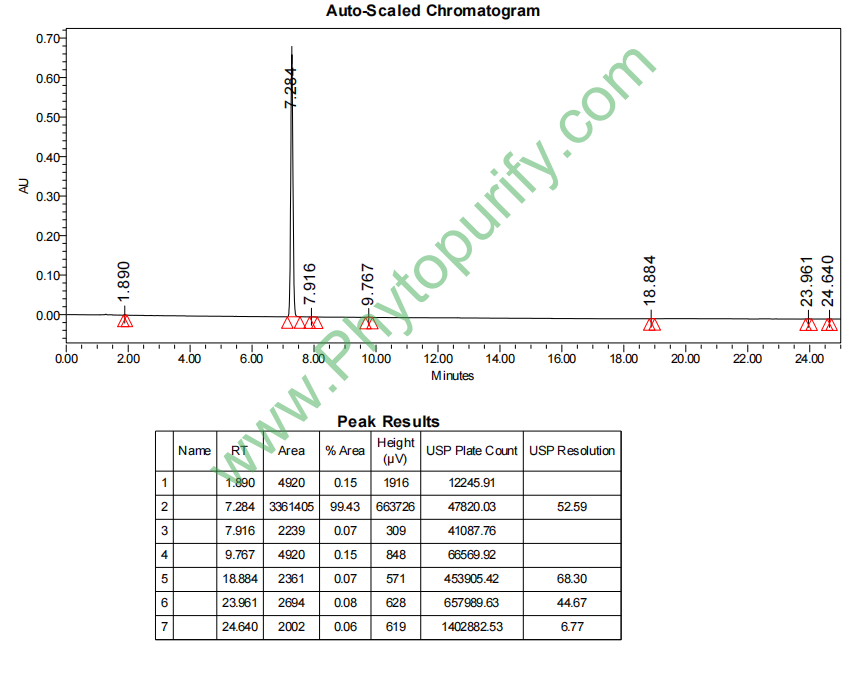
Storage conditions:Short-term storage at 2~8℃, long-term storage at -20 ~ -80℃
119.6100
-.8026
-.8023
48.1472
.7280
.2118
Low
25.6464
3.4075
Yes
No
No
No
No
No
0.0
Yes
Yes
Yes
Yes
Throughout the long history of human struggle against pain and inflammation, natural products have always played a pioneering and foundational role. Salicin, an ancient active ingredient derived from plants in the willow family, is not only a direct natural precursor to the modern antipyretic, analgesic, and anti-inflammatory drug aspirin, but also an activated drug discovery history. Its history can be traced back thousands of years, with records of using willow bark to treat fever and pain in ancient Sumerians, Egyptians, and traditional Chinese medicine. However, the prelude to modern scientific research did not officially begin until the 19th century. In 1828, French pharmacist Henri Leroux and Italian chemist Raphael Piria successfully isolated salicin and subsequently converted it into salicylic acid through hydrolysis and oxidation, laying an indelible chemical foundation for Felix Hoffman's synthesis of acetylsalicylic acid (aspirin) in 1897.
Salicylic acid itself is an aromatic β - D-glucoside that is metabolized in the body to release salicylate, which is further converted into salicylic acid to exert pharmacological effects. Therefore, it is classified as a natural prodrug. As a classic prototype of cyclooxygenase (COX) inhibitors, its effects go far beyond simple enzyme inhibition. Modern pharmacological research continuously reveals that salidroside and its metabolites form a complex analgesic network by acting on multiple targets such as transient receptor potential vanillic acid subtype 1 (TRPV1), cannabinoid receptor 1 (CNR1), opioid receptor system, and monoamine neurotransmitter transporter (SLC6A4). This has brought new scientific value to the development of new analgesics, especially in the exploration of complex pain states and multi-target treatment strategies. This article aims to systematically review the chemistry, sources, pharmacological activities, multi-target mechanisms of action, pharmacological characteristics, and clinical translation prospects of salidroside, in order to provide a comprehensive academic perspective for the deep development and utilization of this classic natural product.
The chemical name of salidroside is 2- (hydroxymethyl) phenyl - β - D-glucopyranose, with a CAS registration number of 138-52-3. Its molecular formula is C13H18O7 and its molecular weight is 286.28 g/mol.
Structurally, the core of salidroside is a benzyl alcohol (salicylate) skeleton, whose phenolic hydroxyl group is connected to a molecule of β - D-glucose through an O-glycosidic bond, forming a typical aromatic β - D-glucoside. This glycosidic bond structure is the key to its use as a prodrug: it has weak activity but good hydrophilicity, making it easy to transport in vivo; Under the action of intestinal microbiota or tissue esterases, glycosidic bonds are hydrolyzed, releasing the glycoside salicylic acid. Salicylic acid is then oxidized to the final active metabolite, salicylic acid, in the liver and other parts.
Its physical and chemical properties are deeply influenced by the amphiphilic structure. The calculated lipid water partition coefficient (LogP) is approximately -0.80, indicating that the molecule has strong overall hydrophilicity. The topologically polar surface area (TPSA) is as high as 119.61 Å ², which is mainly attributed to the presence of multiple hydroxyl and ether oxygen atoms in the molecule, further confirming its excellent hydrophilic properties. Experimental data shows that the solubility of salidroside in water can reach about 48 mg/mL, which ensures its good solubility and bioavailability in aqueous media. However, its high polarity and TPSA also limit its ability to passively diffuse across membranes, especially with a predicted "low" penetration through the blood-brain barrier (BBB), indicating limited direct entry of its prototype drug into the central nervous system. The central analgesic effect may be mainly achieved through peripheral metabolites (such as salicylic acid) or indirect regulation.
Salicylic acid glycosides are widely present in various plants of the Salicaceae family, especially in the white willow(Salix alba)It is known for its rich bark content. In addition, the weeping willows of the same genus(S. babylonica)Purple Willow(S. purpurea)And the Yang genus(Populus)The bark, leaves, and tender branches of plants also contain a considerable amount of salicin. The biosynthesis of salidroside in plants begins with phenylalanine, which undergoes a series of enzymatic reactions to produce salicylic alcohol. Finally, under the catalysis of glycosyltransferase, it combines with UDP glucose to form salidroside. This glycosylation is not only a common strategy for plants to store and transport phenolic compounds, but also precisely endows them with the characteristics of a prodrug in the human body.
The traditional and modern methods for extracting salidroside from plant materials mainly include:
1. Solvent extraction method The most classic method. Water, methanol, ethanol, or alcohol water mixtures of different proportions are commonly used as solvents for heating reflux or leaching. The water extraction method has low cost and safety, but there are many impurities; The alcohol extraction method (such as 70% ethanol) has higher efficiency and better selectivity. After concentration, the extract can be preliminarily purified by decolorization and precipitation using activated carbon.
2. Ultrasonic/Microwave Assisted Extraction Method Modern green extraction technology. By utilizing the cavitation effect of ultrasound or the heating characteristics of microwave, plant cell walls can be significantly damaged, solvent penetration and effective ingredient dissolution can be accelerated, with the advantages of short extraction time, high efficiency, and low solvent dosage.
3. Column chromatography purification method For research or pharmaceutical applications that require high-purity salidroside, the crude extract needs to be further purified. Macroporous adsorption resins such as AB-8 and D101 are commonly used for enrichment, followed by fine separation using silica gel column chromatography, reverse phase C18 column chromatography, or preparative high-performance liquid chromatography (HPLC). Identification and content determination were carried out by comparing the retention time of standard samples and UV spectra (with characteristic absorption of salidroside at approximately 270 nm).
The pharmacological activities of salidroside are mainly reflected in its antipyretic, analgesic, and anti-inflammatory effects, which are mainly attributed to the final product salicylic acid generated by its metabolism in the body. However, salidroside itself and its intermediate metabolite salicylate may also contribute to some unique biological activities.
Antipyretic effect Salicylic acid has a clear effect of reducing fever body temperature without affecting normal body temperature. Its mechanism is mainly related to the central nervous system. The salicylic acid produced by metabolism acts on the hypothalamic thermoregulatory center, inhibiting the synthesis of prostaglandin E2 (PGE2) in this area - PGE2 is a powerful thermogenic mediator - thereby restoring the thermoregulatory point to normal levels, promoting heat dissipation processes (such as skin vasodilation and sweating), and achieving antipyretic effects.
Analgesic effect Salicylic acid glycoside has shown analgesic effects on various pain models, including visceral pain caused by chemical substances (such as acetic acid writhing method), somatic pain caused by hot plate or tail pressure method, as well as some neuropathic and inflammatory pain models. Its analgesic effect combines peripheral and central components. Peripheral analgesia mainly reduces the production of pain inducing substances (such as PGE2 and bradykinin) at the inflammatory site, and lowers the sensitivity of pain receptors. Recent studies have shown that its metabolites may directly or indirectly regulate TRPV1 and TRPA1 plasma channels on peripheral sensory neurons, participating in the modulation of pain signals.
anti-inflammatory effect In acute and chronic inflammation models such as carrageenan induced rat toe swelling and cotton ball granuloma, salidroside showed clear anti-inflammatory activity. Its classic anti-inflammatory mechanism is to inhibit cyclooxygenase (COX), especially COX-2, thereby reducing the synthesis of inflammatory mediators such as prostaglandins (PGs) and thromboxane A2 (TXA2). In addition, salicylic acid has been found to inhibit the activation of nuclear factor kappa B (NF - κ B), a key signaling pathway that regulates the gene expression of numerous inflammatory factors such as TNF - α, IL-1 β, IL-6, providing a broader explanation for its anti-inflammatory effects.
Other potential activities Some studies suggest that salidroside and its derivatives may also have antiplatelet aggregation, antioxidant, and even mild antibacterial activity, but these effects are usually weaker than their main antipyretic, analgesic, and anti-inflammatory effects.
As a prodrug, the ultimate mechanism of action of salidroside overlaps with salicylic acid drugs such as aspirin, but studies have also revealed that it may exert a broader regulatory effect through a multi-target network. Its core functional targets can be summarized as follows:
Inhibition of prostaglandin endoperoxide synthase (PTGS/Cox)This is its most classic target of action. The salicylic acid generated in the body irreversibly acetylates Ser530 of COX-1 and Ser516 of COX-2, inhibiting enzyme activity and thereby blocking the conversion of arachidonic acid to prostaglandins (PGs) and thromboxanes (TXs). The selective inhibition of COX-2 (compared to COX-1) is the basis for its anti-inflammatory and analgesic properties, as well as the relative reduction of gastrointestinal side effects.
Transient receptor potential (TRP) channel regulation TRPV1 and TRPA1 are important pain and heat receptors expressed on nociceptive sensory neurons. Research has shown that salicylic acid is a weak agonist of TRPV1, but can produce desensitization effects under certain conditions; It is also an effective agonist/modulator of TRPA1. This seemingly contradictory "excitation desensitization" mode of action may help interfere with the normal transmission of pain signals and participate in its analgesic mechanism.
Endogenous opioid and monoamine systems The analgesic effect of salidroside can be partially blocked by the opioid receptor antagonist naloxone, suggesting that it may indirectly activate the endogenous opioid system involving μ (OPRM1), δ (OPRD1), and κ (OPRK1) opioid receptors. In addition, its potential impact on the 5-hydroxytryptamine transporter (SLC6A4) suggests that it may enhance the descending inhibitory pain regulatory pathway by regulating 5-hydroxytryptamine neurotransmission.
Endogenous cannabinoid system Evidence suggests that salicylic acid drugs may indirectly activate the cannabinoid CB1 receptor (CNR1) by increasing the levels of endogenous cannabinoids such as arachidonic acid ethanolamine (AEA), thereby exerting anti-inflammatory and analgesic effects. This provides a new perspective for explaining its non COX dependent effects.
Dopamine and other systems The potential interaction with dopamine D2 receptor (DRD2) may be related to certain regulatory effects in the central nervous system, but the specific mechanism remains to be elucidated.
In summary, the analgesic effect of salidroside is not achieved through a single target, but through a synergistic network consisting of inhibiting the production of peripheral inflammatory mediators (COX inhibition), regulating ion channel activity (TRPV1/TRPA1), and activating the central descending inhibitory system (opioid, serotonin, cannabinoid system). This multi-target characteristic may give it unique advantages in dealing with complex pain.
Based on the provided parameters and existing research, a comprehensive evaluation of the pharmacological properties of salidroside is conducted
Although the direct clinical application of salidroside has been surpassed by its derivative aspirin, its unique value as a natural lead compound and multi-target analgesic still has broad prospects in modern drug development:
The challenges faced mainly include: relatively low bioavailability and slow onset of action of prototype drugs; The strength of action is usually weaker than that of synthetic NSAIDs; As a natural product, its quality control and batch stability require strict supervision; More well-designed large-scale clinical studies are needed to confirm its efficacy in specific indications.
Salicylic acid glycoside, a natural treasure derived from ancient willow bark, not only ushered in the glorious era of nonsteroidal anti-inflammatory drugs, but its rich pharmacological connotations still attract the attention of researchers today. It is not just a simple COX inhibitor prodrug, but also a complex biological regulator that acts on multiple targets such as TRP channels, endogenous opioid and cannabinoid systems, and monoamine delivery. This multi-target characteristic occupies a unique position in the "arsenal" of pain and inflammation management - both as a mild acting natural therapy option and as an inspiration for designing the next generation of multi-target analgesic drugs.
With the advancement of systems pharmacology, structural biology, and medicinal chemistry techniques, the interpretation of the molecular mechanism of salidroside will become increasingly profound. In the future, through rational structural optimization, it is expected to be transformed into more selective, potent, or central active new therapeutic agents. At the same time, promoting its clinical application as a standardized herbal medicine will also provide patients with more safe and effective treatment options. From traditional wisdom to modern science, the story of salicin is far from over, and it will continue to play its unique and lasting role in humanity's pursuit of health and pain relief.
