


Product name: Gossypol
Synonym name: Thespesin
Catalogue No.: BP0687
Cas No.: 303-45-7
Formula: C30H30O8
Mol Weight: 518.562
Botanical Source: Cotton seed
Physical Description:
Type of Compound: Phenols
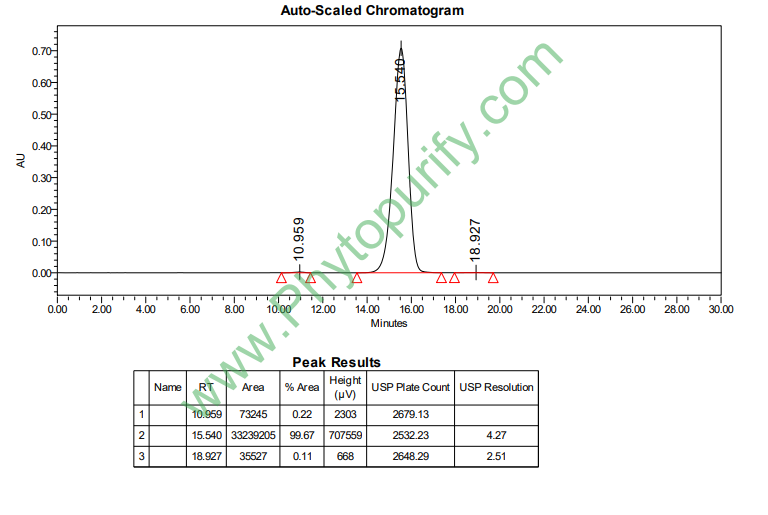
Purity: 95%~99%
Analysis Method: HPLC-DAD or/and HPLC-ELSD
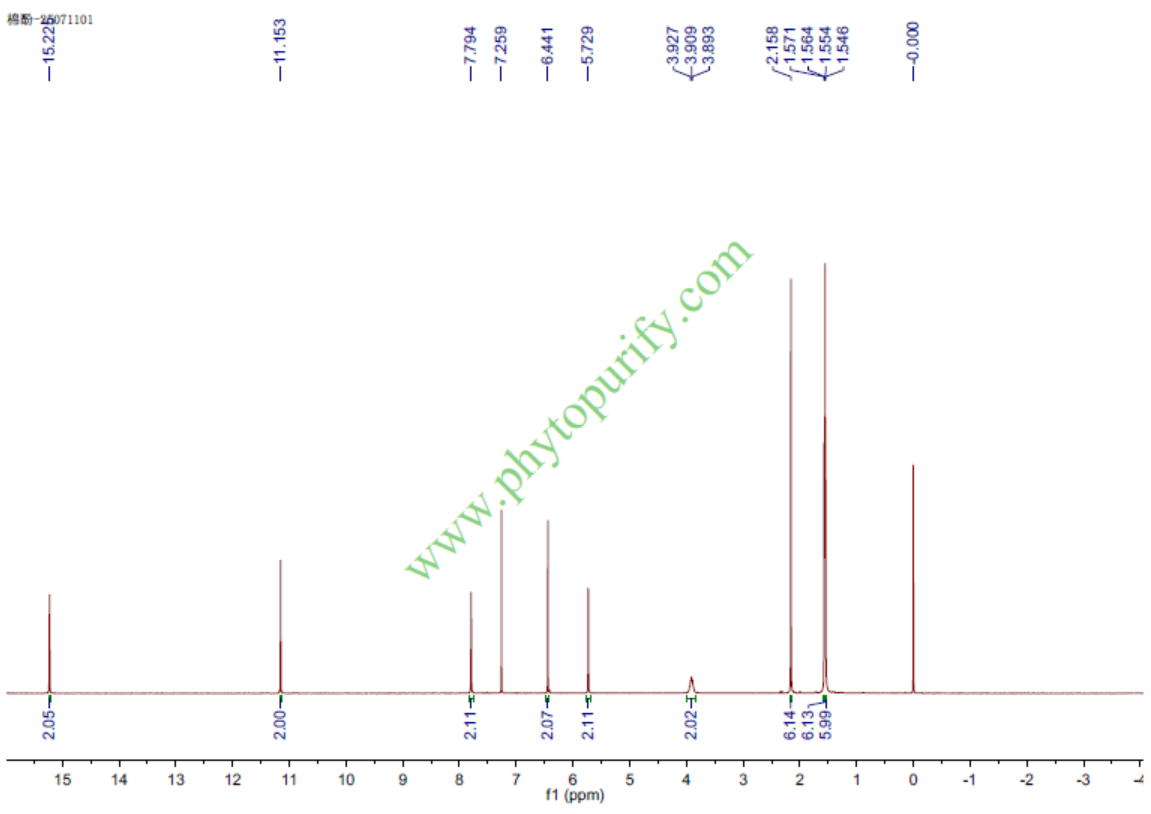
Identification Method: Mass, NMR
Packing: Brown vial or HDPE plastic bottle
Storage: Store in a well closed container, protected from air and light. Put into refrigerate or freeze for long term storage.
Whenever possible, you should prepare and use solutions on the same day. However, if you need to make up stock solutions in advance, we recommend that you store the solution as aliquots in tightly sealed vials at -20℃. Generally, these will be useable for up to two weeks.
The product could be supplied from milligrams to grams
Inquire for bulk scale.
Chengdu Biopurify Phytochemicals Ltd. is a leading company in the research, development, manufacture and marketing of High Quality Phytochemicals and Extracts(especially Active Ingredients from Traditional Chinese Medicine,TCM), Natural Active Pharmaceutical Ingredients worldwide.
The main services:
A. Supply active ingredients and reference standards of TCM, from mgs to kgs scale
B. Custom extraction and purification, target Herb Active Ingredients
C. Custom synthesis and semi-synthesis for Natural Active Ingredients
D. CR(contract research), CM(contract manufacture) and PD(process development) services from lab scale, pilot scale to commercial scale(GMP is also available)
E. TCM compounds library for drug screen,more than 3000 compounds available, many of them are rare and unique.
HPLC of Gossypol
HNMR of Gossypol
Storage conditions:Short-term storage at 2~8℃, long-term storage at -20 ~ -80℃
155.5200
4.7640
3.5469
.0072
2.6043
4.6787
Low
92.8372
3.6359
No
No
Yes
No
Yes
Yes
0.6
Yes
No
Yes
No
Gossypol, CAS number 303-45-7, is a polyphenolic compound found in the pigment glands of cotton plants in the Malvaceae family, such as upland cotton and sea island cotton. Since its isolation and identification in the late 19th century, its complex biological activity and significant toxicity have long attracted the attention of the scientific community. Early research mainly focused on its role as an anti nutritional factor and toxic substance in cottonseed meal, which can lead to growth inhibition, anemia, and even death in monogastric animals such as pigs and poultry. However, as research deepens, gossypol exhibits astonishing "double-edged sword" properties: beyond toxicity, its broad pharmacological activities, especially anti-tumor and male anti fertility effects, transform it from an agricultural toxin into a highly promising drug lead compound.
In the 1970s and 1980s, Chinese scientists were the first to conduct large-scale clinical studies on gossypol as a male oral contraceptive, confirming its reversible anti sperm effect and making it the most promising candidate in the field of non hormonal male contraception. Although it was not ultimately marketed due to potential long-term toxic side effects (such as hypokalemia) and individual differences, this study established the important position of gossypol in reproductive medicine. At the same time, oncologists have found that gossypol has a strong inhibitory effect on various cancer cell lines, and its mechanism of action is closely related to regulating cell apoptosis. Especially after its identity as a small molecule inhibitor of Bcl-2 family proteins was revealed, gossypol's research in the field of tumor targeted therapy has regained vitality.
This article aims to systematically review the chemical properties, plant sources, and pharmacological activities of gossypol, with a focus on its two core application directions - male contraception and anti-tumor, and to deeply analyze its mechanism of action and molecular targets. At the same time, based on its pharmacological parameters, evaluate the challenges and prospects faced in its development, in order to provide a comprehensive academic perspective for the future research and transformation of this unique natural product.
The chemical name of gossypol is 2,2 '- bis (8-formyl-1,6,7-trihydroxy-5-isopropyl-3-methylnaphthalene), with a molecular formula of C ∝₀ H ∝₀ O ₈ and a molecular weight of 518.5620. Its core structure consists of two naphthalene ring skeletons connected by single bonds, each skeleton carrying functional groups such as formyl, hydroxyl, isopropyl, and methyl. This symmetrical binaraldehyde structure is the chemical basis for its diverse biological activities.
The most significant chemical characteristic of gossypol is its chirality. Due to the hindered rotation of the single bond connecting two naphthalene rings, gossypol exists as a pair of optical isomers: (+) - gossypol and (-) - gossypol. Cottonseed seeds usually exist in racemic form in nature, but there are significant differences in biological activity between the two enantiomers. For example, the activity of (-) - gossypol in inhibiting spermatogenesis and tumor cell proliferation is usually stronger than that of (+) - gossypol, and certain toxic side effects may be associated with specific configurations. This stereoselectivity provides important ideas for the development of low toxicity and high efficiency gossypol derivatives.
From the perspective of physical and chemical properties, gossypol appears as a yellow crystalline powder, with a calculated LogP value of 4.7640, indicating its high lipophilicity. The theoretical polar surface area (TPSA) is 155.52 Å ², indicating the presence of numerous hydrogen bond donors and acceptors (multiple phenolic hydroxyl and aldehyde groups) in the molecule. Its water solubility is extremely low, about 0.0072 mg/mL, which severely limits its direct application and oral bioavailability in aqueous formulations. Gossypol is soluble in most organic solvents, such as acetone, chloroform, dimethyl sulfoxide, etc. Under alkaline conditions, its phenolic hydroxyl group can dissociate and its solubility increases. Its aldehyde group has high reactivity and is prone to Schiff base reactions with amino groups in biomolecules such as proteins and amino acids, which may be the molecular basis for some of its pharmacological effects and toxicity.
Gossypol mainly comes from the organs of cotton plants in the Malvaceae family, especially the pigment glands (also known as oil glands) of cottonseeds. These dark colored glands are reservoirs of gossypol and its related terpenoids (such as gossypol purple and gossypol green), accounting for approximately 0.4% -2.0% of the dry weight of cottonseed kernels. There are significant differences in gossypol content among different cotton varieties, planting environments, harvesting periods, and different parts of the seed kernel (such as cotyledons and hypocotyls). In addition to cottonseed, cotton also contains small amounts of gossypol in its nutritional organs such as roots, stems, and leaves.
Extracting gossypol from cottonseeds is the main way to obtain this compound. Traditional methods, based on their solubility, mainly include:
1. Organic solvent extraction method The most commonly used method. Usually, acetone, ethanol, methanol, isopropanol or mixed solvents are used for Soxhlet extraction or leaching of defatted cottonseed meal. Acetone is most commonly used due to its high selectivity towards gossypol and moderate boiling point. After concentration and cooling, crude crystals of gossypol can be precipitated from the crude extract.
2. Acid hydrolysis method Some gossypol in cottonseeds exists in a bound state (such as binding to proteins). Treating cottonseed meal with dilute acids such as oxalic acid and phosphoric acid can hydrolyze the binding bonds and release free gossypol, which can then be extracted with organic solvents.
3. Supercritical fluid extraction method The use of supercritical CO ₂ as an extractant has the advantages of high efficiency, no solvent residue, and the ability to maintain the natural configuration of gossypol, but the equipment cost is relatively high.
The crude extract needs to be further purified to obtain high-purity gossypol. Purification methods include recrystallization (commonly used solvents are ethyl acetate, petroleum ether/ethyl acetate mixed solvents), column chromatography (silica gel column, polyamide column, etc.), and preparative high-performance liquid chromatography. For the separation of optical isomers, chiral stationary phase chromatography technology is required. In recent years, there have been studies exploring the use of microbial transformation or plant cell culture techniques to produce gossypol, but large-scale production has not yet been achieved.
The pharmacological activity spectrum of gossypol is very broad, mainly covering anti fertility, anti-tumor, antiviral, antiparasitic, and anti-inflammatory aspects, among which the first two are the most extensively studied.
1. Male anti fertility activity
This is the earliest pharmacological effect of gossypol to be systematically studied. Numerous animal experiments and clinical studies have shown that oral administration of a certain dose of gossypol can effectively and reversibly inhibit spermatogenesis. Its functional characteristics are: firstly, it leads to a decrease in sperm motility and an increase in deformity rate, followed by a decrease in sperm count until azoospermia. After discontinuing the medication, the spermatogenic function of most subjects can gradually recover. Its target is not the hypothalamic pituitary gonadal axis, and it does not affect testosterone levels and libido. It belongs to the non hormonal contraceptive class, which gives it a unique advantage. However, side effects such as dose-dependent hypokalemia and irreversible azoospermia (about 10%) found in clinical applications have hindered its promotion as a routine contraceptive.
2. Antitumor activity
Gossypol has shown broad-spectrum anti proliferation and pro apoptosis activities on a variety of human tumor cell lines and animal transplanted tumor models, including breast cancer, prostate cancer, lung cancer, colon cancer, lymphoma, glioblastoma, etc. Its anti-tumor effect is concentration - and time-dependent. In addition to directly inducing tumor cell apoptosis, studies have also shown that gossypol can inhibit tumor angiogenesis, reverse tumor multidrug resistance, and have a synergistic effect with chemotherapy/radiotherapy.
3. Other activities
- antiviral It has a certain inhibitory effect on HIV, herpes virus, respiratory syncytial virus, etc., and the mechanism may be related to interfering with virus replication or entering cells.
- Anti parasitic It has a killing effect on malaria parasites, schistosomiasis, and nematodes.
- Anti inflammatory and immune regulation Can inhibit the release of inflammatory cytokines from macrophages and regulate immune responses.
The multiple pharmacological effects of gossypol stem from its interactions with various key proteins and signaling pathways within cells, and its mechanism of action is complex and not yet fully elucidated. At present, research focuses on the following core targets and pathways:
1. Male contraception related targets: CATSPER channel and SPATA16 protein
In recent years, breakthrough research has found that the rapid anti sperm effect of gossypol (which inactivates sperm within a few hours) is mainly due to its direct inhibition of the sperm specific calcium channel CATSPER. CATSPER is a complex composed of at least four core subunits (CATSPER1-4) located in the main segment of sperm flagella, which is crucial for sperm hyperactivation (a high motility state for obtaining fertilization ability) and acrosome response. Gossypol can directly bind and block CATSPER channels, inhibit calcium ion influx, and rapidly weaken sperm motility and fertilization ability. This discovery reveals the molecular basis for the rapid onset of gossypol and drives a strategic shift towards developing it as an "after the fact" or on-demand male contraceptive. In addition, studies suggest that gossypol may also affect the function of sperm related proteins such as SPATA16, but its specific mode of action remains to be clarified.
2. Core anti-tumor target: Bcl-2 family proteins
The core mechanism of gossypol's anti-tumor, especially its pro apoptotic effect, lies in its role as a small molecule inhibitor of pan Bcl-2 family proteins. The Bcl-2 family (including anti apoptotic proteins such as Bcl-2, Bcl xL, Mcl-1, and pro apoptotic proteins such as Bax, Bak) is a key switch that regulates mitochondrial pathway cell apoptosis. Gossypol binds to hydrophobic grooves of anti apoptotic proteins such as Bcl-2 and Bcl xL through its aldehyde group structure, competitively inhibiting its binding to pro apoptotic proteins (such as Bim and Bad), thereby releasing the blockade of anti apoptotic proteins on apoptosis. Specifically, the Ki values of gossypol binding to Bcl xL and Bcl-2 protein are 0.5-0.6 μ M and 0.2-0.3 mM, respectively, indicating a higher affinity for Bcl xL. This binding leads to the release and activation of pro apoptotic proteins, triggering mitochondrial outer membrane permeabilization, cytochrome c release, and subsequently activating the caspase cascade reaction, ultimately leading to cell apoptosis.
3. Other important targets and pathways
- energy metabolism Gossypol can inhibit various dehydrogenases (such as lactate dehydrogenase, malate dehydrogenase) and mitochondrial respiratory chain complex I, interfere with cellular energy metabolism, and lead to ATP depletion.
- signal transduction pathway Gossypol can affect multiple tumor related signaling pathways, such as inhibiting survival and proliferation pathways such as Akt/mTOR, STAT3, NF - κ B, while activating pro apoptotic or stress pathways such as p53 and JNK.
- Autophagy Gossypol can induce protective or lethal autophagy under specific conditions, and its role in tumor therapy is context dependent.
- Reactive oxygen species (ROS)Gossypol can induce an increase in intracellular ROS levels, causing oxidative stress damage and promoting apoptosis.
Based on the provided parameters and existing research, a comprehensive evaluation of the medicinal properties of gossypol is conducted
Pharmacokinetic properties Gossypol can be absorbed through the gastrointestinal tract after oral administration, but due to its low water solubility and high lipophilicity, absorption is slow and incomplete, with significant individual differences. In animals and humans, gossypol is widely distributed in various tissues, especially in high concentrations in fat, liver, and kidneys. Its low blood-brain barrier permeability may be related to its high molecular weight and TPSA, which may be beneficial for reducing central neurotoxicity. Gossypol undergoes extensive metabolism in the body, mainly through the reduction of aldehyde groups to alcohols, oxidation of methyl groups to carboxylic acids, and glucuronic acid binding. Its metabolites are diverse, and some are still active. Gossypol and its metabolites are mainly excreted through bile and feces, with a small amount excreted through urine. They have a long elimination half-life and are prone to accumulation in the body.
Advantages and challenges of pharmaceutical properties:
- Advantage:
1. Clear molecular targets The mechanism of action of CATSPER channels and Bcl-2 family proteins is relatively clear, which is beneficial for targeted drug design.
2. Unique non hormonal contraceptive mechanism Providing a new option for male contraception.
3. Broad spectrum anti-tumor potential Especially for drug-resistant tumors overexpressing Bcl-2/Bcl xL, it may be effective.
To improve drug efficacy, the current strategy mainly focuses on:Structural modification(Synthesize derivatives with higher water solubility and lower toxicity, such as reducing or derivatizing aldehyde groups, or synthesizing asymmetric structural analogues);Formulation innovation(Develop novel delivery systems such as nanoparticles, liposomes, cyclodextrin inclusion complexes, etc. to improve solubility and targeting); and Explore local administration(For example, local gel or sustained-release implant for contraceptive use to reduce systemic exposure and toxicity).
Although the direct development of gossypol as a prototype drug faces many obstacles, its unique dual target (CATSPER and Bcl-2 family) characteristics endow it with broad clinical application prospects. Future research will develop towards precision, low toxicity, and combination.
1. Male contraception field
- On demand contraception/post coital contraception: Based on the rapid inhibition of CATSPER channel by gossypol, local administration forms (such as vaginal gel, suppository or male external gel) are developed, which can be used before and after sexual life to temporarily inactivate sperm. This' event driven 'mode can avoid the systemic toxicity and irreversible risks of long-term oral administration, and is currently the most attractive direction for transformation.
- New oral contraceptive pills Through structural optimization, search for gossypol derivatives or analogues that retain anti CATSPER activity but eliminate major toxic side effects (especially hypokalemia and irreversible infertility).
- combination therapy Explore low-dose combinations of gossypol and other mechanism of action contraceptives to enhance efficacy, reduce individual doses and toxicity.
2. In the field of anti-tumor therapy
- Targeting Bcl-2 family resistant tumors Develop gossypol derivatives (such as AT-101, a gossypol acetate derivative) as monotherapy or in combination with standard chemotherapy, targeted drugs, and immunotherapy to overcome drug resistance and synergistically enhance the expression of Bcl-2/Bcl xL subtypes in hematological malignancies (such as chronic lymphocytic leukemia) and solid tumors. Multiple related clinical trials are currently underway.
- Precise treatment based on biomarkers Future applications require screening of patient populations sensitive to gossypol and its derivatives, such as those with high tumor expression of Bcl-2/Bcl xL or specific genetic backgrounds, to achieve personalized treatment.
- Local treatment For superficial tumors or surgical residual lesions, local injection or implantation of gossypol sustained-release formulations can be explored.
3. Other potential applications
Under the premise of clear safety dosage, the antiviral and antiparasitic activities of gossypol may also find application in specific fields, such as local antiviral preparations.
prospect The future of gossypol lies in "highlighting strengths and avoiding weaknesses". The key to successful research and development is to separate its core pharmacological activities (CATSPER inhibition and Bcl-2 inhibition) from toxic structures through modern medicinal chemistry, structural biology, and formulation methods. At the same time, further elucidating the precise molecular mechanisms underlying its specific toxic side effects such as hypokalemia will provide a basis for safety warnings and avoidance strategies. As a bridging molecule between traditional plant chemistry and modern precision medicine, in-depth research on gossypol will continue to provide valuable insights for innovative drug development.
Gossypol, a natural naphthalene aldehyde compound derived from cotton, has left a significant mark in the history of natural product pharmacology due to its unique chemical structure and complex biological activities. From the initial agricultural toxins, to the pioneering exploration of male contraception, and to the emerging candidate for targeted cancer therapy, the research process fully reflects the continuous deepening of understanding of natural molecules and innovative transformation of thinking. Although its prototype drug has encountered setbacks on the path of drug development due to poor water solubility, narrow therapeutic window, and specific toxicity, this has precisely stimulated deeper mechanism research and more sophisticated drug design.
The current research has pushed its two core applications - achieving rapid male contraception by inhibiting CATSPER channels, and inducing tumor cell apoptosis by antagonizing Bcl-2 family proteins - to new heights of molecular targeting. These breakthroughs not only bring hope for the development of new non hormonal male contraceptive methods and overcoming tumor resistance strategies, but also demonstrate the eternal value of discovering and optimizing lead compounds from traditional medicinal plant resources. In the future, through interdisciplinary collaboration, rational structural modification of gossypol, development of innovative delivery systems, and exploration of precise clinical applications based on biomarkers, it is expected to ultimately overcome its drug bottleneck and forge this "double-edged sword" molecule into a safe and effective modern drug, serving the major needs of human reproductive health and tumor treatment. The research story of gossypol is far from over, and it will continue to serve as a classic case of natural product transformation research, inspiring the discovery and development of more innovative drugs.
