
| Catalog No | Package | Original Price | Price | Inventory | Quantity | Operating |
|---|---|---|---|---|---|---|
| BP0116-20mg | 20mg | $35.00 | Sign in |
|


Synonym name: Gossypol acetic acid
Catalogue No.: BP0116
Cas No.: 12542-36-8
Formula: C32H34O10
Mol Weight: 578.614
Botanical Source:
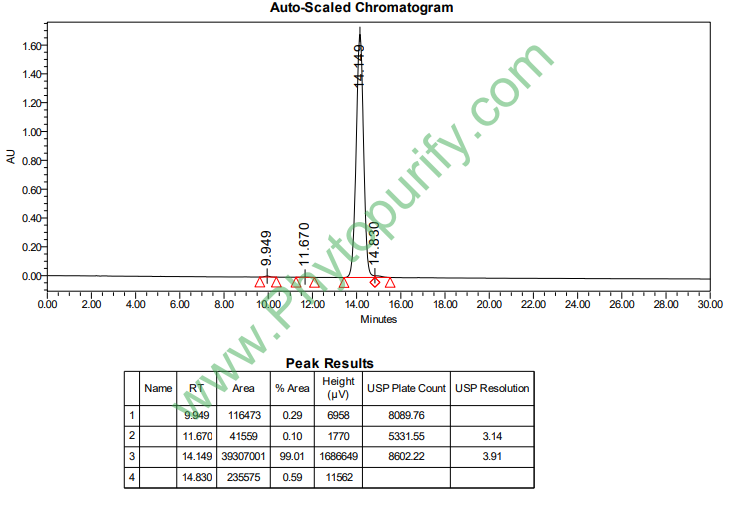
Purity: 95%~99%
Analysis Method: HPLC-DAD or/and HPLC-ELSD
Identification Method: Mass, NMR
Packing: Brown vial or HDPE plastic bottle
Can be supplied from milligrams to grams.
For Reference Standard and R&D, Not for Human Use Directly.
Inquire for bulk scale.
HPLC of Acetate gossypol
Storage conditions:Short-term storage at 2~8℃, long-term storage at -20 ~ -80℃
155.5200
4.7640
3.5469
.0072
2.6043
4.6787
Low
92.8372
3.6999
No
No
Yes
No
Yes
Yes
0.6
Yes
No
Yes
No
Acetic acid gossypol, as an acetylated derivative of natural polyphenolic compound gossypol, has continuously attracted widespread attention in the fields of pharmacology and medicinal chemistry since the biological activity of its precursor gossypol was revealed. Gossypol was initially known for its presence and potential anti fertility effects in cotton seeds, while acetic acid gossypol (CAS number: 12542-36-8) exhibits broader disease treatment potential through structural modification while retaining and enhancing its specific biological activity. Its core pharmacological feature lies in its ability to effectively inhibit the anti apoptotic proteins Bcl-2 and Bcl xL, thereby exhibiting significant induction of apoptosis and anti proliferative activity in various hematological malignancies, such as multiple myeloma and leukemia models. This characteristic makes it an important lead compound targeting the apoptotic pathway of tumor cells.
In recent years, with the deepening of research on the molecular mechanisms of bone metabolism balance, the research scope of gossypol acetate has expanded from oncology to the field of metabolic bone diseases, especially osteoporosis. Osteoporosis is characterized by reduced bone mass, destruction of bone microstructure, and increased risk of fractures. Its pathological process involves an imbalance between osteoblast mediated bone formation and osteoclast mediated bone resorption. Research has found that gossypol acetate not only regulates classic apoptosis related targets (such as the Bcl-2 family), but may also intervene in osteoblast differentiation and function by affecting key factors closely related to bone metabolism, such as Runt related transcription factor 2 (RUNX2), Osterix (SP7), type I collagen alpha 1 chain (COL1A1), and osteoprotegerin (TNFRSF11B/OPG). In addition, its potential interactions with metabolic targets such as aldose reductase (AKR1B1) and lactate dehydrogenase A (LDHA) provide a new perspective for understanding its role in bone cell energy metabolism and oxidative stress.
This article aims to systematically review the chemical properties, plant sources, and pharmacological activities of gossypol acetate, with a focus on its molecular mechanisms and target networks in the dual fields of anti-tumor (especially hematological) and anti osteoporosis. At the same time, based on its pharmacological parameters and pharmacokinetic characteristics, evaluate the challenges and future development directions faced by its clinical translation, in order to provide comprehensive scientific references for the deep development and rational application of this natural product derivative.
The chemical essence of gossypol acetate is the acetate of gossypol. Its parent compound gossypol is a highly symmetrical polyphenolic aldehyde compound, with the chemical name 2,2 '- bis (8-formyl-1,6,7-trihydroxy-5-isopropyl-3-methylnaphthalene). Acetic acid gossypol is formed by introducing an acetyl group (- COCH3) onto the phenolic hydroxyl group of gossypol molecules, which significantly alters its physicochemical properties and biological activity.
Its molecular formula is C ∝₂ H ∝₀ O ₈, and its molecular weight is 518.5620. From a three-dimensional structure perspective, the acetic acid gossypol molecule has a relatively flat and rigid structure, with two naphthalene rings connected by a single bond, allowing for a certain degree of rotation. However, its large conjugated system and multiple substituents make its spatial conformation relatively fixed. After acetylation, its lipophilicity was significantly enhanced, and the calculated lipid water partition coefficient (LogP) was 4.7640, indicating that the compound has high lipophilicity. In line with this, its water solubility is extremely low, only 0.0072 mg/mL, which poses the primary challenge for its formulation development. The topological polar surface area (TPSA) of the molecule is 155.52 Å ², reflecting the polarity characteristics brought by multiple ester bonds and residual hydroxyl groups in the molecule.
These physicochemical properties directly affect its biopharmaceutical behavior. High LogP and low water solubility mean that acetic acid gossypol may face difficulties in gastrointestinal absorption and is easily distributed in adipose tissue. Its large molecular weight and TPSA also limit the efficiency of its transmembrane passive diffusion. Preliminary pharmacokinetic predictions indicate that its ability to penetrate the blood-brain barrier is low, which is unfavorable for treating central nervous system diseases, but may help reduce the associated risk of neurotoxicity. In the preliminary safety screening, the data showed no significant hERG potassium channel inhibitory activity (hERG inhibition: No), indicating a low potential risk of arrhythmia. However, the Ames test result was 0.6, although not explicitly positive, indicating the need for further evaluation of its genetic toxicity. Overall, acetic acid gossypol is a typical natural product derivative that faces challenges in drug like properties. Its advantage lies in its strong target binding ability, while its disadvantage lies in poor solubility and permeability.
The direct plant source of acetic acid gossypol is not widely available, it is mainly obtained through chemical semi synthesis of its precursor, gossypol. Gossypol is a yellow polyphenolic pigment widely present in the cotton seeds, root bark, and other tissues of cotton plants in the Malvaceae family, such as upland cotton and sea island cotton. In cotton plants, gossypol acts as a natural plant protection agent, helping to resist pests and diseases.
The extraction of gossypol is the initial step in obtaining acetic acid gossypol. Traditional extraction methods often use organic solvent extraction. The common process is to use dehulled cottonseed kernels or cotton root bark as raw materials, and use polar solvents such as acetone, ethanol, methanol, or mixed solvents (such as acetone water, petroleum ether methanol) for repeated leaching or Soxhlet extraction. After filtration and concentration, the extraction solution can be preliminarily purified using the characteristic of gossypol forming complex precipitates with metal ions (such as iron and aluminum), or separated and purified using modern chromatographic techniques such as silica gel column chromatography and high performance liquid chromatography (HPLC) to obtain high-purity gossypol.
After obtaining gossypol, acetic acid gossypol can be synthesized through acetylation reaction. The typical synthesis method is to react gossypol with acetylation reagents (such as acetic anhydride or acetyl chloride) in an inert solvent (such as dichloromethane, tetrahydrofuran) in the presence of alkaline catalysts (such as pyridine, triethylamine). The reaction conditions need to be gently controlled to selectively esterify phenolic hydroxyl groups and avoid side reactions with other functional groups such as aldehyde groups. After the reaction is complete, pure acetic acid gossypol can be obtained by quenching, extraction, washing, crystallization or column chromatography separation. Modern process optimization is committed to improving reaction yield, selectivity, and product purity, and exploring greener and more efficient catalytic systems.
It is worth noting that cottonseed, as the main source of gossypol, is affected by factors such as cotton variety, growth environment, and harvest season in terms of its content. Therefore, establishing stable and sustainable supply channels for gossypol raw materials, as well as optimizing the synthesis pathway from gossypol to acetic acid gossypol, are the foundation for ensuring subsequent pharmacological research and development.
The pharmacological activity research of acetic acid gossypol mainly focuses on two fields: one is its strong ability to promote apoptosis as the core anti-tumor activity; The second is the anti osteoporosis activity that has gradually received attention in recent years and is related to its multi-target characteristics.
1. Antitumor activity:
The most prominent activity of acetic acid gossypol is reflected in its inhibitory effect on hematological malignancies. A large number of in vitro studies have shown that acetic acid gossypol has significant anti proliferative and apoptosis inducing effects on multiple myeloma cell lines (such as RPMI 8226, U266) and primary cultured multiple myeloma cells, and its efficacy is stronger than unmodified gossypol. Its effect exhibits concentration and time dependence. In vivo studies have shown that gossypol acetate can effectively inhibit tumor growth and prolong the survival of mouse models of multiple myeloma xenografts, and exhibits synergistic effects with certain conventional chemotherapy drugs such as dexamethasone and bortezomib. In addition, research has confirmed that it also has apoptosis inducing activity on primary cultured acute myeloid leukemia and chronic lymphocytic leukemia cells, indicating its broad spectrum of anti-tumor effects. Its anti-tumor mechanism is mainly attributed to directly targeting and inhibiting Bcl-2 family anti apoptotic proteins (see next chapter for details), thereby lifting its blockade on cancer cell apoptosis.
2. Anti osteoporosis activity:
The treatment of osteoporosis requires promoting bone formation and/or inhibiting bone resorption. Preliminary pharmacological studies have revealed the potential of acetic acid gossypol in this field. At the cellular level, studies have found that gossypol acetate can promote the proliferation, differentiation, and mineralization of pre osteoblasts (such as MC3T3-E1) within a certain concentration range, and upregulate the expression of key osteogenic markers such as alkaline phosphatase, osteocalcin, and type I collagen (COL1A1). More significantly, in the osteoclastogenesis model, gossypol acetate exhibited the ability to inhibit osteoclast differentiation and bone resorption induced by nuclear factor kappa B receptor activator ligand. In animal models, after intervention with gossypol acetate, the bone density, number and quality of bone trabeculae, and biomechanical strength of osteoporotic rats induced by ovariectomy were improved. These effects suggest that acetic acid gossypol may restore bone metabolism balance through bidirectional regulation - enhancing osteogenesis and inhibiting osteoclastogenesis. Its function involves regulating osteogenic transcription factors such as RUNX2 and SP7, as well as signaling pathways such as OPG/RANKL system.
3. Other potential activities:
Based on its potential interaction with aldose reductase (AKR1B1) and lactate dehydrogenase A (LDHA), gossypol acetate may also have research value in the field of complications of diabetes (such as peripheral neuropathy) and tumor metabolism reprogramming. It remains to be explored whether the known antiviral and antiparasitic activities of its precursor gossypol can be preserved or altered on acetic acid gossypol.
The multiple pharmacological activities of acetic acid gossypol stem from its interactions with multiple key protein targets within cells, forming a complex molecular network of action.
1. Core target: Bcl-2 family anti apoptotic proteins
This is the cornerstone of the anti-tumor effect of acetic acid gossypol, especially its anti-tumor effect on blood. Bcl-2 and Bcl xL are important cell survival factors that inhibit cell apoptosis by suppressing the opening of the mitochondrial outer membrane permeability transition pore (MOMP) and preventing the release of apoptotic factors such as cytochrome C. Acetate gossypol, as a class of "BH3 mimetics," can bind with high affinity to hydrophobic grooves (i.e. BH3 binding domains) on the surfaces of Bcl-2 and Bcl xL proteins, competitively inhibiting their binding to pro apoptotic proteins such as Bim, Bid, Bad. This combination directly neutralizes the anti apoptotic function of Bcl-2/Bcl xL, releasing bound pro apoptotic proteins, which in turn activate downstream caspase cascade reactions, ultimately leading to programmed cell death of tumor cells. Its sensitivity to multiple myeloma cells is partly due to the high expression of Bcl-2 or Bcl xL in these cells, which depend on these proteins for survival.
2. Osteoporosis related target network:
In the regulation of bone metabolism, the mechanism of action of acetic acid gossypol is more diverse:
- Regulating osteogenic differentiation and function Acetic acid gossypol may activate the main transcription factor RUNX2 and its downstream target gene SP7 (Osterix) for osteoblast differentiation through direct or indirect means. The activation of RUNX2 and SP7 can cascade upregulate the expression of a series of osteogenic related genes, including COL1A1 (the main component of bone matrix), osteocalcin, and osteopontin, driving the differentiation of mesenchymal stem cells into osteoblasts and the mineralization function of mature osteoblasts.
- Affects bone remodeling balance Osteoprotegerin (OPG, encoded by the TNFRSF11B gene) is a decoy receptor of RANKL that can inhibit osteoclastogenesis. Acetate gossypol may upregulate the expression of OPG and downregulate RANKL, thereby inhibiting the differentiation and maturation of osteoclast precursors and weakening bone resorption. In addition, its direct pro apoptotic effect on osteoclasts themselves may also be achieved by acting on MCL1 (another member of the Bcl-2 family), which is highly expressed in osteoclasts.
- Intervention in metabolism and oxidative stress pathways The target AKR1B1 (aldose reductase) is a key enzyme in the polyol pathway, and its over activation is related to oxidative stress and the formation of advanced glycosylation end products in diabetes induced osteoporosis. Inhibition of AKR1B1 may improve the metabolic microenvironment of bone cells. LDHA (lactate dehydrogenase A) is involved in glycolysis and has vigorous energy metabolism in active osteoblasts and osteoclasts. Intervention with LDHA may affect the energy supply and functional status of bone cells.
- Potential interaction with estrogen receptor 1 (ESR1)Estrogen deficiency is the main cause of postmenopausal osteoporosis. Gossypol and its derivatives have been reported to have weak estrogenic or anti estrogenic activity (depending on the environment and cell type). It is worth exploring whether acetic acid gossypol affects bone metabolism by regulating the ESR1 signaling pathway.
In summary, acetic acid gossypol exerts its biological effects through a multi-target and multi pathway mode of action: in tumor cells, it mainly acts as an "apoptosis initiator"; In the bone system, it plays the role of a "metabolic balance regulator", and its specific dominant pathway may vary depending on cell type, pathological state, and drug concentration.
Based on the aforementioned physicochemical properties, the development of the pharmacological properties of acetic acid gossypol faces significant challenges, and its pharmacokinetic characteristics urgently need to be further studied and optimized.
Drug Evaluation:
- Solubility and permeability The extremely low water solubility (0.0072 mg/mL) and high LogP (4.76) are the main limiting factors for its oral bioavailability. Belonging to the Biopharmaceutical Classification System (BCS) Class II or IV compounds (low solubility, low permeability/high permeability). It is necessary to improve its dissolution and absorption through formulation methods.
- Metabolic stability As an ester compound, acetic acid gossypol is easily hydrolyzed by esterases in the body and converted back into gossypol. This prodrug characteristic may affect its duration of efficacy, tissue distribution, and toxicity profile. It is necessary to evaluate its metabolic rate in plasma and tissues of different species.
- Security Warning The Ames test data (0.6) suggests the need for more comprehensive genetic toxicity testing (such as micronucleus test, chromosome aberration test). Although the absence of hERG inhibition suggests a lower risk of cardiac toxicity, the known potential toxicity of its precursor gossypol (such as hypokalemia, gastrointestinal irritation, and fertility suppression) still needs to be rigorously evaluated on acetic acid gossypol, especially the safety of long-term use.
- Drug interactions Due to its potential metabolism through the cytochrome P450 enzyme system and high binding to other proteins, there is a potential risk of interaction with other drugs.
Pharmacodynamics (based on precursor gossypol and limited data inference):
- absorb The oral absorption of acetic acid gossypol without formulation optimization is expected to be poor and irregular. High lipid solubility suggests that its absorption may depend on bile secretion and the formation of micelles.
- distribution The high molecular weight and plasma protein binding rate (presumably) may limit its tissue distribution volume. Low blood-brain barrier permeability limits central function, but may be beneficial for reducing neurotoxicity. Its lipophilicity may lead to accumulation in tissues such as fat and liver.
- Metabolism The main metabolic pathway is speculated to be the hydrolysis of ester bonds to produce gossypol, which further undergoes phase II metabolism such as glucuronidation, sulfation, and oxidation. The introduction of acetyl groups may alter the metabolic pattern of gossypol, which requires specific research.
- excretion Metabolites are mainly excreted through bile and feces, with a small portion excreted through the kidneys.
Prospects for formulation strategy:
To improve its pharmacological properties, advanced drug delivery technologies need to be adopted: 1)Solid dispersion Disperse acetic acid gossypol in an amorphous form onto hydrophilic carriers such as PVP and poloxamer, significantly increasing the dissolution rate. 2)Nanocrystal technology Preparation of nanosuspensions through medium grinding or high-pressure homogenization to increase surface area, improve dissolution and absorption. 3)Lipid preparations Such as self microemulsion drug delivery systems and liposomes, utilizing their lipophilicity to promote lymphatic absorption and improve bioavailability. 4)Further optimization of prodrug strategy Explore more stable or targeted derivatives to optimize their pharmacokinetic behavior.
The unique multi-target mechanism of action of acetic acid gossypol has brought differentiated clinical application prospects in the treatment of tumors and bone diseases, but its transformation still needs to overcome numerous obstacles.
1. In the field of tumor treatment:
The most promising application direction of acetic acid gossypol is as Targeted therapy drugs for recurrent/refractory multiple myeloma and certain leukemia Especially for tumor subtypes that are resistant to proteasome inhibitors or immunomodulators and highly express Bcl-2/Bcl xL, gossypol acetate can be an important complementary or alternative treatment option. Its clinical development strategy may include:
- combination therapy Combined with existing standard therapies such as bortezomib, lenalidomide, dexamethasone, to overcome drug resistance, produce synergistic effects, and reduce individual doses and toxicity.
- Patient stratification guided by biomarkers By detecting the expression levels and proportions of Bcl-2, Bcl xL, and MCL1 in tumor cells, the patient population most likely to benefit from acetic acid gossypol treatment is screened to achieve precision medicine.
- Indications expansion To explore its efficacy in other solid tumors (such as some breast cancer and small cell lung cancer) that rely on Bcl-2 family proteins to survive.
2. In the field of osteoporosis treatment:
As a compound with potential dual effects of promoting bone formation and anti bone resorption, gossypol acetate provides a new approach for the development of novel anti osteoporosis drugs. Its prospects lie in:
- For patients with severe bone loss May be used to treat patients with severe osteoporosis or poor response to existing medications such as bisphosphonates and teriparatide.
- Combination therapy components Combined with anti resorptive drugs, it may rapidly increase bone density and improve bone quality.
- Metabolism related osteoporosis In view of its effect on AKR1B1 and other targets, it may have unique advantages in the treatment of diabetes induced osteoporosis.
3. Main challenges and future research directions:
- Security optimization This is the biggest bottleneck in clinical translation. It is necessary to clarify its treatment window through systematic preclinical toxicology studies and explore the use of Structural modification Reduce its off target toxicity and reproductive toxicity while retaining or enhancing its activity towards the core target. Developing targeted formulations for organizations, such as bone targeted delivery systems, is also an effective strategy for reducing systemic toxicity.
- Pharmacokinetic optimization As mentioned earlier, it is necessary to use modern pharmaceutical methods to solve the problems of poor absorption and fast metabolism in order to obtain stable and predictable in vivo exposure levels.
- Deep exploration of mechanisms It is necessary to clarify its complex network of action in bone cells, identify its dominant signaling pathways in different pathological stages and cell types, in order to guide the optimal medication regimen.
- Clinical study design Initial clinical trials should be carefully designed, starting from low doses and closely monitoring liver and kidney function, blood potassium levels, and potential reproductive system effects. In tumor trials, attention should be paid to the risk of tumor lysis syndrome.
Acetate gossypol, a structurally optimized derivative derived from the natural product gossypol, has established an important position in the field of anti-tumor pharmacology due to its nature as a potent inhibitor of Bcl-2/Bcl xL. What is even more remarkable is that its multi-target characteristics are like a key, unexpectedly opening up a new door for intervening in bone metabolism balance and treating osteoporosis. From inducing apoptosis of blood tumor cells to bidirectional regulation of osteogenic and osteoclast activity, gossypol acetate vividly embodies the modern drug development concept of "old drugs for new use" and "one drug for multiple targets".
However, the road from excellent in vitro activity to successful clinical drugs is still long. Its inherent poor water solubility, metabolic instability, and potential safety concerns are the real challenges that lie ahead. Future research must adopt a multidisciplinary collaborative strategy: pharmaceutical chemists need to focus on designing safer and more metabolically stable analogues; Pharmacists need to innovate delivery systems to overcome bioavailability barriers; Pharmacologists and clinical doctors need to work together to explore its precise mechanism of action and biomarkers, and design rigorous clinical trials. Only in this way can we fully unleash the enormous potential of acetic acid gossypol as a multi-target therapeutic agent, which may ultimately benefit cancer patients and osteoporosis patients, achieving successful transformation from the laboratory to the bedside.
