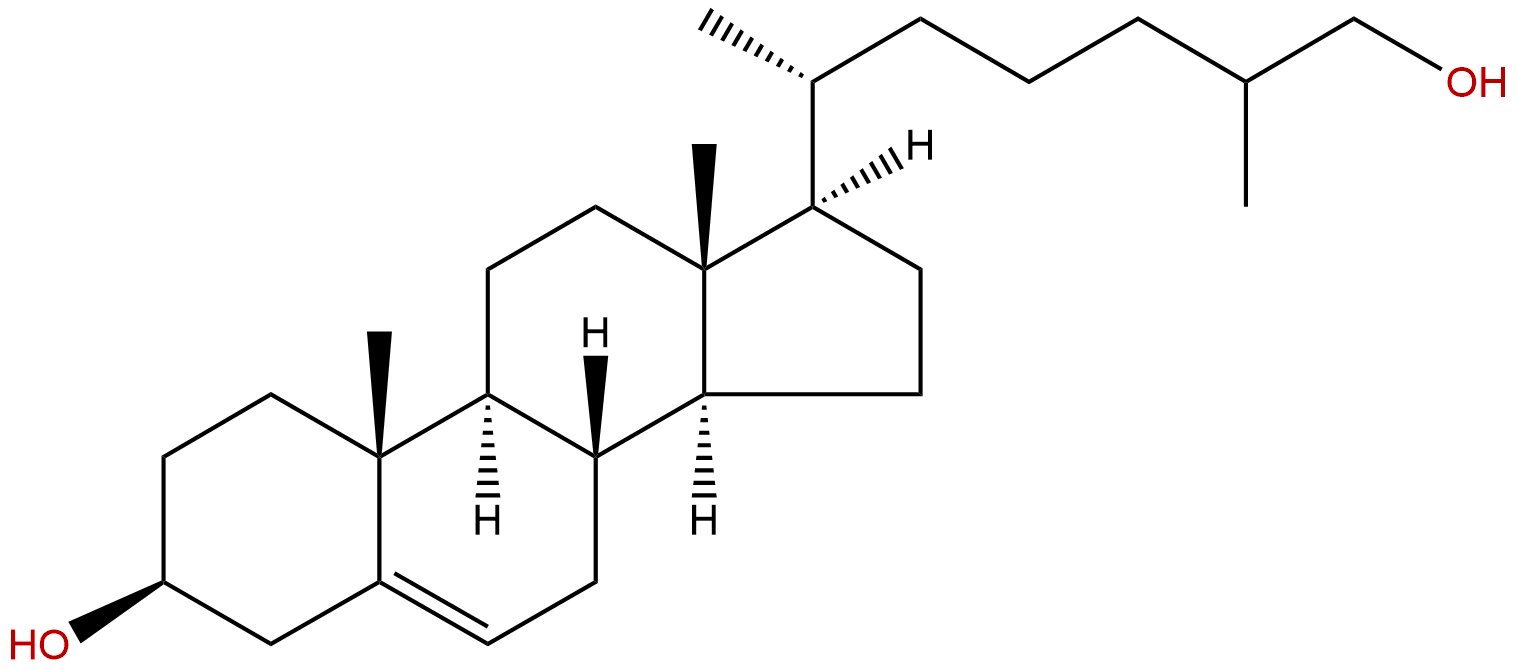


Product name: 27-Hydroxycholesterol
Synonym name:
Catalogue No.: BP3017
Cas No.: 20380-11-4
Formula: C27H46O2
Mol Weight: 402.663
Botanical Source:
Physical Description: Powder
Type of Compound: Steroids
Purity: 95%~99%
Analysis Method: HPLC-DAD or/and HPLC-ELSD
Identification Method: Mass, NMR
Packing: Brown vial or HDPE plastic bottle
The product could be supplied from milligrams to grams. Inquire for bulk scale.
We provide solution to improve the water-solubility of compounds, thereby facilitating the variety of activity tests and clinic uses.
For Reference Standard and R&D, Not for Human Use Directly.
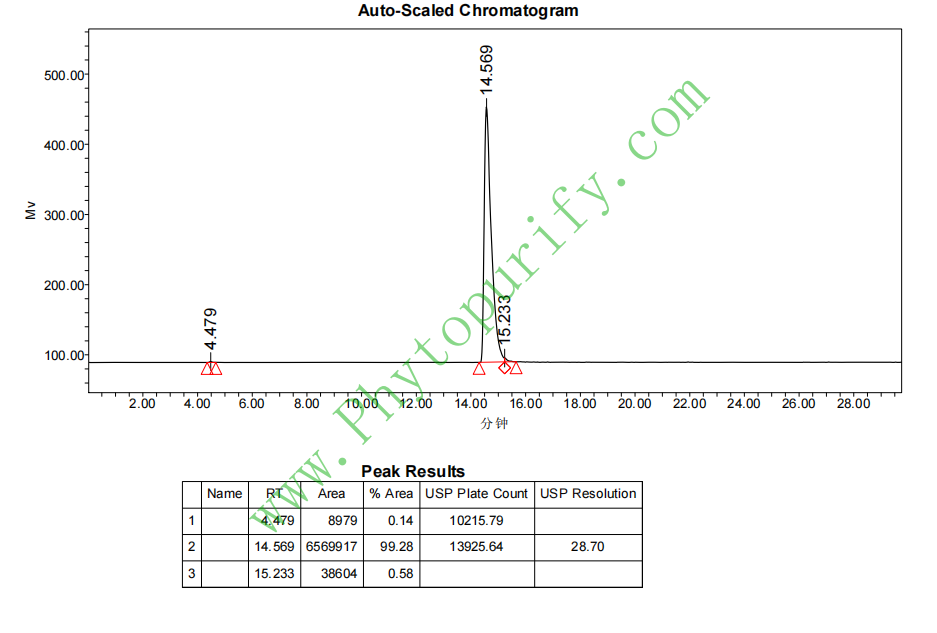
HPLC of 27-Hydroxycholesterol
Storage conditions:Short-term storage at 2~8℃, long-term storage at -20 ~ -80℃
40.4600
6.8155
6.8149
.0002
6.6096
2.2513
High
92.2507
4.3536
No
No
No
No
No
No
0.0
No
No
No
No
27 hydroxycholesterol (27-OHC), CAS number 20380-11-4, is one of the main oxysterols produced by the catalytic oxidation of cholesterol by cytochrome P450 27A1 (CYP27A1) in the body. For a long time, cholesterol metabolites have attracted much attention due to their critical roles in cell signaling and metabolic regulation. 27-OHC, as one of them, has evolved from being initially considered a simple cholesterol metabolism intermediate to a signaling molecule with complex biological functions. Its core feature lies in its dual receptor regulatory activity: it is both a selective estrogen receptor (ER) modulator and an endogenous agonist of the liver X receptor (LXR). This unique receptor cross talk mechanism plays a crucial role in physiological and pathological processes such as lipid metabolism, inflammatory response, cell proliferation, and apoptosis. In recent years, a large number of studies have focused on the role of 27-OHC in atherosclerosis, neurodegenerative diseases, cancer and other diseases, revealing its important value as a disease biomarker and potential therapeutic target. This article aims to systematically review the chemical properties, sources, pharmacological activities, molecular mechanisms of action, drug properties, and clinical application prospects of 27-OHC, in order to provide reference for further research in this field.
The chemical name of 27-OHC is (3 β, 25R) - cholestan-5-ene-3,27-diol, with a molecular formula of C27H46O2 and a molecular weight of 402.6630. Its structure is based on the classical steroid nucleus, which adds a hydroxyl group (- OH) to the 27th carbon atom at the end of the side chain on the basis of cholesterol (choleste-5-en-3 β - ol) structure. This additional hydroxyl group is the key chemical basis for its unique biological activity.
From the analysis of physical and chemical properties, 27-OHC exhibits typical hydrophobic oxygen sterol characteristics. Its lipid water partition coefficient (LogP) is 6.8155, indicating its high lipophilicity. Consistent with this, its water solubility is extremely low, about 0.0002 mg/mL, which determines that it mainly exists and is transported in vivo in conjunction with lipoproteins (such as low-density lipoprotein LDL) or cell membranes. Its topological polar surface area (TPSA) is 40.4600 Å ², which is relatively small, further confirming its hydrophobic properties. It is worth noting that 27-OHC has a high blood-brain barrier permeability, which is closely related to its strong lipophilicity and explains its biological role in the central nervous system. In terms of preliminary safety evaluation, existing data shows that it has no significant hERG potassium channel inhibitory activity (low risk of arrhythmia), and the Ames test result is negative (0.0), indicating that it has no direct genetic toxicity. These basic pharmacological parameters provide important basis for its subsequent research.
Strictly speaking, 27 hydroxycholesterol is mainly an endogenous substance produced by the metabolism of cholesterol in animals and humans through CYP27A1 enzyme. However, in nature, some plants and marine organisms have also been found to contain trace amounts of 27-OHC or similar structured sterols, which may be the result of plant sterols undergoing similar oxidation in specific environments, but not their main source. Therefore, currently the 27-OHC used for research or standard products is mainly obtained through the following channels:
The pharmacological activity of 27-OHC is extensive and complex, with tissue-specific and concentration dependent effects, mainly achieved by regulating estrogen receptors and liver X receptors.
1. Effect on cardiovascular system - atherogenic activity
This is the most in-depth field of 27-OHC research. Although as an LXR agonist, it can theoretically promote the expression of cholesterol reverse transporter ABCA1, which is conducive to cholesterol efflux, a large number of in vivo and in vitro experiments show that 27-OHC at physiological and pathological concentrations has a significant atherosclerosis promoting effect on the whole:
* Promote the formation of foam cells: 27-OHC can be absorbed by vascular endothelial cells and macrophages in large quantities. It can promote the uptake of oxidized low-density lipoprotein (ox LDL) and accelerate the transformation of macrophages to foam cells by up regulating scavenger receptor LOX-1 and other ways.
* Inducing endothelial dysfunction 27-OHC inhibits the activity of endothelial nitric oxide synthase (eNOS) through the ER α non genomic signaling pathway, reduces the production of nitric oxide (NO), and impairs vasodilation function. Meanwhile, it can upregulate the expression of endothelial cell adhesion molecules, promoting monocyte adhesion and migration.
* Stimulate inflammatory response In macrophages, 27-OHC can induce the expression of various inflammatory factors (such as IL-6, TNF - α, MCP-1), exacerbating the inflammatory state of the vascular wall.
* Promote vascular calcification: Research shows that 27-OHC can promote vascular smooth muscle cells to differentiate into osteoblast like cells and participate in the calcification process of atherosclerotic plaque by regulating osteogenic related genes such as RUNX2.
2. Effects on the nervous system - neurotoxicity
27-OHC can freely pass through the blood-brain barrier, and elevated levels in the brain are associated with neurodegenerative diseases such as Alzheimer's disease (AD). The neurotoxic mechanism includes promoting the production of β - amyloid protein (A β), enhancing tau protein phosphorylation, inducing neuroinflammation, leading to mitochondrial dysfunction and neuronal apoptosis. It is considered a key 'bridge molecule' connecting peripheral hypercholesterolemia with central nervous system disorders.
3. Effects on bone metabolism
27-OHC has a bidirectional regulatory effect on bones. On the one hand, as an ER antagonist, it may counteract the bone protective effect of estrogen, promote osteoclastogenesis, and lead to increased bone resorption. On the other hand, through LXR dependent pathways, it may also affect osteoblast differentiation. Its role in postmenopausal osteoporosis is being extensively explored.
4. Effect on tumors
The oncogenic or anticancer effects of 27-OHC vary depending on the type of cancer and microenvironment. In breast cancer, as part of the agonist/antagonist of ER, it may affect the effect of endocrine therapy such as tamoxifen, and may promote cell proliferation by activating LXR or affecting cyclin D1. In colorectal cancer, prostate cancer, and other cancers, studies have also reported that it affects tumor cell survival by regulating apoptosis related proteins such as BCL2 and MCL1. However, in certain contexts, activation of LXR may also induce apoptosis of tumor cells, demonstrating anti-cancer potential.
The biological effects of 27-OHC are the result of a complex network formed by its interactions with multiple molecular targets.
1. Core nuclear receptor targets
* Liver X receptor (LXR, mainly LXR β)27-OHC is an endogenous high affinity agonist of LXR. After activation, LXR forms a heterodimer with retinol X receptor (RXR) and binds to the LXR response element (LXRE) of the target gene promoter, regulating gene transcription. Its key downstream targets include:
* ABCA1/ABCG1: Promote cholesterol to flow out from peripheral cells such as macrophages to apoA-I (apoA-I), and start cholesterol reverse transport, which is its potential anti atherosclerosis arm.
* SREBP-1c Promote fatty acid synthesis, which may be related to lipid metabolism disorders.
* Estrogen receptor (ER, mainly ER α)27-OHC is a selective estrogen receptor modulator (SERM). It exhibits excitatory or antagonistic activity in different tissues. For example, in the cardiovascular system, it is often used as an ER α antagonist to inhibit the activation of eNOS; In bone tissue, it is also possible to counteract the protective effect of estrogen. The mechanism of organizational selectivity is not fully understood and may be related to the recruitment of co regulatory factors.
2. Other key signaling pathways and targets (especially in the context of atherosclerosis)
* LOX-1(OLR1)27-OHC can significantly upregulate the expression of lectin like oxidized low-density lipoprotein receptor-1 (LOX-1) on endothelial cells and macrophages. LOX-1 is the main receptor of ox LDL, whose upregulation greatly enhances the uptake of modified lipoproteins by cells, and is the core link of foam cell formation.
* AMPK(PRKAA1)AMP activated protein kinase is a core sensor for cellular energy metabolism. Research has shown that 27-OHC may inhibit the phosphorylation (activity) of AMPK, thereby relieving its inhibitory effects on fatty acid synthesis and inflammatory pathways, exacerbating metabolic stress and inflammation.
* Epigenetic regulatory target: EHMT2 Histone lysine methyltransferase 2 (EHMT2/G9a) is a key enzyme for epigenetic silencing. There is evidence to suggest that 27-OHC may alter the histone methylation status of genes related to inflammation and apoptosis by affecting the activity or expression of EHMT2, thereby regulating cell phenotype at the transcriptional level in the long term.
* Apoptosis regulatory targets: BCL2 and MCL1 27-OHC can affect the expression levels of anti apoptotic proteins such as B-cell lymphoma 2 (BCL2) and myeloid leukemia sequence 1 (MCL1). In different cell types, it may promote cell apoptosis by down regulating these proteins (such as in some tumor treatments), or enhance cell survival by up regulating them (such as promoting the survival of diseased cells in atherosclerosis).
* DNA repair related target: RECQ1 RecQ helicase 1 (RECQ1) is involved in DNA replication and repair. The potential impact of 27-OHC on RECQ1 may be associated with its effects on genome stability and cell cycle, which is worth paying attention to in cancer research.
These targets do not operate in isolation, but form an interwoven signal network. For example, 27-OHC promotes lipid uptake through LOX-1, and may promote cell survival and inflammation by inhibiting AMPK and regulating apoptosis protein (BCL2/MCL1), jointly driving the progression of atherosclerosis; Meanwhile, the activated LXR-ABCA1 pathway may play a compensatory protective role. The final phenotype depends on the balance of these positive and negative signals in a specific space-time.
Based on its physicochemical properties and preliminary biological data, evaluate the pharmacological properties of 27-OHC as a drug lead or intervention target:
Advantage:
1. Clear target activity As an endogenous ligand for LXR and ER, its mechanism of action is relatively clear, providing a basis for rational drug design.
2. Good membrane permeability and distribution The high LogP value and blood-brain barrier permeability enable it to be distributed to multiple target tissues, including the central nervous system.
3. Preliminary safety signal The absence of hERG inhibition and Ames mutagenicity reduces the critical risk of early development.
Challenge:
1. Poor water solubility and pharmaceutical challenges The extremely low water solubility (0.0002 mg/mL) poses a huge challenge to formulation development, requiring the use of complex delivery systems (such as liposomes, cyclodextrin inclusion, nano formulations) to achieve effective in vivo delivery.
2. Complex dual receptor activity and tissue selectivity Its dual and often tissue-specific regulatory effects on ER and LXR are a double-edged sword. The ideal intervention strategy is to precisely regulate its activity on specific tissues or receptor subtypes, such as developing tissue-specific LXR agonists (to avoid side effects of liver fatty acid synthesis) or specific antagonists targeting the 27-OHC/ER axis. Directly using 27-OHC as a drug is difficult to achieve this selectivity.
3. Metabolism and clearance As an endogenous molecule, 27-OHC is further metabolized in the body (such as sulfation and glucuronidation) and rapidly cleared. Its half-life is relatively short and may require structural modifications to improve metabolic stability.
4. Concentration dependent bidirectional effect Its pharmacological effects, such as its impact on apoptosis and inflammation, are highly dependent on concentration and cellular environment, which increases the difficulty of directing its effects towards therapeutic directions.
pharmacokinetics 27-OHC mainly binds to albumin and lipoprotein in the bloodstream. It is synthesized by CYP27A1 and can be metabolized by sulfate transferase (SULT) or uridine diphosphate glucuronosyltransferase (UGT) to form more water-soluble complexes, which are excreted through bile or urine. Under pathological conditions (such as hypercholesterolemia and atherosclerotic plaque), its local concentration can be significantly increased and play a paracrine or autocrine role. At present, its detailed PK/PD model still needs to be improved.
The clinical application of 27-OHC is not directly used as a drug, but revolves around the following three main directions:
1. As a biomarker for disease prediction and stratification
Monitoring the levels of 27-OHC in plasma or tissues is expected to be used for:
* Cardiovascular risk assessment Plasma 27-OHC level is positively related to the severity of coronary atherosclerosis and the risk of future cardiovascular events, which may become a new risk marker beyond traditional lipid indicators.
* Early diagnosis of Alzheimer's disease Elevated levels of 27-OHC in cerebrospinal fluid or peripheral blood may indicate impaired blood-brain barrier function and abnormal cholesterol metabolism in the brain, which is helpful for early identification and disease monitoring of AD.
* Cancer prognosis and efficacy prediction In hormone dependent tumors such as breast cancer, the level of 27-OHC or the expression of related metabolic enzymes in tumor tissue may be related to the sensitivity of patients to endocrine therapy and prognosis.
2. As a new target for therapeutic intervention
Intervening in the generation, action, or clearance of 27-OHC is a highly promising therapeutic strategy:
* CYP27A1 inhibitor: Develop selective CYP27A1 inhibitor to reduce the production of 27-OHC in vivo, which may be used to treat atherosclerosis, Alzheimer's disease, etc. The key is to avoid affecting the normal physiological pathway of cholesterol to bile acid conversion.
* 27-OHC signaling pathway antagonist Developing small molecules or antibodies that specifically block the binding of 27-OHC to LOX-1 or antagonize its abnormal ER activity can more accurately block its pathogenic pathway while retaining the beneficial effects of LXR-ABCA1.
* LXR β selective agonist: Considering that 27-OHC partially mediates harmful effects through LXR, it is possible to develop an agonist with higher selectivity for LXR β and does not activate the liver LXR α - SREBP-1c pathway, which may simulate or enhance the benefits of its ABCA1 upregulation, while avoiding side effects such as fatty liver, for the treatment of atherosclerosis.
3. Application in drug synergistic therapy
Understand how 27-OHC affects the efficacy of existing drugs. For example, in the endocrine therapy of breast cancer, clarifying the level of 27-OHC in the tumor microenvironment and its impact on ER signal will help to optimize the treatment scheme of tamoxifen or aromatase inhibitor, or develop a combined drug strategy.
prospect Future research needs to further utilize techniques such as single-cell sequencing and spatial transcriptomics to accurately map the cell specific effects of 27-OHC in different disease microenvironments. Meanwhile, structure based drug design should focus on developing novel compounds that can distinguish 27-OHC from other oxysterols and precisely regulate its specific downstream pathways. In addition, exploring the role of 27-OHC in emerging fields such as immune metabolism and gut microbiota host interactions may open up new avenues for disease intervention.
27 hydroxycholesterol, as an endogenous cholesterol metabolite, has surpassed its traditional role as a metabolic intermediate and has been established as a multifunctional signaling molecule with important pathophysiological significance. It skillfully cross regulates estrogen receptor and liver X receptor, and widely affects multiple targets such as LOX-1, AMPK, apoptosis pathway, and deeply participates in the process of atherosclerosis, neurodegeneration, cancer and other major diseases. Although its extremely poor physicochemical properties and complex biological effects pose serious challenges to direct drug development, this precisely highlights its enormous value as a disease warning biomarker and innovative drug target. Future research should aim to deepen the understanding of its tissue-specific mechanisms, and based on this, develop diagnostic tools and treatment methods that can precisely intervene in its pathogenic pathways or utilize its protective pathways. The continuous exploration of 27-OHC will not only enrich our understanding of the association between cholesterol metabolism and human diseases, but also bring breakthrough progress to the prevention and treatment of related diseases.
