Introduction/Overview
Natural products, as an important source of drug discovery, have played an indispensable role in the long history of human fight against diseases. Fungi, as a large and diverse group of organisms in nature, contain novel and diverse compounds in their metabolic product libraries, providing abundant lead molecules for drug development. Among the numerous natural products derived from fungi, sterols have attracted much attention due to their core roles in cell membrane structural integrity, signal transduction, and cell growth regulation. Ergosterol is a unique major sterol component in fungal cell membranes, similar to cholesterol in mammalian cells. Its unique biosynthetic pathway makes it an ideal target for antifungal drug design.
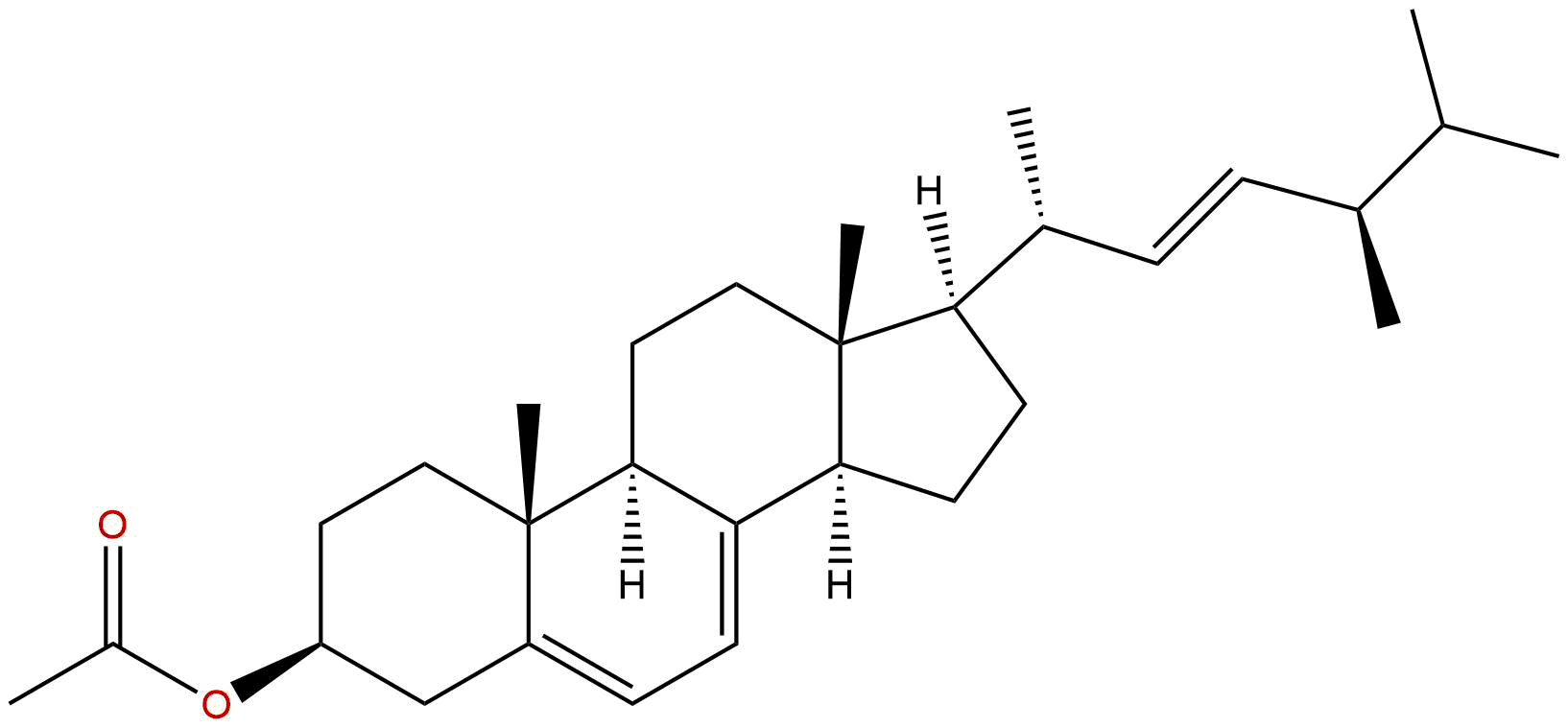
Ergosterol acetate, also known as ergosterol-5,7,22-triene-3 β - ol acetate, is a derivative of ergosterol whose 3 β - hydroxyl group has been acetylated. As a naturally occurring fungal metabolite, ergosterol acetate not only plays a role in the physiological metabolism of fungi, but also has aroused widespread interest among researchers due to its potential pharmacological activity, especially its antifungal properties. Compared with the parent compound ergosterol, acetylation modification alters its molecular polarity and spatial configuration, which may affect its interaction mode with biological targets, membrane permeability, and metabolic stability. In recent years, with the deepening understanding of fungal resistance mechanisms and the increasingly urgent demand for new antifungal drugs, research on ergosterol acetate and its analogues has regained attention. This article aims to systematically review the chemical structure, sources, pharmacological activities, mechanisms of action, pharmacological characteristics, and clinical application prospects of ergosterol acetate, in order to provide comprehensive academic references for the in-depth development and utilization of this natural product.
Chemical structure and physicochemical properties
The chemical structure of ergosterol acetate is based on a typical steroid skeleton, with the core being the cyclopentane dihydrophenanthrene structure. Specifically, its structural features can be summarized as follows: there is a conjugated double bond (Δ 5,7) between positions C-5 and C-7, which is the key to the UV absorption characteristics of ergosterol compounds; There is a trans double bond (Δ 22) between positions C-22 and C-23; There is a methyl branch at position C-24; Connect a side chain containing 8 carbon atoms at position C-17. The most crucial modification is that the hydroxyl group (- OH) at the C-3 position of its parent nucleus is esterified with an acetyl group (- COCH3) to form an acetate ester. This structural modification is the core marker for distinguishing ergosterol acetate from ergosterol, with a molecular formula of C30H46O2 and a molecular weight of 438.6960 g/mol.
From the perspective of physicochemical properties, ergosterol acetate exhibits typical lipophilic characteristics. The calculated lipid water partition coefficient (LogP) is as high as 8.5051, indicating that the compound has strong lipid solubility and is easily soluble in organic solvents such as chloroform, ether, ethyl acetate, n-hexane, etc., while its solubility in water is extremely low, only 0.0005 mg/mL. This high lipophilicity is directly related to its steroid skeleton and long side chain structure. The polar surface area (TPSA) is 26.3000 Å ², which is a relatively small value, further confirming its potential for low polarity and high membrane permeability. It is worth noting that its blood-brain barrier (BBB) permeability assessment is "high", indicating that the compound may have the ability to penetrate the blood-brain barrier, which has potential implications for its application in central nervous system related diseases or fungal infections (such as cryptococcal meningitis), but may also pose a risk of central neurotoxicity. In addition, preliminary pharmacological evaluation showed that ergosterol acetate has a low risk of inhibiting hERG potassium ion channels (hERG inhibition: no), and the result in Ames test was negative (0.0), indicating a low risk of genotoxicity. This provides preliminary positive signals for its safety as a candidate drug. However, its extremely low water solubility is a major challenge for oral administration, requiring the use of formulation technologies such as liposomes, nanoemulsions, cyclodextrin inclusion complexes, etc. to improve its bioavailability.
Plant sources and extraction methods
Acetic ergosterol ester is not a common component in the plant kingdom, and its main source is in the fungal kingdom. As a natural fungal metabolite, it can be isolated from various fungi, including but not limited to large fungi (mushrooms) and filamentous fungi. For example, in various medicinal fungi such as Ganoderma lucidum(Ganoderma lucidum)Poria cocos(Poria cocos)Cordyceps sinensis(Cordyceps sinensis)And the presence of ergosterol acetate has been detected in some yeast and mold strains. It is usually an intermediate or final product in the biosynthesis pathway of ergosterol, and its content is influenced by various factors such as fungal species, culture conditions, fungal age, and harvesting time.
The extraction and separation of ergosterol acetate usually follow the classic process of natural product chemistry. Firstly, the dried fungal fruiting bodies, mycelium, or fermentation products are crushed and extracted using organic solvents. Due to its high lipophilicity, commonly used extraction solvents include petroleum ether, n-hexane, chloroform, ethyl acetate, or methanol chloroform mixed solvents. Usually, methods such as cold soaking, reflux extraction, or ultrasound assisted extraction are used to improve efficiency. After filtration and vacuum concentration of the extract, the total extract is obtained. Subsequently, preliminary separation is performed using normal phase silica gel column chromatography, often with gradient elution using mixed solvents such as petroleum ether ethyl acetate or petroleum ether acetone. Due to the low polarity of ergosterol acetate, it usually appears in the early fractions of elution. For further purification, preparative thin layer chromatography (PTLC), Sephadex LH-20 gel column chromatography or high-performance liquid chromatography (HPLC) can be used, especially reverse phase HPLC (such as C18 column, using acetonitrile water or methanol water as mobile phase) can achieve high-purity separation. The structural identification of compounds mainly relies on spectroscopic techniques, including nuclear magnetic resonance spectroscopy (¹ H-NMR, ¹ ³ C-NMR, DEPT, COSY, HSQC, HMBC) and high-resolution mass spectrometry (HR-ESI-MS). By comparing with the spectral data reported in the literature, its structure can be confirmed. It is worth noting that during the extraction process, attention should be paid to avoiding light and high temperature to prevent oxidation or isomerization of conjugated double bonds.
Pharmacological activity research
The pharmacological activity research of ergosterol acetate mainly focuses on the antifungal field, which is closely related to the core position of ergosterol in fungal cell membranes. In addition, in recent years, it has also been found to have other biological activities such as anti-inflammatory, anti-tumor, and immune regulation, demonstrating the potential for multi-target and multi pathway action.
1. Antifungal activity
This is the core activity of ergosterol acetate that has received the most attention. Research has shown that ergosterol acetate exhibits inhibitory effects on various pathogenic fungi, including but not limited to Candida albicans(Candida albicans)Cryptococcus neoformans(Cryptococcus neoformans)Aspergillus fumigatus(Aspergillus fumigatus)And some skin fungi. Its antifungal mechanism is different from traditional azole drugs such as fluconazole, which may involve direct effects on fungal cell membranes or interference with ergosterol biosynthesis pathways. It is worth noting that some studies have shown that ergosterol acetate still has certain activity against azole resistant Candida albicans strains, suggesting that it may exert its effect by bypassing or inhibiting efflux pumps (such as CDR1, CDR2, MDR1), providing new ideas for overcoming clinical fungal resistance.
2. Anti inflammatory activity
In cell and animal models, ergosterol acetate has been shown to have anti-inflammatory effects. It can inhibit the production of nitric oxide (NO), prostaglandin E2 (PGE2), and pro-inflammatory cytokines (such as TNF - α, IL-6, IL-1 β) in macrophages induced by lipopolysaccharide (LPS). The mechanism may be related to the inhibition of the activation of nuclear factor kappa B (NF - κ B) and mitogen activated protein kinase (MAPK) signaling pathways. This anti-inflammatory activity provides the possibility for its application in the treatment of inflammation related diseases such as dermatitis and arthritis.
3. Antitumor activity
Preliminary studies found that ergosterol acetate showed cytotoxicity to some tumor cell lines (such as HepG2, MCF-7, A549, etc.), and could induce apoptosis or cycle arrest. Its mechanism of action may involve the influence on mitochondrial membrane potential, activation of caspase family proteases, and upregulation of pro apoptotic protein Bax and downregulation of anti apoptotic protein Bcl-2 expression. However, the selectivity index of its anti-tumor activity (toxicity ratio to normal cells and tumor cells) still needs further evaluation to determine its potential as an anti-tumor lead compound.
4. Other activities
In addition, literature has reported that ergosterol acetate also has antioxidant, immune regulatory (such as enhancing macrophage phagocytic ability), and wound healing promoting activities. These diverse biological activities indicate that ergosterol acetate is a natural product molecule with pleiotropy.
Mechanism of action and molecular targets
The pharmacological mechanism of ergosterol acetate is complex and cannot be explained by a single target. Its antifungal activity is the most extensively studied direction, involving multiple potential molecular targets that are closely related to the synthesis, function, and drug resistance of fungal cell membranes.
1. Interference with the biosynthesis pathway of ergosterol
Ergosterol is an essential component of fungal cell membranes, and its biosynthetic pathway is a classic target for antifungal drug design. Acetate ergosterol ester, as a derivative of ergosterol, may exert its effects through feedback inhibition or competitive inhibition of key enzymes in the pathway. Among them, the most critical targets include:
- ERG11 / CYP51A1 / CYP51 These genes encode sterol 14 α - demethylase (CYP51), which is the main target of azole antifungal drugs. The enzyme catalyzes the key demethylation step in the conversion of lanosterol to ergosterol. Acetic ergosterol ester or its metabolites may directly bind to the heme iron of CYP51, inhibiting its activity, leading to the accumulation of toxic 14 α - methylsterols, and disrupting cell membrane structure. Although its inhibitory efficacy may be weaker than fluconazole, it may still be effective against certain CYP51 mutants due to its structural differences.
- FKS1 This gene encodes β -1,3-glucan synthase, responsible for synthesizing the key component of fungal cell walls - β -1,3-glucan. Although ergosterol acetate does not directly act on FKS1 (the target of echinocandin drugs), the disruption of cell membrane integrity may indirectly affect the synthesis and assembly of cell walls, resulting in a synergistic effect with FKS1 inhibitors.
- CHS3 Encoding chitin synthase, responsible for synthesizing another important component of the cell wall - chitin. Similarly, membrane damage may trigger a cell wall stress response, affecting the activity of chitin synthase.
2. Adjustment of fungal efflux pump
One of the main mechanisms of fungal drug resistance is overexpression of drug efflux pumps, which pump drugs out of the cell and reduce the effective concentration inside the cell. Among them, ATP binding cassette (ABC) transporter family members CDR1 and CDR2, as well as major facilitator superfamily (MFS) member MDR1, are the most important efflux pumps in Candida albicans. Research has shown that ergosterol acetate may affect efflux pumps in the following ways:
- Direct inhibition It may act as a substrate or inhibitor for efflux pumps, competitively occupying drug binding sites to prevent other antifungal drugs (such as azoles) from being pumped out, exerting a synergistic sensitization effect.
- Downregulate expression It is possible to reduce the gene expression levels of CDR1, CDR2, or MDR1 by affecting the activity of transcription regulatory factors such as Tac1 and Mrr1, thereby reducing the production of efflux pumps from the source.
3. Effects on fungal biofilm and adhesion factors
The formation of fungal biofilms is an important cause of chronic infections and drug resistance. ALS3 encodes adhesins, which are key factors in fungal adhesion and biofilm formation. Acetic ergosterol esters may interfere with the composition of cell membrane lipid rafts, affecting the localization and function of membrane proteins such as ALS3, thereby inhibiting fungal adhesion to host cells and subsequent biofilm formation. In addition, MLS1 (which may refer to a gene related to ergosterol synthesis or membrane structure) may also be involved.
4. Anti inflammatory and anti-tumor mechanisms
In terms of anti-inflammatory effects, ergosterol acetate mainly downregulates the expression of downstream pro-inflammatory genes by inhibiting the phosphorylation of NF - κ B and MAPK (such as p38, JNK) signaling pathways. In terms of anti-tumor effects, its mechanism may involve inducing endoplasmic reticulum stress, activating mitochondrial apoptosis pathways, and inhibiting survival promoting signaling pathways such as PI3K/Akt/mTOR.
Evaluation of drug properties and pharmacokinetics
The development of ergosterol acetate from a natural product to a clinical drug requires a systematic evaluation of its pharmacological properties. Based on its physicochemical properties and preliminary pharmacological data, its pharmacokinetic characteristics and challenges can be outlined.
1. Absorption and bioavailability
The extremely low water solubility (0.0005 mg/mL) and extremely high lipid solubility (LogP 8.5) of ergosterol acetate are the primary obstacles to its oral absorption. According to the Lipinski Five Rules, a LogP greater than 5 usually indicates poor absorption or permeability. Although high LogP values are beneficial for penetrating biofilms, they can also easily lead to the formation of micelles or precipitates in the intestine, making it difficult for drugs to be effectively absorbed. Therefore, its oral bioavailability is expected to be extremely low. Intravenous injection may be a more feasible route of administration, but it also needs to address its solubility in aqueous media. The use of formulation technologies such as liposomes, nanoparticles, self microemulsifying drug delivery systems (SMEDS), or phospholipid complexes is a potential strategy to improve their oral absorption.
2. Distribution
Once it enters the bloodstream, ergosterol acetate is expected to be widely distributed in the body due to its high lipophilicity, especially highly bound to plasma proteins such as albumin and lipoproteins. The prediction of high blood-brain barrier permeability suggests that the compound can penetrate the blood-brain barrier, which may be advantageous for the treatment of central nervous system fungal infections such as cryptococcal meningitis. However, this also increases the risk of central nervous system toxicity and requires close monitoring. In addition, it may also accumulate in adipose tissue, leading to a longer half-life and potential accumulation toxicity.
3. Metabolism
As a sterol ester, ergosterol acetate is likely to be rapidly hydrolyzed by esterases (such as carboxylesterases) in the body, releasing the parent compounds ergosterol and acetic acid. Ergosterol subsequently undergoes further oxidative metabolism, mainly occurring in the liver and involving the cytochrome P450 enzyme system (especially CYP3A4). Its metabolites may include products of hydroxylation, epoxidation, or side chain cleavage. Metabolic research needs to clarify the main metabolic pathways, enzymes, and whether the metabolites are active or toxic.
4. Excretion
Due to its high lipophilicity, ergosterol acetate and its metabolites are mainly excreted into feces through bile, and the amount excreted in urine through the kidneys may be relatively small. There may be hepatic intestinal circulation, which prolongs its retention time in the body.
5. Safety evaluation
Preliminary pharmacological parameters indicate that a low risk of hERG inhibition (no) and a negative Ames test (0.0) are positive signals. However, this is far from sufficient to evaluate its overall security. A comprehensive toxicology study must be conducted, including:
- acute toxicity Determine the median lethal dose (LD50).
- Repeated administration toxicity Evaluate the potential damage of long-term medication to major organs such as the liver, kidneys, and nervous system.
- Reproductive and developmental toxicity Evaluate the impact on fertility and fetal development.
- Phototoxicity Given its conjugated double bond structure, it is necessary to evaluate whether it has photosensitivity.
Clinical application prospects and prospects
Although the pharmacological properties of ergosterol acetate face many challenges, its unique pharmacological activity spectrum, especially its potential to target drug-resistant fungi, has shown certain prospects in clinical applications.
1. Antifungal infection
This is its most direct application prospect. Given that existing antifungal drugs (such as azoles, polyenes, and echinocandins) are facing increasingly severe resistance challenges, it is urgent to develop drugs with new mechanisms or those that can overcome existing resistance. The activity of ergosterol acetate against fluconazole resistant Candida albicans strains and its potential mechanism of action by inhibiting efflux pumps (CDR1, CDR2, MDR1) make it an attractive candidate molecule or lead compound. Future research directions include:
- structural optimization Using ergosterol acetate as a lead, the side chain, parent nucleus, or acetyl group of ergosterol acetate can be modified through semi synthetic or total synthetic methods to improve water solubility, reduce toxicity, and enhance antifungal activity, especially against specific drug-resistant strains.
- combination therapy Study its synergistic effect with existing antifungal drugs such as fluconazole, amphotericin B, and caspofungin. By inhibiting the efflux pump, it may act as a "sensitizer" to restore the sensitivity of drug-resistant strains to azole drugs, achieving a low-dose, high-efficiency, and low toxicity combination therapy.
- Formulation development The successful experience of developing formulations suitable for clinical administration, such as liposomal amphotericin B, can be used as a reference to prepare liposomes or nano formulations to improve their solubility and targeting, and reduce systemic toxicity.
2. Anti inflammatory and immune regulation
Its anti-inflammatory activity suggests that it can be used to treat chronic inflammatory diseases such as atopic dermatitis, psoriasis, inflammatory bowel disease, etc. Topical preparations (such as creams and ointments) may be the preferred route of administration, as they can avoid the disadvantage of poor oral absorption and directly act on the lesion. In addition, its immunomodulatory activity may also play a role in the adjuvant treatment of fungal infections in immunocompromised patients.
3. Anti tumor adjuvant therapy
Although its anti-tumor activity is weak, when used in combination with other chemotherapy drugs as an adjuvant therapy, it may exert a synergistic effect by enhancing immune response or reversing tumor resistance. This requires more in-depth in vivo pharmacological and mechanistic research.
4. Challenges and Prospects
Despite the promising prospects, research on the conversion of ergosterol acetate still faces significant challenges. Firstly, its extremely poor water solubility and potential metabolic instability are the core obstacles. Secondly, the non-specific binding and potential toxicity (such as hemolysis and hepatotoxicity) caused by high lipophilicity need to be carefully evaluated. Finally, the exact molecular mechanism of its antifungal activity, especially the interaction mode with CYP51 and efflux pumps, still needs to be further elucidated through structural biology (such as protein eutectic structure analysis) and molecular dynamics simulations.
Future research should focus on:
- In depth mechanism research Using gene knockout/overexpression strains, proteomics, and metabolomics techniques, systematically elucidate their molecular network for antifungal and reversal of drug resistance.
- Research on Structure Activity Relationship (SAR) of Systems Synthesize a series of analogues and systematically investigate the effects of different site modifications on activity, selectivity, toxicity, and pharmacokinetic properties.
- Pharmacodynamic and toxicological evaluation in vivo Establish appropriate animal infection models (such as mouse systemic candidiasis model, skin infection model) to verify their in vivo efficacy and safety.
- Green biosynthesis Exploring the use of synthetic biology techniques to efficiently produce ergosterol acetate or its more active derivatives in engineered yeast or filamentous fungi, in order to solve the problem of low yields from natural sources.
Conclusion
As a natural sterol ester derived from fungi, ergosterol acetate occupies a place in the field of natural product drug research due to its unique chemical structure and various pharmacological activities, especially its potential for antifungal and reversal of fungal resistance. Its high lipophilicity and low water solubility are not only the basis for its membrane related activity, but also the main bottleneck for its drug development. By potentially regulating relevant targets such as ERG11, CDR1, FKS1, etc., it exhibits a different mode of action from traditional antifungal drugs, providing new ideas for addressing the increasingly severe fungal resistance crisis.
The road from laboratory discovery to clinical application of ergosterol acetate conversion is still long and challenging. Future success will depend on the collaborative efforts of multiple disciplines: medicinal chemists optimize their pharmacological and pharmacokinetic properties through structural modifications; Pharmacologists delve into its intricate mechanism of action; Pharmacists develop efficient delivery systems; Toxicologists comprehensively evaluate its safety. Despite the bumpy road ahead, given the urgent need for new antifungal drugs, in-depth research on ergosterol acetate and its analogues not only has important scientific value, but also contains potential clinical translational significance. It reminds us that in the vast treasure trove of natural products, even a seemingly ordinary metabolite may hold the key to solving major medical problems. The continuous exploration of such molecules will be an important driving force for advancing the research and development of antifungal drugs.