Introduction/Overview
Mexoticin (CAS number: 18196-00-4) is a natural coumarin compound that was first isolated from the leaves of the Murraya omphalocarpa genus in the Rutaceae family. As an important member of the coumarin family, quercetin has attracted widespread attention in the field of natural product pharmacology in recent years due to its unique chemical structure and diverse biological activities. Especially in the research of prevention and treatment of cardiovascular diseases, especially arrhythmia, quercetin has shown potential pharmacological activity and application prospects. Arrhythmia, as a common and complex cardiac electrophysiological abnormality, involves the regulation of multiple ion channels and receptors, and the search for safe and effective natural product interventions has become a current research hotspot.
This article aims to systematically review the chemical structure and physicochemical properties, plant sources and extraction methods, pharmacological activity and mechanism of action, pharmacological evaluation and pharmacokinetic characteristics of quercetin, and explore its clinical application prospects and future development directions in combination with its research progress on arrhythmia related targets, providing theoretical basis and reference for subsequent basic research and drug development.
Chemical structure and physicochemical properties
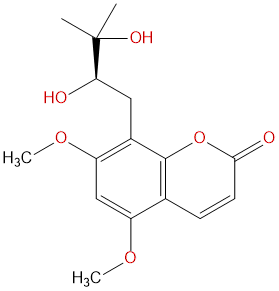
Jiu Li Xiang Su belongs to the coumarin class of compounds, with a molecular formula of C18H16O5 and a molecular weight of 308.33. The core of its structure is the coumarin skeleton, which contains multiple hydroxyl and methoxy substituents, endowing it with certain polarity and biological activity. The specific structural features include:
- Aromatic coumarin core with conjugated double bond system, which facilitates binding with biomolecules.
- The distribution of substituents affects its lipophilicity and polarity, with a LogP value of 1.3753, indicating moderate lipophilicity that facilitates membrane penetration.
- The polar surface area (TPSA) is 89.13 Å ², indicating a balance between molecular polarity and hydrophobicity, which is beneficial for drug absorption and distribution.
- The water solubility is 0.5452, which belongs to moderate solubility and is conducive to the development of in vivo bioavailability.
- It has a high ability to penetrate the blood-brain barrier, indicating its potential role in the central nervous system.
- The hERG channel inhibition experiment was negative, indicating its potential toxicity to cardiac potassium channels is low.
- The Ames mutagenicity test score is 0.6, indicating a low risk of genotoxicity and good safety.
In summary, the physicochemical properties of quercetin are suitable for its development as a drug molecule, with good bioavailability and safety potential.
Plant sources and extraction methods
Jiu Li Xiang Su mainly comes from the leaves of Murraya omphalocarpa, a plant in the Rutaceae family. M. Omphalocarpa is widely distributed in Southeast Asia and has traditionally been used to treat various inflammations and cardiovascular diseases. Leaves contain abundant coumarin compounds, among which quercetin is one of the important components.
The extraction method mainly includes the following steps:
- Ingredient Preparation Collect fresh or dry leaves of M. omphalocarpa and grind them to the appropriate particle size.
- Solvent extraction Ethanol or methanol is used as the extraction solvent for reflux or ultrasound assisted extraction, and the extraction time is generally 2-4 hours.
- Crude extract concentration Concentrate the extract by rotary evaporation, remove the solvent, and obtain a concentrated extract.
- Separation and purification Using techniques such as silica gel column chromatography and reverse phase high-performance liquid chromatography (RP-HPLC), combined with gradient elution, to separate and purify quercetin.
- Structural Identification Confirm the structure through methods such as nuclear magnetic resonance (NMR), mass spectrometry (MS), and infrared spectroscopy (IR).
In recent years, supercritical CO2 extraction and microwave-assisted extraction techniques have also been applied to the extraction of quercetin, improving extraction efficiency and purity, reducing solvent usage, and complying with green chemistry principles.
Pharmacological activity research
The pharmacological activity research of quercetin mainly focuses on the cardiovascular system, especially the regulatory effect on arrhythmia. Multiple in vitro and in vivo experiments have shown that quercetin has significant antiarrhythmic activity, can regulate the electrophysiological properties of myocardial cells, and restore abnormal cardiac rhythms.
Antiarrhythmic effect
- Ion channel regulation Jiu Li Xiang Su exhibits antiarrhythmic effects by regulating the functions of various key cardiac ion channels, affecting the formation and conduction of action potentials.
- Myocardial protection In the ischemia-reperfusion model, quercetin has shown effects in reducing myocardial injury and inhibiting myocardial cell apoptosis.
- Antioxidant and anti-inflammatory properties Jiu Li Xiang Su can reduce the oxidative stress response of myocardial cells, decrease the expression of inflammatory factors, and indirectly protect heart function.
Other potential activities
In addition to its cardiovascular effects, quercetin also exhibits various biological activities such as antibacterial, anti-tumor, and neuroprotective effects, but related research is still in its preliminary stage and needs further exploration.
Mechanism of action and molecular targets
The molecular mechanism of Jiu Li Xiang Su's anti arrhythmic effect mainly involves the regulation of various key cardiac electrophysiological targets, including:
- CHRNA7 (α 7-type nicotinic acetylcholine receptor)Regulating cardiac nerve regulation and affecting heart rate variability.
- KCNA5 (Kv1.5 potassium channel)Regulating the repolarization of action potentials in atrial myocytes, quercetin can prolong the duration of action potentials and stabilize heart rhythm by modulating this channel.
- CHRM2 (M2 muscarinic receptor)Mediating the inhibitory effect of vagus nerve on the heart, quercetin may enhance the activity of this receptor and regulate heart rate.
- KCNH2 (hERG potassium channel)The key cardiac repolarization channel is not significantly inhibited by quercetin, which reduces the potential risk of cardiac toxicity.
- KCNQ1 (Kp7.1 potassium channel)Jiu Li Xiang Su may improve heart rhythm by regulating the repolarization process of myocardial action potentials.
- SCN5A (Nav1.5 sodium channel)Regulating the rising phase of action potential in myocardial cells, quercetin has a regulatory effect on it and improves conduction abnormalities.
- CACNA1C (L-type calcium channel)Jiu Li Xiang Su can regulate calcium influx and stabilize myocardial electrical activity by affecting myocardial contraction and electrical activity.
- KCNE1 (Auxiliary Potassium Channel Subunit)Regulating the function of KCNQ1 channel, quercetin may enhance channel activity by affecting this subunit.
- ATP1A1 (Na+/K+- ATPase)Maintaining ion homeostasis in myocardial cells, quercetin has a regulatory effect on its activity and promotes the recovery of myocardial cell function.
- RYR2 (Intracellular Calcium Release Channel in Cardiomyocytes)Regulating the release of calcium ions from myocardial cells, quercetin stabilizes calcium signals by regulating RYR2 and prevents arrhythmia.
The synergistic regulation of these targets enables quercetin to intervene in myocardial electrophysiological abnormalities in multiple dimensions, exert anti arrhythmic effects, and has high safety due to its non inhibitory effect on hERG channels.
Evaluation of drug properties and pharmacokinetics
The pharmacological evaluation of Jiu Li Xiang Su shows that it has good potential for drug development:
- Molecular weight 308.33 According to Lipinski's rules, it is beneficial for oral absorption.
- LogP 1.3753 Moderate lipid solubility helps with membrane penetration and in vivo distribution.
- TPSA 89.13 ŲSuitable for absorption through the intestine and penetration through the blood-brain barrier.
- Water solubility 0.5452 Ensure a certain level of bioavailability.
- High blood-brain barrier penetration It suggests that it may be used for research on central nervous system related diseases.
- HERG inhibition negative Reduce the risk of cardiac toxicity.
- Ames test 0.6 The risk of genotoxicity is relatively low.
In terms of pharmacokinetics, existing studies have shown that quercetin has good absorption and distribution characteristics in the body, moderate half-life, mainly metabolized through the liver, and the safety of metabolites is good. Its high blood-brain barrier permeability suggests the potential for central nervous system effects, but attention should also be paid to the risk of central side effects.
Clinical application prospects and prospects
As a natural coumarin, quercetin has shown broad clinical application prospects due to its significant anti arrhythmic activity and good drug properties
- Arrhythmia treatment Regarding common arrhythmias such as atrial fibrillation and premature ventricular contractions, quercetin can be used as a candidate molecule for novel antiarrhythmic drugs, especially for patients with poor tolerance or significant side effects to traditional drugs.
- Cardioprotective agent In myocardial ischemia-reperfusion injury, quercetin may play a protective role, reduce myocardial injury, and improve prognosis.
- Advantages of multi-target regulation Its multi-target mechanism of action helps to comprehensively regulate cardiac electrophysiological abnormalities and reduce the risk of drug resistance to single target therapy.
- Security advantage No significant hERG inhibition and low genotoxicity risk, enhancing the safety of clinical application.
Future research should focus on:
- Systematic pharmacokinetic and toxicological evaluation to clarify the safe dose range.
- Preclinical animal model validation and in-depth study of mechanisms, optimization of dosing regimens.
- Structural modification and derivative development to enhance activity and selectivity.
- Clinical trial design to evaluate efficacy and safety.
In addition, combining modern drug delivery technologies such as nanocarrier systems to enhance the bioavailability and targeting of quercetin is also a future research focus.
Conclusion
As a natural coumarin derived from Murraya omphalocarpa, naringin has demonstrated excellent pharmacological activity and potential for clinical application due to its unique chemical structure and multi-target regulation of arrhythmia. Its safety advantages and multidimensional regulatory mechanisms provide new ideas and candidate molecules for the treatment of cardiovascular diseases such as arrhythmia. In the future, it is necessary to conduct systematic pharmacological and toxicological research and clinical validation to promote the clinical application of quercetin and bring new treatment options for cardiovascular disease patients.
In summary, as an important object of pharmacological research on natural products, quercetin not only enriches the biological activity spectrum of coumarin compounds, but also provides strong support for the development of natural medicines, and is worthy of continuous and in-depth exploration in the field of cardiovascular drug research and development.