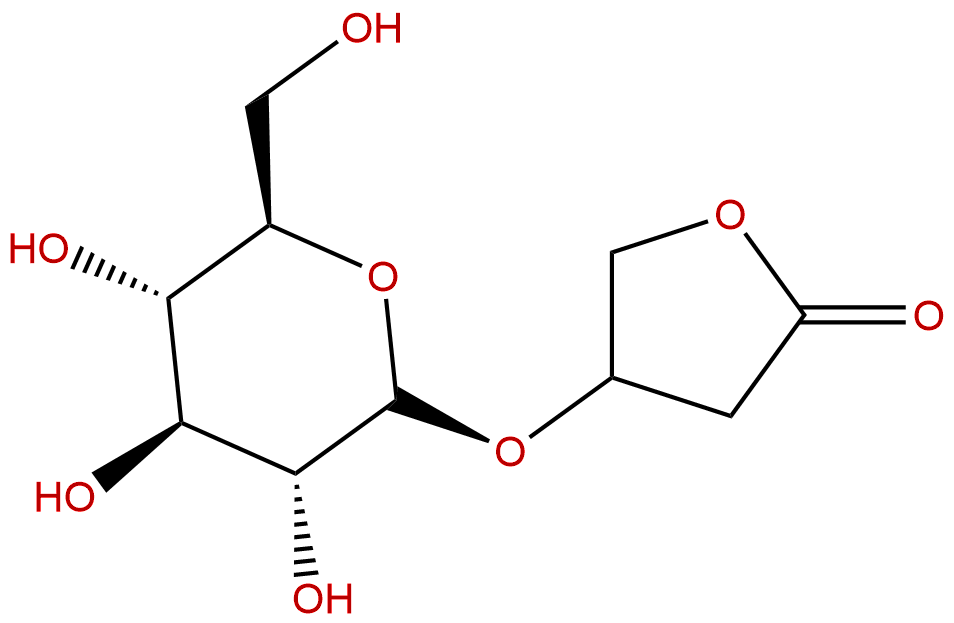


Product name: Kinsenoside
Synonym name: (+)-Kinsenoside
Catalogue No.: BP1705
Cas No.: 151870-74-5
Formula: C10H16O8
Mol Weight: 264.23
Botanical Source:
Physical Description:
Type of Compound:
Purity: 95%~99%
Analysis Method: HPLC-DAD or/and HPLC-ELSD
Identification Method: Mass, NMR
Packing: Brown vial or HDPE plastic bottle
The product could be supplied from milligrams to grams. Inquire for bulk scale.
We provide solution to improve the water-solubility of compounds, thereby facilitating the variety of activity tests and clinic uses.
For Reference Standard and R&D, Not for Human Use Directly.
Description:
Kinsenoside shows significant antihepatotoxic, and anti-inflammatory activities. Kinsenoside could be useful for repairing beta cells in pancreatic islet injury as well as improving its function, it could promote the glucose tolerance of acute glucose increase in both diabetic and normal healthy rats. Kinsenoside inhibits osteoclastogenesis from macrophages by attenuating RANKL-induced NF-κB and NFATc1 activities, which in turn, prevents bone loss from OVX mice.
References:
J Ethnopharmacol. 2007 Nov 1;114(2):141-5.
Antihyperglycemic activity of kinsenoside, a high yielding constituent from Anoectochilus roxburghii in streptozotocin diabetic rats.
Different doses of Kinsenoside, a high yielding constituent from Anoectochilus roxburghii, was orally administered to further investigate its biological activity and pharmacological mechanisms that involve in the hypoglycemic effect on streptozotocin (STZ) diabetic rats.
METHODS AND RESULTS:
Our study showed that this compound exhibited significantly antihyperglycemic activity at the dose of 15mg/kg body weight, which is speculated to be partially attributed to modulating the activity of enzymatic antioxidants, scavenging free radicals, and reducing the content of factor NO. Much more intact beta cells in the islets of Langerhans with denser insulin in Kinsenoside-treated groups than the negative control were observed, which greatly supported the morphological and functional elucidation.
CONCLUSIONS:
These results displayed that Kinsenoside could be useful for repairing beta cells in pancreatic islet injury as well as improving its function. The OGTT evidenced that this compound could promote the glucose tolerance of acute glucose increase in both diabetic and normal healthy rats.
Phytother Res. 2007 Jan;21(1):58-61.
The hepatoprotective activity of kinsenoside from Anoectochilus formosanus.
Carbon tetrachloride (CCl(4)) causes chronic hepatitis, featuring an increase in hepatic hydroxyproline, spleen weight and serum GPT levels and a decrease in plasma albumin levels.
METHODS AND RESULTS:
Crude extracts of fresh whole plants of Anoectochilus formosanus showed inhibition of chronic hepatitis induced by CCl(4) in mice. Bioactivity-guided fractionation and spectroscopic analysis revealed that Kinsenoside was the most active compound. In an in vitro study, the LD(50) values for H(2)O(2)-induced cytotoxicity in BALB/c normal liver cells were significantly higher after Kinsenoside pretreatment than after vehicle alone, further confirming that Kinsenoside shows significant antihepatotoxic activity.
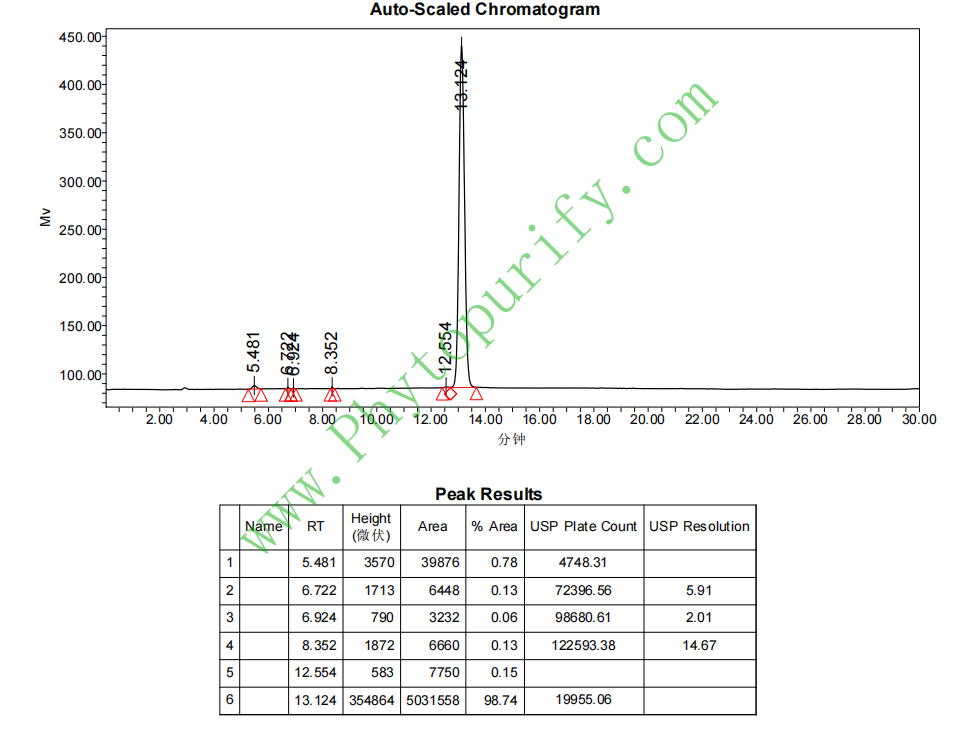
HPLC of Kinsenoside
Storage conditions:Short-term storage at 2~8℃, long-term storage at -20 ~ -80℃
125.6800
-1.8615
-1.8609
152.6051
.5591
.3045
Low
9.3318
4.0654
Yes
No
No
No
Yes
No
0.6
Yes
Yes
Yes
Yes
Intervertebral Disc Degeneration (IDD) is one of the main causes of chronic low back pain, placing a heavy burden on global public health systems. The pathological process involves multiple stages such as apoptosis, aging, extracellular matrix degradation, and oxidative stress damage of nucleus pulposus cells (NPCs). At present, treatment methods for IDD, such as physical therapy, drug analgesia, and even surgical intervention, mostly focus on symptom relief rather than etiological reversal. Developing disease modifying drugs that can delay or even reverse the pathological process of IDD is currently a hot and difficult research topic. In this context, natural products derived from traditional medicinal plants have shown great potential due to their multi-target and multi pathway effects. Kinsenoside (CAS number: 151870-74-5), as a major active glycoside isolated from Orchidaceae plants, has attracted much attention in recent years due to its significant activities in oxidative stress protection, anti-inflammatory, and anti apoptotic effects. Especially the latest discovery that it protects nucleus pulposus cells by activating the Nrf2 signaling pathway provides a new candidate molecule for the prevention and treatment of IDD. This article aims to systematically review the chemical properties, plant sources, pharmacological activities, mechanisms of action, medicinal properties, and application prospects of salidroside in diseases such as IDD.
Jinlianlian glycoside is a relatively simple natural glycoside compound, with the chemical name (3R) -3- β - D-glucopyranosyl-5-hydroxyvalerolactone. Its molecular formula is C11H16O7 and its molecular weight is 264.2300. Structurally, it is connected to a β - D-glucopyranose group through a glycosidic bond by a five membered lactone ring (butyrolactone). This sugar lactone structure is an important basis for its biological activity.
Its physical and chemical properties data show good hydrophilicity: the calculated lipid water partition coefficient (LogP) is -1.8615, indicating its high lipophilicity; The topological polar surface area (TPSA) is 125.6800 Å ², reflecting the presence of multiple hydrogen bond acceptors (mainly hydroxyl and carbonyl oxygen atoms) in the molecule. These parameters are consistent with its excellent water solubility (152.6051 mg/L), indicating its good solubility and potential for formulation development. However, higher polarity and TPSA also lead to a predicted "low" blood-brain barrier (BBB) permeability, which limits its direct effect on central nervous system diseases. However, for IDD, which mainly acts on peripheral tissues such as intervertebral discs, the impact is relatively small. In addition, preliminary pharmacological risk assessment shows that salidroside has no significant inhibitory effect on hERG potassium channels (hERG inhibition: no), indicating a low risk of cardiac toxicity; The Ames test result is 0.6, indicating a low risk of mutagenicity and providing preliminary support for further safety evaluation.
Golden lotus glycosides mainly come from plants in the Orchidaceae family, specifically the Anoectochilus genus, with the most famous being the golden lotus (Anoectochilus roxburghii). Anoectochilus roxburghii has been used as a precious folk herb for hundreds of years in Asia, especially in Southeast China, Taiwan and Southeast Asia. It is traditionally used to treat hypertension, diabetes, hepatitis and various inflammatory diseases.
The extraction of salidroside from plant materials is usually carried out using solvent extraction method. The common process includes crushing the dried whole plant of lotus root and using methanol, ethanol, or a water alcohol mixed solvent for reflux extraction or ultrasound assisted extraction. After filtration and concentration, the crude extract is preliminarily enriched and purified using macroporous adsorption resins (such as D101, AB-8), and different concentrations of ethanol aqueous solutions are often used as elution solvents. Further purification relies on chromatographic techniques such as silica gel column chromatography, reverse phase C18 column chromatography, and high-performance liquid chromatography (HPLC) preparative chromatography to ultimately obtain high-purity salidroside monomers. Modern biotechnology such as plant cell culture has also been explored for sustainable and large-scale production of this active ingredient.
Golden lotus glycosides exhibit a wide and diverse range of pharmacological activities, laying the foundation for their multifaceted applications.
Antioxidant and Cellular Protective Effects This is one of the core activities of salidroside. In the intervertebral disc degeneration model, salidroside can significantly increase the survival rate of nucleus pulposus cells under oxidative stress (such as H2O2 treatment), reduce the accumulation of intracellular reactive oxygen species (ROS), protect mitochondrial membrane potential, and inhibit the expression of apoptosis and aging related markers (such as SA - β - gal). This effect is the focus of this article and is closely related to its activation of the Nrf2 pathway.
anti-inflammatory effect Gold lotus glycosides have shown strong anti-inflammatory effects in various inflammatory models. It can inhibit pro-inflammatory factors such as tumor necrosis factor - α (TNF - α), interleukin-6 (IL-6), and nitric oxide (NO) produced by macrophages stimulated by lipopolysaccharides (LPS). Its anti-inflammatory mechanism involves the regulation of classic inflammatory signaling pathways such as NF - κ B and MAPK.
Metabolic regulation effect Research has shown that salidroside has the potential to improve insulin resistance, lower blood sugar and blood lipids. In the animal model of diabetes, it can improve glucose tolerance and lipid metabolism disorder, which may be related to the regulation of AMPK, PPAR γ and other metabolic pathways.
Liver protective effect For chemical (such as acetaminophen, carbon tetrachloride) and alcoholic liver injury models, salidroside shows hepatoprotective effects, can reduce serum transaminase levels, alleviate liver inflammation and steatosis.
Antitumor activity Although research is still in its early stages, there is evidence to suggest that salidroside has growth inhibitory and pro apoptotic effects on certain cancer cell lines, such as lung cancer and liver cancer. Its potential targets involve regulating Bcl-2 family proteins, STAT3 signaling, etc.
Bone and joint protective effect In addition to IDD, salidroside can also alleviate cartilage destruction and synovial inflammation in osteoarthritis models, indicating its broad-spectrum protective potential against joint degenerative diseases.
The multiple pharmacological effects of salidroside stem from its regulation of multiple key signaling pathways within cells. In recent years, its cellular protective mechanism in intervertebral disc degeneration has been extensively elucidated, with the core being the activation of the AKT-ERK1/2-Nrf2 signaling axis.
Core pathway: AKT-ERK1/2-Nrf2 signaling axis In nucleus pulposus cells under oxidative stress, salidroside can rapidly phosphorylate and activate protein kinase B (AKT) and extracellular signal regulated kinase 1/2 (ERK1/2). Activated AKT and ERK1/2 promote nuclear translocation of nuclear factor E2 related factor 2 (Nrf2). Nrf2 is a central regulatory factor of cellular antioxidant response. After entering the nucleus, Nrf2 binds to antioxidant response elements (ARE) and initiates the transcriptional expression of downstream phase II detoxifying enzymes and antioxidant proteins, such as heme oxygenase-1 (HO-1), quinone oxidoreductase 1 (NQO1), etc. This series of events collectively enhanced the antioxidant defense ability of cells, thereby resisting oxidative stress-induced mitochondrial dysfunction and DNA damage, ultimately inhibiting caspase-3 mediated cell apoptosis and p53/p21 mediated cell aging. Therefore, salidroside achieves multidimensional protection of nucleus pulposus cells through this pathway.
Related disease target network In addition to its role in IDD, the potential target network of salidroside is also associated with other diseases. For example, in tumor models such as lung cancer, its role may involve:
Based on its physicochemical properties, salidroside has great potential to become an oral medication. Its high water solubility is beneficial for absorption in the gastrointestinal tract and development of formulations. However, as glycoside compounds, they may face hydrolysis by glycosidases in gut microbiota or intestinal epithelial cells in vivo, generating aglycones, which may affect their bioavailability and mode of action. At present, there are relatively limited reports on pharmacokinetic studies of the golden lotus glycoside system.
Some existing animal pharmacokinetic studies have shown that salidroside is rapidly absorbed after oral administration, but its absolute bioavailability may not be high. Its distribution in the body conforms to the characteristics of the two compartment model, mainly distributed in organs with abundant blood flow, such as the liver and kidneys, while the amount entering the brain is relatively small, which is consistent with the prediction of low blood-brain barrier permeability. In terms of metabolism, in addition to possible hydrolysis, the glycoside portion may undergo further II binding reactions such as glucuronidation and sulfation. The main excretion pathway is the renal excretion of prototype drugs or metabolites. In depth pharmacokinetic research, including the analysis of the entire process of absorption, distribution, metabolism, and excretion (ADME), as well as dosage form optimization (such as the use of phospholipid complexes, nanomaterials, etc.) to improve their bioavailability, is an important step in promoting their clinical translation. The preliminary negative results of hERG and Ames provide early positive signals for its safety, but comprehensive preclinical toxicology evaluation still needs to be conducted.
The clinical application prospects of salidroside mainly focus on the fields of chronic degenerative diseases and metabolic diseases.
Intervertebral disc degeneration (IDD)This is the most distinctive application direction of salidroside. The mechanism by which it activates the Nrf2 pathway to protect nucleus pulposus cells and delay IDD progression is clear, and its effect is significant in animal models. In the future, it can be explored to develop it as a local injection (such as intervertebral disc injection) or a systemic drug for the treatment of early to mid stage IDD, aiming to change the disease progression rather than simply providing pain relief. The combination with existing anti-inflammatory and analgesic drugs may produce synergistic effects.
Osteoarthritis (OA)Its anti-inflammatory and cartilage protective effects make it also highly promising in the treatment of OA, making it a potential drug candidate for improving the condition.
Diseases related to metabolic syndrome Based on its hypoglycemic, lipid-lowering and insulin resistance improving activities, Anoectoside is expected to be used as an adjuvant treatment for metabolic diseases such as type 2 diabetes and non-alcoholic fatty liver disease (NAFLD).
Other inflammatory diseases Its broad-spectrum anti-inflammatory properties can be explored for the treatment of inflammatory diseases such as chronic hepatitis and colitis.
However, there are still many challenges to clinical application: firstly, it is necessary to complete systematic preclinical pharmacological, pharmacokinetic, and toxicological studies to clarify their safety window. Secondly, it is necessary to optimize the administration strategy and dosage form to address the potential issue of low bioavailability. Furthermore, it is necessary to further clarify its target priority and potential side effects in complex disease networks. Finally, it is necessary to ensure the sustainability of its raw material sources and develop efficient chemical or biological synthesis routes to ensure supply.
As a natural active molecule derived from traditional herbs, Jin Xian Lian glycoside has shown remarkable value in modern disease prevention and treatment research due to its unique chemical structure and multi-target pharmacological effects. Especially in the field of intervertebral disc degeneration, it effectively protects nucleus pulposus cells from oxidative stress damage by activating the AKT-ERK1/2-Nrf2 signaling pathway, providing a new strategy for intervening in the pathological core of IDD. Although there are still challenges in drug formulation, systemic pharmacokinetics, and clinical translation, existing research has laid a solid scientific foundation for it. With the continuous deepening of subsequent research, salidroside is expected to develop from a promising lead compound into a new drug for treating degenerative spinal diseases, osteoarthritis, and metabolic diseases, achieving a leap from traditional wisdom to modern medicine.
