16 oxo laxative alcohol A: research progress from traditional Chinese medicine laxative to modern drug lead compounds
Introduction/Overview
Natural products, as an important source of drug discovery, play an irreplaceable role in the long history of human fight against diseases. Chinese traditional medicine Alisma(Alisma orientale (Sam.) Juzep. is a dried tuber of the Alisma genus in the family Alismataceae. It was first recorded in the "Shennong Bencao Jing" and is classified as a top-grade product. It has the effects of promoting water and dampness, relieving heat and turbidity, and is widely used in clinical practice for the treatment of edema, urinary obstruction, diarrhea, turbidity, diarrhea, phlegm retention, and other diseases. Modern pharmacological research shows that Alisma orientalis has many biological activities, such as diuresis, blood lipid lowering, blood glucose lowering, anti atherosclerosis, anti-inflammatory, antioxidant, anti-tumor and liver protection. Its chemical composition is complex and diverse, mainly including triterpenes, sesquiterpenes, diterpenes, flavonoids, phenolic acids and polysaccharides.
Among triterpenoids, protostane type triterpenes are characteristic components of Alisma and the main material basis for their pharmacological activity. 16 Oxoalisol A (CAS number: 124515-98-6) is an important oxidized triterpenoid compound in Alisma. Its structural feature is the presence of a ketone carbonyl group at the C-16 position, which endows it with unique biological activity and pharmacological properties. In recent years, with the advancement of separation and purification technology and the improvement of pharmacological screening systems, 16 oxo Alismatal A has gradually become a research hotspot in the fields of natural product chemistry and pharmacology. This article will provide a systematic review of the compound from the aspects of chemical structure, plant origin, pharmacological activity, mechanism of action, medicinal properties, and clinical application prospects, in order to provide reference for subsequent research and development.
Chemical structure and physicochemical properties
Chemical structural characteristics
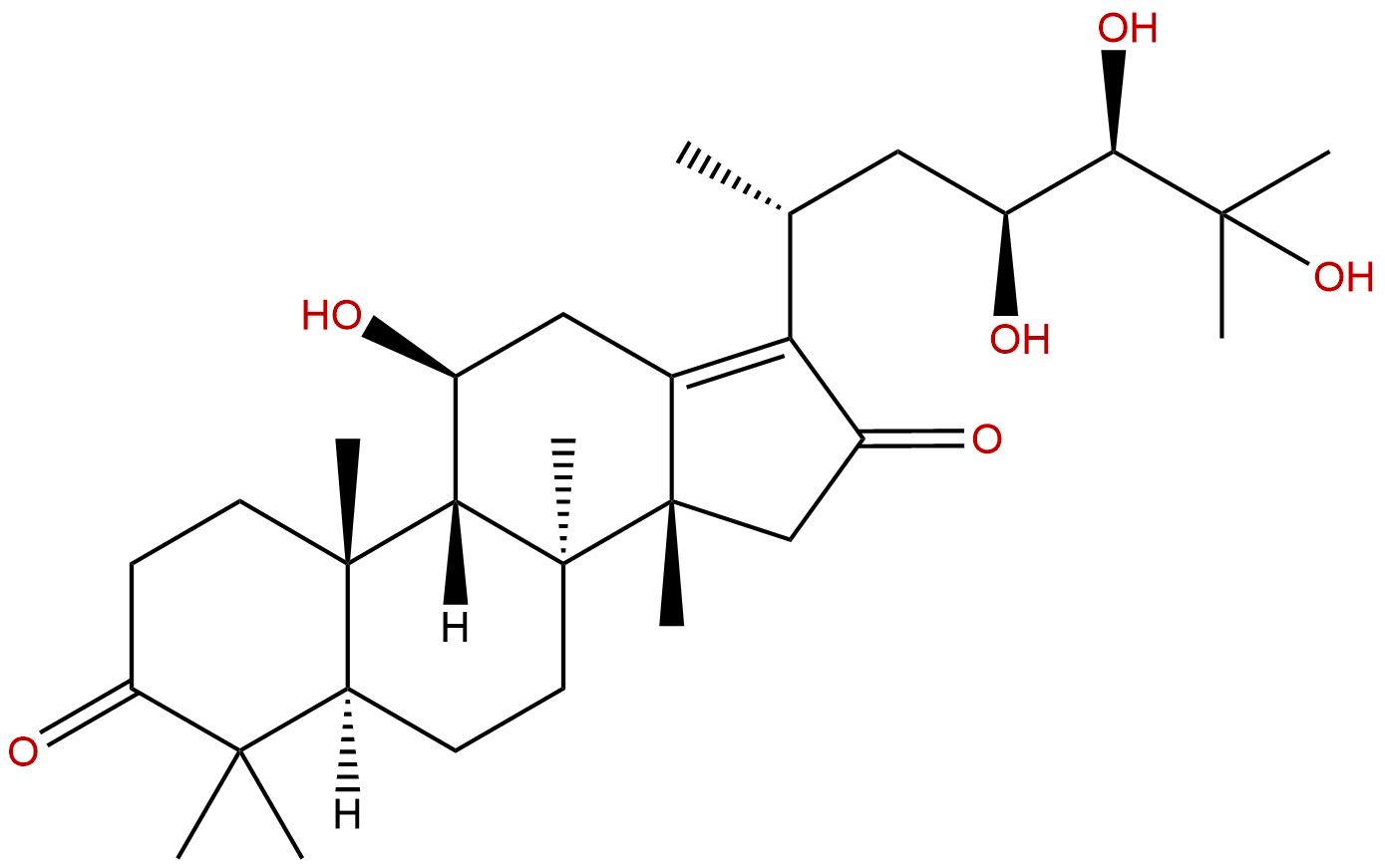
16 oxo Alismatal A belongs to the terpene type tetracyclic triterpenoid compounds, and its basic skeleton is the protostane carbon framework. The chemical name of this compound is (24S) -3 β, 11 β, 23,24-tetrahydroxy-16-oxo-ortherpine-13 (17) - en-15-one, with the molecular formula C ∝₀ H ₄₈ O ₆ and a molecular weight of 504.7080. Its structural features are mainly reflected in the following aspects:
-
Four ring skeleton It has a typical four ring system of A/B/C/D terpenoids, in which there is a Δ ¹³ ⁽¹⁷⁾ double bond between the C and D rings. This unsaturated structural unit is a characteristic structural feature of this class of compounds.
-
oxygen-containing functional group The molecule contains four hydroxyl groups (3 β - OH, 11 β - OH, 23-OH, 24-OH) and one ketone carbonyl group (C-16 position), as well as one carbonyl group located at C-15 position. The presence of these oxygen-containing functional groups not only determines the polarity and reactivity of the compound, but also serves as a key structural basis for its interaction with biological targets.
-
Side chain structure The C-17 position is connected to a side chain containing four carbon atoms, and the C-24 position at the end of the side chain is hydroxyl substituted. The C-23 position is also hydroxyl substituted. This multi hydroxyl side chain structure is more common in triterpenoids of Alisma.
-
Stereochemistry This compound has multiple chiral centers, including C-3, C-11, C-20, C-24, etc. Its stereoconfiguration has a significant impact on its biological activity. Among them, the C-3 hydroxyl group is in the β configuration, the C-11 hydroxyl group is also in the β configuration, and the C-24 hydroxyl group is in the S configuration.
Physical and chemical property parameters
According to the results of computational chemistry and experimental measurements, the main physicochemical properties of 16 oxo Alisma alcohol A are as follows:
- molecular weight:504.7080 Da
- Lipid water partition coefficient (LogP)3.2871 indicates that the compound has a certain degree of lipophilicity, but has not yet reached a highly lipophilic level, which is related to the presence of multiple hydroxyl groups in its molecule.
- Topological Polarity Surface Area (TPSA)115.0600 Å ², which is greater than 100 Å ², suggests that the compound may have lower membrane permeability, but still within the acceptable range for oral medication.
- Water solubility:0.0120 mg/mL, Poor water solubility to some extent limits its bioavailability.
- Blood-brain barrier permeability Low indicates that the compound is not easily able to cross the blood-brain barrier and has a low risk of central nervous system side effects.
- HERG inhibition Negative, indicating a low risk of the compound causing QT interval prolongation in the heart.
- Ames test: 0.0, indicating that the compound did not exhibit mutagenicity in the bacterial recovery mutation test and had a low risk of genetic toxicity.
These physical and chemical properties indicate that 16 oxo laxative alcohol A has good safety characteristics, but its poor water solubility may become one of the key factors restricting its further development. Future drug chemical modification strategies should focus on improving water solubility and oral bioavailability.
Plant sources and extraction methods
Plant-based
16 oxo Alismatal Alcohol A is mainly derived from the plant Alismata in the Alismataceae family(Alisma orientale Dried tubers of (Sam.) Juzep. Alisma is a perennial aquatic or swamp herbaceous plant widely distributed in China, Japan, South Korea, the Russian Far East, and Southeast Asian countries. In China, the main production areas of Alisma include Fujian, Sichuan, Jiangxi, Guangdong, Guangxi and other places. Among them, the quality of Alisma produced in Jianou, Fujian and Pengshan, Sichuan is excellent, known as "Jian Alisma" and "Chuan Alisma".
In addition to authentic Alisma, it belongs to the same plant as Alisma orientale(Alisma orientale)Narrow leaved Alisma(Alisma canaliculatum)And European Alisma(Alisma plantago-aquatica)It also contains similar triterpenoid components, but there are differences in their content and composition ratio. Research has shown that the content of 16 oxo Alisma alcohol A in the tubers of Alisma is relatively low and belongs to trace components. Its content is influenced by various factors such as origin, harvest season, processing method, and storage conditions.
Extraction and Separation Purification Methods
extraction method
The extraction of 16 oxo Alismatal A is usually carried out using organic solvent extraction method. Common extraction solvents include methanol, ethanol, ethyl acetate, etc. Considering the moderate polarity of the compound, an ethanol water mixed solvent (usually 70% -95% ethanol) is an ideal extraction solvent that can effectively extract the target compound while balancing cost and safety. Extraction methods can include cold soaking, reflux extraction, ultrasound assisted extraction, or microwave-assisted extraction.
In recent years, supercritical fluid extraction technology has also been applied to the extraction of triterpenoids from Alisma. This technology has the advantages of high extraction efficiency, low solvent residue, and environmental friendliness, but the high equipment cost limits its large-scale application.
Separation and purification methods
The separation and purification of 16 oxo senetol A from crude extract of Alisma usually requires a multi-step chromatographic separation process:
-
Preliminary separation After concentrating the ethanol extract, it was extracted with petroleum ether, ethyl acetate, and n-butanol in sequence. 16 oxo Alisma alcohol A was mainly enriched in the ethyl acetate extraction site.
-
Column chromatography separation Preliminary separation was performed using silica gel column chromatography, followed by gradient elution using solvent systems such as chloroform methanol or petroleum ether acetone. Collect the fraction containing the target compound based on the results of thin-layer chromatography (TLC) detection.
-
Fine separation: It is further purified by reversed phase silica gel column chromatography (such as ODS column), Sephadex LH-20 gel column chromatography or preparative high-performance liquid chromatography (Prep HPLC). Among them, Prep HPLC is a key step in obtaining high-purity 16 oxo Alismatal A, usually using a C18 chromatographic column with acetonitrile water or methanol water system as the mobile phase.
-
Structural Identification The purified compound was structurally confirmed by techniques such as nuclear magnetic resonance spectroscopy (¹ H-NMR, ¹ ³ C-NMR, DEPT, HSQC, HMBC, NOESY, etc.), high-resolution mass spectrometry (HR-ESI-MS), and infrared spectroscopy (IR).
It is worth noting that due to the low content of 16 oxo Alisma alcohol A in Alisma and its coexistence with multiple triterpenoid compounds with similar structures, the separation and purification process is relatively complicated, and the yield is usually low. In recent years, the application of new separation methods such as high-speed countercurrent chromatography (HSCCC) and molecular imprinting technology has provided a new approach for efficiently obtaining this compound.
Pharmacological activity research
Diuretic and renal protective effects
As a traditional diuretic, the diuretic activity of Alisma is closely related to the triterpenoid components it contains. Research has shown that 16 oxo laxative alcohol A can significantly increase the urine output of experimental animals, while reducing the concentrations of Na ⁺, K ⁺, and Cl ⁻ in urine, exhibiting a similar mode of action to the classic diuretic furosemide. Further research has found that the compound can inhibit the expression of aquaporin 2 (AQP2) in renal collecting duct epithelial cells, thereby reducing water reabsorption and promoting urine production.
In terms of renal protection, 16 oxo Alisrinol A has a protective effect on cisplatin induced damage to renal tubular epithelial cells. The mechanism may be related to the inhibition of oxidative stress, reduction of inflammatory cytokine release, and anti apoptotic effects. In addition, the compound can also reduce urinary protein excretion of diabetes nephropathy model rats, improve the degree of glomerulosclerosis and renal interstitial fibrosis, suggesting that it has potential application value in the treatment of diabetes nephropathy.
Anti inflammatory and immune regulatory activity
Inflammatory response is a common pathological basis for the occurrence and development of various diseases. 16 oxo Alisrinol A exhibits significant anti-inflammatory activity in various inflammatory models. In a macrophage model stimulated by lipopolysaccharide (LPS), this compound can dose dependently inhibit the production of inflammatory mediators such as nitric oxide (NO), prostaglandin E ₂ (PGE ₂), tumor necrosis factor - α (TNF - α), interleukin-6 (IL-6), and interleukin-1 β (IL-1 β). Its anti-inflammatory mechanism is related to the inhibition of the activation of nuclear factor kappa B (NF - κ B) signaling pathway and mitogen activated protein kinase (MAPK) signaling pathway.
In an in vivo inflammatory model, 16 oxo laxative alcohol A can significantly alleviate carrageenan induced paw swelling in rats and xylene induced ear swelling in mice, reduce myeloperoxidase (MPO) activity and malondialdehyde (MDA) content in inflammatory tissues, and increase superoxide dismutase (SOD) activity. These results indicate that the compound has the potential to be developed as a novel anti-inflammatory drug.
Hypolipidemic and antiatherosclerotic effects
Hyperlipidemia is an important risk factor for atherosclerotic cardiovascular disease. 16 oxo Alisrinol A exhibits significant lipid-lowering activity in various animal models of hyperlipidemia. Research has shown that this compound can significantly reduce the levels of total cholesterol (TC), triglycerides (TG), and low-density lipoprotein cholesterol (LDL-C) in the serum of rats fed a high-fat diet, while increasing the level of high-density lipoprotein cholesterol (HDL-C).
The mechanism of lowering blood lipids involves multiple aspects: ① inhibiting the absorption of cholesterol in the intestine; ② Upregulate the expression of low-density lipoprotein receptor (LDLR) in the liver and promote the clearance of LDL-C; ③ Activate the AMP activated protein kinase (AMPK) signaling pathway, inhibit the activity of 3-hydroxy-3-methylglutaryl-CoA reductase (HMGCR), and reduce cholesterol synthesis; ④ Promote the conversion and excretion of cholesterol to bile acids.
In terms of anti atherosclerosis, 16 oxyalisol A can inhibit vascular endothelial cell injury and monocyte adhesion induced by oxidized low density lipoprotein (ox LDL), reduce the formation of foam cells, inhibit the abnormal proliferation and migration of vascular smooth muscle cells, and thus delay the formation and development of atherosclerotic plaques in arteries.
Antitumor activity
In recent years, the anti-tumor activity of 16 oxo Alismatal A has attracted widespread attention. In vitro experiments showed that the compound had a proliferation inhibitory effect on a variety of tumor cell lines, including liver cancer cells (HepG2, Huh7), lung cancer cells (A549), breast cancer cells (MCF-7), colon cancer cells (HT-29) and prostate cancer cells (PC-3). Its anti-tumor mechanism mainly includes:
-
Inducing cell cycle arrest By upregulating the expression of cyclin dependent kinase inhibitors such as p21 and p27, and downregulating the expression of cyclin and cyclin dependent kinase (CDK), the cell cycle is arrested in the G ₀/G ₁ phase or G ₂/M phase.
-
Inducing cell apoptosis Activation of the mitochondrial apoptosis pathway leads to a decrease in mitochondrial membrane potential, release of cytochrome c, and subsequent activation of Caspase-9 and Caspase-3, ultimately inducing cell apoptosis. Meanwhile, the compound can upregulate the expression of pro apoptotic protein Bax, downregulate the expression of anti apoptotic protein Bcl-2, and alter the Bax/Bcl-2 ratio.
-
Inhibit tumor cell migration and invasion By inhibiting the expression and activity of matrix metalloproteinases (MMP-2, MMP-9), the invasive ability of tumor cells is reduced.
-
Reverse multidrug resistance Research has shown that 16 oxo laxative alcohol A can inhibit the expression and function of P-glycoprotein (P-gp), increase the sensitivity of drug-resistant tumor cells to chemotherapy drugs, and has the potential to be developed as a chemotherapy sensitizer.
Other pharmacological activities
In addition to the main activities mentioned above, 16 oxo laxative alcohol A also has the following pharmacological effects:
- Hepatoprotective effect It has a protective effect on liver cell damage induced by carbon tetrachloride, acetaminophen, and alcohol, and its mechanism is related to antioxidant, anti-inflammatory, and inhibition of hepatic stellate cell activation.
- Hypoglycemic effect It can improve insulin resistance, promote glucose uptake and utilization, inhibit gluconeogenesis, and has hypoglycemic effect on type 2 diabetes model animals.
- Anti osteoporosis effect By activating the Wnt/β - catenin signaling pathway, it promotes osteoblast differentiation and bone formation, while inhibiting osteoclast activity and reducing bone resorption.
- Neuroprotective effect It has a protective effect on the neurotoxicity induced by β - amyloid protein and may have potential value in the treatment of Alzheimer's disease.
Mechanism of action and molecular targets
Regulation of main signaling pathways
The pharmacological activity of 16 oxo Alisrinol A involves the regulation of multiple signaling pathways, among which the more extensively studied ones include:
-
NF - κ B signaling pathway This compound can inhibit the phosphorylation and degradation of I κ B α, prevent the nuclear translocation of NF - κ B p65 subunit, and thus suppress the expression of downstream inflammation related genes. This is one of the core mechanisms of its anti-inflammatory activity.
-
MAPK signaling pathway 16 oxo Alisrinol A can inhibit LPS induced phosphorylation of p38 MAPK, JNK, and ERK1/2, thereby reducing the production of inflammatory mediators.
-
AMPK signaling pathway This compound can activate AMPK, thereby inhibiting the activity of acetyl CoA carboxylase (ACC) and HMGCR, and regulating lipid metabolism. The activation of AMPK is also involved in its hypoglycemic and anti-tumor activities.
-
PI3K/Akt/mTOR signaling pathway 16 oxo Alisol A can inhibit the overactivation of the PI3K/Akt/mTOR signaling pathway, which plays an important role in anti-tumor and anti insulin resistance.
-
Wnt/β - catenin signaling pathway This compound can activate the Wnt/β - catenin signaling pathway, promote osteoblast differentiation, and is the molecular basis of its anti osteoporosis activity.
Molecular target recognition
Through techniques such as molecular docking, surface plasmon resonance (SPR), and drug affinity reaction target stability (DARTS), researchers have preliminarily identified the potential molecular targets of 16 oxo Alismatal A:
- NF-κB p65 This compound can directly bind to the NF - κ B p65 subunit, interfering with its ability to bind to DNA.
- AMPKαBy binding to the allosteric site of AMPK α subunit, AMPK activity is activated.
- P-glycoprotein (P-gp)As an inhibitor of P-gp, this compound can competitively bind to the drug binding site of P-gp.
- Aquaporin 2 (AQP2)By downregulating the expression of AQP2, it exerts a diuretic effect.
It is worth noting that the multi-target action characteristics of 16 oxo laxative alcohol A are consistent with the natural product's "multi-component multi-target" action characteristics, which also provides a theoretical basis for its application in the treatment of complex diseases. However, research on its direct targets is still in its early stages and requires more high-resolution biophysical and structural biology studies to confirm.
Evaluation of drug properties and pharmacokinetics
Drugability assessment
Based on Lipinski's "Five Rules" and Veber's Rules, a systematic evaluation was conducted on the pharmacological properties of 16 oxo Alismatal A:
- molecular weight:504.7080 Da, Slightly above the threshold of 500 Da, but still within an acceptable range.
- Lipid water partition coefficient (LogP)3.2871, meets the requirement of LogP<5.
- Hbond donor 4 hydroxyl groups, meeting the requirement of ≤ 5 hydrogen bond donors.
- Number of hydrogen bond acceptors 6 oxygen atoms, meeting the requirement of hydrogen bond acceptor number ≤ 10.
- Number of rotatable keys The molecule contains multiple rotatable bonds, but has not yet exceeded the threshold of 10.
- Topological Polarity Surface Area (TPSA)115.0600 Å ², slightly above the threshold of 140 Å ², suggests that oral absorption may be limited.
Overall, 16 oxo laxative alcohol A basically conforms to the synthetic drug rules, but its high molecular weight and polar surface area may affect its oral bioavailability. In addition, poor water solubility (0.0120 mg/mL) is the main bottleneck restricting its medicinal properties.
Pharmacokinetic characteristics
At present, there are few systematic studies on the pharmacokinetics of 16 oxo laxative alcohol A. However, based on its physicochemical properties and preliminary research results, it can be inferred that its pharmacokinetic characteristics are:
-
absorb Due to poor water solubility and high molecular weight, the oral absorption of this compound may be poor and its bioavailability may be low. Its LogP value is 3.2871, indicating a certain membrane permeability, but may be affected by P-gp efflux.
-
distribution The compound may have a high binding rate with plasma proteins and a moderate distribution volume. Due to the low permeability of the blood-brain barrier, the distribution of the central nervous system is limited.
-
Metabolism As a triterpenoid compound, 16 oxo Alisrinol A may undergo extensive phase I and phase II metabolic reactions in the liver, including hydroxylation, oxidation, glucuronic acid binding, and sulfate binding. The CYP450 enzyme system may be involved in its metabolic processes.
-
excretion Metabolites may be mainly excreted through bile and urine. The renal excretion of the prototype drug may be lower.
Structural Modification and Optimization Strategies
The following structural modification strategies can be adopted to address the shortcomings in the pharmacological properties of 16 oxo Alismatal A:
- Improve water solubility Introducing phosphate, amino acid, or sugar groups into molecules to prepare prodrugs or water-soluble derivatives.
- Improve oral absorption Adopting novel drug delivery systems such as liposomes, nanoparticles, and cyclodextrin inclusion complexes to enhance their oral bioavailability.
- Optimize pharmacokinetics Reduce metabolic rate, prolong half-life, and increase drug exposure through structural modification.
- Improve targeting ability Design derivatives targeting specific tissues or cells to enhance therapeutic efficacy and reduce toxic side effects.
Clinical application prospects and prospects
Potential indications
Based on the pharmacological activity spectrum of 16 oxo laxative alcohol A, it has potential application value in the treatment of the following diseases:
-
Diseases of the urinary system As one of the main active ingredients of Alisma orientalis, this compound has a traditional application basis in the treatment of renal edema, nephrotic syndrome, diabetes nephropathy, urinary tract infection and other urinary diseases.
-
Metabolic diseases Its hypolipidemic, hypoglycemic and anti atherosclerotic activities make it a potential drug in the treatment of hyperlipidemia, type 2 diabetes and cardiovascular diseases.
-
Inflammatory diseases The anti-inflammatory activity suggests that it can be used to treat chronic inflammatory diseases such as rheumatoid arthritis, inflammatory bowel disease, and chronic hepatitis.
-
tumor The anti-tumor activity and ability to reverse multidrug resistance make it promising for development as an adjuvant therapy for anti-tumor treatment.
Development Challenges and Countermeasures
Despite its various pharmacological activities, the development of 16 oxo Alismatal A still faces the following challenges:
-
Source restrictions The content in Alisma is relatively low, and natural resources are limited, making it difficult to meet large-scale production and clinical needs. The countermeasures include: establishing artificial cultivation bases to optimize harvesting processes; Study biosynthetic pathways and explore heterologous expression systems; Develop fully synthetic or semi synthetic routes.
-
Low bioavailability Poor water solubility and low oral absorption are the main obstacles that restrict its clinical application. Countermeasures include: designing prodrug strategies; Developing new drug delivery systems; Perform structural optimization to improve metabolic stability.
-
The mechanism of action is unclear Although multiple potential targets have been identified, further research is still needed on the direct action targets and detailed molecular mechanisms. The countermeasures include: applying new technologies such as chemical proteomics and drug affinity reaction target stability for target discovery; Conduct structural biology research to analyze the structure of compound target protein complexes.
-
Incomplete safety evaluation Currently, there is a lack of systematic toxicological research data. The countermeasures include conducting systematic preclinical safety evaluations of acute toxicity, long-term toxicity, reproductive toxicity, and genetic toxicity.
Future research directions
-
Study on Structure Activity Relationship Systematically study the structure-activity relationship of 16 oxo Alismatal A and its derivatives, identify key pharmacophores, and provide guidance for structural optimization.
-
Combination drug research Explore the synergistic effects of this compound with other active ingredients of Alisma or clinical drugs, and develop compound formulations.
-
New drug delivery system Develop new drug delivery systems such as liposomes, nanoemulsions, and solid dispersions to improve bioavailability.
-
Clinical translational research On the basis of completing sufficient preclinical research, promote the compound to enter the clinical trial stage.
Conclusion
As an important triterpenoid compound of the original terpenoid type in Alisma, 16 oxo zeoliticol A has become a hot molecule in the field of natural product research due to its unique chemical structure and diverse pharmacological activities. From diuresis, anti-inflammatory, lipid-lowering to anti-tumor, this compound exhibits a wide spectrum of biological activities, and its mechanism of action involves the regulation of multiple signaling pathways such as NF - κ B, MAPK, AMPK, etc. The pharmacological evaluation shows that the compound has good safety characteristics, but poor water solubility and low oral bioavailability are the main bottlenecks restricting its further development.
In the future, with the advancement of separation and purification technology, innovation in structural modification strategies, and deepening of pharmacological research, 16 oxo Alismatal A is expected to overcome existing shortcomings and develop into an innovative drug lead compound for the treatment of urinary system diseases, metabolic diseases, tumors, and other diseases. Meanwhile, in-depth research on this compound will also provide important scientific basis for revealing the pharmacological substance basis of Alisma and promoting the modernization and internationalization of traditional Chinese medicine. Extracting active natural products from traditional Chinese medicine and conducting systematic research using modern medicinal chemistry and pharmacology methods is an important approach to innovative drug discovery. The research process of 16 oxo Alismatal A is a vivid embodiment of this concept.