


Synonym name:
Catalogue No.: BP0584
Cas No.: 24211-30-1
Formula: C17H16O5
Mol Weight: 300.31
Botanical Source: the leaves of Rhododendron farrerae and other Rhododendron spp., from Cyrtomium spp., Phormium tenax and Angophora spp.
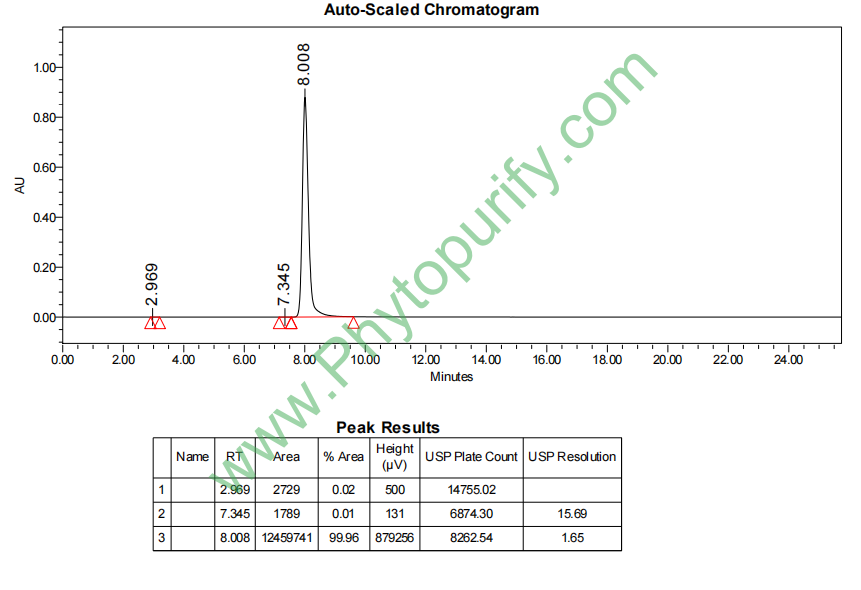
Purity: 95%~99%
Analysis Method: HPLC-DAD or/and HPLC-ELSD
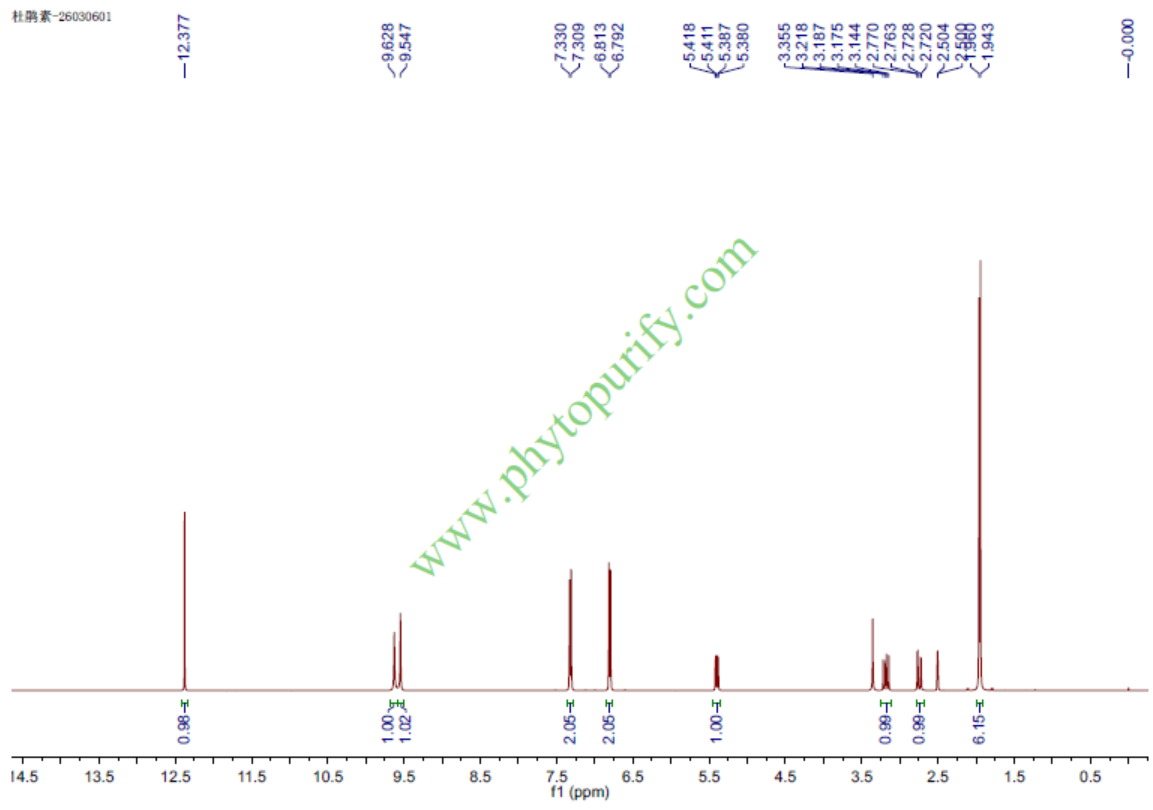
Identification Method: Mass, NMR
Packing: Brown vial or HDPE plastic bottle
Can be supplied from milligrams to grams.
For Reference Standard and R&D, Not for Human Use Directly.
Inquire for bulk scale.
Description:
Farrerol has antioxidative, anti-bacterial, anti-inflammatory, antiangiogenic activities, it is a potential candidate for the intervention of endothelial-injury-associated cardiovascular diseases. Farrerol inactivates KEAP-1 or activates the Akt, p38 and ERK to facilitate the release of Nrf2 from Keap1 and subsequent reduces the intracellular production of reactive oxygen species via the induction of HO-1 expression. Farrerol can inhibit angiogenesis through down regulation of Akt/mTOR, Erk and Jak2/Stat3 signal pathway, and can inhibit IL-1β-induced inflammatory responses in osteoarthritis chondrocytes by blocking PI3K/Akt/NF-κB signaling pathway.
References:
Chem Biol Interact. 2015 Jun 22.
The antioxidative potential of farrerol occurs via the activation of Nrf2 mediated HO-1 signaling in RAW 264.7 cells.
Farrerol, (S)-2,3-dihydro-5,7-dihydroxy-2-(4-hydroxyphenyl)-6,8-dimethyl-4-benzopyrone, isolated from rhododendron, has been shown to have antioxidative potential, but the molecular mechanism underlying this activity remains unclear. The inducible expression of heme oxygenase-1 (HO-1), a potent antioxidative and cytoprotective enzyme, is known to play an important role in cytoprotection in a variety of pathological models.
METHODS AND RESULTS:
In this study, we evaluated the antioxidative potential of Farrerol against oxidative damage and investigated its antioxidative mechanism in RAW 264.7 cells. The molecular mechanism underlying the cytoprotective function of Farrerol was determined by analyzing intracellular signaling pathways, transcriptional activation and the inhibitory effect of HO-1 on ROS production. Farrerol induced antioxidant enzymes mRNA expression, HO-1 protein expression and nuclear translocation of NF-E2-related factor 2 in RAW 264.7 macrophage cells. Farrerol down-regulated the expression of the Keap1 protein and the thiol reducing agents attenuated Farrerol-induced HO-1 expression. Further investigation utilizing Western blotting and specific inhibitors of Akt, p38, JNK and ERK demonstrated that Akt, p38, and ERK axis of signaling pathway mediates HO-1 expression. Moreover, tert-butyl hydroperoxide (t-BHP)-induced oxidative damage was ameliorated by Farreroltreatment in a dose-dependent manner, which was abolished by Akt, p38, ERK and HO-1 inhibitors (Snpp). It is hence likely that Farrerol inactivated KEAP-1 or activated the Akt, p38 and ERK to facilitate the release of Nrf2 from Keap1 and subsequent reduced the intracellular production of reactive oxygen species via the induction of HO-1 expression.
CONCLUSIONS:
These results support the central role of HO-1 in the cytoprotective effect of Farrerol.
Microb Pathog. 2013 Dec;65:1-6.
Farrerol regulates antimicrobial peptide expression and reduces Staphylococcus aureus internalization into bovine mammary epithelial cells.
Mastitis, defined as inflammation of the mammary gland, is an infectious disease with a major economic influence on dairy industry. Staphylococcus aureus is a common gram-positive pathogen that frequently causes subclinical, chronic infection of the mammary gland in dairy cows. Farrerol, a traditional Chinese medicine isolated from rhododendron, has been shown to have anti-bacterial activity. However, the effect of Farrerol on S. aureus infection in mammary epithelium has not been studied in detail. The aim of this study was to investigate the effect of Farrerol on the invasion of bovine mammary epithelial cells (bMEC) by S. aureus.
METHODS AND RESULTS:
The expression of antimicrobial peptide genes by bMEC were assessed in the presence or absence of S. aureus infection. Our results demonstrated that Farrerol (4-16 μg/ml) reduced > 55% the internalization of S. aureus into bMEC. We also found that Farrerol was able to down-regulate the mRNA expression of tracheal antimicrobial peptide (TAP) and bovine neutrophil β-defensin 5 (BNBD5) in bMEC infected with S. aureus. The Nitric oxide (NO) production of bMEC after S. aureus stimulation was decreased by Farrerol treatment. Furthermore, Farrerol treatment suppressed S. aureus-induced NF-κB activation in bMEC.
CONCLUSIONS:
These results demonstrated that Farrerol modulated TAP and BNBD5 gene expression in mammary gland, enhances bMEC defense against S. aureus infection and could be useful in protection against bovine mastitis.
Eur J Pharmacol. 2015 Oct 5;764:443-7.
Anti-inflammatory effects of farrerol on IL-1β-stimulated human osteoarthritis chondrocytes.
The present study aimed to investigate the anti-inflammatory effects and the underlying molecular mechanism of Farrerol on IL-1β-stimulated human osteoarthritis chondrocytes.
METHODS AND RESULTS:
Chondrocytes were pretreated with Farrerol 1h before IL-1β stimulation. The effects of Farrerol on NO and PGE2 production were tested by Griess reagent and ELISA. The effects of Farrerol on COX-2, iNOS, Akt, phosphorylated Akt, and NF-κB activation were measured by western blot analysis. The results showed that Farrerol remarkably inhibited IL-1β-induced NO and PGE2 production, as well as COX-2 and iNOS expression. Farrerol also inhibited IL-1β-induced NF-κB activation. Furthermore, Farrerol significantly inhibited IL-1β-induced phosphorylation of PI3K and Akt.
CONCLUSIONS:
In conclusion, these results indicated that Farrerol inhibited IL-1β-induced inflammatory responses in osteoarthritis chondrocytes by blocking PI3K/Akt/NF-κB signaling pathway.
HPLC of Farrerol
HNMR of Farrerol
Storage conditions:Short-term storage at 2~8℃, long-term storage at -20 ~ -80℃
Natural products, as an important source of drug discovery, have attracted much attention due to their structural diversity and biological activity. Farrerol is a flavonoid compound isolated from Rhododendron spp., which has become a hot topic in pharmacological research in recent years due to its multiple biological activities. Rhododendron extract not only exhibits significant antioxidant, anti-inflammatory, and anti-tumor activities, but also has various pharmacological effects such as neuroprotection and liver protection, demonstrating broad potential for medicinal development. Especially in the treatment of tumor diseases such as breast cancer, rhododendron shows a complex and effective mechanism by regulating a variety of key molecular targets. This article provides a systematic review of the chemical structure, sources, pharmacological activity, mechanism of action, and pharmacological evaluation of rhododendron, aiming to provide theoretical basis and research direction for its clinical application and new drug development.
Farrerol (CAS number: 24211-30-1) is a flavonoid compound with a molecular formula of C17H14O5 and a molecular weight of 300.31. Its structural characteristics include a typical flavonoid skeleton with multiple hydroxyl substituents, endowing it with excellent antioxidant activity. The LogP value of rhododendron is 2.82, indicating its moderate lipid solubility, which is beneficial for membrane penetration. The topological polar surface area (TPSA) is 86.99, indicating moderate polarity and facilitating binding with biological targets. Low water solubility (0.1999 mg/mL) indicates limited solubility in the aqueous phase, which may affect its bioavailability. The low permeability of the blood-brain barrier suggests that its distribution in the central nervous system is somewhat limited. The hERG channel inhibition experiment showed a negative result, indicating a low risk of cardiac toxicity. The Ames test score is 0.6, indicating a low risk of genotoxicity.
Rhododendron is mainly found in plants of the Rhododendron genus, especially in some traditional Chinese medicinal herbs such as Dendrobium officinale and Rhododendron. Its content is greatly affected by plant species, growth environment, and harvesting period. The extraction method usually uses organic solvent extraction combined with chromatographic separation technology. Common extraction processes include:
In recent years, ultrasound assisted extraction and microwave-assisted extraction techniques have also been applied to the extraction of rhododendron, improving extraction efficiency and purity.
Rhododendron has significant free radical scavenging ability, which can effectively reduce intracellular reactive oxygen species (ROS) levels and alleviate cell damage caused by oxidative stress. In vitro experiments have shown that rhododendron enhances the ability of cells to resist oxidative damage by increasing the activity of intracellular antioxidant enzymes such as superoxide dismutase (SOD) and glutathione peroxidase (GPx).
Rhododendron extract can inhibit the expression of inflammatory factors, including tumor necrosis factor - α (TNF - α), interleukin-6 (IL-6), and nitric oxide (NO), and alleviate the inflammatory response. The mechanism involves inhibition of the nuclear factor kappa B (NF - κ B) signaling pathway, blocking the transmission of pro-inflammatory signals, and reducing the release of inflammatory mediators.
Rhododendron has shown the ability to inhibit proliferation and induce apoptosis in many tumor cell lines, especially in breast cancer research. Its anti-tumor effect involves the regulation of multiple signaling pathways, including activating the AMPK pathway, inhibiting STAT3 signaling, regulating BCL2 family protein expression, and promoting cancer cell apoptosis. In addition, rhododendron can inhibit the migration and invasion of tumor cells, partially due to the decrease in MMP2 enzyme activity.
Rhododendron protects nerve cells from damage by inhibiting oxidative stress and inflammatory responses. Related studies have shown that it can alleviate neuroinflammation and cell apoptosis in neurodegenerative disease models, improve cognitive dysfunction, and demonstrate potential neuroprotective value.
Rhododendron has shown protective effects on various liver injury models, and can alleviate liver cell necrosis and fibrosis. Its mechanisms include antioxidant, anti-inflammatory, and regulation of liver cell apoptosis, demonstrating its potential as an adjuvant therapy for liver diseases.
The multi-target mechanism of action of rhododendron is the basis for its various pharmacological activities. For breast cancer, rhododendron mainly regulates the following key targets:
In summary, rhododendron achieves comprehensive regulation of tumor cells through multi-target and multi pathway synergistic effects.
The pharmacological parameters of rhododendron indicate that it has certain potential for drug development. Moderate molecular weight and lipid solubility are beneficial for in vivo absorption and cell membrane penetration. The TPSA value suggests moderate polarity, which may be beneficial for binding to target proteins. Low water solubility may limit its oral bioavailability, which needs to be improved through formulation optimization or drug carrier technology.
Low blood-brain barrier permeability means limited distribution of rhododendron in the central nervous system, but this also reduces the potential risk of central toxicity. The hERG channel has no inhibitory effect, indicating good cardiac safety. The Ames test results showed a low risk of genotoxicity and met safety requirements.
In terms of pharmacokinetics, existing research is relatively limited. The metabolic pathways in the body may involve phase I and phase II metabolic enzymes in the liver, and the activity and toxicity of metabolites need to be further evaluated. The parameters such as half-life, oral absorption rate, and tissue distribution still need to be systematically studied to guide clinical formulation design and dosing regimens.
Rhododendron extract, as a multifunctional natural flavonoid compound, exhibits a wide range of pharmacological activities and good safety characteristics, especially showing unique advantages in the field of anti-tumor. The multi-target mechanism for breast cancer provides a theoretical basis for its clinical development. Future research should focus on the following aspects:
With the development of molecular biology and medicinal chemistry, the mechanism of action of rhododendron will become clearer, laying a solid foundation for its transformation into clinical drugs.
Rhododendron extract, as a natural flavonoid compound derived from Rhododendron flowers, exhibits broad medicinal value due to its multi-target and multi pathway pharmacological activities. Its research achievements in antioxidant, anti-inflammatory, anti-tumor, neuroprotective, and liver protective aspects provide important examples for natural product pharmacology. Despite challenges such as poor water solubility and insufficient pharmacokinetic data, rhododendron is expected to become a candidate molecule for novel anti-tumor and multifunctional protective drugs through the application of modern drug development technology. Future in-depth research will promote its clinical translation and benefit more patients.
