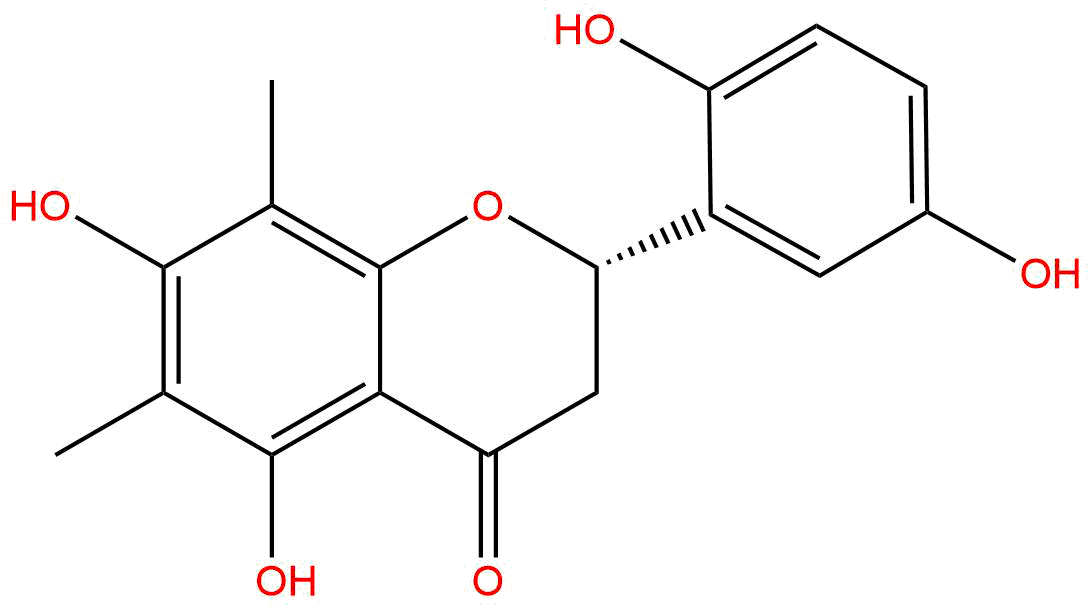


Product name: Myriacetin
Synonym name: Myrciacetin
Catalogue No.: BP2160
Cas No.: 203734-35-4
Formula: C17H16O6
Mol Weight: 316.309
Botanical Source:
Type of Compound:
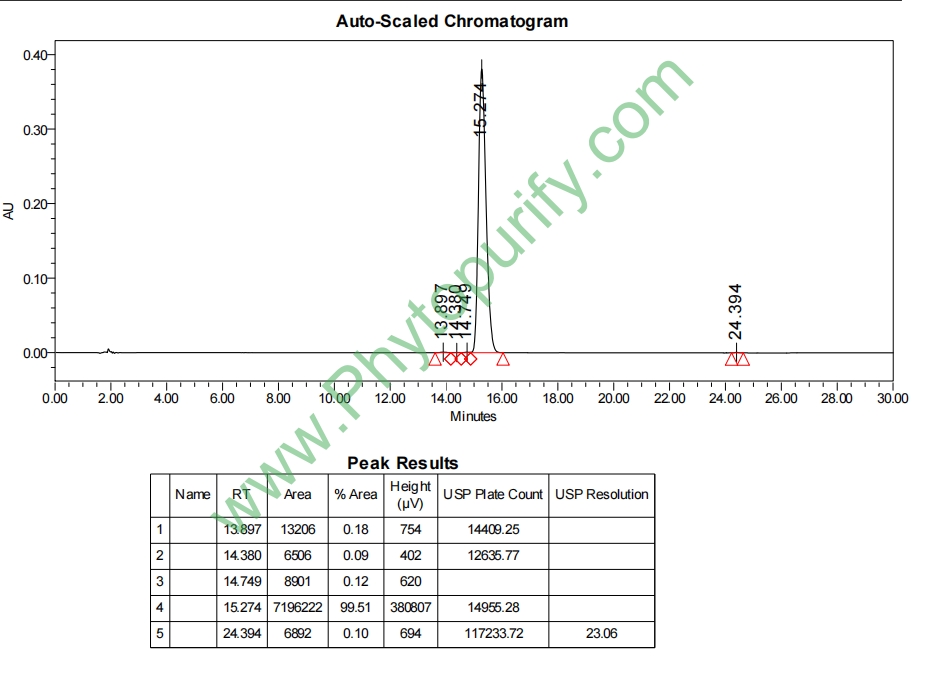
Purity: 95%~99%
Analysis Method: HPLC-DAD or/and HPLC-ELSD
Identification Method: Mass, NMR
Packing: Brown vial or HDPE plastic bottle
Storage: Store in a well closed container, protected from air and light. Put into refrigerate or freeze for long term storage.
Whenever possible, you should prepare and use solutions on the same day. However, if you need to make up stock solutions in advance, we recommend that you store the solution as aliquots in tightly sealed vials at -20℃. Generally, these will be useable for up to two weeks.
The product could be supplied from milligrams to grams
Inquire for bulk scale.
For Reference Standard and R&D, Not for Human Use Directly.
HPLC of Myriacetin
Storage conditions:Short-term storage at 2~8℃, long-term storage at -20 ~ -80℃
107.2200
2.3431
2.1239
.2974
2.9107
7.1889
Low
87.6789
3.2383
No
No
Yes
No
Yes
No
0.6
Yes
No
Yes
No
Asthma is a complex heterogeneous disease characterized by chronic airway inflammation, airway hyperresponsiveness and reversible airflow restriction. The global incidence rate continues to rise, bringing a heavy burden to the public health system. Although existing therapies represented by glucocorticoids and β 2 receptor agonists can effectively control the symptoms of most patients, some refractory asthma and adverse drug reactions still remain prominent, and there is an urgent need to develop therapeutic drugs with new mechanisms of action, precise efficacy, and high safety. In this context, searching for lead compounds from natural products has become an important strategy for new drug development. Myriacetin (CAS number: 203734-35-4), as a natural flavonoid compound that has received much attention in recent years, has shown great potential in the treatment of inflammatory diseases such as asthma due to its multi-target and multi pathway anti-inflammatory and immune regulatory activities. This article aims to systematically review the chemical structure, plant origin, pharmacological activity, molecular mechanism of action, pharmacological evaluation, and clinical application prospects of Myriacetin, in order to provide comprehensive scientific references for the in-depth research and development of this compound.
Myriacetin is a naturally occurring polyhydroxyflavonol compound. Its basic chemical skeleton is 2-phenylchromenone, and its specific chemical name is 3,5,7,3 ', 4', 5 '- hexahydroxyflavone. Its molecular formula is C15H10O8 and its molecular weight is 316.3090. This compound contains six phenolic hydroxyl groups in its structure, located at positions 5 and 7 of the A ring, positions 3 ', 4', and 5 'of the B ring, and position 3 of the C ring. This highly hydroxylated structural feature is the material basis for its strong antioxidant activity and interaction with various biomolecules.
From the analysis of physical and chemical properties, Myriacetin's theoretical lipid water partition coefficient (LogP) is 2.3431, indicating that it has a certain lipophilicity, but the presence of six hydroxyl groups gives it strong polarity. Its topological polar surface area (TPSA) is as high as 107.2200 Å ², mainly attributed to multiple hydroxyl and carbonyl oxygen atoms. Higher TPSA typically affects the membrane permeability of compounds. The predicted value of its water solubility is about 0.2974 mg/mL, which belongs to the category of slight solubility. Taking into account its moderate molecular weight (<500), suitable LogP value (<5), but high TPSA, Myriacetin basically meets multiple criteria in the five rules for generic drugs, but its oral bioavailability may face challenges. In addition, preliminary pharmacological predictions indicate that its ability to cross the blood-brain barrier is relatively low, which to some extent limits its potential application in central nervous system related diseases, but may also reduce the risk of central side effects. The prediction of key toxicity indicators shows that it has no significant inhibitory effect on hERG potassium channels, indicating a low risk of cardiac toxicity; The Ames test predicted a value of 0.6, indicating a low risk of mutagenicity and providing preliminary positive signals for its safety evaluation.
Myriacetin is relatively widely distributed in nature and mainly exists in various medicinal plants. Common sources include Myrtaceae, Fabaceae, and some ferns. For example, in the genus Myrtle(Myrtus)Plant leaves, as well as certain Lysimachia There are reports in the genus plants. These plants are often used in traditional medicine to treat inflammation, infections, and respiratory diseases, which indirectly confirms the possible pharmacological activity of Myriacetin from the perspective of ethnopharmacology.
The extraction of Myriacetin from plant materials is often carried out using organic solvent extraction method. Due to its high polarity as a polyphenolic substance, methanol, ethanol, acetone, or their mixed solvents with water are commonly used extraction media. The typical extraction process includes: soaking or refluxing the dried and crushed plant materials with an appropriate concentration of ethanol (such as 70% -80%) for several times under heating or room temperature, combining the extraction solutions, and concentrating under reduced pressure to obtain the crude extract. Subsequently, column chromatography technology needs to be further used for separation and purification. Common stationary phases include silica gel, polyamide, dextran gel (such as Sephadex LH-20) and reverse silica gel (such as ODS-C18). High performance liquid chromatography (HPLC), especially preparative HPLC, is a key step in obtaining high-purity Myriacetin monomers. Methanol water or acetonitrile water (containing a small amount of formic acid or acetic acid to adjust pH) is often used as the mobile phase for gradient elution. In addition, modern extraction techniques such as ultrasound assisted extraction and microwave-assisted extraction have also been applied, which can improve extraction efficiency, shorten time, and reduce solvent consumption. During the extraction process, attention should be paid to avoiding light and operating at low temperatures to prevent the oxidation and degradation of its phenolic hydroxyl structure.
A large number of in vitro and in vivo pharmacological studies have shown that Myriacetin has a wide range of biological activities, among which its outstanding anti-inflammatory, antioxidant, and anti allergic activities are the most prominent, which constitutes the core of its anti asthma potential.
anti-inflammatory activity Myriacetin can dose dependently inhibit the production of inflammatory mediators such as nitric oxide (NO) and prostaglandin E2 (PGE2) in various inflammatory cell models, such as lipopolysaccharide (LPS) - stimulated macrophage RAW264.7 and human monocyte THP-1. Myriacetin exhibits significant anti-inflammatory effects in acute inflammation models induced by carrageenan or histamine in rat paw swelling, and increased intra-abdominal capillary permeability in mice induced by acetic acid. More importantly, in the classic mouse asthma model induced by ovalbumin (OVA), oral administration of Myriacetin significantly reduced the infiltration of airway inflammatory cells (especially eosinophils), lowered the levels of inflammatory factors in bronchoalveolar lavage fluid (BALF), and improved lung tissue pathological damage.
antioxidant activity Myriacetin's multiple phenolic hydroxyl groups are excellent hydrogen donors that can effectively scavenge DPPH radicals, ABTS radicals, superoxide anions, and hydroxyl radicals. Its antioxidant capacity (ORAC value) is strong. In the cellular oxidative stress model, it can increase intracellular glutathione (GSH) levels, enhance the activity of superoxide dismutase (SOD) and catalase (CAT), and reduce malondialdehyde (MDA) content, thereby protecting cells from oxidative damage. Oxidative stress is a key driving factor for airway inflammation and remodeling in asthma, therefore its antioxidant effect is an important component of its anti asthma mechanism.
Antiallergic and bronchodilator effects Research has shown that Myriacetin can inhibit degranulation of mast cells and histamine release. In the ex vivo tracheal tube experiment, it can counteract the contraction of airway smooth muscle caused by histamine or acetylcholine, indicating its direct bronchodilator effect. In addition, it can regulate the Th1/Th2 immune balance and inhibit the overexpression of Th2 cytokines (such as IL-4, IL-5, IL-13), which is the core immune characteristic of allergic asthma.
Other activities The study also suggests that Myriacetin may have anti-tumor, antibacterial, neuroprotective and other activities, but the correlation between these and its anti asthma effects is weak, which will not be elaborated here.
The anti asthma effect of Myriacetin is not achieved through a single target, but through a complex multi-target network that works synergistically, mainly involving the regulation of inflammatory mediator synthases, signal transduction pathways, inflammatory factors, and airway tension regulatory proteins.
Inhibition of key enzymes involved in the synthesis of inflammatory mediators:
Regulating key signal transduction pathways and transcription factors:
Regulating airway tension and neuroinflammation:
In summary, Myriacetin forms a synergistic "multi-target drug" network by simultaneously acting on multiple asthma related key targets such as ALOX5, PTGS2, NF - κ B (RELA), MAPK1, and PDE4D, inhibiting airway inflammation, hyperresponsiveness, and remodeling from multiple links. This may be its potential advantage over single target drugs.
Although Myriacetin exhibits excellent pharmacological activity, its successful development as a drug depends on its drug like and pharmacokinetic (PK) properties.
Absorption, distribution, metabolism, excretion (ADME):
Optimization strategy for drug properties:
At present, there is still a lack of research data on the pharmacokinetics of the Myriacetin system, which is a key gap that must be filled for its preclinical development. It is necessary to establish sensitive and specific biological analysis methods to comprehensively evaluate core PK parameters such as absolute bioavailability, half-life, distribution volume, and clearance rate in animal models (rats, dogs, etc.).
Myriacetin has shown unique application prospects in the field of asthma treatment, but also faces a series of challenges.
Prospects and advantages:
1. Advantages of multi-target therapy Asthma is a complex multifactorial disease, and single target drugs often have limited efficacy or are prone to developing tolerance. The multi-target mechanism of action of Myriacetin may achieve more comprehensive regulation of the inflammatory network, especially for refractory asthma subtypes that have poor response to existing therapies.
2. Combination of source anti-inflammatory and antioxidant effects It simultaneously inhibits upstream enzymes such as PLA2, ALOX5, COX, etc., reducing inflammatory mediators from the source, and supplemented with strong antioxidant effects, which may more effectively block the vicious cycle of inflammation oxidative stress.
3. Potential value of combination therapy Myriacetin may be used in combination with low-dose inhaled corticosteroids to achieve synergistic effects, thereby reducing hormone dosage and lowering the risk of systemic side effects.
4. The safety foundation of natural product sources It originates from traditional medicinal plants, and the preliminary toxicity prediction is optimistic, laying a good foundation for subsequent safety evaluation.
Challenges and Prospects:
1. Drug bottleneck As mentioned earlier, its low oral bioavailability is the primary challenge. Future research should focus on addressing its delivery issues through prodrug strategies or advanced drug delivery systems (especially inhaled formulations). The development of Myriacetin nanoparticles for nebulization inhalation, which directly acts on target organs in the lungs, is a highly attractive research direction.
2. Deep analysis of the mechanism of action Chemical biology methods such as affinity fishing, molecular docking and dynamics simulation, CRISPR screening, etc. need to be used to more accurately verify its direct interaction, binding site, and affinity with the above-mentioned targets, and explore whether there are unknown new targets.
3. System preclinical evaluation On the basis of comprehensive PK/PD (pharmacodynamic) research, it is necessary to complete systematic safety evaluations such as acute toxicity, long-term toxicity, reproductive toxicity, and genetic toxicity in accordance with the guidelines for preclinical research of new drugs.
4. Explore broader indications Given its strong anti-inflammatory and immune regulatory effects, Myriacetin may also have potential applications in other inflammatory and immune diseases such as chronic obstructive pulmonary disease (COPD), atopic dermatitis, rheumatoid arthritis, etc., and is worthy of further research.
Myriacetin, as a natural product with a polyhydroxyflavonol structure, exhibits strong anti-inflammatory, antioxidant, anti allergic, and bronchodilator activities by acting on multiple molecular targets closely related to asthma pathophysiology, such as ALOX5, PTGS1/2, NF - κ B, MAPK, PDE4D, etc. It has remarkable potential in the development of anti asthma drugs. Its multi-target action characteristics conform to the concept of modern complex disease systemic therapy. However, the inherent physical and chemical properties of the drug pose a challenge to its drug development, particularly in terms of oral bioavailability, which is a key bottleneck restricting its translation into clinical applications. Future research should focus on optimizing its ADME properties through rational drug chemical modifications and innovative drug delivery strategies, while conducting in-depth systematic pharmacokinetic, toxicological, and mechanism of action studies. If these challenges are successfully overcome, Myriacetin has the potential to be developed as a novel, efficient, and multi-target anti asthma drug, providing not only new treatment options for asthma patients but also opening up new pathways for the treatment of other inflammatory diseases. The deep integration of natural product treasure trove and modern drug development technology will continue to contribute wisdom and solutions to solving human health problems.
