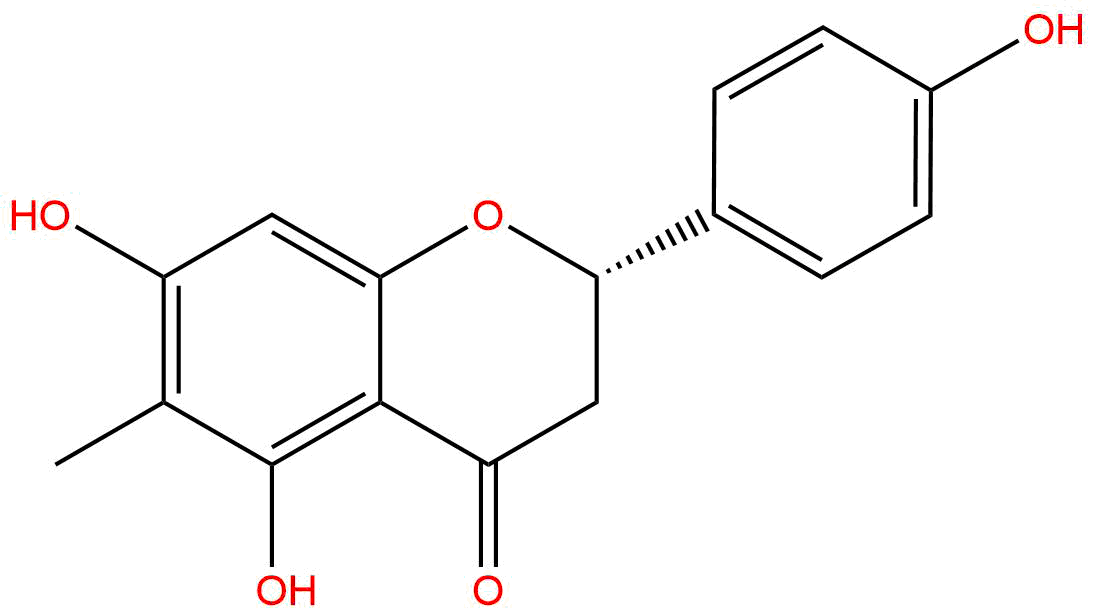


Product name: 8-Demethylfarrerol
Synonym name: Poriol
Catalogue No.: BP2159
Cas No.: 14348-16-4
Formula: C16H14O5
Mol Weight: 286.283
Botanical Source:
Type of Compound:
Purity: 95%~99%
Analysis Method: HPLC-DAD or/and HPLC-ELSD
Identification Method: Mass, NMR
Packing: Brown vial or HDPE plastic bottle
Storage: Store in a well closed container, protected from air and light. Put into refrigerate or freeze for long term storage.
Whenever possible, you should prepare and use solutions on the same day. However, if you need to make up stock solutions in advance, we recommend that you store the solution as aliquots in tightly sealed vials at -20℃. Generally, these will be useable for up to two weeks.
The product could be supplied from milligrams to grams
Inquire for bulk scale.
For Reference Standard and R&D, Not for Human Use Directly.
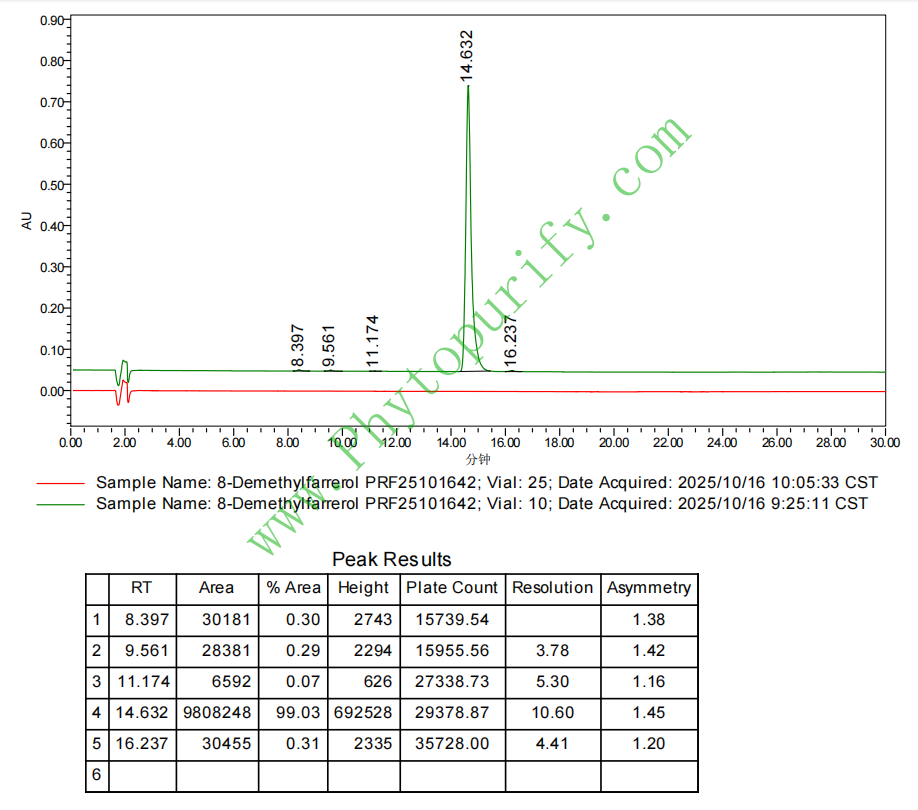
HPLC of 8-Demethylfarrerol
Storage conditions:Short-term storage at 2~8℃, long-term storage at -20 ~ -80℃
86.9900
2.5477
2.3648
.2135
2.9240
25.8021
Low
90.0248
2.9464
No
No
Yes
No
Yes
No
0.6
Yes
No
Yes
No
Natural products, as an important source of drug discovery, play an irreplaceable role in the history of human disease prevention and treatment. Flavonoids are a class of C6-C3-C6 flavonoids widely present in the plant kingdom, which have attracted the attention of pharmacological researchers due to their diverse biological activities such as anti-inflammatory, antioxidant, anti-tumor, and cardiovascular protective effects. 8-Demethylfarrerol (CAS number: 14348-16-4), as a natural flavonoid derivative, lacks a methyl group in its chemical structure compared to its parent compound, Farrerol. This subtle structural difference may significantly affect its physicochemical properties and biological activity. In recent years, with the deepening understanding of the molecular mechanisms of inflammatory diseases, especially the pathological processes of respiratory infections such as pneumonia and inflammatory diseases, the search for efficient and low toxicity new anti-inflammatory drugs has become a research hotspot. Preliminary studies have shown that 8-demethylated rhododendron has potential value in anti-inflammatory and antioxidant aspects, especially in regulating multiple molecular targets related to pneumonia such as TLR4, TNF, NOS2, etc. This article aims to systematically review the chemical properties, plant sources, pharmacological activities, mechanisms of action, medicinal properties, and clinical application prospects of 8-demethylated rhododendron, in order to provide comprehensive scientific references for the in-depth research and development of this compound.
8-demethylrhododendron, chemical name 2,3-dihydro-5,7-dihydroxy-2- (4-hydroxyphenyl) -4H-1-benzopyran-4-one, molecular formula C16H14O5, molecular weight 286.2830. Its core structure is a flavanone skeleton, namely a benzodihydropyran-4-one structure, with one phenolic hydroxyl group at each of the 5th and 7th positions of the A ring, and a 4 '- hydroxyl group replacing the benzene ring in the B ring. Compared with Farrerol, 8-demethylated rhododendron lacks a methyl group (- CH3) at position 8 of the A ring, hence the name "8-demethylated". This demethylation structure slightly increases its polarity and may affect its interaction mode with biomolecules.
The theoretical lipid water partition coefficient (LogP) is 2.5477, indicating that the compound has moderate lipophilicity, which is beneficial for transmembrane transport, but does not significantly increase the risk of accumulation in the body due to high lipid solubility. The topological polar surface area (TPSA) is 86.99 Å ², reflecting the total surface area of hydrogen bond donors and acceptors in the molecule. This value suggests that it has a certain polarity, which may affect its solubility and membrane permeability. The calculated water solubility value is approximately 0.2135 mg/mL, belonging to the category of slightly soluble to poorly soluble, which is a key factor to consider in the development of actual formulations. Preliminary pharmacological risk assessment shows that its ability to cross the blood-brain barrier is low, which reduces its potential risk of central nervous system side effects; There is no significant inhibitory effect on hERG potassium channels, indicating a lower risk of inducing QT interval prolongation in the heart; The Ames test result is 0.6 (usually negative if the mutation rate is less than 2.0), indicating that it has no significant genetic toxicity. These physicochemical and early safety parameters laid the preliminary foundation for the subsequent development of 8-demethylated rhododendron.
8-demethylated rhododendron is mainly found in plants of the Ericaceae family, especially in various plants of the Rhododendron genus. This compound often coexists with its structural analogues such as rhododendron, quercetin, and other flavonoids. Common source plants include Rhododendron dauricum and Rhododendron mariesii, which are commonly used in traditional medicine to treat respiratory diseases such as cough, phlegm accumulation, and chronic bronchitis. The study of their pharmacological substance basis has promoted the isolation and identification of active ingredients, including 8-demethylated rhododendron.
The extraction of 8-demethylated rhododendron from plant materials usually follows the conventional process of natural product chemistry. Firstly, solvent extraction method is used to extract flavonoids with moderate polarity from dried plant leaves or whole plants by reflux extraction or ultrasound assisted extraction using ethanol, methanol, or ethanol water solutions of different proportions. Subsequently, the crude extract was subjected to liquid-liquid partitioning extraction using organic solvents such as ethyl acetate and n-butanol to enrich the target components. Further purification relies on various chromatographic techniques. Silica gel column chromatography is commonly used for preliminary separation using gradient elution systems such as chloroform methanol or petroleum ether ethyl acetate. Subsequently, using high-performance liquid chromatography (HPLC), especially preparative or semi preparative HPLC, combined with a C18 reverse phase chromatography column, fine separation was performed using methanol water or acetonitrile water (usually containing a small amount of formic acid or acetic acid to improve peak shape) as the mobile phase, ultimately obtaining high-purity 8-demethylrhododendron monomer. Structural identification involves the comprehensive use of techniques such as ultraviolet spectroscopy (UV), infrared spectroscopy (IR), mass spectrometry (MS), nuclear magnetic resonance spectroscopy (NMR, including 1H-NMR and 13C-NMR), and comparison with literature data or standard samples for confirmation. Modern extraction techniques such as supercritical CO2 fluid extraction and microwave-assisted extraction are gradually being applied in the extraction research of such compounds due to their high efficiency and environmental friendliness.
A large number of in vitro and in vivo pharmacological studies have shown that 8-demethylated rhododendron has various biological activities, among which anti-inflammatory and antioxidant effects are the most prominent, and extend to protective effects against specific diseases.
anti-inflammatory activity This is the pharmacological effect of 8-demethylated rhododendron that has received the most attention. In the lipopolysaccharide (LPS) - induced macrophage (such as RAW264.7 cells) inflammation model, 8-demethylrhododendron can dose dependently inhibit the production of inflammatory mediators such as nitric oxide (NO) and prostaglandin E2 (PGE2). Meanwhile, it can significantly downregulate the mRNA and protein expression levels of various pro-inflammatory cytokines, such as tumor necrosis factor - α (TNF - α), interleukin-1 β (IL-1 β), and interleukin-6 (IL-6). In animal models, such as LPS induced acute lung injury or pneumonia models in mice, pre - or therapeutic administration of 8-demethylrhododendron can effectively reduce lung inflammatory cell infiltration, alveolar septal thickening, and pulmonary edema, lower levels of inflammatory factors in bronchoalveolar lavage fluid (BALF), thereby improving lung function and histopathological damage.
antioxidant activity The phenolic hydroxyl group in the structure of 8-demethylated rhododendron is the chemical basis for its antioxidant capacity. In in vitro chemical analysis, it exhibits good scavenging ability against 1,1-diphenyl-2-trinitrophenylhydrazine (DPPH) free radicals, 2,2 '- diazo-bis-3-ethylbenzothiazoline-6-sulfonic acid (ABTS) free radicals, as well as certain iron ion reduction/antioxidant capacity (FRAP). In cell models, it can alleviate the increase in intracellular reactive oxygen species (ROS) levels induced by hydrogen peroxide (H2O2) or other oxidative stressors, protecting cells from oxidative damage. Its antioxidant and anti-inflammatory effects complement each other, forming the pharmacological basis for its fight against inflammatory diseases.
Antibacterial and antiviral activity Some studies suggest that 8-demethylated rhododendron has a certain inhibitory effect on certain Gram positive and Gram negative bacteria, but its antibacterial spectrum and efficacy need further clarification. In addition, preliminary studies have explored its potential inhibitory effect on respiratory related viruses, but its specific mechanisms and effects still need to be further validated.
Other potential activities: Based on the commonness of flavanone compounds, 8-norrhododendron may also have research value in cardiovascular protection (such as anti atherosclerosis), neuroprotection and other fields, but there are few relevant reports at present, which is one of the directions of its future research.
The pharmacological effects of 8-demethylated rhododendron, especially its anti-inflammatory effect, are achieved by regulating multiple signaling pathways and molecular targets closely related to inflammation and immune response. The mechanism of action network for the pneumonia related targets you provided can be summarized as follows:
Regulating Toll like receptor (TLR) signaling pathway TLR4 and TLR2 are key receptors for recognizing pathogen associated molecular patterns, such as LPS. Research has shown that 8-demethylated rhododendron can inhibit the binding or downstream signal transduction of LPS and TLR4, and may also affect the activation of TLR2. This blocks the activation of the myeloid differentiation factor 88 (MyD88) dependent pathway, thereby inhibiting the activation of nuclear factor kappa B (NF - κ B) and mitogen activated protein kinases (MAPKs).
Inhibition of NF - κ B signaling pathway NF - κ B is the core transcription factor of inflammatory response. 8-demethylated rhododendron inhibits the activity of I κ B kinase (IKK), prevents the phosphorylation and degradation of I κ B α, and thus retains NF - κ B (such as p65/RELA subunit) in the cytoplasm, preventing it from entering the nucleus to initiate transcription of TNF - α, IL-6, IL-1 β, inducible nitric oxide synthase (iNOS/NOS2) and other genes. The direct or indirect inhibition of RELA (p65) is a key step in its anti-inflammatory properties.
Regulating the MAPK signaling pathway This compound can also inhibit LPS induced phosphorylation of p38 MAPK, extracellular signal regulated kinase (ERK), and c-Jun N-terminal kinase (JNK), thereby suppressing the production of inflammatory mediators at multiple levels.
Affects NLRP3 inflammasome activation Inflammasome is a key platform mediating the mature secretion of IL-1 β and IL-18. 8-demethylated rhododendron may inhibit the activation of caspase-1 (CASP1) by reducing ROS levels, inhibiting NF - κ B signaling (reducing transcription of NLRP3 and pro-IL-1 β), or directly interfering with inflammasome assembly, thereby reducing the release of mature IL-1 β.
Intervene in other key targets:
In summary, 8-demethylated rhododendron forms a synergistic anti-inflammatory network through multiple targets and pathways, providing a molecular basis for its treatment of complex inflammatory diseases such as pneumonia.
Although 8-demethylated rhododendron has shown good pharmacological activity, its development into a drug still requires systematic pharmacological evaluation and pharmacokinetic studies.
Absorption, distribution, metabolism, excretion (ADME):
Pharmacokinetic parameters Currently, there are few reports on the pharmacokinetic studies of the 8-demethylated rhododendron system. Future research requires measuring the drug time curves of preclinical animal models such as rats and beagle dogs after single and multiple administrations, calculating key parameters such as peak time (Tmax), peak concentration (Cmax), half-life (t1/2), area under the drug time curve (AUC), and clearance rate (CL), to evaluate their in vivo process characteristics.
safety evaluation Preliminary computer predictions (hERG inhibition negative, Ames test negative) provide early safety signals, but a complete preclinical safety evaluation must be conducted. This includes assessment of acute toxicity, repeated administration toxicity (28 days or longer), genotoxicity complete set of tests (Ames, micronucleus, chromosomal aberration), reproductive toxicity, and potential organ toxicity (such as liver and kidney).
Formulation development challenges Given its poor water solubility, developing a suitable drug delivery system is the key to successful drug development. In addition to oral preparations, given its positioning for treating pneumonia, the development of pulmonary local delivery formulations (such as inhaled powder sprays, nebulized solutions) may be a highly promising approach to improve lung targeting, reduce systemic exposure, and mitigate side effects.
8-demethylated rhododendron has shown clear clinical potential in the treatment of inflammatory lung diseases such as community-acquired pneumonia, acute lung injury/acute respiratory distress syndrome (ALI/ARDS), etc.
Treating pneumonia Its multi-target anti-inflammatory mechanism can target key links such as excessive inflammatory response (cytokine storm) and oxidative damage in the pathological process of pneumonia. Compared to single target inhibitors, multi-target regulation may be more effective in controlling complex inflammatory networks and may be less prone to developing drug resistance. Can be used as an adjuvant therapy drug, combined with antibiotics, to control infection while rapidly reducing inflammatory damage and improving prognosis.
Treat other inflammatory diseases Its anti-inflammatory and antioxidant properties also make it potentially applicable in chronic inflammatory diseases such as acute exacerbation of chronic obstructive pulmonary disease (COPD), asthma, rheumatoid arthritis, and inflammatory bowel disease.
Development Strategy and Prospects:
As a natural source of flavanone compound, 8-demethylated rhododendron has shown promising development prospects in the treatment of inflammatory lung disease, especially pneumonia, due to its significant anti-inflammatory and antioxidant activities, as well as its unique mechanism of acting on multiple pneumonia related key targets such as TLR4, NF - κ B, and NLRP3. Its chemical structure is clear, and preliminary pharmacological parameters suggest a certain feasibility for development, but it also faces challenges such as poor water solubility and lack of systematic pharmacokinetic data. Future research should focus on overcoming its physical and chemical shortcomings through innovative formulation technology and/or structural optimization, conducting systematic preclinical ADME/Tox evaluation, and actively exploring its lung targeted drug delivery strategy. With the continuous elucidation of its mechanism of action and advances in development technology, 8-demethylrhododendron is expected to evolve from a promising natural active molecule into a novel candidate drug for the treatment of inflammatory diseases such as pneumonia, providing new treatment options for clinical practice.
