Introduction/Overview
Natural products, as an important source of drug discovery, play an irreplaceable role in the long history of human fight against diseases. From ancient plant medicine to modern target based drug screening, the diverse structures and unique activities of secondary metabolites in nature have always provided a continuous source of inspiration and lead compounds for new drug development. Among numerous natural products with biological activity, triterpenoid saponins have attracted much attention due to their extensive pharmacological activities, such as anti-inflammatory, anti-tumor, antiviral, hepatoprotective, and cardiovascular protective effects. Arjunglucoside I, As a pentacyclic triterpenoid saponin isolated from specific plants, it has gradually entered the field of researchers in recent years. Its significant antimicrobial activity and potential multi-target regulatory ability, especially in cardiovascular disease-related targets, indicate that it may become a valuable lead molecule for development.
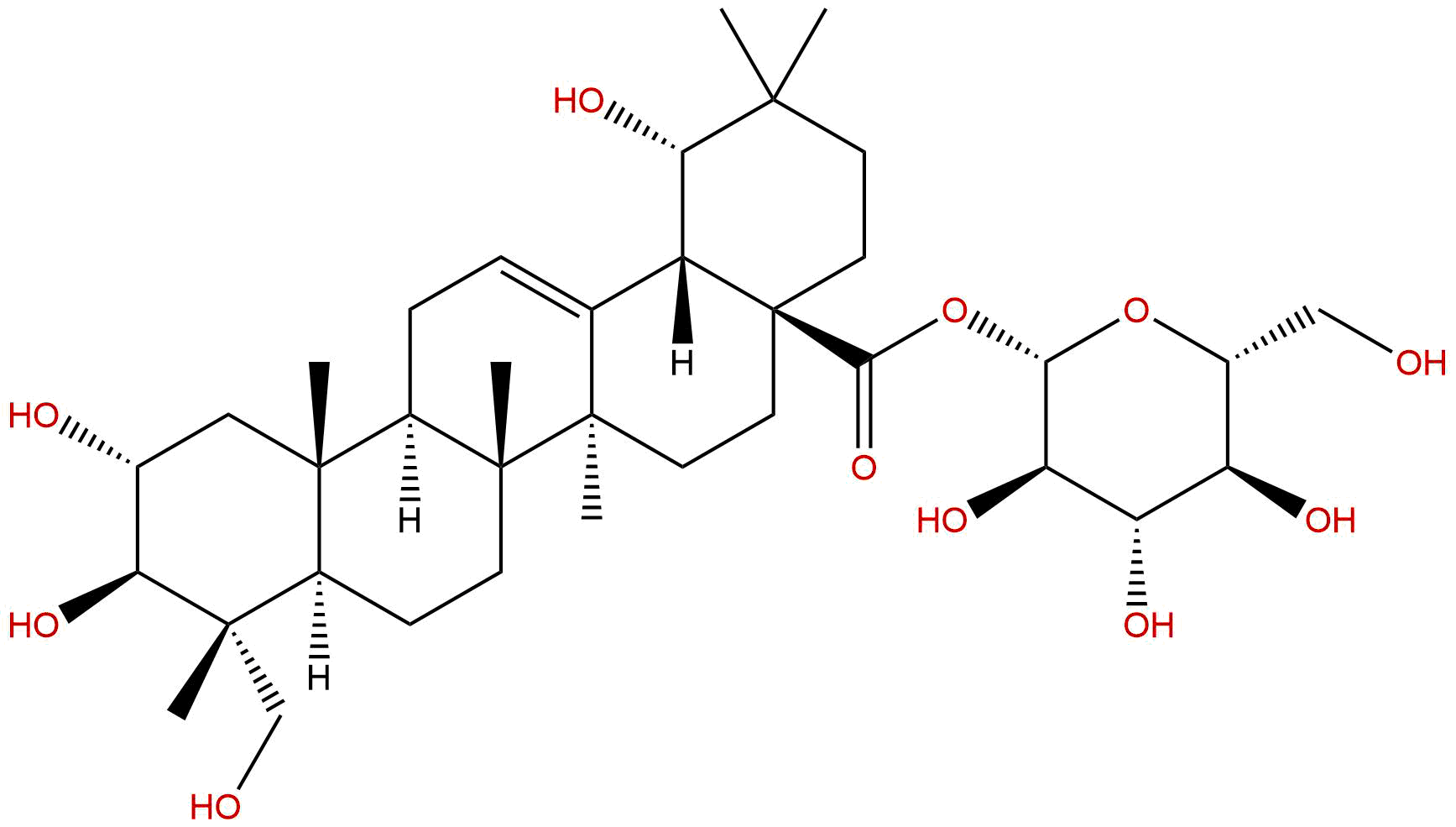
Arjunglucoside I (CAS number: 62319-70-4) is a naturally occurring triterpenoid glycoside compound. It was initially isolated from plants in the Combretaceae family, which are commonly used in traditional medical systems to treat infections, inflammation, and digestive system diseases. Preliminary pharmacological studies have shown that Arjunglucoside I exhibits strong antimicrobial activity, with a minimum inhibitory concentration (MIC) as low as 1.9 μ g/mL for certain microorganisms, indicating its potential as a novel antibacterial drug. However, its value goes far beyond that. Through computer-aided drug design and network pharmacology analysis, researchers have found that Arjunglucoside I can interact with multiple protein targets closely related to the pathogenesis of cardiovascular disease (CVD), including AMPK(PRKAA1)、BCL2、BACE1、TLR4、PTPN1、STAT3、ESR2、APEX1、SERPINE1 And PRKCA. This multi-target action characteristic demonstrates unique advantages in the treatment of complex diseases such as cardiovascular diseases.
Cardiovascular disease is the leading cause of death worldwide, and its pathological and physiological processes involve multiple links such as lipid metabolism disorders, inflammatory reactions, oxidative stress, cell apoptosis, fibrosis, and vascular dysfunction. Traditional single target drugs often struggle to comprehensively control the progression of diseases. Therefore, finding multi-target natural products that can simultaneously act on multiple key pathways is one of the important directions in current cardiovascular drug development. The discovery of Arjunglucoside I perfectly meets this demand. This article aims to provide a systematic review of the chemical structure, plant origin, pharmacological activity, mechanism of action, medicinal properties, and clinical application prospects of Arjunglucoside I, in order to provide comprehensive scientific basis for the in-depth research and development of this natural product.
Chemical structure and physicochemical properties
Arjunglucoside I belongs to the pentacyclic triterpenoid class, with its core skeleton being an Oleanane type triterpene. Structurally, this compound is typically composed of a triterpenoid glycoside (Aglycone) linked to one or more glycosyl units via glycosidic bonds. Specifically, the aglycone portion of Arjunglucoside I is typically considered to be an Arjonic acid or similar structure, while the glycosyl portion contains monosaccharides such as glucose. Its precise chemical structure analysis relies on modern spectroscopic techniques such as nuclear magnetic resonance (NMR) and mass spectrometry (MS). According to existing data, its molecular formula is C ∝₆ H ₅₈ O ₁₁, and its molecular weight is 666.8490 g/mol.
The physicochemical properties of this compound are the basis for its medicinal properties. Firstly, from the perspective of lipophilicity, the calculated lipid water partition coefficient (LogP) is 2.1769. This value is within a relatively ideal range, indicating that Arjunglucoside I has both lipid solubility to penetrate biofilms and water solubility to transport in body fluids. However, its solubility is only 0.0591 mg/mL, making it a poorly soluble compound. This characteristic is a common challenge in drug development and may require improvement in dissolution and bioavailability through formulation techniques such as nanocrystals, liposomes, cyclodextrin inclusion complexes, etc.
Topological Polarity Surface Area (TPSA) is an important parameter for measuring the binding ability of compounds to targets and their intestinal absorption capacity. The TPSA of Arjunglucoside I is as high as 197.3700 Å ². Typically, compounds with TPSA greater than 140 Å ² are considered to have lower intestinal absorption rates and poorer cell membrane permeability. The high TPSA value is mainly due to the large number of hydroxyl (- OH) groups and oxygen atoms in glycosidic bonds in its molecular structure. Although these polar groups are conducive to forming hydrogen bonds and binding to target proteins, they also limit its ability to passively diffuse through the cell membrane. In addition, the high TPSA value also explains why the compound's blood-brain barrier (BBB) penetration ability is evaluated as "low". This is to some extent an advantage, as avoiding central nervous system side effects is an important safety consideration for treating peripheral diseases such as cardiovascular disease and microbial infections.
Regarding cardiac toxicity, hERG (human Ether - à - go Related Gene) inhibition is a key indicator for evaluating the cardiac safety of compounds. Inhibition of hERG potassium channels can lead to prolonged QT interval and increased risk of arrhythmia. The evaluation results showed that Arjunglucoside I does not have hERG inhibitory activity, providing preliminary positive evidence for its cardiovascular safety. Meanwhile, the Ames test result was 0.0, indicating that it did not show mutagenicity in the bacterial recovery mutation test, suggesting a low risk of genetic toxicity. Overall, the physicochemical properties of Arjunglucoside I exhibit a "double-edged sword" characteristic: good target binding potential (high TPSA) and preliminary safety (low BBB penetration, no hERG inhibition, no mutagenicity) are its advantages; However, poor water solubility and potential membrane permeability issues are the main obstacles to its development as an oral drug.
Plant sources and extraction methods
Arjunglucoside I mainly comes from various plants in the Combretaceae family, among which the most famous source is the genus Ele.me(Terminalia)Plants. For example, Ajiang Lanren(Terminalia arjuna)It is one of the main sources of this compound, and its bark is widely used in Ayurvedic medicine in India to treat cardiovascular diseases. In addition, Hezi(Terminalia chebula)And Vail(Terminalia bellirica)Plants also contain this ingredient. These plants are widely distributed in tropical and subtropical regions of Asia, Africa, and the Americas.
Traditional extraction methods typically rely on organic solvent extraction. Due to the polarity of Arjunglucoside I, commonly used extraction solvents include methanol, ethanol, or their aqueous solutions. The typical extraction process is as follows: after crushing dry plant materials (such as bark), soak or reflux extract them with 70% -95% ethanol or methanol at room temperature or heating conditions. After filtration and vacuum concentration of the extract, crude extract is obtained. Subsequently, liquid-liquid extraction was used for preliminary separation, for example, the crude extract was suspended in water and extracted sequentially with petroleum ether, ethyl acetate, and n-butanol. Due to the high polarity of Arjunglucoside I, it is usually enriched in the n-butanol extraction layer.
In order to obtain high-purity Arjunglucoside I, further chromatographic separation techniques are required. The classic separation methods include silica gel column chromatography, ODS (octadecylsilane bonded silica gel) reversed phase column chromatography and Sephadex LH-20 gel column chromatography. The elution system usually uses gradient systems such as chloroform methanol water or acetonitrile water. In recent years, modern separation techniques such as high-performance liquid chromatography (HPLC) and high-speed countercurrent chromatography (HSCCC) have also been applied to the efficient purification of this compound, enabling rapid and high-purity separation of the target compound from complex natural product extracts.
It is worth noting that the extraction efficiency and compound stability are influenced by multiple factors. Excessive extraction temperature may lead to hydrolysis of glycosidic bonds; Light and oxygen may also cause structural oxidation. Therefore, in the extraction and separation process, it is usually necessary to control the temperature (such as low-temperature extraction), avoid light, and operate under inert gas (such as nitrogen) protection. With the promotion of green chemistry concepts, some new extraction techniques, such as ultrasound assisted extraction, microwave-assisted extraction, and supercritical fluid extraction, have also been attempted to improve the extraction rate and purity of Arjunglucoside I while reducing the use of organic solvents.
Pharmacological activity research
Antimicrobial activity
One of the most notable activities of Arjunglucoside I is its strong antimicrobial activity. Research has shown that this compound exhibits inhibitory activity against various Gram positive and Gram negative bacteria. Its MIC value is as low as 1.9 μ g/mL, which is even better than some commonly used antibiotics in clinical practice. For example, targeting Staphylococcus aureus(Staphylococcus aureus)Bacillus subtilis(Bacillus subtilis)And Escherichia coli(Escherichia coli)Arjunglucoside I showed significant growth inhibitory effects on standard strains. Its mechanism of action may involve disrupting the integrity of bacterial cell membranes, increasing membrane permeability, leading to leakage of intracellular substances, and ultimately causing bacterial death. In addition, it may also exert antibacterial effects by inhibiting the synthesis of bacterial cell walls or interfering with the synthesis of bacterial proteins. Given the increasingly severe issue of global antibiotic resistance, Arjunglucoside I, a natural antibacterial molecule with a novel mechanism of action, provides valuable candidate molecules for the development of new antibiotics.
Cardiovascular protective activity
Although antimicrobial activity is the classic pharmacological action of Arjunglucoside I, its potential value in the field of cardiovascular disease is gradually being revealed. Network pharmacology and molecular docking studies have shown that Arjunglucoside I can bind to multiple key protein targets associated with cardiovascular diseases, suggesting that it may exert cardiovascular protective effects through multiple pathways and targets.
- Anti atherosclerosis Atherosclerosis is the main pathological basis of cardiovascular disease. Arjunglucoside I may promote fatty acid oxidation and glucose uptake, improve lipid metabolism, and reduce lipid deposition in blood vessel walls by activating the AMPK (PRKAA1) pathway. At the same time, it may inhibit the inflammatory response of vascular endothelial cells and the formation of foam cells by inhibiting TLR4 (Toll like receptor 4) signaling pathway and reducing the release of inflammatory factors.
- Anti cardiomyocyte apoptosis Myocardial ischemia-reperfusion injury is a key challenge in the treatment of acute myocardial infarction. Arjunglucoside I may protect myocardial cells from ischemia and hypoxia induced apoptosis by upregulating the expression of anti apoptotic protein BCL2 and inhibiting the activity of pro apoptotic proteins. In addition, its regulation of the STAT3 signaling pathway may also be involved in myocardial protection.
- Anti myocardial fibrosis Myocardial fibrosis is an important pathological feature of heart failure. Arjunglucoside I may slow down or reverse the progression of myocardial fibrosis by inhibiting the expression of SERPINE1 (plasminogen activator inhibitor-1), reducing excessive deposition of extracellular matrix.
- Vascular function regulation By acting on ESR2 (estrogen receptor beta) and PRKCA (protein kinase C alpha), Arjunglucoside I may be involved in regulating vasomotor function, improving endothelial dependent vasodilation, and lowering blood pressure.
Other pharmacological activities
In addition to the aforementioned activities, preliminary studies suggest that Arjunglucoside I may have anti-inflammatory, antioxidant, and neuroprotective effects. For example, by inhibiting the activity of BACE1 (β - secretase 1), it is theoretically possible to reduce the production of β - amyloid protein (A β), which has potential significance in the treatment of Alzheimer's disease. Meanwhile, its regulation of APEX1 (de purine/de pyrimidine endonuclease 1) may affect cellular oxidative stress response and DNA repair process.
Mechanism of action and molecular targets
The pharmacological diversity of Arjunglucoside I stems from its interactions with multiple molecular targets. Based on existing research, we summarize its main mechanisms of action and molecular targets as follows:
-
AMPK (PRKAA1)AMPK is a core sensor for cellular energy metabolism. Arjunglucoside I may phosphorylate AMPK through direct binding or indirect activation. Activated AMPK can inhibit acetyl CoA carboxylase (ACC) and promote fatty acid oxidation; Simultaneously activate glucose transporter 4 (GLUT4) to increase glucose uptake. This mechanism is the core link of its improvement of metabolic syndrome and anti atherosclerosis.
-
BCL2 BCL2 is a key protein that regulates the mitochondrial apoptosis pathway. Arjunglucoside I may stabilize mitochondrial membrane potential by upregulating BCL2 expression or inhibiting its binding to pro apoptotic proteins such as BAX and BAK, thereby preventing the release of cytochrome c and inhibiting the Caspase cascade reaction, ultimately suppressing apoptosis of cardiomyocytes or neurons.
-
TLR4 (Toll like receptor 4)TLR4 is a key pattern recognition receptor that mediates inflammatory responses. Arjunglucoside I may act as an antagonist of TLR4, competitively inhibiting its binding to endogenous ligands (such as high mobility group protein B1, HMGB1) or exogenous ligands (such as lipopolysaccharides, LPS). This leads to obstruction of downstream MyD88- and TRIF dependent signaling pathways, thereby inhibiting the activation of NF - κ B and IRF3, reducing the production of pro-inflammatory cytokines (such as TNF - α, IL-6) and type I interferon.
-
STAT3 (Signal Transduction and Transcription Activation Factor 3)STAT3 plays a dual role in inflammation, cell proliferation, and survival. Overactivated STAT3 is often associated with myocardial hypertrophy and fibrosis in cardiovascular diseases. Arjunglucoside I may inhibit its nuclear translocation and transcriptional activity by inhibiting JAK kinase activity or directly binding to the SH2 domain of STAT3, blocking its phosphorylation and dimerization.
-
PTPN1 (protein tyrosine phosphatase 1B)PTPN1 is a negative regulator of the insulin and leptin signaling pathways. Arjunglucoside I may improve insulin resistance and energy metabolism by inhibiting the activity of PTPN1 and prolonging the phosphorylation of insulin receptor and leptin receptor, which has therapeutic significance for type 2 diabetes and obesity related cardiovascular diseases.
-
BACE1 (β - secretase 1)BACE1 is the rate limiting enzyme for the generation of A β peptides. Arjunglucoside I may inhibit the enzymatic activity of BACE1 by directly binding to its active site, thereby reducing the production of A β. This is not only a potential therapeutic target for Alzheimer's disease, but also suggests its potential to improve cognitive impairments such as vascular dementia.
-
SERPINE1 (PAI-1)PAI-1 is the main inhibitor of the fibrinolytic system. High levels of PAI-1 are associated with thrombosis and fibrosis. Arjunglucoside I may inhibit thrombus formation and extracellular matrix deposition by downregulating the expression of PAI-1, enhancing fibrinolytic activity.
-
ESR2 (estrogen receptor beta)ESR2 is expressed in endothelial cells and cardiomyocytes, mediating the cardiovascular protective effect of estrogen. Arjunglucoside I may act as an agonist or selective regulator of ESR2, exerting vasodilatory, anti-inflammatory, and antioxidant effects.
-
APEX1 (APE1)APEX1 is a key enzyme in the base excision repair (BER) pathway and also participates in redox regulation. Arjunglucoside I may affect cellular oxidative stress response and DNA damage repair ability by regulating the activity of APEX1.
-
PRKCA (protein kinase C alpha)PKC α is involved in various cellular processes, including vasoconstriction, cell proliferation, and migration. Arjunglucoside I may inhibit the abnormal proliferation and migration of vascular smooth muscle cells by suppressing the activity of PKC α, which is of great significance in the prevention and treatment of vascular restenosis.
In summary, Arjunglucoside I forms a complex and networked mechanism map by acting on multiple key pathways, including energy metabolism (AMPK), apoptosis (BCL2), inflammation (TLR4, STAT3), insulin signaling (PTPN1), fibrosis (SERPINE1), neurodegeneration (BACE1), vascular function (ESR2, PRKCA), and oxidative stress (APEX1). This multi-target and multi pathway mode of action gives it unique advantages in dealing with complex diseases.
Evaluation of drug properties and pharmacokinetics
To move Arjunglucoside I from laboratory research to clinical application, a systematic evaluation of its pharmacological properties is necessary. As mentioned earlier, its physical and chemical properties present certain challenges.
absorb High TPSA (197.37 Å ²) and low water solubility (0.0591 mg/mL) indicate that its oral bioavailability may be low. According to the Lipinski Five Rules, this compound violates multiple rules (molecular weight>500, TPSA>140, high number of hydrogen bond donors/acceptors) and belongs to a typical "non class drug" molecule. Its absorption may mainly rely on passive diffusion, but the efficiency is extremely low. Therefore, oral administration may not be the best choice. Developing non oral dosage forms (such as injections, transdermal patches) or adopting advanced drug delivery systems (such as lipid nanoparticles, polymer micelles) is a key strategy to improve their bioavailability.
distribution Due to its low BBB penetration, Arjunglucoside I is mainly distributed in peripheral tissues. This is advantageous for treating cardiovascular diseases and local infections, as it can avoid central nervous system side effects. Its high protein binding rate (presumably) may affect its free drug concentration and distribution volume.
Metabolism As a triterpenoid saponin, Arjunglucoside I may undergo extensive metabolism in the body. The main metabolic pathways may include: 1) Under the action of gut microbiota, glycosidic bonds are hydrolyzed, releasing aglycones (Arjundic acids); 2) In the liver, aglycones or prototype drugs may undergo phase I metabolism (oxidation, reduction, hydrolysis) and phase II metabolism (glucuronidation, sulfation). The activity of metabolites may differ from that of the prototype drug and further research is needed.
excretion Given its high polarity, Arjunglucoside I and its metabolites may be primarily excreted through bile and feces, while renal excretion may not be the main pathway.
safety The preliminary safety evaluation results are encouraging. The absence of hERG inhibitory activity reduces the risk of cardiac toxicity; A negative Ames test indicates no genetic toxicity. However, this is only preliminary in vitro data. A comprehensive in vivo toxicology study, including acute toxicity, chronic toxicity, reproductive toxicity, and immunotoxicity, is essential.
Clinical application prospects and prospects
Arjunglucoside I, as a natural product with multi-target activity, has broad clinical application prospects, but also faces many challenges.
Potential application areas:
1. Anti infective drugs Its strong antimicrobial activity (MIC 1.9 μ g/mL) makes it a candidate molecule for developing novel antibiotics, especially against drug-resistant strains. It can be developed as a topical preparation (such as ointment, lotion) for skin infections, or administered by injection for systemic infections.
2. Cardiovascular disease adjuvant therapy: In view of its regulatory effect on multiple cardiovascular protection targets, such as AMPK, BCL2, TLR4, etc., Arjunglucoside I is expected to be developed as an auxiliary drug for the treatment of atherosclerosis, myocardial ischemia-reperfusion injury, heart failure and other diseases. Its multi-target characteristics may enable it to exert synergistic effects in comprehensive treatment plans.
3. Metabolic diseases: By inhibiting PTPN1 and activating AMPK, this compound may improve insulin resistance and lipid metabolism, and thus be used to treat type 2 diabetes and obesity.
4. Neurodegenerative diseases Its inhibitory effect on BACE1 makes it potentially valuable in the prevention and treatment of Alzheimer's disease.
Challenges and Future Directions Faced:
1. The issue of bioavailability This is the biggest bottleneck. Future research should focus on developing efficient drug delivery systems, such as nanocrystals, liposomes, phospholipid complexes, self microemulsifying drug delivery systems (SMEDS), etc., to significantly improve their oral absorption and bioavailability.
2. Deepening the mechanism of action Although network pharmacology predicts multiple targets, these interactions require rigorous experimental validation at the cellular and animal levels. It is necessary to use techniques such as gene knockout/knock in, protein-protein interactions, and surface plasmon resonance (SPR) to confirm its direct target and binding mode.
3. Study on Structure Activity Relationship By synthesizing a series of derivatives of Arjunglucoside I and systematically studying the effects of sugar group number, sugar group type, and glycoside structure modification on its activity and drug properties, we aim to find candidate compounds with higher activity, lower toxicity, and better pharmacokinetic properties.
4. In vivo efficacy and toxicology A systematic animal model study is needed to evaluate its therapeutic effect on cardiovascular disease, infections, and other models in vivo. At the same time, conduct comprehensive toxicology research, including long-term toxicity, reproductive toxicity, immunotoxicity, etc., to ensure its safety.
5. Synthetic Biology and Green Synthesis Given the low efficiency and high cost of extracting from plants, synthetic biology techniques can be explored in the future to heterogeneously synthesize Arjunglucoside I or its precursors in microorganisms such as yeast and Escherichia coli, achieving sustainable and low-cost production.
Conclusion
Arjunglucoside I is a natural triterpenoid saponin with unique structure and diverse activities. It is not only a promising antimicrobial lead compound, but also demonstrates enormous potential in the treatment of complex diseases due to its regulatory effects on multiple key cardiovascular disease targets such as AMPK, BCL2, TLR4, STAT3, etc. Despite the challenges of poor water solubility and low oral bioavailability in drug development, these obstacles are expected to be overcome through the comprehensive application of modern medicinal chemistry, pharmacy, and biotechnology. Future research should focus on further elucidating its mechanism of action, optimizing its pharmacokinetic properties, and conducting systematic preclinical studies. The research process of Arjunglucoside I once again confirms the value of natural products as a treasure trove of drug discovery, and provides valuable ideas for developing new treatment strategies for multifactorial complex diseases. With the continuous deepening of research, we have reason to expect that the active molecules in this ancient plant can shine new on the stage of modern medicine.