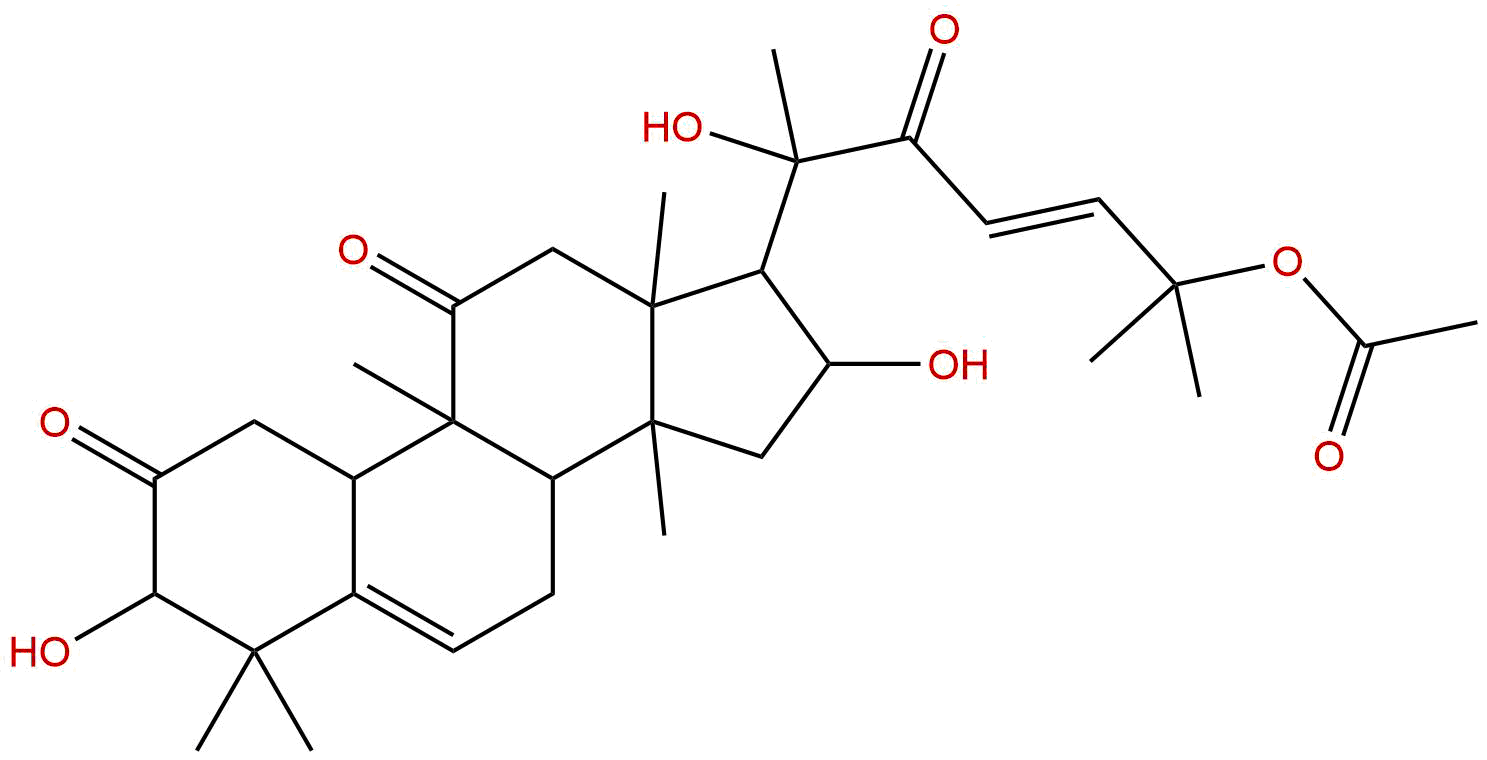


Product name: Isocucurbitacin B
Synonym name:
Catalogue No.: BP3973
Cas No.: 17278-28-3
Formula: C32H46O8
Mol Weight: 558.712
Botanical Source: Cucumis melo L.
Physical Description:
Type of Compound:
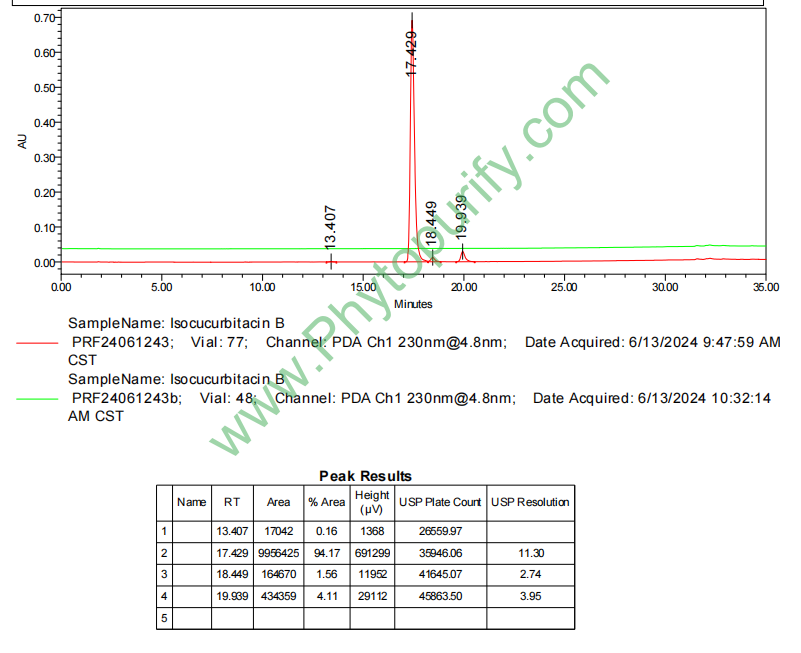
Purity: 95%~99%
Analysis Method: HPLC-DAD or/and HPLC-ELSD
Identification Method: Mass, NMR
Packing: Brown vial or HDPE plastic bottle
The product could be supplied from milligrams to grams
Inquire for bulk scale.
For Reference Standard and R&D, Not for Human Use Directly.
Description:
Isocucurbitacin B has significantly activities against HeLa and HT-29 human cancer cells with IC50 values ranging from 0.93 to 9.73uM.
References:
J Ethnopharmacol. 2015 Jul 1;169:18-23.
Bioassay-guided isolation and identification of cytotoxic compounds from Bolbostemma paniculatum.
Four cucurbitacine triterpenoid sapogenins, Isocucurbitacin B(1), 23,24-dihydroIsocucurbitacin B(2), cucurbitacin E(3), 23,24-dihydrocucurbitacin E(4), and 11 triterpenoid saponins, tubeimosideI(5), tubeimoside III(6), tubeimoside V(7), dexylosyltubeimoside III(8), lobatoside C(9), tubeimoside A(10), tumeimoside B(11), lobatoside A(12), tubeimoside C(13), tubeimoside IV(14), 7β,18,20,26-tetrahydroxy-(20S)-dammar-24E-en-3-O-α-L-(4-acetyl)arabinopyranosyl-(1→2)-β-D-glucopyranoside(15) were isolated from the active EtOAc and n-BuOH extracts.
METHODS AND RESULTS:
Of them, compounds 2, 4, 9 and 12 were firstly isolated from the Bolbostemma genus. MTT assay revealed that compounds 1, 3 and 4 had significantly activities against HeLa and HT-29 human cancer cells with IC50 values ranging from 0.93 to 9.73μM. It is worth mentioning that compound 4׳s activities against the two cell lines are 12- and 8-fold that of the positive control drug (5-Fu). Whereas, the cyclic bisdesmosides 5-9 exerted significantly activities on BGC-823, HeLa, HT-29 and MCF-7 cancer cells with IC50 values ranging from 1.30 to 15.64μM. And 6׳s activities against the four cell lines are 6-, 3-, 10- and 16-fold that of 5-Fu and 8׳s activities against the four cell lines are 5-, 3-, 14- and 9-fold that of 5-Fu.
CONCLUSIONS:
The cytotoxic activity of the bulbs of B. paniculatum is mainly ascribable to cucurbitacine triterpenoid sapogenins (1-4) and the cyclic bisdesmosides (5-9). The cyclic bisdesmosides are the main anti-cancer active compounds of B. paniculatum. The above results provide scientific evidence to support, to some extent, the ethnomedicinal use of B. paniculatum as anticancer remedies in traditional Chinese medicine.
HPLC of Isocucurbitacin B
Storage conditions:Short-term storage at 2~8℃, long-term storage at -20 ~ -80℃
138.2000
3.2571
3.2574
.0192
1.6749
7.1738
Low
77.7189
5.3986
No
No
No
No
No
No
0.0
Yes
Yes
No
Yes
Natural products, as an important source of drug discovery, play an irreplaceable role in the long history of human fight against diseases. Among them, cucurbitacins are a highly oxidized natural product of tetracyclic triterpenoids, mainly distributed in Cucurbitaceae plants, known for their significant cytotoxicity and anti-tumor activity. This type of compound has a unique structure, usually with a cucurbitane skeleton, and exhibits diverse biological activities due to characteristic functional groups such as C-11 carbonyl, C-20 ketone, and conjugated double bonds. However, its strong cytotoxicity also limits its direct clinical application, prompting researchers to continuously explore its structural analogues and derivatives in order to obtain candidate molecules with higher selectivity and lower toxicity.
Iso CuB, also known as isocucurbitacin B, is an important natural product that stands out in this context. As a stereoisomer of cucurbitacin B, isocucurbitacin B was initially isolated and identified from the stem of cantaloupe (Pedichellus melo), and its chemical structure differs from cucurbitacin B in the stereoisomeric configuration of the C-19 methyl group. This subtle structural change endows isocucurbitacin B with a unique biological activity spectrum. Compared with the parent compound cucurbitacin B, isocucurbitacin B exhibits different mechanisms of action and target preferences while maintaining certain anti-tumor efficacy, especially in regulating multiple key signaling pathways. In recent years, research on isocucurbitacin B has become increasingly in-depth, revealing its potential in inhibiting tumor cell proliferation, inducing apoptosis, blocking the cell cycle, resisting migration and invasion, and regulating the tumor microenvironment. This article aims to systematically review the chemical properties, plant sources, pharmacological activities, molecular mechanisms, medicinal characteristics, and clinical application prospects of isocucurbitacin B, in order to provide comprehensive scientific basis for the in-depth development and transformation research of this natural product.
The chemical name of isocucurbitacin B is 19- (10 → 9) β)-abeo-10α-lanosta-5,24-diene-2,16,20,22-tetrone, 25-(acetyloxy)-, (9β,10α,16α,23E)-, Its molecular formula is C ∝₂ H ₄₆ O ₈, and its molecular weight is 558.7120 Da. Structurally, isocucurbitacin B belongs to the tetracyclic triterpenoid class, with a core skeleton of cucurbitane type, but it has unique rearrangement characteristics: the C-19 methyl group migrates from the C-10 position to the C-9 position, forming a 9 β, 10 α configuration, which is in sharp contrast to the 9 α, 10 β configuration of most cucurbitacin compounds (such as cucurbitacin B). This structural difference is the key structural feature that distinguishes isocucurbitacin B from other cucurbitacins. In addition, its molecule contains multiple oxygen-containing functional groups, including four carbonyl groups at positions C-2, C-16, C-20, and C-22, an acetoxy group at position C-25, and hydroxyl or double bonds at positions C-3, C-11, C-23, etc. These functional groups not only endow the molecule with a highly oxidized state, but also provide abundant chemical sites for its interaction with biological targets.
In terms of physicochemical properties, isocucurbitacin B exhibits typical hydrophobic characteristics. Its calculated lipid water partition coefficient (LogP) is 3.2571, indicating that it has strong lipophilicity and is easy to penetrate biofilms, but it may also affect its solubility and distribution in aqueous environments. The topological polar surface area (TPSA) is 138.2000 Å ², which is relatively high and mainly attributed to the presence of multiple carbonyl and hydroxyl groups in the molecule, suggesting that it may have certain hydrogen bond donor and acceptor abilities, which are crucial for binding to target proteins. The water-soluble parameter is 0.0192 mg/mL, which belongs to poorly soluble compounds. This may pose challenges in the development of actual drug formulations, requiring the use of appropriate delivery systems or prodrug strategies to improve their bioavailability. It is worth noting that the blood-brain barrier penetration ability of isocucurbitacin B has been evaluated as "low", which is both an advantage (reducing non-specific toxicity to normal brain tissue) and a disadvantage (requiring strategies to increase targeted delivery) for the treatment of central nervous system diseases such as gliomas. In addition, the prediction of hERG inhibition is' no ', and the Ames test result is 0.0, indicating that it does not have significant genetic or cardiac toxicity risks, which provides a favorable safety basis for its further development.
The main natural source of isocucurbitacin B is the dried fruit stem of Cucumis melo L., a plant in the Cucurbitaceae family, also known as the traditional Chinese medicine "Pedichellus melo". Melon stems are used in traditional Chinese medicine as a medicine for spitting out and treating symptoms such as phlegm, saliva, food retention, damp heat, and jaundice. One of the medicinal substances based on their efficacy is cucurbitacin compounds. In addition to the stem of cantaloupe, isocucurbitacin B may also be present in other cucurbitaceous plants such as Momordica charantia, Luffa cylindrica, or Ecballium elaterium, but the content is usually low. Therefore, melon stem is currently the most commonly used and reliable plant material for obtaining isocucurbitacin B.
The extraction of isocucurbitacin B from cantaloupe stems is usually carried out using classical natural product chemistry methods, which mainly involve extraction, separation, and purification. Firstly, the dried melon stem material is crushed and extracted using polar organic solvents. Due to the moderate polarity of isocucurbitacin B, commonly used extraction solvents include methanol, ethanol, or their mixed solvents. To improve extraction efficiency, techniques such as heating reflux, ultrasound assisted extraction, or microwave-assisted extraction can be used. After filtration and vacuum concentration of the extract, crude extract is obtained. Subsequently, the crude extract was preliminarily classified using liquid-liquid extraction (such as sequential extraction with different polar solvents such as petroleum ether, ethyl acetate, n-butanol, etc.), and isocucurbitacin B is usually enriched in the ethyl acetate extraction layer.
Further separation and purification mainly rely on modern chromatographic techniques. Silica gel column chromatography is the most commonly used preliminary separation method, which uses gradient elution systems such as chloroform methanol or petroleum ether acetone to achieve preliminary separation of cucurbitacin compounds. Due to the similar polarity between isocucurbitacin B and structurally similar compounds such as cucurbitacin B, it is often necessary to combine reverse phase high performance liquid chromatography (RP-HPLC) for purification. Using a C18 reverse phase column with acetonitrile water or methanol water system as the mobile phase, high-purity isocucurbitacin B monomer can be obtained through isocratic or gradient elution. In addition, high-speed countercurrent chromatography (HSCCC), as a liquid-liquid distribution chromatography technique, has been successfully applied to the separation of cucurbitacin compounds due to its advantages of irreversible adsorption and high sample recovery rate. Finally, the obtained compound was structurally identified using techniques such as nuclear magnetic resonance spectroscopy (NMR), mass spectrometry (MS), and circular dichroism (CD), confirming its stereoconfiguration as isocucurbitacin B.
The pharmacological activity research of isocucurbitacin B mainly focuses on its anti-tumor effect, and has shown remarkable potential in various cancer models in recent years.
1. Inhibit cancer cell proliferation and induce cell apoptosis
Several in vitro studies have confirmed that isocucurbitacin B can significantly inhibit the proliferation of many cancer cell lines, including glioma, breast cancer, lung cancer, liver cancer, prostate cancer, etc. Its concentration of action is usually in the micromolar range, and its selectivity towards tumor cells is superior to that of normal cells. For example, in glioma U87MG and U251 cells, treatment with isocucurbitacin B can dose - and time-dependent inhibit cell viability and induce typical apoptotic morphological changes such as cell shrinkage, chromatin condensation, and formation of apoptotic bodies. Flow cytometry analysis further confirmed that isocucurbitacin B can significantly increase the proportion of Annexin V positive cells and activate caspase-3 and caspase-9, indicating that it induces apoptosis through the mitochondrial pathway (endogenous pathway). In addition, isocucurbitacin B can downregulate the expression of anti apoptotic proteins MCL1 and BCL2, while upregulating the level of pro apoptotic protein BAX, thereby breaking the mitochondrial membrane potential, releasing cytochrome c, and initiating the apoptotic cascade reaction.
2. Inducing cell cycle arrest
Abnormal regulation of the cell cycle is an important characteristic of tumorigenesis. Isocucurbitacin B has been found to induce G2/M phase arrest in various cancer cells. In glioma cells, after treatment with isocucurbitacin B, the expression levels of cyclin B1 and cyclin dependent kinase 1 (CDK1) were significantly reduced, while the expression of cell cycle inhibitory proteins such as p21 and p53 was upregulated. This G2/M phase blocking effect may be mediated by inhibiting the PI3K/AKT signaling pathway, as activation of this pathway typically promotes cell cycle progression. G2/M phase arrest provides a time window for DNA damage repair, but when the damage is severe and cannot be repaired, the cells eventually move towards apoptosis.
3. Inhibit cancer cell migration and invasion
Tumor metastasis is the main cause of patient death. Isocucurbitacin B also exhibits significant activity in inhibiting cancer cell migration and invasion. Scratch test and Transwell test showed that isocucurbitacin B could effectively inhibit the migration ability of glioma, breast cancer and other cancer cells. The mechanism is closely related to the downregulation of matrix metalloproteinases (MMPs) expression, especially MMP2 and MMP9. MMPs are key enzymes that degrade extracellular matrix, and their enhanced activity is a prerequisite for tumor invasion and metastasis. Isocucurbitacin B reduces the transcription and expression of MMP2 by inhibiting the phosphorylation of STAT3 and MAPK signaling pathways, thereby weakening the invasive ability of cancer cells. In addition, isocucurbitacin B can upregulate epithelial markers such as E-cadherin and downregulate stromal markers such as N-cadherin and vimentin, suggesting that it may reverse epithelial mesenchymal transition (EMT), which is another important mechanism for inhibiting metastasis.
4. Regulating tumor microenvironment and metabolism
The effect of isocucurbitacin B is not limited to tumor cells themselves, but also involves the regulation of the tumor microenvironment. Research has found that isocucurbitacin B can lower cholesterol levels in cancer cells. Cholesterol is an important component of the cell membrane, and its metabolic abnormalities are closely related to tumor growth and metastasis. Isocucurbitacin B may reduce intracellular cholesterol levels by inhibiting key enzymes involved in cholesterol synthesis (such as HMG CoA reductase) or promoting cholesterol efflux, thereby affecting membrane fluidity and signal transduction. Meanwhile, isocucurbitacin B can also lower intracellular pH, which may be related to its inhibition of proton pumps or impact on lactate metabolism. Intracellular acidification can induce cellular stress and promote apoptosis. In addition, treatment with isocucurbitacin B can significantly increase intracellular calcium ion (Ca ² ⁺) levels. Calcium ions, as important second messengers, can activate calpain and calcium/calmodulin dependent protein kinase (CaMK) when their concentration increases, triggering endoplasmic reticulum stress and mitochondrial dysfunction, ultimately leading to cell apoptosis. This multidimensional metabolic regulation of cholesterol, pH, and calcium ions constitutes the unique mechanism of the anti-tumor activity of isocucurbitacin B.
The anti-tumor activity of isocucurbitacin B is the result of the synergistic effect of multiple targets and pathways. The core mechanism lies in precise regulation of multiple key signaling pathways.
1. PI3K/AKT signaling pathway
The PI3K/AKT pathway is a core pathway that regulates cell survival, proliferation, and metabolism, and is abnormally activated in various tumors. Isocucurbitacin B can significantly inhibit the activity of PI3K, thereby reducing the phosphorylation level of its downstream effector molecule AKT (Thr308 and Ser473 sites). After AKT inactivation, on the one hand, it leads to changes in the activity of downstream pro survival factors such as mTOR, GSK-3 β, FOXO, etc., promoting apoptosis; On the other hand, AKT reduces the phosphorylation of MDM2, increasing the stability of p53 protein and enhancing p53 mediated cell cycle arrest and apoptosis. In addition, isocucurbitacin B can downregulate the expression of CAV1 (Caveolin-1) downstream of the PI3K/AKT pathway. CAV1 is the main structural protein of caveolae on the cell membrane, involved in signal transduction, cholesterol transport, and tumor metastasis. The decrease of CAV1 is closely related to the inhibitory effect of isocucurbitacin B on cell migration and invasion.
2. MAPK signaling pathway
The MAPK pathway includes three main branches: ERK, JNK, and p38, which play important roles in cell proliferation, differentiation, and stress response. The regulation of MAPK pathway by isocucurbitacin B exhibits branch specificity. Research has shown that isocucurbitacin B can inhibit the phosphorylation of ERK1/2, thereby blocking growth factor mediated proliferation signals. At the same time, it can also activate p38 MAPK and JNK, which are usually associated with stress-induced apoptosis. The activation of p38 and JNK can further phosphorylate and activate transcription factors such as c-Jun and ATF-2, upregulating the expression of pro apoptotic genes. This differential regulation of different branches of the MAPK pathway, namely inhibition of proliferative ERK signaling and activation of stress-induced p38/JNK signaling, jointly promotes the pro apoptotic effect of isocucurbitacin B.
3. STAT3 signaling pathway
STAT3 (Signal Transduction and Transcription Activation Factor 3) is a key oncogenic transcription factor that is continuously activated in various tumors, promoting cell proliferation, survival, angiogenesis, and immune escape. Isocucurbitacin B can effectively inhibit the phosphorylation of STAT3 (Tyr705 site), prevent its dimerization and incorporation into the nucleus, thereby suppressing its transcriptional activity. The inactivation of STAT3 leads to the downregulation of downstream target genes such as MCL1, BCL2, MMP2, VEGF, and Cyclin D1, which directly explains the role of isocucurbitacin B in inducing apoptosis, inhibiting invasion, and anti angiogenesis. In addition, isocucurbitacin B can also inhibit the binding ability of STAT3 to DNA, further weakening its pro cancer function.
4. Other targets and mechanisms
In addition to the core pathways mentioned above, isocucurbitacin B also acts on other key targets. For example, it can inhibit the activity of topoisomerase I (TOP1) and topoisomerase II alpha (TOP2A), interfere with DNA replication and transcription, and lead to DNA damage. In addition, isocucurbitacin B can downregulate the expression of hypoxia inducible factor 1 alpha (HIF1A), inhibit the adaptive response of tumors in hypoxic environments, including angiogenesis and glycolysis. Isocucurbitacin B has been found to regulate the expression of estrogen receptor α (ESR1) and aromatase (CYP19A1) in hormone related tumors, suggesting that it may have therapeutic potential in hormone dependent tumors such as breast cancer. The multi-target characteristics of these drugs enable isocucurbitacin B to strike tumor cells from multiple levels, reducing the risk of developing resistance to single target drugs.
To push isocucurbitacin B from laboratory research to clinical application, a systematic evaluation of its drug like and pharmacokinetic properties is necessary.
1. Analysis of pharmacological parameters
Based on classic pharmacological evaluation criteria such as Lipinski's "Rule of Five", the molecular weight of isocucurbitacin B (558.71 Da) is slightly higher than 500 Da, and the LogP (3.26) is within an acceptable range (<5). However, the number of hydrogen bond donors (hydroxyl) and acceptors (carbonyl) is relatively high, resulting in a higher TPSA. These characteristics indicate that isocucurbitacin B belongs to a moderately complex natural product molecule, and its oral bioavailability may be limited. However, many successful natural medicines such as paclitaxel and rapamycin have also broken through the limitations of the "five rules", so their development potential cannot be denied solely based on this. Importantly, the hERG inhibition risk of isocucurbitacin B is low, and there is no positive signal in the Ames test, indicating a low risk of cardiac and genetic toxicity, which is an important addition to its pharmacological properties.
2. Pharmacokinetic characteristics (based on prediction and limited experimental data)
At present, there is insufficient systematic research on the pharmacokinetics of isocucurbitacin B in vivo, but reasonable inferences can be made based on its physicochemical properties. Due to its poor water solubility (0.0192 mg/mL), oral administration may result in incomplete absorption and low bioavailability. Intravenous injection may be a more effective route of administration. In terms of distribution, high lipophilicity makes it easy to distribute to fat rich tissues, but its blood-brain barrier penetration ability is low. For the treatment of brain tumors (such as gliomas), nanocarriers or local administration strategies are needed. In terms of metabolism, the molecule of isocucurbitacin B contains multiple ester bonds and carbonyl groups, suggesting that it is mainly metabolized by liver esterase hydrolysis and cytochrome P450 enzyme system oxidation in vivo. The main excretion pathway may be bile excretion, with some being excreted through the kidneys. In the future, it is necessary to conduct systematic pharmacokinetic studies in vivo, including plasma concentration time curves, tissue distribution, metabolite identification, and excretion pathway analysis, to comprehensively understand its fate in vivo.
3. Formulation and delivery strategy
Given the poor water solubility and potential metabolic instability of isocucurbitacin B, developing a suitable drug delivery system is key to improving its pharmacological properties. Nanotechnologies such as liposomes, nanoparticles, polymer micelles, and cyclodextrin inclusion complexes have been successfully applied to improve the delivery of insoluble natural products. For example, encapsulating isocucurbitacin B in polylactic acid hydroxyacetic acid copolymer (PLGA) nanoparticles can improve their water dispersibility, prolong circulation time, and achieve passive tumor targeting through enhanced permeability and retention (EPR) effects. In addition, for the treatment of gliomas, functionalized nanocarriers targeting specific receptors on the blood-brain barrier, such as transferrin receptor and low-density lipoprotein receptor associated protein 1, can be designed to achieve cross blood-brain barrier delivery. The prodrug strategy is also a feasible approach, which can improve its water solubility and metabolic stability by introducing phosphate groups, amino acids, or polyethylene glycol (PEG) chains into the molecule.
Due to its unique chemical structure and multi-target mechanism of action, isocucurbitacin B has shown broad application prospects in the field of anti-tumor drug development.
1. Potential in glioma treatment
Gliomas are the most common and invasive primary brain tumors in adults, with limited treatment options and extremely poor prognosis. The proliferation inhibition, apoptosis induction, migration and invasion inhibition, as well as G2/M phase arrest effects of isocucurbitacin B on glioma cells make it a highly promising candidate compound for anti glioma treatment. Especially, it can inhibit the STAT3 and PI3K/AKT pathways, which are often abnormally activated in gliomas and closely related to tumor malignant progression and drug resistance. Although isocucurbitacin B has a low ability to penetrate the blood-brain barrier, it is expected to overcome this barrier through targeted nano delivery systems (such as transferrin modified liposomes) or local administration strategies (such as intratumoral injection or brain implantation of sustained-release tablets). In addition, the combination of isocucurbitacin B and temozolomide (TMZ, a first-line chemotherapy drug for glioma) is worth exploring in order to enhance efficacy and overcome TMZ resistance through synergistic effects.
2. Application prospects in other solid tumors
In addition to glioma, isocucurbitacin B also showed activity against a variety of solid tumors, such as breast cancer, lung cancer, liver cancer, prostate cancer, etc. Its regulatory effect on estrogen receptor (ESR1) and aromatase (CYP19A1) suggests that it may have unique value in the treatment of hormone receptor positive breast cancer. At the same time, isocucurbitacin B inhibits the ability of MMP2 and HIF1A, making it have dual potential for anti-tumor metastasis and anti angiogenesis, which is crucial for controlling the progression of advanced tumors. In the future, more extensive in vivo pharmacological studies can be conducted for different types of tumors to clarify their optimal indications.
3. Combination therapy strategy
Given the multi-target nature of isocucurbitacin B, its combination with chemotherapy drugs, targeted drugs, or immunotherapy drugs is expected to achieve synergistic enhancement, attenuation, or overcome drug resistance. For example, when used in combination with PI3K inhibitors or STAT3 inhibitors, the effect may be enhanced by double blocking key pathways; Combined with immune checkpoint inhibitors (such as PD-1/PD-L1 antibodies), it may increase the response rate of immunotherapy by regulating the tumor microenvironment and enhancing immune cell infiltration. These joint strategies require rigorous preclinical studies to validate their rationality and safety.
4. Research on structural optimization and structure-activity relationship
The natural structure of isocucurbitacin B provides excellent lead compounds for medicinal chemists. By studying the structure-activity relationship (SAR) of the system, clarify which functional groups in the molecule are crucial for activity and which can be modified to improve drug properties. For example, hydrolysis or substitution of the acetoxy group at position C-25 may alter its metabolic stability; Reducing or alkylating carbonyl groups at positions C-2, C-16, etc. may regulate their binding affinity with target proteins. Through semi synthetic or fully synthetic methods, it is expected to obtain isocucurbitacin B derivatives with higher activity, better selectivity, lower toxicity, and better pharmacokinetic properties.
Isocucurbitacin B, as a natural tetracyclic triterpenoid derived from the traditional Chinese medicine melon stem, has shown significant scientific value and development potential in the field of anti-tumor drug research due to its unique stereochemical structure and multi-target pharmacological mechanism of action. This article systematically reviews its chemical structure and physicochemical properties, plant sources, extraction methods, pharmacological activities, molecular mechanisms, medicinal characteristics, and clinical application prospects. Isocucurbitacin B inhibits key signaling pathways such as PI3K/AKT, MAPK, and STAT3, downregulates the expression of targets such as CAV1, MCL1, BCL2, and MMP2, and regulates intracellular cholesterol, pH, and calcium ion levels, thereby achieving multidimensional regulation of tumor cell proliferation, apoptosis, cycle, migration, and invasion. Despite the challenges of poor water solubility and low oral bioavailability in drug development, these obstacles are expected to be gradually overcome through strategies such as nano delivery systems, prodrug design, and structural optimization.
Looking ahead to the future, research on isocucurbitacin B should be conducted from the following aspects: firstly, systematic pharmacokinetic and toxicological studies should be carried out to clarify its safety and efficacy; The second is to use modern medicinal chemistry methods to develop derivatives with higher activity and better drug properties; Thirdly, explore the optimal combination therapy with existing anti-tumor drugs; The fourth is to conduct translational medicine research targeting specific tumor types, especially gliomas, to promote their transition from laboratory to clinical use. The study of isocucurbitacin B not only enriches the chemical and biological connotations of cucurbitacin compounds, but also provides a successful example for discovering innovative anti-tumor drugs from traditional Chinese medicine. With the continuous deepening of research, isocucurbitacin B and its derivatives are expected to become important members of the anti-tumor drug family in the future, contributing to human health.
