


Product name: Echinocystic acid
Synonym name: Albizziagenin
Catalogue No.: BP0522
Cas No.: 510-30-5
Formula: C30H48O4
Mol Weight: 472.71
Botanical Source: Albizzia julibrissin Durazz.
Physical Description:
Type of Compound: Triterpenoids
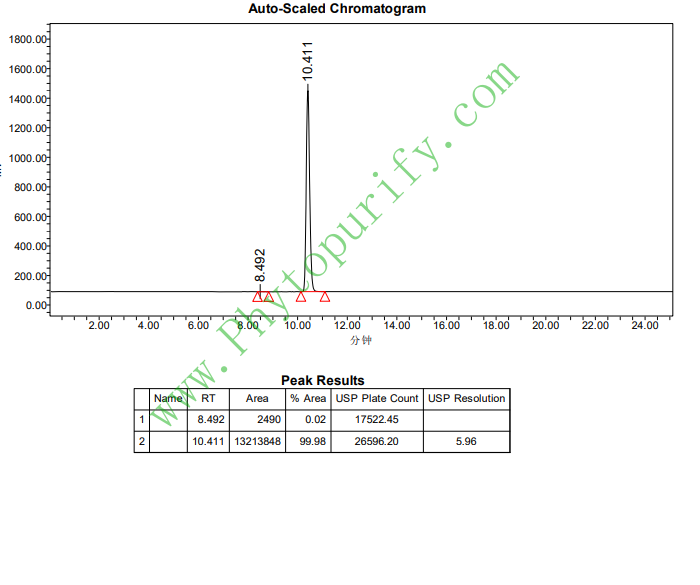
Purity: 95%~99%
Analysis Method: HPLC-DAD or/and HPLC-ELSD
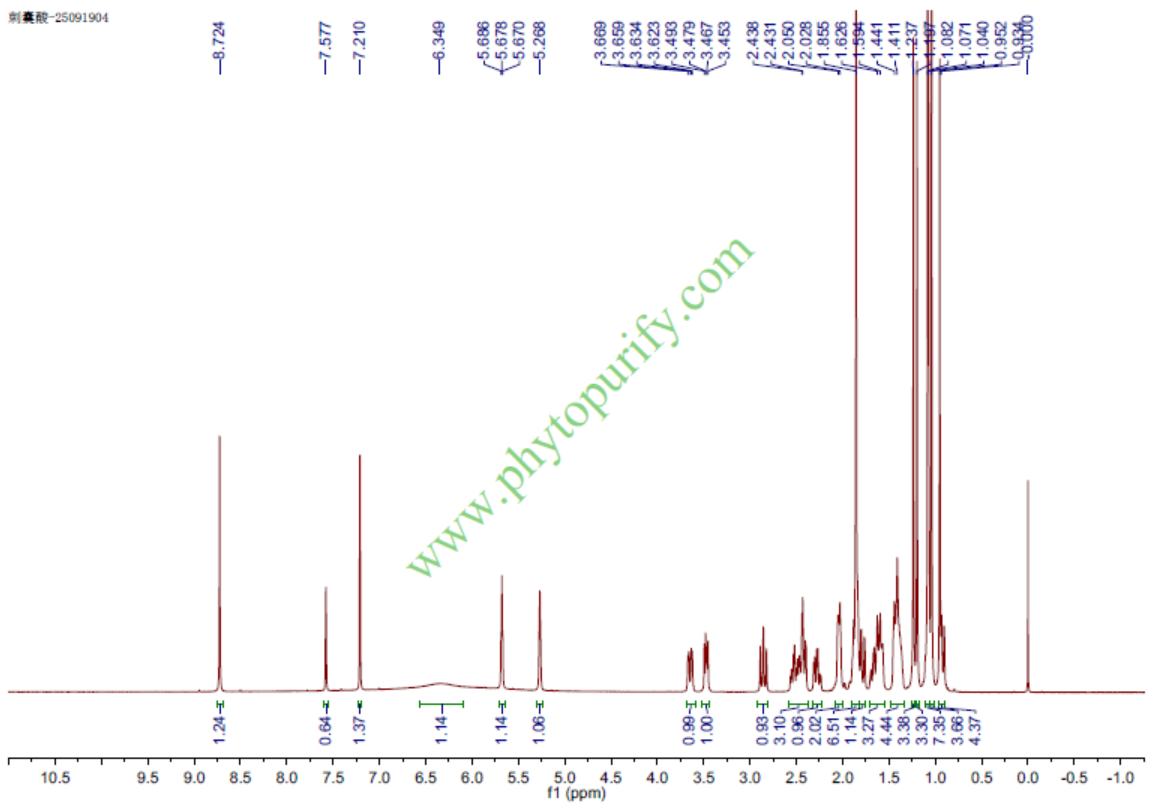
Identification Method: Mass, NMR
Packing: Brown vial or HDPE plastic bottle
Storage: Store in a well closed container, protected from air and light. Put into refrigerate or freeze for long term storage.
Whenever possible, you should prepare and use solutions on the same day. However, if you need to make up stock solutions in advance, we recommend that you store the solution as aliquots in tightly sealed vials at -20℃. Generally, these will be useable for up to two weeks.
The product could be supplied from milligrams to grams
Inquire for bulk scale.
Description:
Echinocystic acid has cardioprotective, hypolipidemic, anti-tumor, anti-inflammatory and antioxidant effects, it displays substantial inhibitory activity on HCV entry.Orally administered lancemaside A may be metabolized to echinocystic acid, which may be absorbed into the blood and ameliorate memory and learning deficits by inhibiting AChE activity and inducing BDNF and p-CREB expressions.Orally administered lancemaside A may be metabolized to echinocystic acid, which may be absorbed into the blood and ameliorate memory and learning deficits by inhibiting AChE activity and inducing BDNF and p-CREB expressions.
References:
Planta Med. 2013 Aug;79(12):1031-7
Echinocystic acid isolated from Eclipta prostrata suppresses lipopolysaccharide-induced iNOS, TNF-α, and IL-6 expressions via NF-κB inactivation in RAW 264.7 macrophages.[Pubmed: 23877917]
In this study, we aimed to identify the compounds in Eclipta prostrata responsible for its anti-inflammatory effects using an in vitro bioassay.
METHODS AND RESULTS:
Three triterpenoids, eclalbasaponin I, eclalbasaponin II, and Echinocystic acid, were isolated from an EtOAc fraction of the 70 % EtOH extract of E. prostrata by activity-guided fractionation based on the inhibition of nitric oxide release from lipopolysaccharide-induced RAW 264.7 macrophages. Of these three triterpenoids, Echinocystic acid inhibited lipopolysaccharide-induced production of nitric oxide and cytokines such as tumor necrosis factor-α and interleukin-6. Consistent with these observations, Echinocystic acid concentration-dependently inhibited lipopolysaccharide-induced inducible nitric oxide synthase expression at the protein level and inducible nitric oxide synthase, tumor necrosis factor-α, and interleukin-6 expression at the mRNA level, and inhibited lipopolysaccharide-induced iNOS promoter binding activity. In addition, Echinocystic acid suppressed the lipopolysaccharide-induced transcriptional activity of nuclear factor-κB by blocking the nuclear translocation of p65.
Life Sci. 2014 Oct 2;114(2):62-9.
Echinocystic acid, isolated from Gleditsia sinensis fruit, protects endothelial progenitor cells from damage caused by oxLDL via the Akt/eNOS pathway.[Pubmed: 25086379 ]
Our previous studies revealed that Echinocystic acid (EA) showed obvious attenuation of atherosclerosis in rabbits fed a high-fat diet. However, the underlying mechanisms remain to be elucidated. Considering the importance of endothelial progenitor cells (EPCs) in atherosclerosis, we hypothesise that EPCs may be one of the targets for the anti-atherosclerotic potential of EA.
METHODS AND RESULTS:
After in vitro cultivation, EPCs were exposed to 100 μg/mL of oxidised low-density lipoprotein (oxLDL) and incubated with or without EA (5 and 20 μM) for 48 h. An additional two groups of EPCs (oxLDL+20 μM EA) were pre-treated with either wortmannin, an inhibitor of the phosphoinositide 3-kinase (PI3K) pathway, or nitro-l-arginine methyl ester (l-NAME), an endothelial nitric oxide synthase (eNOS)-specific inhibitor. Assessment of EPC apoptosis, adhesion, migration, and nitric oxide (NO) release was performed using terminal deoxynucleotidyl transferase-mediated dUTP nick-end labelling (TUNEL) staining, cell counting, caspase-3 activity assay, transwell chamber assay, and Griess reagent, respectively. The protein expression of protein kinase B (Akt) and eNOS was detected using Western blot. Treatment of EPCs with oxLDL induced significant apoptosis and impaired adhesion, migration, and NO production. The deleterious effects of oxLDL on EPCs were attenuated by EA. However, when EPCs were pre-treated with wortmannin or l-NAME, the effects of EA were abrogated. Additionally, oxLDL significantly down-regulated eNOS protein expression as well as repression of eNOS and Akt phosphorylation.
CONCLUSIONS:
The inhibitory effect of oxLDL on Akt/eNOS phosphorylation was attenuated by EA. Taken together, the results indicate that EA protects EPCs from damage caused by oxLDL via the Akt/eNOS pathway.
Fitoterapia. 2010 Jan;81(1):8-10.
Protective effects of echinocystic acid isolated from Gleditsia sinensis Lam. against acute myocardial ischemia.[Pubmed: 19573579 ]
Echinocystic acid (EA), a pentacyclic triterpene, was isolated and identified from the fruits of Gleditsia sinensis Lam.
METHODS AND RESULTS:
The protective effects of EA were evaluated in rat models with acute myocardial ischemia induced by isoproterenol and vasopressin. In the electrocardiogram of anesthetized rats, EA prevented the ST-segment depression induced by isoproterenol or vasopressin in a dose-dependently manner. Furthermore, the mRNA expression of Bcl-2 was analyzed by RT-PCR. EA shows an elevation of Bcl-2 mRNA level in infarcted tissue induced by isoproterenol in rats.
CONCLUSIONS:
These results demonstrated for the first time EA has a cardioprotective effect and may be a natural drug.
HPLC of Echinocystic acid
HNMR of Echinocystic acid
Storage conditions:Short-term storage at 2~8℃, long-term storage at -20 ~ -80℃
77.7600
5.6490
3.7997
.0043
4.1687
4.2157
Low
91.1444
4.7951
No
No
No
No
No
No
0.0
No
No
Yes
No
Natural products are an important source for the discovery and development of new drugs, among which pentacyclic triterpenoids have attracted much attention due to their wide range of biological activities and unique chemical structures. Echinocystic acid (EA), also known as 3 β, 16 α - dihydroxyoleanan-12-en-28-oic acid, is a pentacyclic triterpenoid compound of oleanane type widely found in various medicinal plants. Since its discovery, its significant antioxidant, anti-inflammatory, and analgesic activities have been preliminarily confirmed. In recent years, with the deepening of molecular pharmacology and tumor biology research, the potential of oxalic acid in the treatment of major diseases such as prostate cancer has gradually become prominent, exhibiting multi-target and multi pathway characteristics. This article aims to systematically review the chemical properties, plant sources, pharmacological activities, molecular mechanisms of action, pharmacological evaluation, and clinical application prospects of prickly acid, in order to provide comprehensive scientific references for the deep development and transformation research of this natural product.
The molecular formula of succinic acid is C30H48O4, with a molecular weight of 472.7100 and a CAS number of 510-30-5. Its basic skeleton is an oleane type pentacyclic triterpene, with structural features including A/B rings, B/C rings, and C/D rings all being trans fused, and D/E rings being cis fused. On its parent nucleus, there is a β - configured hydroxyl group at positions C-3 and C-16, a carboxyl group at position C-17, and a double bond at position C-12. These functional groups are the key structural basis for their biological activity.
From the analysis of parameters related to drug properties, the lipid water partition coefficient (LogP) of oxalic acid is 5.6490, indicating its strong lipophilicity. Its topological polar surface area (TPSA) is 77.7600 Å ². Its water solubility is extremely low, about 0.0043 mg/mL, which is consistent with its high LogP value, suggesting that it may need to improve solubility through structural modification or formulation methods during its development. Preliminary toxicity prediction shows that the Ames test result is negative (0.0), indicating no mutagenic risk; There is no significant inhibitory effect on hERG potassium channels, indicating a low potential risk of arrhythmia. However, its blood-brain barrier permeability is predicted to be "low", which means it may have difficulty entering the central nervous system to exert its effects, which is a limitation for treating central related diseases but may also reduce the risk of central side effects.
Prickly acid is widely distributed in nature, mainly found in various plants such as Fabaceae, Cucurbitaceae, and Lardizabalaceae. Common medicinal plants rich in oxalic acid include:Echinocystis spp、Gleditsia sinensis、Albizia julybrissin、Luffa cylindrica and Akebia quinata Wait. These plants are often used in traditional medicine to treat inflammation, fever, and pain, and some of their medicinal effects may be attributed to active ingredients such as succinic acid.
The extraction and separation of succinic acid usually follow the conventional process of natural product chemistry. Firstly, dry and crush plant materials such as roots, stems, leaves, or fruits. Common extraction solvents include methanol, ethanol, or ethanol water mixed solutions with different ratios. Reflux extraction, ultrasound assisted extraction, or microwave-assisted extraction techniques are used to improve efficiency. After vacuum concentration, the crude extract was subjected to gradient extraction using organic solvents such as petroleum ether, ethyl acetate, and n-butanol, and oxalic acid was mostly enriched in the ethyl acetate fraction. Further purification relies on various chromatographic techniques, such as silica gel column chromatography, reverse phase C18 column chromatography, and high-performance liquid chromatography (HPLC) preparation. Structural identification is accomplished through spectroscopic methods such as nuclear magnetic resonance (NMR, including 1H-NMR and 13C-NMR), mass spectrometry (MS), and infrared spectroscopy (IR).
Prickling acid exhibits diverse pharmacological activities, laying the foundation for its application in multiple disease fields.
Anti inflammatory and analgesic activity This is one of the earliest recognized activities of prickly acid. In various animal models of acute and chronic inflammation, such as carrageenan induced rat foot swelling and acetic acid induced increased peritoneal capillary permeability in mice, succinic acid can significantly inhibit the release of inflammatory mediators and edema formation. Its analgesic effect has been confirmed in acetic acid writhing test and hot plate test, and the effect is comparable to that of nonsteroidal anti-inflammatory drugs, but the mechanism of action may be more diverse.
antioxidant activity The phenolic hydroxyl group in the structure of succinic acid is the key to its antioxidant capacity. In vitro experiments have shown that it can effectively scavenge DPPH free radicals, ABTS free radical cations, and exhibit iron ion reduction ability. Its antioxidant effect helps to alleviate oxidative stress-related tissue damage and is the basis for anti-inflammatory, anti-aging, and prevention of certain chronic diseases.
Antitumor activity In recent years, the anti-tumor potential of succinic acid has become a research hotspot, especially in the field of prostate cancer. Research has shown that oxalic acid can effectively inhibit the proliferation of various prostate cancer cell lines (such as LNCaP, PC-3, DU145) and induce cell apoptosis. Its effect is not limited to prostate cancer, but also shows certain growth inhibition on breast cancer, liver cancer, colon cancer and other cells.
Other activities The study also suggests that oxalic acid has potential activities such as liver protection, antiviral (such as anti HIV, anti HBV), immune regulation, and improvement of insulin resistance, demonstrating its broad prospects as a lead compound for pleiotropic drugs.
The pharmacological effects of oxalic acid, especially its anti prostate cancer activity, are achieved by intervening in multiple key signaling pathways and molecular targets, demonstrating the advantages of multi-target therapy. According to the provided target information, its mechanism of action can be summarized as follows:
Inducing apoptosis and regulating apoptosis related proteins Prickling acid can downregulate the expression of anti apoptotic protein BCL2, disrupt mitochondrial membrane potential, promote cytochrome C release, activate Caspase cascade reaction, and ultimately induce cancer cell apoptosis. Meanwhile, it can also activate CASP1 (cysteine protease-1), which may be involved in the inflammasome mediated cell pyroptosis pathway.
Inhibition of STAT3 signaling pathway STAT3 is a core transcription factor involved in tumor development, progression, immune escape, and chemotherapy resistance. Cistanche acid can effectively inhibit the phosphorylation (activation) of STAT3, suppress its nuclear translocation and the transcription of downstream target genes (such as Cyclin D1, Bcl xL), thereby inhibiting cell proliferation, promoting apoptosis, and enhancing chemotherapy sensitivity.
Regulating kinase and phosphatase activity Prickling acid has been reported as an inhibitor of protein tyrosine phosphatase 1B (PTPN1/PTP1B). PTP1B is a negative regulator of the insulin and leptin signaling pathways, and its inhibition can improve insulin resistance; Meanwhile, PTP1B may also play a complex role in tumors. In addition, quercetin can also affect the activity of protein kinase C alpha (PRKCA), which is involved in the regulation of cell proliferation, differentiation, and apoptosis.
Intervention of nuclear receptors and transcription factors Prickling acid can interact with estrogen receptor beta (ESR2). ESR2 is believed to have tumor suppressive function in the prostate, and oxalic acid may exert a protective effect by activating ESR2 signaling. It can also activate the key transcription factor NFE2L2 (Nrf2) for antioxidant stress, promote the expression of downstream antioxidant enzymes, and alleviate oxidative damage. Under hypoxic microenvironment, oxalic acid can inhibit the stability and activity of hypoxia inducible factor 1 alpha (HIF1A), thereby interfering with tumor metabolic adaptation and angiogenesis.
Affects drug efflux and DNA topology structure Prickling acid has regulatory potential on multidrug resistance protein ABCB1 (P-gp), which may help reverse multidrug resistance in tumors. In addition, it can also inhibit the activity of topoisomerase I (TOP1), interfere with DNA replication and repair, which may be one of the mechanisms of its direct cytotoxic effect.
Despite its rich biological activity, the development of medicinal properties of prickly acid still faces challenges, mainly due to its poor drug like properties.
Absorption, distribution, metabolism, excretion (ADME):
Optimization strategy for drug properties In order to improve the pharmacological properties of prickly acid, researchers are exploring various strategies:
As a natural pentacyclic triterpenoid with multi-target effects, the clinical application prospects of prickly acid mainly focus on the following directions:
Antitumor therapy, especially for prostate cancer Based on its inhibitory effects on multiple key prostate cancer targets such as STAT3, BCL2, and HIF1A, oxalic acid has the potential to be developed as a novel anti prostate cancer drug, or combined with existing chemotherapy and endocrine therapy drugs to enhance efficacy and overcome drug resistance. Its multi-target characteristics may help to address the heterogeneity and evolution of tumors.
Chronic inflammatory diseases Its strong anti-inflammatory and antioxidant activities make it valuable in the treatment of diseases such as rheumatoid arthritis, inflammatory bowel disease, and chronic hepatitis. It can be considered to develop topical formulations for the treatment of skin inflammation, or to improve oral administration for systemic diseases through formulation technology.
Metabolic diseases By inhibiting PTP1B to improve insulin sensitivity, acanthocystic acid provides a new candidate molecule for the prevention and treatment of type 2 diabetes and its complications.
Combination therapy and complementary replacement therapy Prickling acid can be used as an adjuvant drug in combination with conventional treatment methods to enhance efficacy and reduce toxicity. The long-term use history of its source plants in traditional medicine also provides a cultural and practical basis for developing it into standardized plant medicines or dietary supplements.
However, there are still many challenges to overcome in order to move towards clinical application:First It is necessary to clarify its safety window through systematic preclinical toxicology studies (acute toxicity, chronic toxicity, reproductive toxicity, etc.).secondly The core problem of low bioavailability must be addressed, which relies on the collaborative innovation of pharmacy and medicinal chemistry.finally It is necessary to design and conduct rigorous clinical trials to verify its effectiveness, safety, and optimal medication regimen in humans.
Future research should focus on: 1) deepening the understanding of the network interactions of its targets; 2) Using computer-aided drug design for rational structural optimization to obtain derivatives with higher activity and better drug properties; 3) Explore targeted delivery systems and combination therapy strategies based on oxalic acid.
Prickling acid is a natural pentacyclic triterpenoid compound with important research value. Coming from traditional medicinal plants, modern pharmacological research has gradually revealed its powerful multiple biological activities such as antioxidant, anti-inflammatory, analgesic, and anti prostate cancer. Its multi-target mechanism of action is particularly noteworthy. Although its inherent physical and chemical properties, such as low water solubility and low bioavailability, pose challenges for the development of new drugs, this is also an area where modern pharmaceutical chemistry and pharmacy can shine. Through strategies such as structural modification and novel drug delivery systems, it is expected to transform this ancient natural molecule into modern drugs with clear therapeutic effects and good patient compliance. With the continuous deepening of basic and translational research, oxalic acid is expected to demonstrate unique therapeutic value in fields such as tumors, inflammation, and metabolic diseases, contributing naturally to human health.
