Introduction/Overview
Hypertension is one of the cardiovascular diseases with the highest incidence rate and the heaviest disease burden in the world. Its pathogenesis is complex, involving multiple links such as nerve, endocrine, vascular endothelial dysfunction and metabolic abnormalities. Although there are various types of antihypertensive drugs available, some patients still face problems such as poor blood pressure control, drug side effects, and multi drug combination therapy. Therefore, finding efficient and low toxicity new antihypertensive lead compounds or functional factors from natural products has always been an important direction for drug development. Graveobioside A (CAS number: 506410-53-3), as a naturally occurring anthocyanin glycoside, has attracted much attention in recent years due to its multi-target and multi pathway pharmacological activities in the cardiovascular system, especially in hypertension related models. Anthocyanins have been widely studied in the field of cardiovascular disease prevention due to their powerful antioxidant, anti-inflammatory, and endothelial protective effects. As one of the members, the unique chemical structure of Medicinal Celery Glycoside A endows it with a specific spectrum of biological activity. This article aims to provide a systematic review of the chemical properties, plant sources, pharmacological activities, molecular mechanisms of action, pharmacological characteristics, and potential applications of Medicinal Celery Glycoside A in the treatment of hypertension, in order to provide comprehensive scientific references for the in-depth research and development of this natural product.
Chemical structure and physicochemical properties
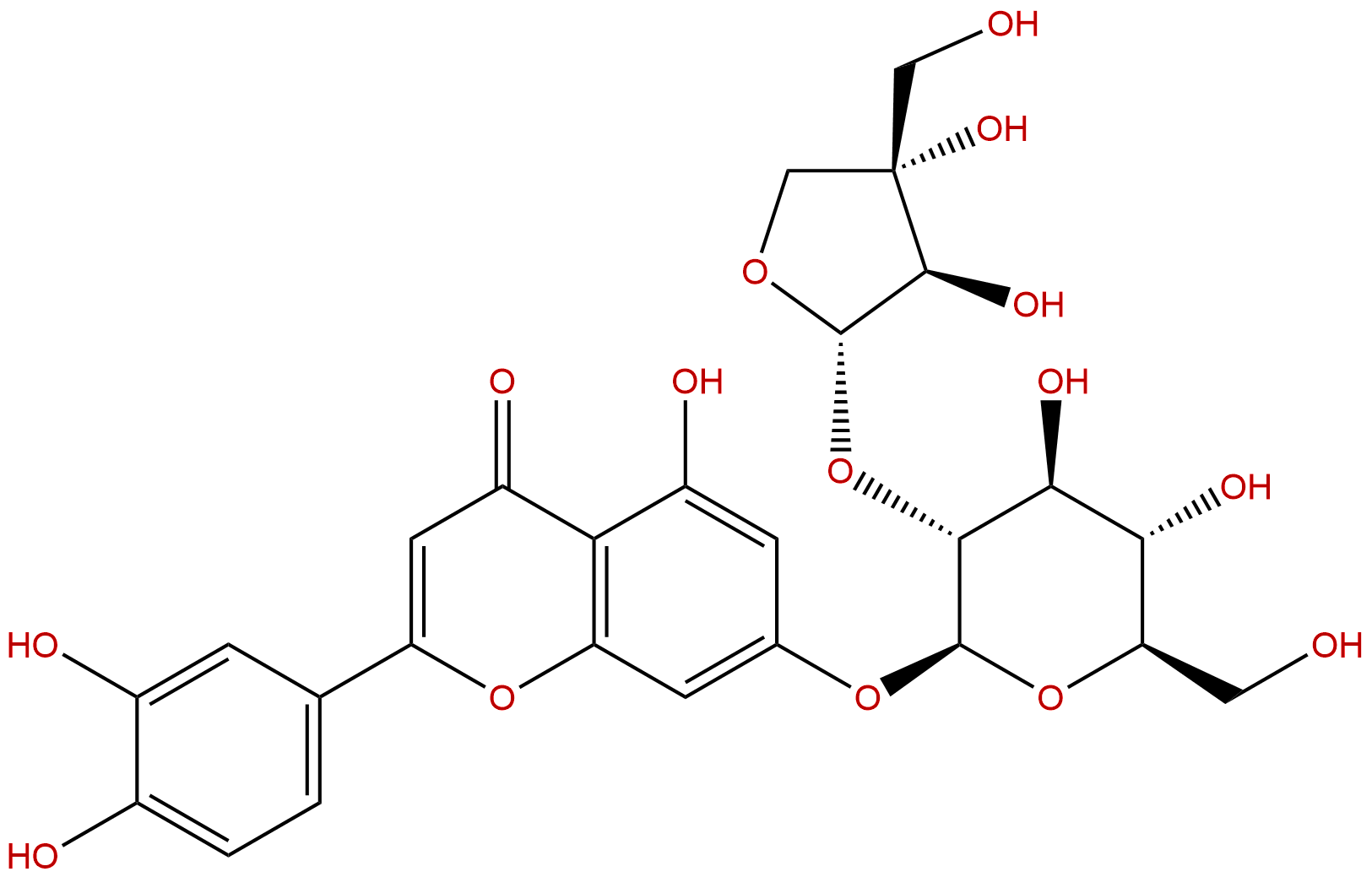
Medicinal celery glycoside A is a type of anthocyanin glycoside compound. Its parent nucleus is anthocyanin, which is a cationic structure of 2-phenylbenzopyran, connected to the sugar group through glycosidic bonds. Specifically, the aglycone of Medicinal Celery Glycoside A is Cyanidin or other similar anthocyanins, and its sugar moiety is a disaccharide structure, which may be the origin of the "disaccharide" in its name. This glycosylation modification significantly affects the polarity, solubility, stability, and bioavailability of the compound.
According to the provided pharmacological parameters, its molecular weight is 580.4950, which is a medium-sized natural product molecule. The calculated logarithmic value of the lipid water partition coefficient (LogP) is -0.6576, indicating that the compound has moderate lipophilicity but overall leans towards hydrophilicity. Its topological polar surface area (TPSA) is as high as 249.2000 Å ², mainly attributed to the hydrogen bond donors and acceptors such as hydroxyl groups and ether oxygen atoms on the sugar ring that are abundant in the molecule. High TPSA is a typical characteristic of polyphenolic glycosides. Consistent with this, its theoretical water solubility value is 1.3651 (usually measured in mg/mL or log mol/L, indicating good water solubility). These physicochemical properties (low LogP, high TPSA, good water solubility) collectively indicate that oral absorption may face challenges due to weak transmembrane passive diffusion ability. In addition, the prediction shows that its blood-brain barrier permeability is low, indicating that it mainly acts on the peripheral system, and the risk of central nervous system related side effects is relatively low. The key early safety indicators show that its hERG channel inhibition tendency is' no ', indicating a lower potential risk of arrhythmia; The Ames test value is 1.2 (usually considered negative if it is close to or less than 2), indicating no significant genetic toxicity. These data provide preliminary physicochemical and safety baselines for the subsequent development of Medicinal Celery Glycoside A.
Plant sources and extraction methods
Medicinal celery glycoside A mainly comes from plants in the Umbelliferae family, especially celery(Apium graveolens L. And its closely related species. Celery, as a common medicinal and edible plant, is rich in various flavonoids, coumarins, and benzophenone active ingredients in its seeds, stems, and leaves. Medicinal celery glycoside A can be inferred from its name "Graveobioside", which is likely to have originated from celery(Apium graveolens)The bioside obtained through separation and identification.
The extraction method usually follows the conventional process of plant polyphenolic compounds. Firstly, crush the dried celery seeds or whole plants and extract them using a medium polarity solvent system. Common methods include:
1. Solvent extraction method Use methanol, ethanol, or acetone water mixed solution (such as 70% ethanol) for heating reflux or room temperature extraction. This method is easy to operate and is an effective means of preliminary enrichment.
2. Ultrasonic or microwave-assisted extraction method The use of physical fields to enhance the penetration and component dissolution of solvents into plant cells can significantly improve extraction efficiency, shorten time, and reduce solvent consumption.
3. Purification and Separation After vacuum concentration, the crude extract is sequentially subjected to liquid-liquid distribution using solvents such as petroleum ether and ethyl acetate to remove lipophilic impurities. The water layer or alcohol layer rich in glycosides is further enriched by macroporous adsorption resin (such as AB-8, D101) column chromatography, and eluted with water and different concentrations of ethanol gradient. Medicinal celery glycoside A usually appears in the middle to high concentration ethanol eluted portion. The final refined separation relies heavily on preparative high-performance liquid chromatography (HPLC), using a reverse phase C18 column and methanol water or acetonitrile water (often containing small amounts of formic acid or acetic acid to improve peak shape) as the mobile phase for separation. The target peak is collected and freeze-dried to obtain the pure product. The entire separation process needs to be carried out under light avoidance and low temperature conditions to protect anthocyanin glycosides from photo oxidation and thermal degradation.
Pharmacological activity research
The pharmacological research of Medicinal Celery Glycoside A mainly focuses on the cardiovascular system, especially in the prevention and treatment of hypertension and its complications, demonstrating various beneficial activities.
1. Vasodilatory effect Multiple in vitro studies have shown that icarioside A can selectively relax ex vivo vascular rings (such as rat aortic rings) induced by norepinephrine, potassium chloride, and other factors in a concentration dependent manner. This relaxation effect partially depends on the vascular endothelium, as its effect weakens after removing the endothelium, suggesting that it can promote the release or enhance the activity of endothelial derived relaxation factors (such as nitric oxide, NO). Meanwhile, it may also affect ion channels or intracellular calcium signaling pathways by directly acting on vascular smooth muscle cells.
2. Antihypertensive effect In animal models such as spontaneously hypertensive rats (SHR) or renal hypertensive rats, long-term gavage of icariin A can significantly reduce systolic and diastolic blood pressure in animals, and it is dose-dependent. Its antihypertensive effect is relatively stable, and no sharp blood pressure fluctuations were observed. In addition, it can improve myocardial hypertrophy and vascular remodeling associated with hypertension, and reduce target organ damage.
3. Antioxidant and anti-inflammatory activities As an anthocyanin glycoside, Medicinal Celery Glycoside A has strong free radical scavenging ability and can effectively inhibit the production of reactive oxygen species such as superoxide anions and hydrogen peroxide. Oxidative stress is a key factor leading to endothelial dysfunction and vascular inflammation in pathological states such as hypertension. Medicinal celery glycoside A can downregulate the expression and activity of NADPH oxidase in vascular tissue, and enhance the activity of endogenous antioxidant enzymes such as superoxide dismutase (SOD) and glutathione peroxidase (GSH Px). At the same time, it can inhibit the activation of inflammatory signaling pathways such as nuclear factor kappa B (NF - κ B), reduce the expression of pro-inflammatory cytokines such as tumor necrosis factor - α (TNF - α) and interleukin-6 (IL-6), thereby alleviating chronic low-grade inflammation of the vascular wall.
4. Endothelial protection and functional improvement Medicinal celery glycoside A can promote the synthesis and release of NO in vascular endothelial cells, inhibit the production of endothelin-1 (ET-1), and regulate vascular tension balance. It can also upregulate the expression and activity of endothelial nitric oxide synthase (eNOS), protect endothelial cells from oxidative stress-induced apoptosis, and maintain the integrity of the endothelial barrier.
5. Metabolic regulation effect Preliminary research suggests that Medicinal Celery Glycoside A may have a certain regulatory effect on glucose and lipid metabolism, such as improving insulin sensitivity and regulating lipid metabolism disorders, which has potential benefits for metabolic syndrome commonly associated with hypertension.
Mechanism of action and molecular targets
The antihypertensive and cardiovascular protective effects of Medicinal Celery Glycoside A are not achieved through a single target, but involve a complex network that acts on multiple key molecular targets closely related to the pathophysiology of hypertension (as listed in the provided information):
- AMPK(PRKAA1)AMP activated protein kinase is a core regulator of cellular energy metabolism. Medicinal celery glycoside A may activate AMPK, thereby promoting eNOS phosphorylation activation (increasing NO production), inhibiting NF - κ B pathway (anti-inflammatory), regulating fatty acid oxidation and glucose uptake (improving metabolism), and inhibiting abnormal proliferation of vascular smooth muscle cells.
- SIRT1 Silent information regulatory factor 1 is a NAD+- dependent deacetylase. Activation of SIRT1 can deacetylate and activate transcription factors such as PGC-1 α and FOXOs, enhancing mitochondrial function and antioxidant defense; Meanwhile, SIRT1 can also deacetylate and activate eNOS, while inhibiting the transcriptional activity of NF - κ B, thus synergistically exerting a vascular protective effect. Medicinal celery glycoside A may act as an activator of SIRT1.
- HIF1A Hypoxia inducible factor 1 alpha plays a role in hypertension vascular remodeling and renin secretion regulation. Medicinal celery glycoside A may indirectly regulate the stability or activity of HIF1A by improving oxidative stress and microcirculation, but its direct interaction still needs to be confirmed.
- NF - κ B pathway (RELA)RELA (p65) is a key subunit of NF - κ B. Through its antioxidant and possible direct inhibition, apigenide A can prevent I κ B degradation and NF - κ B nuclear translocation, thereby inhibiting the expression of downstream inflammatory factors, which is one of the core mechanisms of its anti atherosclerosis and vascular protection.
- Renin angiotensin system (RAS) and kininoid system:
- ACE Angiotensin converting enzyme is a key enzyme in the RAS system. Medicinal celery diglycoside A may exhibit certain ACE inhibitory activity, reducing the production of angiotensin II and decreasing the degradation of bradykinin, with a dual effect beneficial for lowering blood pressure.
- EDNRA The endothelin A receptor mediates the strong vasoconstrictive and pro proliferative effects of endothelin-1. Medicinal celery glycoside A may antagonize the endothelin system by downregulating ET-1 expression or competitively antagonizing EDNRA.
- ion channel:
- KCNA5 The encoded voltage-gated potassium channel Kv1.5 is expressed in vascular smooth muscle and atrial muscle, affecting vascular tone and cardiac electrophysiology. Regulating this channel may be involved in vasodilation.
- CHRNA7 Alpha 7 nicotinic acetylcholine receptors are expressed in endothelial cells and immune cells, and their activation has anti-inflammatory effects. Medicinal celery glycoside A may mediate the cholinergic anti-inflammatory pathway through this receptor.
- Metabolism of Epoxyeicosaenoic Acid and Nuclear Receptors:
- EPHX2 Soluble epoxide hydrolase can hydrolyze epoxyeicosaenoic acid (EETs) with vasodilator and anti-inflammatory effects into less active products. Inhibiting EPHX2 can increase endogenous EETs levels and is a potential antihypertensive strategy. Medicinal celery glycoside A may have EPHX2 inhibitory activity.
- PPARG Peroxisome proliferator activated receptor gamma is a nuclear receptor, and its agonists (such as thiazolidinediones) can improve insulin resistance, inhibit vascular inflammation, and remodeling. Medicinal celery glycoside A may serve as a regulator of PPARG.
In summary, Medicinal Celery Glycoside A forms a multi-target synergistic network by simultaneously acting on the AMPK/SIRT1 energy and stress sensing pathway, NF - κ B inflammatory pathway, RAS/endothelin vascular active system, as well as ion channel and metabolism related targets, contributing to its antihypertensive and organ protective effects.
Evaluation of drug properties and pharmacokinetics
Based on its physical and chemical properties, there are both opportunities and challenges for the pharmacological potential of Medicinal Celery Glycoside A.
Advantage:
1. Natural source, preliminary good safety Originating from medicinal and edible plants, historical consumption experience provides a certain safety foundation. The preliminary hERG and Ames negative results have reduced the key risks of early development.
2. Multi-target effect Targeting the complex mechanism of hypertension, multi-target synergy may lead to smoother therapeutic effects and lower drug resistance.
3. Clear in vitro and in vivo activity Its cardiovascular protective effect has been confirmed in cell and animal models.
Challenges and research questions:
1. Oral bioavailability High polarity (high TPSA, low LogP) and larger molecular weight may limit its absorption across gastrointestinal epithelial cells through passive diffusion. Glycoside structures may undergo hydrolysis under the action of gut microbiota, affecting the absorption and activity of the original drug. Its bioavailability needs to be clarified in pharmacokinetic studies.
2. Metabolism and stability Anthocyanins are easily degraded and metabolized in the body under the influence of pH, enzymes, and gut microbiota. It is necessary to study its stability in gastrointestinal fluid and liver microsomes, as well as the main phase I and phase II metabolites.
3. Pharmacokinetic characteristics Currently, there is a lack of systematic pharmacokinetic data, including its absorption, distribution, metabolism, and excretion (ADME) processes. It is necessary to clarify its blood drug concentration time curve, tissue distribution (especially cardiovascular target tissue), half-life, clearance pathway, etc.
4. Formulation development To improve its oral bioavailability, advanced formulation technologies such as nanocrystals, liposomes, phospholipid complexes, cyclodextrin inclusion complexes, or prodrug modifications may be needed to enhance its solubility, stability, and membrane permeability.
5. Preclinical safety evaluation A comprehensive GLP toxicology study is required, including acute toxicity, chronic toxicity, reproductive toxicity, etc., to evaluate its safety window.
Clinical application prospects and prospects
As a natural anthocyanin glycoside with multi-target antihypertensive potential, the clinical application prospects of Medicinal Celery Glycoside A are mainly reflected in the following aspects:
- New antihypertensive drugs/lead compounds On the basis of existing antihypertensive drugs such as ACEI, ARB, CCB, etc., develop plant chemical drugs with novel multi-target mechanisms of action (especially simultaneously regulating energy metabolism, oxidative stress, and inflammation), providing new options for patients with refractory hypertension or metabolic syndrome.
- Cardiovascular protectants/functional food additives With its multiple effects such as antioxidant, anti-inflammatory, and endothelial protection, it can be developed as a health functional food or dietary supplement to prevent the progression of hypertension and reduce the risk of cardiovascular events. Its natural source characteristics are more easily accepted by consumers.
- Combination therapy strategy Given its unique mechanism of action, Medicinal Celery Glycoside A may have a synergistic effect with existing antihypertensive drugs, achieving better blood pressure control and target organ protection at lower doses, thereby reducing the side effects caused by high-dose monotherapy.
- Regarding complications Its anti-inflammatory and anti fibrosis effects suggest that it may also have application value in the prevention and treatment of hypertensive nephropathy, heart failure, atherosclerosis and other complications.
Future research directions should focus on:
* In depth mechanism research By utilizing gene knockout, specific inhibitors, and other methods, the direct interactions and upstream and downstream signaling pathways with various potential targets (such as AMPK, SIRT1, EPHX2) were accurately validated in in in vivo and in vitro models.
* Systematic pharmacokinetics and formulation studies Initiate systematic ADME research as soon as possible and explore efficient delivery systems to address their bioavailability bottlenecks.
* Preclinical development and translation Complete standardized preclinical pharmacodynamic, pharmacokinetic, and safety evaluations, and provide a complete data package for its application for clinical trials.
* Study on Structure Activity Relationship Modify its glycoside structure, glycosylation type, and connection mode to synthesize a series of derivatives, and screen for candidate molecules with better activity and drug properties.
Conclusion
Medicinal celery glycoside A is a natural anthocyanin glycoside compound derived from celery. With its unique chemical structure, it has demonstrated remarkable multi-target pharmacological activity in experimental studies of hypertension and related cardiovascular diseases. It exerts a comprehensive effect of lowering blood pressure, antioxidation, anti-inflammatory and endothelial protection by regulating AMPK/SIRT1, inhibiting NF - κ B inflammatory pathway, affecting RAS and endothelin system, regulating ion channels and other mechanisms. Although its good initial safety and pleiotropy provide a favorable foundation for development, the high polarity and potential bioavailability challenges are key obstacles that must be overcome for its clinical application. In the future, through in-depth elucidation of molecular mechanisms, systematic optimization of drug properties, and innovative formulation strategies, Medicinal Celery Glycoside A is expected to develop from a potential natural active molecule into a new drug or functional factor for the prevention and treatment of hypertension and its complications, contributing new strength to the field of cardiovascular disease treatment.