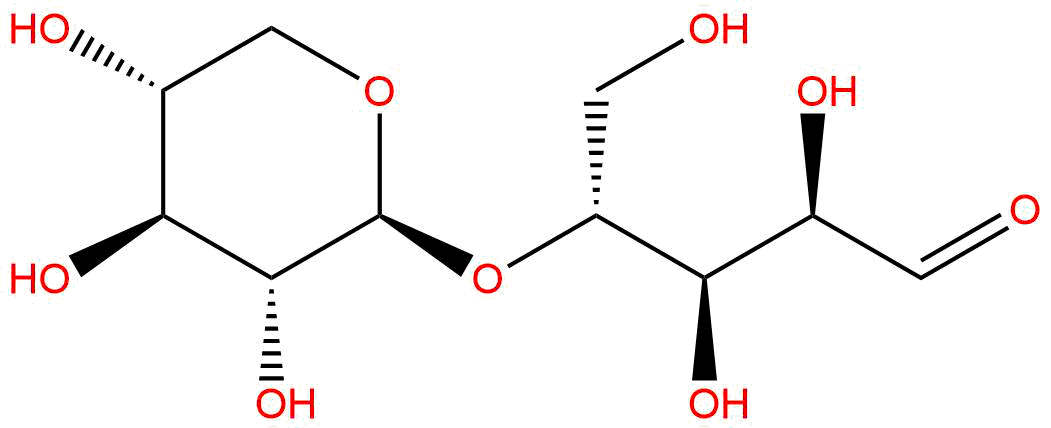


Product name: Xylobiose
Synonym name: Xylobiose (6CI,7CI,8CI); 4-O-β-D-Xylopyranosyl-D-xylose; 1,4-β-Xylobiose;D-Xylose, 4-O-β-D-xylopyranosyl-
Catalogue No.: BP4058
Cas No.: 6860-47-5
Formula: C10H18O9
Mol Weight: 282.245
Botanical Source:
Physical Description: White powder
Type of Compound: Oligose
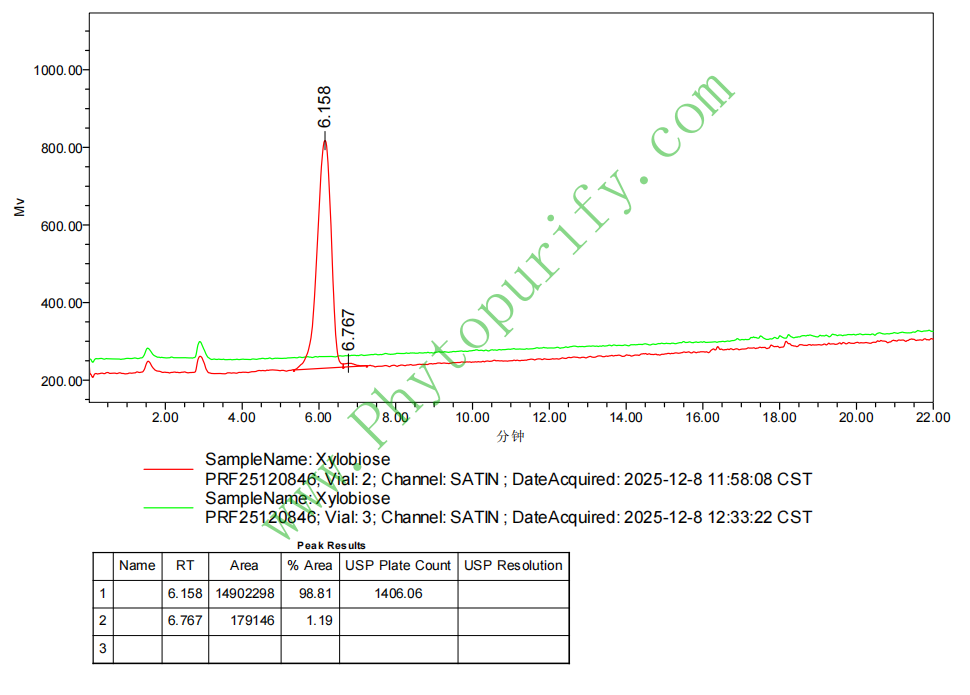
Purity: 95%~99%
Analysis Method: HPLC-DAD or/and HPLC-ELSD
Identification Method: Mass, NMR
Packing: Brown vial or HDPE plastic bottle
Storage: Store in a well closed container, protected from air and light. Put into refrigerate or freeze for long term storage.
Whenever possible, you should prepare and use solutions on the same day. However, if you need to make up stock solutions in advance, we recommend that you store the solution as aliquots in tightly sealed vials at -20℃. Generally, these will be useable for up to two weeks.
The product could be supplied from milligrams to grams
Inquire for bulk scale.
For Reference Standard and R&D, Not for Human Use Directly.
HPLC of Xylobiose
Storage conditions:Short-term storage at 2~8℃, long-term storage at -20 ~ -80℃
Xylobiose (CAS number: 6860-47-5), as a naturally occurring oligosaccharide, has attracted widespread attention in the field of natural product pharmacology in recent years. Its unique biological activity, especially its potential role in regulating intestinal barrier function, glucose and lipid metabolism and inflammatory response, makes it a hot molecule in the research of type 2 diabetes and metabolic syndrome. Wood disaccharides not only exhibit significant Claudin 2 (CLDN2) inhibitory activity, but also induce the expression of heat shock protein 27 (HSP27), thereby exerting a cellular protective effect. In addition, wood disaccharides exhibit multi-target and multi mechanism pharmacological properties by regulating the miR-122a/miR-33a axis, inhibiting hepatic lipid synthesis, and improving insulin resistance. This article provides a systematic review of the chemical structure and physicochemical properties, plant sources and extraction methods, pharmacological activity, mechanism of action, drug evaluation, and clinical application prospects of xylobiose, aiming to provide scientific basis for its subsequent drug development and clinical translation.
Xylose is a disaccharide formed by connecting two β - D-xylose molecules through a 1,4-β glycosidic bond, with the chemical name 1,4-β - D-xylose. Its molecular formula is C10H18O9 and its molecular weight is 282.2450. The structural characteristics of xylobiose determine its high hydrophilicity, manifested by a low LogP value (-2.4793), indicating strong hydrophilicity and poor lipid solubility. Its topological polar surface area (TPSA) is 156.91 Å ², reflecting the abundant polar groups on its molecular surface, which are conducive to interactions with biomolecules such as proteins. Excellent water solubility (221.4310 mg/mL) gives it good solubility and bioavailability when administered orally. Wood disaccharides have low blood-brain barrier permeability, reducing the risk of potential toxicity to the central nervous system. In vitro safety evaluation showed that xylobiose does not have hERG channel inhibitory activity, and the Ames mutagenicity test result is negative, indicating its high safety and suitability for further drug development.
Xylobiose is widely present in the lignocellulose and hemicellulose of various plants, especially in the degradation products of lignin and the hemicellulose components of plant cell walls. Its natural sources mainly include the lignocellulosic components of hardwood and cork plants, as well as the cell walls of certain grasses. Traditionally, the acquisition of xylobiose relies on enzymatic or acid hydrolysis treatment of plant cellulose. The specific methods include:
Enzymatic hydrolysis Selective hydrolysis of plant xylan using Xylanase to generate a mixture of oligosaccharides containing xylobiose. This method is mild, the product purity is high, and it retains the biological activity of xylobiose.
Acid hydrolysis method Dilute acid (such as dilute hydrochloric acid) is used to hydrolyze plant cellulose, producing xylobiose and other oligosaccharides. This method is easy to operate, but there are many impurities in the product, which require further purification.
Purification technology: Common purification methods include ion exchange chromatography, gel filtration chromatography and high performance liquid chromatography (HPLC) to obtain high purity xylobiose products.
In recent years, with the development of biotechnology, genetic engineering microbial fermentation method has also been used to produce xylobiose, which has advantages such as high yield and environmental friendliness.
The pharmacological activity of xylobiose is mainly reflected in its regulation of intestinal barrier function, improvement of glucose and lipid metabolism, and anti-inflammatory and antioxidant effects.
The integrity of the intestinal barrier is crucial for maintaining homeostasis in the body. Research has shown that xylobiose can reduce the permeability of intestinal epithelial intercellular spaces and alleviate inflammation and metabolic disorders caused by leaky gut by inhibiting the expression of Claudin 2 (CLDN2). In addition, wood disaccharides induce the expression of heat shock protein 27 (HSP27), enhance the cell's resistance to oxidative stress and inflammation, and further protect the intestinal barrier.
Xylose inhibits the expression of liver lipid synthesis related genes and significantly reduces liver fat accumulation by regulating the miR-122a and miR-33a axes. This mechanism can effectively improve insulin resistance, reduce blood sugar and lipid levels, and shows potential therapeutic value for type 2 diabetes and metabolic syndrome.
Xylose can regulate the immune response in the intestine, reduce the expression of pro-inflammatory factors such as IL-6 and TNF - α, and alleviate systemic inflammatory response. Meanwhile, the induced expression of HSP27 enhances the antioxidant capacity of cells and reduces oxidative stress damage.
As an oligosaccharide, xylooligosaccharides have prebiotic properties that can promote the growth of beneficial gut microbiota (such as Bifidobacterium) and regulate gut microbiota balance. Its targets include TLR4, TLR2, MUC2, IL22, OCLN, ZO1, GPR41, GPR43, and CLDN1, which participate in the regulation of intestinal immunity and barrier function.
The multi-target mechanism of action of xylobiose mainly involves the following aspects:
CLDN2 is a member of the tight junction protein family, involved in regulating the permeability of intestinal epithelial intercellular spaces. Xylose inhibits CLDN2 expression, reduces intestinal permeability, prevents endotoxins and inflammatory factors from entering the bloodstream, and alleviates systemic inflammation.
HSP27, as a molecular chaperone protein, participates in cellular stress response. Xylose induces HSP27 expression, enhances cell resistance to oxidative stress and inflammation, promotes cell survival and repair.
MiR-122a and miR-33a are important microRNAs that regulate lipid metabolism. Wood disaccharides regulate the expression of these two miRNAs, inhibit fatty acid synthesis and cholesterol synthesis related genes, reduce liver lipid accumulation, and improve metabolic abnormalities.
Wood disaccharides, as prebiotics, activate the TLR2 and TLR4 signaling pathways in the intestine, promote the expression of mucin MUC2 and tight junction proteins OPLN and ZO1, and enhance intestinal barrier function. At the same time, xylobiose activates G protein coupled receptors GPR41 and GPR43, regulating metabolism and immune responses mediated by short chain fatty acids (SCFAs).
Wood disaccharides have good medicinal properties. Its molecular weight is moderate and its water solubility is excellent (221.4310 mg/mL), which is conducive to oral administration and intestinal absorption. A negative LogP value (-2.4793) indicates strong hydrophilicity and difficulty in crossing the blood-brain barrier, reducing the risk of central nervous system toxicity. The hERG channel inhibition experiment was negative, indicating a low risk of cardiac toxicity from xylobiose. The Ames test result is 0.0, indicating that it has no mutagenicity and high safety.
At present, pharmacokinetic studies on xylobiose are still in the preliminary stage. Due to its low fat solubility and high polarity, the absorption of xylobiose in the gastrointestinal tract may depend on specific transporters or prebiotics mediated metabolic transformations. Further systematic research is needed on its bioavailability, plasma half-life, and metabolic pathways.
Xylodisaccharides have shown broad application prospects in the prevention and treatment of type 2 diabetes and metabolic syndrome by virtue of their multiple pharmacological activities of regulating intestinal barrier function, improving glucose and lipid metabolism, and anti-inflammatory and antioxidant. Its prebiotic properties also make it potentially valuable in regulating gut microbiota and related diseases such as inflammatory bowel disease and obesity.
Future research should focus on the following directions:
Preclinical safety and efficacy evaluation Conduct toxicological and pharmacological studies in animal models to clarify the dose-response relationship and safety window of xylobiose.
Pharmacokinetic and administration route optimization Conduct in-depth research on the absorption, distribution, metabolism, and excretion characteristics of xylobiose, and explore drug delivery strategies to improve its bioavailability.
In depth analysis of the mechanism By combining omics techniques such as transcriptomics and metabolomics, we aim to uncover the molecular mechanisms by which xylobiose regulates the gut liver axis and immune metabolic network.
Clinical trial design: Based on the existing pharmacological evidence, clinical trials were carried out for patients with type 2 diabetes and metabolic syndrome to verify its efficacy and safety.
Development of composite formulations Develop composite formulations with multi-target synergistic effects by combining other natural products or drugs to enhance therapeutic efficacy.
As a natural oligosaccharide, xylobiose has become a powerful candidate molecule for regulating intestinal barrier function and treating metabolic diseases due to its unique chemical structure and multi-target pharmacological activity. Its inhibition of CLDN2 and induction of HSP27, combined with the regulation of miR-122a/miR-33a axis, constructed a multi-level and multi-dimensional action network. In the future, with the deepening of pharmacokinetics and clinical research, xylobiose is expected to become a new natural drug or auxiliary means to treat type 2 diabetes and metabolic syndrome. Continuous basic and applied research will lay a solid foundation for its clinical translation and promote innovative development in the field of natural product pharmacology.
