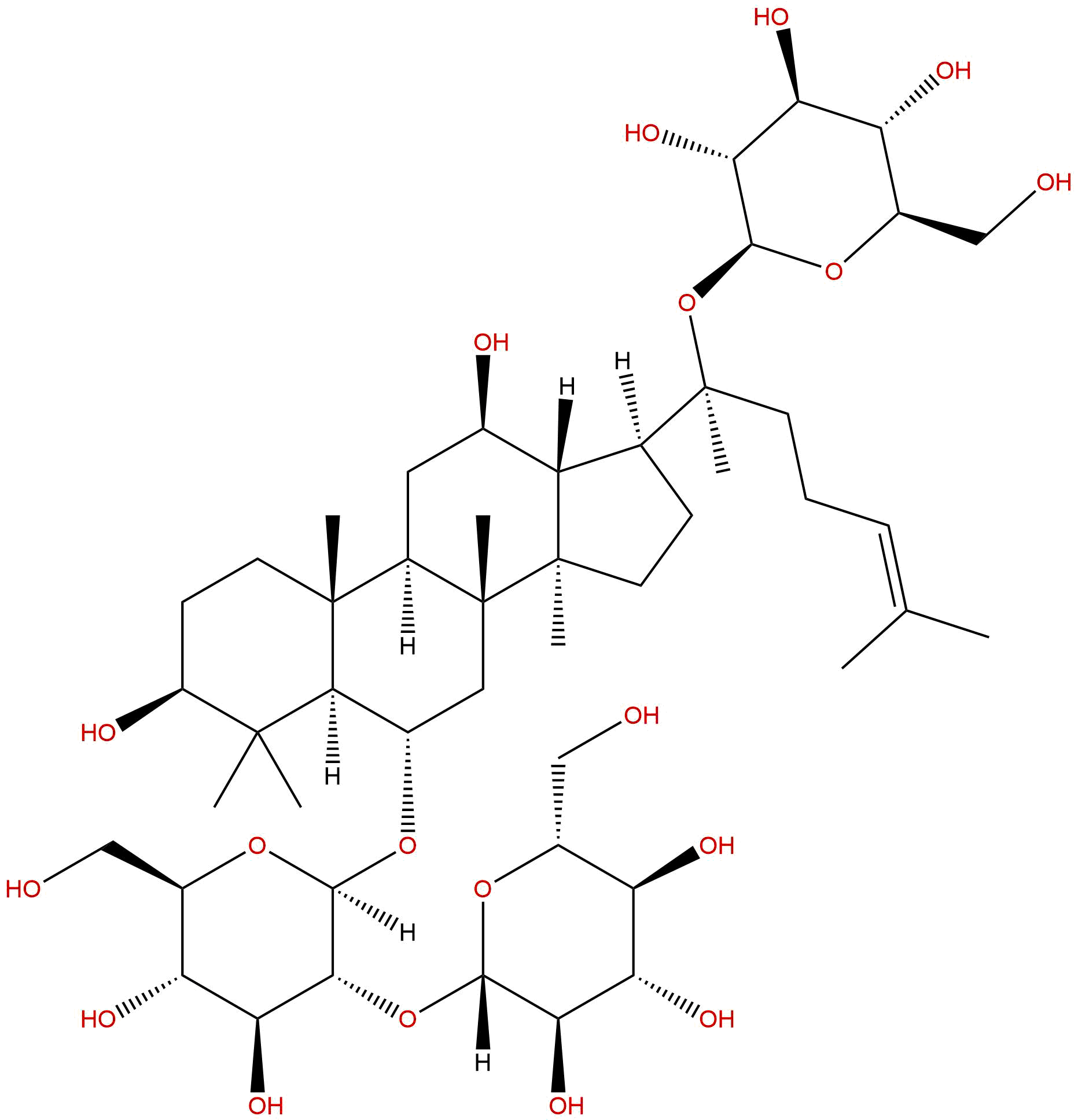


Product name: 20-Gluco-ginsenoside Rf
Synonym name: 20-O-Glucoginsenoside Rf; 20-O-gluco-Ginsenoside Rf
Catalogue No.: BP4628
Cas No.: 68406-27-9
Formula: C48H82O19
Mol Weight: 963.165
Botanical Source:
Type of Compound: Triterpenoids
Purity: 95%~99%
Analysis Method: HPLC-DAD or/and HPLC-ELSD
Identification Method: Mass, NMR
Packing: Brown vial or HDPE plastic bottle
Storage: Store in a well closed container, protected from air and light. Put into refrigerate or freeze for long term storage.
Whenever possible, you should prepare and use solutions on the same day. However, if you need to make up stock solutions in advance, we recommend that you store the solution as aliquots in tightly sealed vials at -20℃. Generally, these will be useable for up to two weeks.
The product could be supplied from milligrams to grams
Inquire for bulk scale.
For Reference Standard and R&D, Not for Human Use Directly.
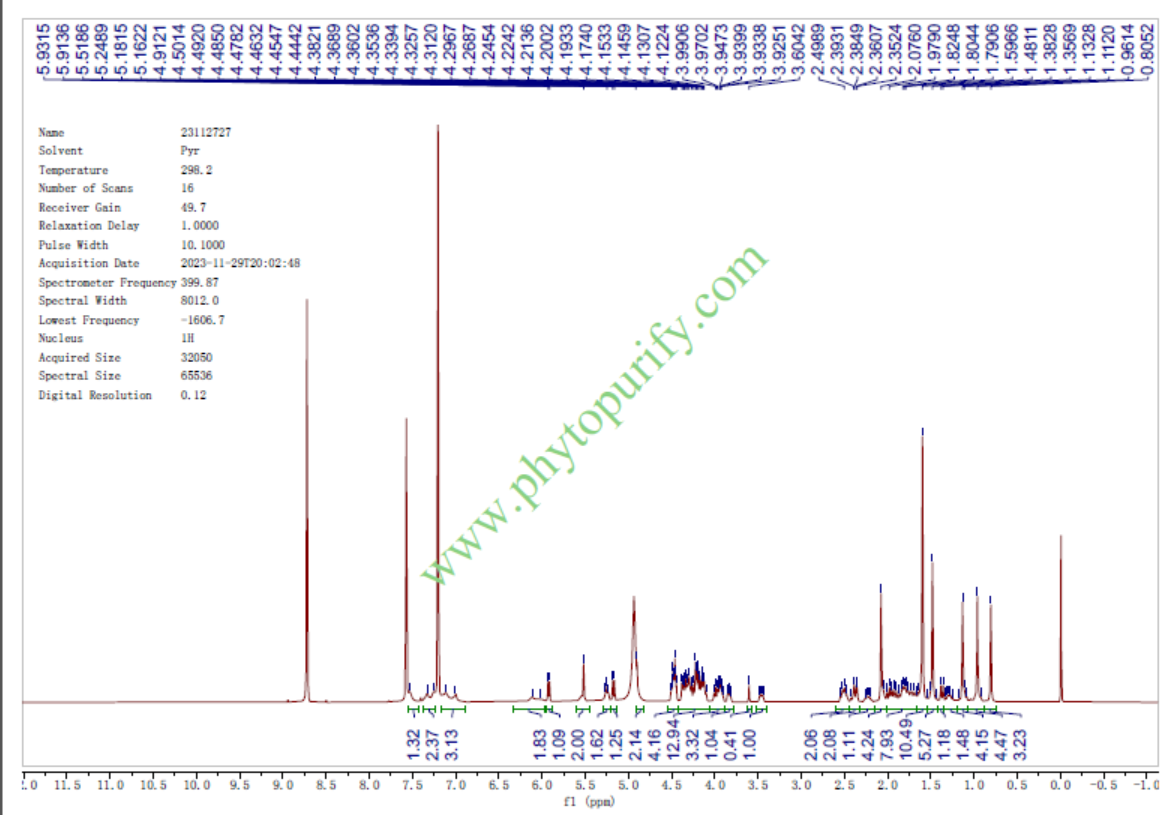
HNMR of 20-Gluco-ginsenoside Rf
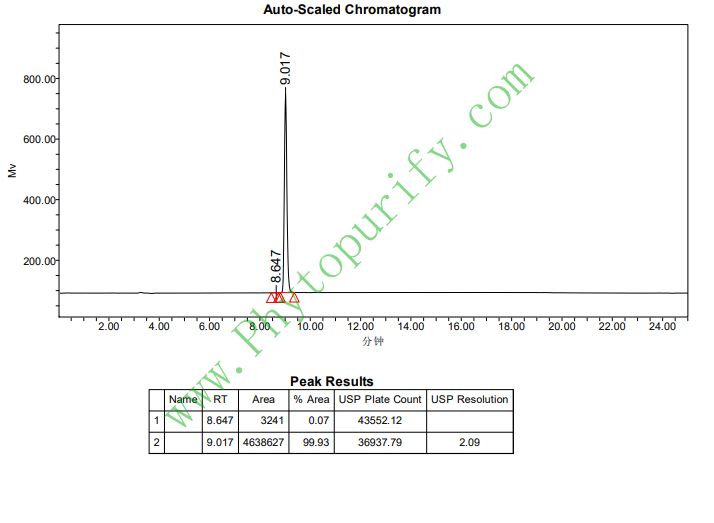
HPLC of 20-Gluco-ginsenoside Rf
Storage conditions:Short-term storage at 2~8℃, long-term storage at -20 ~ -80℃
318.3700
1.9322
1.9321
.1802
.4508
.1531
Low
62.7806
6.5162
No
No
No
No
No
No
0.0
Yes
No
No
No
Ginseng(Panax ginseng C. As a traditional precious medicinal herb, the core pharmacological active ingredient of A. Mey., ginsenosides, has always been a hot topic in modern pharmacological research. Ginsenosides have diverse structures and are mainly divided into damaane and oleanane types based on their glycoside skeleton. Among them, damaane saponins, especially the protopanaxadiol type (PPD) and protopanaxatriol type (PPT), exhibit a wide range of biological activities, such as anti-tumor, immune regulation, cardiovascular protection, and neuroprotection. With the advancement of separation and identification technology, more and more rare saponins with novel structures and unique modifications have been discovered. They often have unique pharmacological activities and mechanisms of action that differ from common saponins, providing valuable lead compounds for new drug development.
20 Gluco ginsenoside Rf (hereinafter referred to as 20-G-Rf), CAS number 68406-27-9, is a rare double chain saponin with a unique structure. As a glycosylated derivative of ginsenoside Rf, it has an additional glucose group attached to the C-20 position, which significantly alters its physicochemical properties and biological activity spectrum. In recent years, research has gradually revealed the outstanding potential of 20-G-Rf in the field of neuroprotection, which involves multiple key targets and pathways related to neurodegenerative diseases such as Alzheimer's disease and Parkinson's disease, and has attracted widespread attention in the field of natural product pharmacology. This article aims to systematically review the chemical structure, plant origin, pharmacological activity, mechanism of action, and medicinal properties of 20-G-Rf, in order to provide comprehensive scientific references for the in-depth research and development of this compound.
20 glucosyl ginsenoside Rf is a dammarane type protopanaxatriol (PPT) saponin. Its basic skeleton is tetracyclic triterpenoid damantane, belonging to PPT type, with a aglycone of 20 (S) - protopanaxatriol. Its structural specificity lies in the composition and connection of sugar chains.
Compared with the common ginsenoside Rf, 20-G-Rf undergoes key structural modifications. The sugar chain of ginsenoside Rf is usually linked to a glucose group at position C-6 and a disaccharide chain composed of glucose and rhamnose at position C-20 (Glc (2 → 1) Rha). And 20-G-Rf further connects an additional glucose group through a glycosidic bond on the C-20 position of the rhamnose group, forming a more complex "double chain" trisaccharide structure. Therefore, its complete chemical name can be described as: 20-O - [α - L-rhamnopyranosyl - (1 → 2) - β - D-glucopyranosyl - (1 → 6) - β - D-glucopyranosyl] -20 (S) - protopanaxatriol-6-O - β - D-glucopyranoside. This modification, which adds an additional glucose group to the C-20 sugar chain, increases its molecular weight to 963.1650 Da.
This structural change profoundly affects its physical and chemical properties. The calculated lipid water partition coefficient (LogP) is 1.93, indicating that it has a certain lipophilicity, but compared to some PPD type saponins with higher LogP values (such as Rb1, Rg3), its hydrophilicity is stronger. Its topological polar surface area (TPSA) is as high as 318.37 Å ², which is mainly attributed to the contribution of multiple hydroxyl groups and oxygen atoms on the sugar ring in the molecule, indicating a high molecular polarity and strong hydrogen bond donor/acceptor ability. The theoretically calculated water solubility value is 0.1802 mg/mL, which belongs to the category of slight solubility, consistent with the poor water solubility of most ginsenosides. The high TPSA and molecular weight also pose challenges to its biofilm permeability, especially in terms of its ability to penetrate the blood-brain barrier (BBB). Prediction shows that its BBB permeability is relatively low, which is a key bottleneck that needs to be overcome for its central nervous system protective effect. In terms of preliminary safety prediction, the hERG inhibition risk is negative, and the Ames mutagenicity test prediction value is 0.0, indicating that it may have a good cardiac safety and genotoxicity safety window, but further experimental verification is needed.
20 glucose ginsenoside Rf is mainly derived from ginseng, a plant of the Panax genus in the Araliaceae family(Panax ginseng)Separated from the dry roots. It is worth noting that unlike mainstream saponins with relatively high content (such as Rb1, Rg1, Re, etc.), 20-G-Rf belongs to the "rare saponins" category, which means its content is extremely low in native plants. It may partially exist in fresh or processed ginseng raw materials, but more often it is produced through the conversion or biosynthesis pathways of other saponins.
Its extraction and separation follow the conventional process of natural product chemistry, but the technical requirements are higher. Firstly, alcohol solvents (such as methanol, ethanol) or alcohol water mixed solvents are usually used for reflux extraction or ultrasound assisted extraction of ginseng root powder to maximize the extraction of saponin components. After vacuum concentration, the obtained crude extract was preliminarily enriched and decolorized using macroporous adsorption resins (such as D101, AB-8). Strong polar impurities such as polysaccharides and inorganic salts were removed by water washing, and gradient elution was performed using ethanol solutions of different concentrations to collect the saponin rich fraction.
Due to the rarity of 20-G-Rf content and its coexistence with structurally similar saponins (such as Rf, Rg2, etc.), subsequent separation and purification are difficult and crucial. High performance liquid chromatography (HPLC) technology is commonly used, especially preparative or semi preparative reverse phase HPLC. Typically, a C18 chromatographic column is used, with acetonitrile water or methanol water as the mobile phase for gradient elution. The target chromatographic peak is monitored and collected using a UV detector (typically detecting the terminal absorption of saponins at around 203 nm). Sometimes multiple repeated chromatographic purification steps are required to obtain high-purity monomeric compounds. The separated compounds were finally confirmed for their structures by spectroscopic techniques such as nuclear magnetic resonance (NMR, including 1H-NMR, 13C-NMR, 2D-NMR such as HSQC, HMBC), mass spectrometry (MS, especially high-resolution mass spectrometry HR-MS), etc.
In addition, in order to obtain sufficient samples for activity research, biotransformation or chemical transformation methods have become important supplementary means. For example, using abundant ginsenosides Rf or Re as substrates and utilizing specific microorganisms or enzymes for selective glycosylation reactions, it is expected to selectively and efficiently synthesize 20-G-Rf.
Current research mainly focuses on the neuroprotective activity of 20-G-Rf, which exhibits significant protective effects in various in vitro and in vivo neural injury models.
1. Anti apoptosis and oxidative stress damage: In neuronal cell injury models induced by hydrogen peroxide (H ₂ O ₂), glutamate, or β - amyloid protein (A β), such as PC12 cells, SH-SY5Y cells, and primary cortical neurons, 20-G-Rf pretreatment can significantly improve cell survival and reduce lactate dehydrogenase (LDH) leakage. Its function is closely related to inhibiting the excessive generation of reactive oxygen species (ROS), enhancing the activity of endogenous antioxidant enzymes such as superoxide dismutase (SOD) and glutathione peroxidase (GSH Px), and reducing the content of lipid peroxidation product malondialdehyde (MDA), indicating its strong antioxidant capacity.
2. Combat Alzheimer's disease (AD) related pathology: In AD cell models or animal models induced by A β injection, 20-G-Rf exhibits multi-target intervention potential. Research has shown that it can inhibit the activity of β - secretase 1 (BACE1) and reduce the production of A β; At the same time, it may promote the clearance of formed A β oligomers or fibers by regulating autophagy or proteasome pathways. In addition, it also has a certain inhibitory effect on the excessive phosphorylation of tau protein. Behavioral experiments have shown that AD model mice given 20-G-Rf have significantly improved learning and memory abilities in water maze and dark avoidance experiments.
3. Combat Parkinson's disease (PD) related pathology: In MPP ⁺ or rotenone induced PD cell models, 20-G-Rf can protect dopaminergic neurons and reduce cell apoptosis. Its mechanism involves inhibiting abnormal aggregation of alpha synuclein (SNCA) and maintaining mitochondrial functional stability. In the MPTP induced PD mouse model, administration of 20-G-Rf partially improved the animal's motor coordination ability and protected dopaminergic neurons in the substantia nigra pars compacta.
4. Anti inflammatory and immune regulation: Neuroinflammation is a common feature of neurodegenerative diseases. Research has shown that 20-G-Rf can inhibit the excessive activation of microglia (resident immune cells in the brain) under LPS or A β stimulation, downregulate the expression of inducible nitric oxide synthase (iNOS) and cyclooxygenase-2 (COX-2), and reduce the release of pro-inflammatory factors such as tumor necrosis factor - α (TNF - α), interleukin-1 β (IL-1 β), and interleukin-6 (IL-6), thereby alleviating neuroinflammatory damage.
5. Other potential activities: In addition to neuroprotection, based on its basic saponin properties, 20-G-Rf may also have potential activities such as anti fatigue, immune enhancement, and myocardial protection. However, there are few related research reports and further exploration is needed.
The neuroprotective effect of 20-G-Rf is not achieved through a single target, but rather through the synergistic action of multiple targets and pathways. Existing research has preliminarily outlined the core nodes of its functional network:
1. Regulating the balance between apoptosis and autophagy: 20-G-Rf can upregulate the expression of anti apoptotic protein Bcl-2, while downregulating the expression of pro apoptotic protein Bax, and inhibiting the activation of caspase-3, thereby blocking mitochondrial pathway induced cell apoptosis. In addition, it can activate SIRT1 (deacetylase 1), which regulates various transcription factors such as FOXO and PGC-1 α through deacetylation, thereby affecting cellular stress resistance, energy metabolism, and autophagy flow. Moderate autophagy activation helps to clear damaged organelles and misfolded proteins (such as A β, α - synuclein).
2. Activate the Nrf2/ARE antioxidant pathway: Nuclear factor E2 related factor 2 (Nrf2) is a central regulator of cellular antioxidant stress. 20-G-Rf can promote the translocation of Nrf2 from the cytoplasm to the nucleus, enhance its binding with antioxidant response elements (ARE), thereby driving the expression of a series of downstream phase II detoxifying enzymes and antioxidant proteins (such as HO-1, NQO1, GCLC), and constructing a powerful cellular defense system.
3. Regulating the MAPK signaling pathway: The mitogen activated protein kinase (MAPK) pathway, including ERK (such as MAPK1/ERK2), JNK, and p38, plays a critical role in cellular stress, inflammation, and apoptosis. 20-G-Rf has been shown to inhibit the excessive phosphorylation (activation) of JNK and p38 caused by A β or inflammatory stimuli, and may moderately activate the ERK pathway with pro survival effects, thereby directing signals towards cell survival.
4. Targeting AD core targets: Directly targeting the pathological core of AD, 20-G-Rf exhibits inhibitory activity against β - secretase 1 (BACE1) and acetylcholinesterase (AChE). Inhibition of BACE1 can reduce the cleavage of amyloid precursor protein (APP) to neurotoxic A β peptide; Inhibiting AChE can increase the level of acetylcholine in synaptic cleft and improve cholinergic neurotransmission, which is currently one of the main strategies for symptomatic treatment of AD.
5. Affects the pathology of Tau protein and alpha synuclein: Its role in reducing tau protein phosphorylation may be related to regulating the activity of kinases such as GSK-3 β and CDK5. For alpha synuclein, its mechanism of inhibiting aggregation may involve molecular chaperone mediated autophagy activation or direct interaction.
In summary, 20-G-Rf forms a multidimensional protective network from antioxidant, anti-inflammatory, anti apoptotic to direct intervention in pathogenic protein metabolism by acting on a series of key targets such as BCL2, SIRT1, NFE2L2, MAPK1, BACE1, ACHE, CASP3, APP, MAPT, SNCA, etc.
Although 20-G-Rf exhibits excellent pharmacological activity, its drug affinity faces challenges mainly due to its inherent properties as a natural saponin.
Absorption, distribution, metabolism, and excretion (ADME) characteristics:
* Absorption: The high molecular weight (>900 Da), high TPSA (>300 Å ²), and multiple hydrogen bond donors/acceptors severely limit its ability to passively diffuse across the gastrointestinal epithelial cell membrane, indicating that its oral bioavailability may be extremely low. The sugar chain structure makes it easy to serve as a substrate for gut microbiota, and may undergo deglycosylation in the colon to generate secondary glycosides (such as PPT), whose activity may differ from that of the prototype compound.
* Distribution: As mentioned earlier, its blood-brain barrier (BBB) penetration ability is predicted to be "low". This is a major obstacle to the treatment of central nervous system diseases. How to effectively deliver it to the brain is the core issue for future drug development. The binding rate of saponins to plasma proteins is not yet clear, but saponin components usually have higher protein binding rates.
* Metabolism: The main metabolic pathways of ginsenosides include hydrolysis by microbial communities in the digestive tract and hydroxylation and deglycosylation catalyzed by cytochrome P450 enzymes (CYPs) in the liver. The complex sugar chain structure of 20-G-Rf makes it a potential substrate for various glycosidases. It is crucial to clarify its main phase I and phase II metabolites for understanding its in vivo active forms.
* Excretion: The prototype drug and its metabolites may be mainly excreted through bile and kidneys.
Strategies for improving drug properties:
1. Structural modification: By acylating, alkylating, or synthesizing glycoside derivatives of sugar groups, appropriately reducing polarity and increasing lipid solubility may improve their membrane permeability and BBB penetration ability. However, it is necessary to carefully evaluate the changes in activity after modification.
2. Formulation technology:
* Nano delivery system: Encapsulated in liposomes, polymer nanoparticles, solid lipid nanoparticles or micelles, it can significantly improve its water solubility and stability, and achieve brain targeted delivery through surface modification (such as connecting BBB targeting ligand TfR antibody, Angiopep-2 peptide, etc.).
* Pre medication strategy: Prepare 20-G-Rf into a more lipophilic prodrug to improve its absorption and brain entry efficiency, and release the original drug at specific sites in the body (such as brain lactonase action).
* Bioaccumulation enhancer: Used in combination with absorption enhancers (such as certain surfactants), but attention should be paid to intestinal safety.
3. Route of administration: Consider non oral routes such as nasal administration (using the nasal brain pathway), injection administration (intravenous or intrathecal), etc., to bypass first pass effects and partial BBB barriers.
At present, there are few reports on the pharmacokinetic studies of the 20-G-Rf system. Key parameters such as in vivo processes, absolute bioavailability, and major active metabolites need to be further studied by establishing sensitive and specific LC-MS/MS biological analysis methods.
As a rare saponin with clear multi-target neuroprotective activity, 20-G-Rf has shown broad application prospects in the prevention and treatment of neurodegenerative diseases (NDs), but there are also many challenges.
Potential application directions:
1. Prevention and adjuvant therapy of Alzheimer's disease (AD) and Parkinson's disease (PD): It simultaneously acts on multiple pathological processes such as A β generation, tau phosphorylation, α - syn aggregation, oxidative stress, neuroinflammation, and cell apoptosis, which is in line with the complex characteristics of multifactorial pathogenesis of NDs. It is expected to be developed into multi-target disease modifying agents, rather than just symptomatic treatment.
2. Protective agents for cerebral ischemia/reperfusion injury: Its strong antioxidant and anti apoptotic effects suggest its potential value in the treatment of stroke.
3. Cognitive enhancer: Based on its promoting effect on the cholinergic system and neuronal survival, it may be used to improve age-related cognitive decline.
4. Optimizing as a lead compound: Using it as the parent nucleus, systematic structure-activity relationship research and structural modification are expected to obtain new compounds with stronger activity and better drug properties.
Challenges and future research directions:
1. Resource and supply issues: The natural source content is extremely low, making it difficult to meet research and development and future production needs. Sustainable acquisition methods must be developed, such as Synthetic Biology(Reconstructing its biosynthetic pathway in yeast or plant cells)Enzyme catalysis/microbial transformation(Directed synthesis using abundant saponins as substrates) or Total chemical synthesis。
2. Breakthrough in the bottleneck of drug development: As mentioned earlier, low oral bioavailability and low BBB penetration are the two core obstacles. The focus of future research should be on Advanced brain targeted drug delivery system And reasonable Prodrug design Above, accompanied by systematic pharmacokinetic studies.
3. In depth study of the mechanism of action: At present, mechanism research still mostly remains at the level of phenotype and validation of known pathways. Need to utilize Chemical Biology Finding its direct target through methods such as affinity fishing and molecular probes; Utilize omics technologies(Transcriptome, proteome, metabolome) comprehensively reveal its regulatory network; And utilize more advanced Disease Model Verify its therapeutic effect using iPSC derived neurons and 3D brain like organs.
4. Pre clinical and clinical evaluation of the system: It is necessary to complete standardized preclinical pharmacological studies (in various animal models), safety evaluations (acute toxicity, long-term toxicity, reproductive toxicity, etc.), and ultimately advance them to clinical trials to verify their safety and effectiveness in humans.
20 glucose ginsenoside Rf, as a rare and structurally unique saponin in ginseng, has shown unique advantages and enormous development potential in dealing with complex neurodegenerative diseases such as Alzheimer's disease and Parkinson's disease due to its multi-target and multi pathway neuroprotective mechanism. It is not only an important material carrier for exploring the traditional and modern scientific connotations of ginseng's "intellectual and calming" effects, but also provides a valuable natural lead compound for the development of innovative neuroprotective drugs.
However, the road from active compounds to candidate drugs is still long. Its inherent pharmaceutical defects, especially the difficulty of brain delivery, are the main bottleneck in current conversion. Future research requires deep interdisciplinary collaboration and collaboration in fields such as chemistry, pharmacology, pharmacy, and synthetic biology. On the one hand, optimizing its ADME properties through modern formulation technology and structural modification strategies; On the other hand, utilizing cutting-edge technologies such as synthetic biology can solve the problem of large-scale preparation. Only in this way can the therapeutic potential of this natural molecule be fully unleashed, driving it from the laboratory to clinical practice and ultimately bringing new hope to the growing number of neurodegenerative disease patients worldwide. The continuous in-depth research on 20-G-Rf will further enrich our understanding of the complex biological activities of ginsenosides and provide an example for innovative drug discovery based on natural products.
