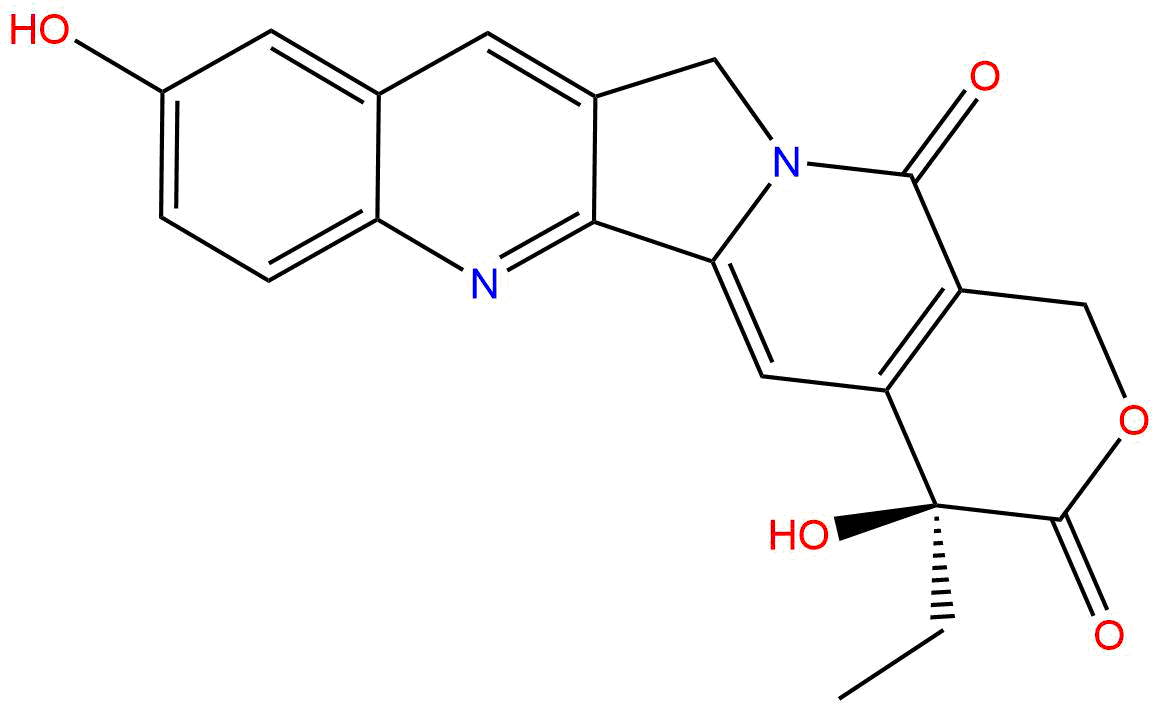


Product name: 10-Hydroxycamptothecin
Synonym name:
Catalogue No.: BP0014
Cas No.: 19685-09-7
Formula: C20H16N2O5
Mol Weight: 364.35
Botanical Source: Camptotheca acuminata.
Physical Description:
Type of Compound: Alkaloids
Purity: 95%~99%
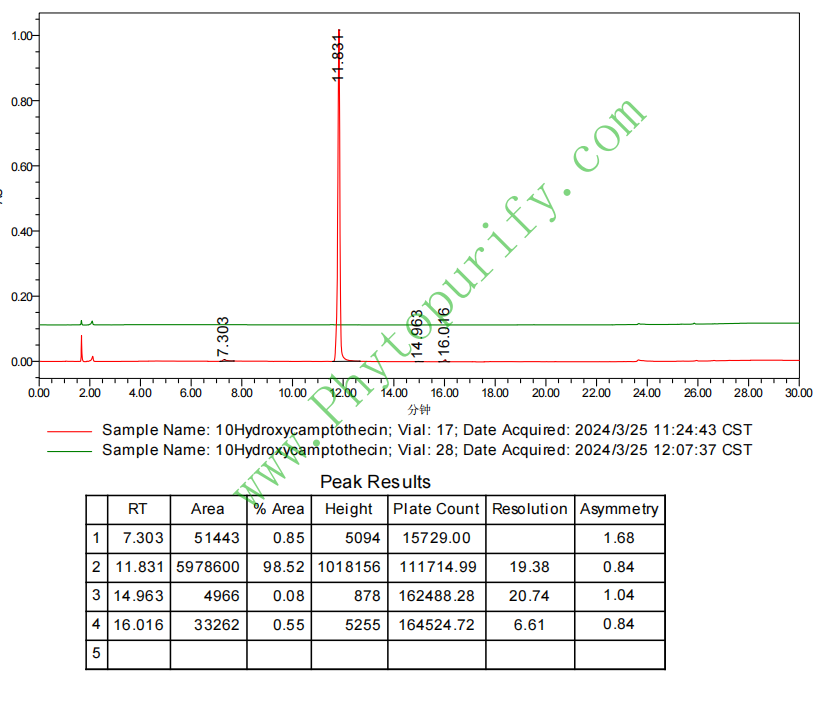
Analysis Method: HPLC-DAD or/and HPLC-ELSD
Identification Method: Mass, NMR
Packing: Brown vial or HDPE plastic bottle
Storage: Store in a well closed container, protected from air and light. Put into refrigerate or freeze for long term storage.
Whenever possible, you should prepare and use solutions on the same day. However, if you need to make up stock solutions in advance, we recommend that you store the solution as aliquots in tightly sealed vials at -20℃. Generally, these will be useable for up to two weeks.
The product could be supplied from milligrams to grams
Inquire for bulk scale.
For Reference Standard and R&D, Not for Human Use Directly.
HPLC of 10-Hydroxycamptothecin
Storage conditions:Short-term storage at 2~8℃, long-term storage at -20 ~ -80℃
101.6500
1.5265
1.5196
.0787
1.2671
7.3115
Low
85.2864
3.3384
No
No
No
No
Yes
Yes
0.9
Yes
No
No
Yes
Natural products, as an important source of drug discovery, play an irreplaceable role in the history of human disease treatment. The research on camptothecin (CPT) and its derivatives is a milestone in the history of modern anti-tumor drug development. Camptothecin was initially isolated from the Chinese endemic plant Camptotheca acuminata, and its unique anti-tumor activity has attracted widespread attention. However, early research was hindered by its severe poor water solubility and dose limiting toxicity. In order to overcome these shortcomings, scientists have devoted themselves to modifying its structure, thus discovering a series of derivatives with better activity and lower toxicity. 10 Hydroxycamptothecin (10-HCPT, CAS number: 19685-09-7) is one of the most representative natural active monomers. As a hydroxylated derivative of camptothecin, 10-HCPT not only retains the strong DNA topoisomerase I (Topo I) inhibitory activity of the parent nucleus, but also exhibits significant advantages in solubility, anti-tumor spectrum, and toxicity. In recent years, with the deepening of research, its pharmacological activity has gone beyond the traditional anti-tumor field, showing potential application value in anti angiogenesis, anti fibrosis and metabolic diseases such as type 2 diabetes. This article aims to systematically review the chemical properties, plant sources, pharmacological activities, mechanisms of action, medicinal properties, and clinical application prospects of 10-HCPT, in order to provide comprehensive scientific references for the deep development and comprehensive utilization of this natural product.
10 hydroxycamptothecin is a pyran indazino quinoline alkaloid with the molecular formula C20H16N2O5 and a molecular weight of 364.3570. Its core structure consists of a five ring system: ring A is a quinoline ring, ring B is a pyridone ring, ring C is a hexagonal lactone ring (α - hydroxy - δ - lactone), ring D is a pyrrole ring, and ring E is a conjugated pyran ring. Compared with the camptothecin core, the significant feature of 10-HCPT is that a hydroxyl group (- OH) is attached to the 10th carbon atom of its D ring. This seemingly minor structural modification has a profound impact on its physicochemical properties and biological activity.
The introduction of this hydroxyl group enhances the polarity of the molecule. Its calculated lipid water partition coefficient (LogP) is 1.5265, indicating that it has a certain lipophilicity, but is more hydrophilic compared to camptothecin (with a higher LogP). Its topological polar surface area (TPSA) is 101.65 Å ², reflecting the presence of hydrogen bond donors (hydroxyl, lactone rings) and acceptors (carbonyl, nitrogen atoms) in the molecule. These parameters collectively determine its water solubility to be 0.0787 mg/mL. Although it is still a poorly soluble drug, it is superior to camptothecin and provides a relatively better foundation for its formulation development (such as nanocrystals, liposomes, micelles). Another key chemical characteristic of 10-HCPT is its unstable lactone ring structure. Under physiological pH (~7.4) conditions, its active closed ring lactone form (E-ring) can be reversibly hydrolyzed into an open ring carboxylate form, which has significantly reduced activity and strong binding affinity with plasma proteins (such as human serum albumin), directly affecting its efficacy and pharmacokinetic behavior. In addition, its blood-brain barrier permeability is predicted to be "low", mainly due to its large molecular weight and polar surface area, which limits its application in the treatment of central nervous system tumors, but may also reduce related neurotoxicity. Importantly, the preliminary pharmacological risk assessment showed that the hERG channel inhibition risk was "no", and the Ames test result was 0 (close to negative), indicating low risks of cardiac and genetic toxicity and good safety potential.
10 hydroxycamptothecin mainly comes from Camptotheca acuminata Decne, a tree native to the Yangtze River Basin in China. Almost all parts of Camptotheca acuminata, including bark, root bark, fruit, and leaves, contain camptothecin and its derivatives, but the content varies significantly. As a natural hydroxylation product of camptothecin, the content of 10-HCPT in plants is usually lower than that of camptothecin, which increases the difficulty and cost of its isolation and purification.
The traditional extraction method mainly relies on organic solvent extraction. Usually, dried and crushed Camptotheca acuminata fruits or branches and leaves are extracted or refluxed with polar solvents such as methanol, ethanol, or acetone to obtain crude extracts. Subsequently, preliminary enrichment was carried out using an acid-base treatment method: under acidic conditions, camptothecin alkaloids dissolved in the aqueous phase in the form of salts; After adjusting to alkaline, free alkali precipitates and can be extracted by organic solvents such as chloroform and dichloromethane. After obtaining the total alkaloids, column chromatography technology is required for fine separation. Silica gel column chromatography is the most commonly used method, and a gradient elution system such as chloroform methanol can effectively separate camptothecin from 10-HCPT. High performance liquid chromatography (HPLC), especially preparative HPLC, is the final key step in obtaining high-purity 10-HCPT monomers. C18 reverse phase chromatography columns are commonly used, with methanol water or acetonitrile water (often containing small amounts of formic acid or triethylamine to adjust pH) as the mobile phase for separation.
Due to the significant influence of season, place of origin, and location on plant sources, as well as the cumbersome extraction and separation process and low yield, chemical semi synthesis and biosynthetic pathways have become important supplements. Using camptothecin as raw material, hydroxyl groups can be introduced at position 10 through microbial transformation or chemical selective hydroxylation. In addition, utilizing biotechnology such as plant cell culture and hairy root culture, as well as regulating key enzymes in the biosynthesis pathway of camptothecin through metabolic engineering (such as cytochrome P450 oxidase), is expected to achieve targeted, efficient, and sustainable production of 10-HCPT, which is an important direction for solving resource bottlenecks in the future.
The pharmacological activity research of 10 hydroxycamptothecin began with its powerful anti-tumor effect and has expanded to multiple disease fields.
1. Antitumor activity: 10-HCPT exhibits broad-spectrum and highly effective inhibitory activity against various human tumor cell lines and animal transplant tumor models, including gastric cancer, liver cancer, colon cancer, lung cancer, ovarian cancer, leukemia, etc. Its activity is usually superior to or equivalent to camptothecin, and in some models, its toxicity is lower. For example, in liver cancer HepG2 cells and nude mouse transplant tumor models, 10-HCPT can significantly inhibit cell proliferation and induce apoptosis, with significant effects.
2. Anti angiogenic activity: The growth and metastasis of tumors depend on the formation of new blood vessels. Research has shown that 10-HCPT can effectively inhibit the proliferation, migration, and tubular formation of vascular endothelial cells, and downregulate the expression of angiogenic factors such as vascular endothelial growth factor (VEGF), thereby cutting off the "nutrient supply" of tumors and exerting anti angiogenic effects. This characteristic gives it a dual mechanism in anti-tumor therapy.
3. Anti fibrotic and anti adhesive activity: This is a distinctive pharmacological effect of 10-HCPT. Studies in a rat model after laminectomy have confirmed that local application of 10-HCPT can effectively inhibit excessive proliferation of fibroblasts and collagen deposition, significantly preventing the formation of epidural scar adhesions. The mechanism may be related to the inhibition of Topo I-mediated fibroblast DNA replication and the impact on the transforming growth factor - β (TGF - β) signaling pathway. This provides a solid experimental basis for its application in preventing tissue adhesion after surgical procedures.
4. Anti metabolic disease activity (take type 2 diabetes as an example): Recent studies have revealed the potential of 10-HCPT in metabolic regulation. The network pharmacology analysis and preliminary experiments on related targets of type 2 diabetes indicate that 10-HCPT may play a role through multiple targets. For example, it may activate the AMPK (PRKAA1/AMPK) pathway, improve insulin resistance, and promote glucose uptake; Inhibit glycogen phosphorylase or aldose reductase (AKR1B1), reduce gluconeogenesis and polyol pathway flux; Regulating proteins related to beta cell apoptosis and function, such as MCL1 and APP. These findings open up new research directions for repositioning 10-HCPT as a therapeutic drug for metabolic diseases.
The most classic and clear mechanism of action of 10 hydroxycamptothecin is as an "interface inhibitor" of DNA topoisomerase I (Topo I).
1. Core mechanism: Inhibit Topo I
Topo I is responsible for alleviating DNA supercoiled tension during DNA replication and transcription processes. Its mechanism of action is to temporarily break a DNA strand, forming a covalent 'Topo I-DNA cleavable complex', allowing another strand to pass through and then reconnect. 10-HCPT (in its active lactone form) can specifically bind to this "cleavable complex", stabilizing its structure and preventing the reconnection of DNA breaks. When the replication fork encounters this "frozen" complex, it can cause irreversible DNA double strand breaks. This DNA damage triggers cell cycle checkpoints (especially S and G2 phase arrest) and ultimately induces tumor cell apoptosis by activating pathways such as p53. The 10 hydroxyl group of 10-HCPT may enhance its hydrogen bonding interaction with the Topo I-DNA complex binding site, thereby improving its ability and selectivity to stabilize the complex.
2. Impact on epigenetic regulation
Research has shown that 10-HCPT can selectively inhibit the phosphorylation of histones H1 and H3. Histone phosphorylation is a key event in epigenetic regulation of chromatin structure and gene expression, closely related to mitosis and DNA damage response. Inhibition of H3 phosphorylation (such as Ser10 site) may interfere with chromosome agglutination and exacerbate cell cycle arrest. This selective effect on histone modification may be a complementary mechanism for inducing cell apoptosis and exerting specific biological functions.
3. Multi target effects and systems biology perspective
In addition to Topo I, the core target, system biology studies suggest that 10-HCPT may be a multi-target regulator, which is particularly reflected in its potential anti type 2 diabetes activity:
* Energy metabolism regulation targets: May activate AMPK (PRKAA1), which is an energy receptor in cells. Activation can promote glucose transport, fatty acid oxidation, and inhibit synthetic metabolism, improving insulin sensitivity.
* Sugar metabolism enzyme targets: It may inhibit the allosteric regulation of glucokinase (GCK) or directly inhibit aldose reductase (AKR1B1), which plays a key role in the occurrence of complications of diabetes.
* Cell survival and apoptosis related targets: May affect the metabolism of myeloid leukemia 1 (MCL1, anti apoptotic protein) and amyloid precursor protein (APP), thereby regulating the survival and function of beta cells or insulin target cells.
* Signal regulation targets: It may inhibit protein tyrosine phosphatase 1B (PTPN1), which is a negative regulator of insulin receptor signaling pathway and a recognized anti diabetes target.
* Other enzyme targets: The potential effects of monoamine oxidase A (MAOA), tyrosinase (TYR), and depurine/pyrimidine endonuclease 1 (APEX1) may be associated with their secondary activities such as neuroprotection, anti melanoma, or DNA repair regulation.
These multi-target effects together form a complex and diverse pharmacological network of 10-HCPT, ranging from direct killing of tumor cells to regulating systemic metabolic homeostasis, demonstrating its enormous potential as a "pleiotropic" natural product.
Despite the significant pharmacological activity of 10-HCPT, its pharmaceutical process faces a series of challenges, mainly due to its unique physicochemical properties and in vivo behavior.
Pharmacokinetic characteristics:
The pharmacokinetic behavior of 10-HCPT in vivo is complex and exhibits nonlinear characteristics. Oral administration has low bioavailability and significant individual differences, mainly due to its low solubility and unstable lactone ring. After intravenous administration, it rapidly distributes in the plasma and undergoes extensive hydrolysis (lactone ring opening) and protein binding (ring opening carboxylate form with a binding rate of over 90% to albumin). This results in low plasma concentration and short half-life (usually several hours) of its active lactone form. It is mainly metabolized through the liver, possibly involving UGT mediated glucuronidation and CYP450 enzyme system oxidative metabolism, with metabolites excreted through bile and urine. The phenomenon of hepatic intestinal circulation is obvious, which may prolong its action time, but also increase the risk of gastrointestinal toxicity.
Main challenges and strategies for drug development:
1. Solubility and stability issues: Low water solubility and instability of lactone rings at physiological pH are the biggest obstacles. The strategy includes:① Formulation technology: Developing delivery systems such as nanocrystalline suspensions, liposomes (such as long circulating liposomes), polymer micelles, nanoparticles, etc. can not only improve solubility and stability, but also target tumor tissues through EPR effect.② Pre drug design: Esterify, amidate, or connect water-soluble groups with 10 or 20 hydroxyl groups to produce prodrugs that release the active ingredient under specific enzyme action in vivo, in order to improve solubility and targeting.
2. Toxic side effects: Dose limiting toxicity mainly includes bone marrow suppression (neutropenia), gastrointestinal toxicity (diarrhea, nausea and vomiting), and cystitis (possibly related to the renal excretion of the prototype drug stimulating the bladder). Reducing the distribution in normal tissues through the targeted delivery system mentioned above, or adjusting the dosing regimen (such as continuous intravenous infusion instead of single push injection), can effectively reduce toxicity.
3. Individual differences are significant: The genetic polymorphism of metabolic enzymes (such as UGT1A1) can significantly affect their clearance rate and toxicity (such as severe diarrhea caused by irinotecan being associated with the UGT1A1 * 28 allele). Therefore, personalized medication guided by therapeutic drug monitoring and pharmacogenomics is crucial.
The existing pharmacological parameters (LogP, TPSA, hERG negative, Ames negative) provide a favorable starting point for its optimization. The future research focus will be on utilizing advanced drug delivery technologies and structure based rational drug design to maximize its therapeutic index.
The clinical application of 10 hydroxycamptothecin has moved from exploration to practice and has shown vast potential for expansion.
Current clinical application:
At present, 10-HCPT (often in the form of hydrochloride or hydroxycamptothecin) has been approved for clinical use in countries such as China, with the main indications including:
* Malignant tumors: Commonly used for the treatment of primary liver cancer, gastric cancer, colorectal cancer, head and neck epithelial cancer, leukemia, etc., it can be used alone or in combination with other chemotherapy drugs such as fluorouracil and cisplatin.
* Intraluminal infusion therapy: It is used for postoperative perfusion of bladder cancer to prevent recurrence.
* Local application: Based on its anti fibrotic activity, some studies have used it to prevent postoperative adhesions, but it has not yet been widely popularized.
Future prospects and research directions:
1. New formulations and combination therapy: Developing more efficient and safer targeted delivery systems, such as antibody drug conjugates and stimulus responsive nanomaterials, is the core of enhancing their therapeutic efficacy. Combining it with immune checkpoint inhibitors, targeted drugs, or radiotherapy may produce synergistic anti-tumor effects, which is a hot topic in clinical research.
2. Indications Expansion - Metabolic Diseases: Its potential multi target anti type 2 diabetes activity is an attractive new direction. Systematic preclinical pharmacodynamics, pharmacokinetics and safety evaluation are needed to clarify the specific mechanism and effective dose of it to improve blood sugar and protect pancreatic islet function, and explore the possibility of it as a new strategy for the treatment of diabetes and its complications.
3. New use of old drugs and drug repositioning: In addition to diabetes, its application in anti fibrosis (such as liver fibrosis, pulmonary fibrosis), anti angiogenesis (such as age-related macular degeneration) and other fields deserves further exploration. The use of network pharmacology and artificial intelligence to predict new disease target associations can accelerate this process.
4. Green Production and Sustainable Development: Developing synthetic biology techniques to construct efficient cell factories for producing 10-HCPT in microorganisms or plant chassis cells, achieving large-scale and environmentally friendly production, and fundamentally solving resource constraints.
5. Precision Medicine: Establish personalized medication guidelines based on UGT1A1 and other genotypes, optimize dosing regimens, and achieve maximum efficacy and minimal toxicity.
As a star molecule derived from the traditional medicinal plant Camptotheca acuminata, 10 hydroxycamptothecin's research and development process is a successful example of modern research on natural products. From the initial discovery of its powerful Topo I inhibitory activity, to the in-depth revelation of its multiple pharmacological effects on anti angiogenesis, anti fibrosis, and even metabolic regulation; The research on 10-HCPT continues to deepen and expand, from the bottleneck of poor solubility and high toxicity in drug development to the gradual application of formulation technology and combination strategies in clinical practice. It not only provides an important weapon for anti-tumor therapy, but also demonstrates great potential for extending into the field of major chronic diseases such as metabolic disorders with its multi-target action characteristics. In the future, interdisciplinary research methods combining synthetic chemistry, pharmacy, molecular biology, systems pharmacology, and clinical medicine will continue to drive the secondary development of 10-HCPT. By innovating delivery systems, exploring new indications, achieving green manufacturing, and practicing precision medicine, this ancient natural molecule will surely be revitalized and contribute greater value to human health.
