Introduction/Overview
Bilirubin (CAS number: 635-65-4), as an important product of heme catabolism, has long been regarded as a key biomarker for liver function and biliary system health. Its yellow color is not only an important basis for clinical diagnosis of jaundice, but also reflects the dynamic balance of red blood cell metabolism and liver detoxification function in the body. In recent years, with the deepening of molecular biology and pharmacology research, the biological functions of bilirubin have gradually been re understood, especially in terms of antioxidant, anti-inflammatory, and anti mutagenic activities, indicating its potential application value in the prevention and treatment of various diseases.
Bilirubin IX α, as a typical member of the diene class, belongs to the straight chain tetrapyrrole compound with unique chemical configuration and physicochemical properties. The biosynthesis process involves steps such as the oxidative cleavage of heme and the reduction of biliverdin, mainly completed in the reticuloendothelial system, and transported to the liver for metabolism and excretion through binding with serum albumin. The antioxidant mechanism of bilirubin is closely related to its regulation of various oxidative stress-related targets such as NFE2L2/NRF2, SOD family enzymes, catalase (CAT), etc., demonstrating its important role in maintaining cellular redox homeostasis.
This article will provide a systematic review of the chemical structure and physicochemical properties, sources and extraction methods, pharmacological activity and mechanism of action, pharmacological evaluation and pharmacokinetic characteristics of bilirubin. Combined with the latest research progress, it will explore its clinical application prospects and development trends, aiming to provide comprehensive and in-depth academic references for the field of natural product pharmacology.
Chemical structure and physicochemical properties
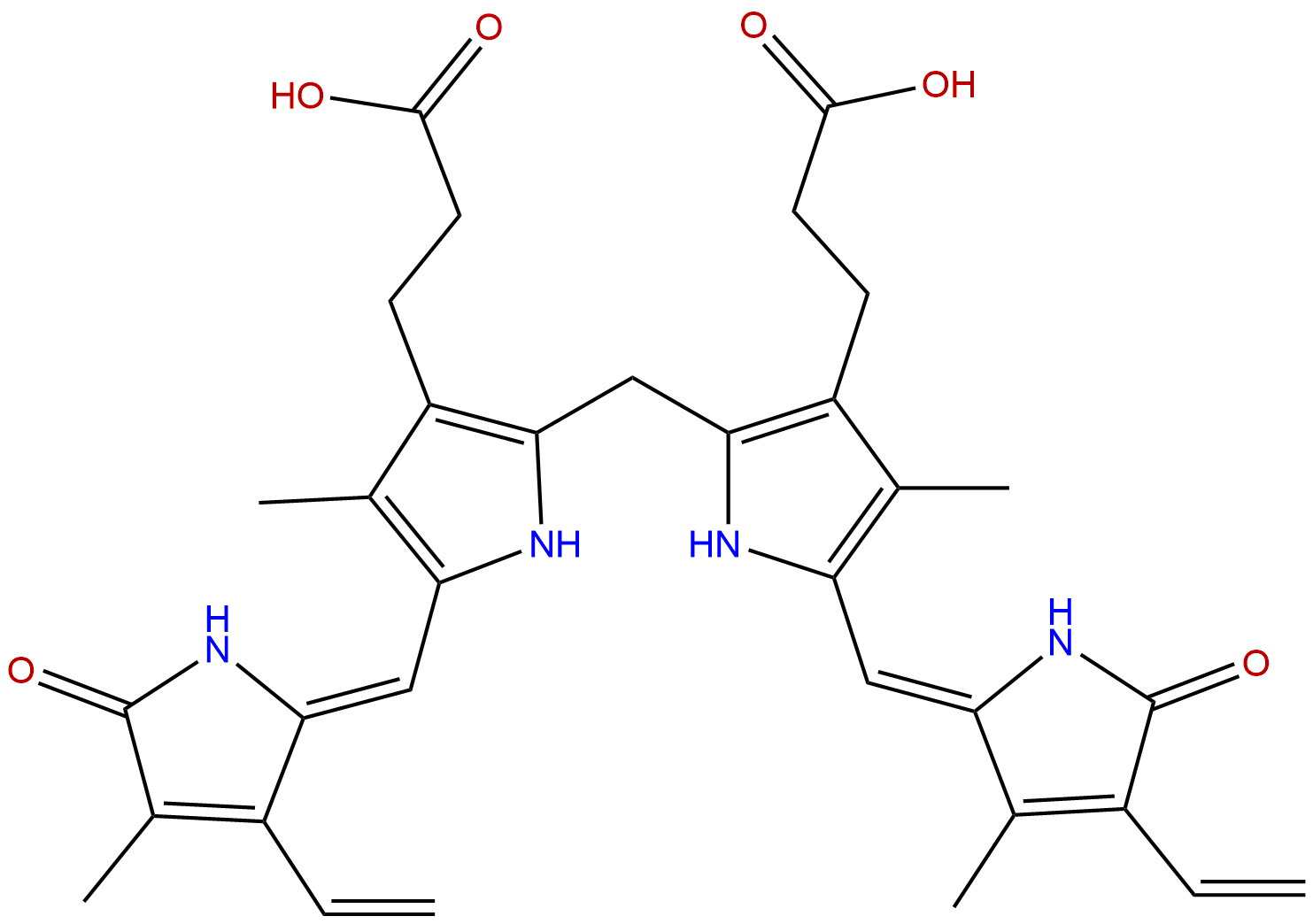
Bilirubin belongs to the linear tetrapyrrole compound, which is composed of two vinyl substituted pyrrole units in its chemical structure. Specifically, it is of the outer vinyl and inner vinyl types and belongs to the diene class. Its molecular formula is C33H36N4O6, with a molecular weight of 584.6730 Da. Bilirubin contains multiple carboxyl and ketone groups in its structure, giving it certain polarity and acidic characteristics, and belongs to the class of dicarboxylic acid compounds.
In terms of physical and chemical properties, the LogP value of bilirubin is about 2.4475, indicating its moderate lipid solubility, which is beneficial for cell membrane penetration, but its water solubility is low (0.0649 mg/mL), which limits its solubility and bioavailability in aqueous phase. Its polar surface area (TPSA) is 164.38 Å ², indicating that its molecule has a high polarity region, which may affect its transmembrane transport and pharmacokinetic behavior.
Bilirubin mainly exists in the form of binding to serum albumin under physiological pH conditions, with high stability. The conjugated double bond system in its chemical structure endows it with significant optical and electronic properties, making it easy to participate in redox reactions, which is also the molecular basis of its antioxidant activity. In addition, bilirubin does not exhibit hERG channel inhibitory activity and the Ames mutagenicity test result is negative, indicating its high safety.
Plant sources and extraction methods
Bilirubin is not essentially a secondary metabolite in plants, but a product of heme degradation in animal bodies, mainly present in the blood and bile of mammals. Its natural sources are mainly animal tissues, especially the liver, spleen, and red blood cell destruction products in the blood. However, some plants contain pyrrole compounds that are structurally related to bilirubin, but bilirubin itself is not a common target for plant extraction.
In laboratory and industrial production, the acquisition of bilirubin mainly relies on the extraction and chemical synthesis of animal tissues. Common extraction methods include:
-
Animal tissue extraction method Obtaining high-purity bilirubin through organic solvent extraction of liver or bile samples, combined with acid-base treatment and chromatographic purification techniques. This method requires strict control of oxidation conditions to prevent spontaneous oxidation of bilirubin into derivatives such as biliverdin.
-
Chemical Synthesis Based on the chemical structure of bilirubin, a multi-step organic synthesis route is used to synthesize bilirubin and its derivatives, which are suitable for structural modification and functional research.
-
Biosynthetic simulation method Using an enzymatic reaction system to simulate the degradation process of hemoglobin, combined with enzyme engineering technology to achieve the biosynthesis of bilirubin, has the advantages of green environmental protection and high selectivity.
Although bilirubin does not belong to the category of plant natural products, the study of its biosynthesis and metabolic mechanisms provides important insights for natural product pharmacology, especially in interpreting the biological activity of pyrrole compounds.
Pharmacological activity research
Bilirubin, as an endogenous metabolite, has multiple important physiological and pharmacological functions. In recent years, a large number of studies have confirmed that it exhibits significant activities in antioxidant, anti-inflammatory, anti mutagenic, and cell protection.
antioxidant activity
Bilirubin is one of the powerful antioxidants in the body, which can effectively eliminate free radicals and inhibit lipid peroxidation. Its antioxidant mechanism is mainly achieved by directly capturing reactive oxygen species (ROS) and regulating the antioxidant enzyme system. Bilirubin can activate the NFE2L2/NRF2 signaling pathway, induce the expression of downstream antioxidant enzymes such as superoxide dismutase (SOD1, SOD2), catalase (CAT), glutathione peroxidase (GPX1), and heme oxygenase-1 (HMOX1), and enhance the antioxidant defense ability of cells.
Anti inflammatory and immune regulation
Bilirubin regulates the expression of inflammatory mediators, inhibits the activity of matrix metalloproteinases (MMP1, MMP3), and reduces tissue inflammation and fibrosis processes. In addition, bilirubin has a regulatory effect on immune cell function, which can inhibit excessive immune reactions and reduce inflammatory damage.
Anti mutagenesis and cell protection
Bilirubin exhibits anti mutagenic effects, protecting DNA from oxidative damage and reducing mutation rates. Its role in regulating apoptosis and cell survival is gradually being revealed, demonstrating a certain potential for cell protection.
Other pharmacological effects
Some studies have shown that bilirubin has potential roles in metabolic regulation, neuroprotection, and the cardiovascular system. Although its blood-brain barrier penetration rate is low, it indirectly exerts a protective effect by regulating the oxidative stress state of surrounding tissues.
Mechanism of action and molecular targets
The biological function of bilirubin depends on its interaction with multiple molecular targets, especially its regulatory role in antioxidant and anti-inflammatory signaling pathways.
NFE2L2/NRF2 signaling pathway
Bilirubin promotes the transcriptional expression of antioxidant enzyme genes by activating the NFE2L2 (nuclear factor erythroid 2-related factor 2)/NRF2 signaling pathway. NRF2, as a key transcription factor in cells, regulates various antioxidant genes including SOD1, SOD2, CAT, GPX1, and HMOX1, enhancing cells' resistance to oxidative stress.
Antioxidant enzyme system
Bilirubin directly or indirectly regulates the activities of superoxide dismutase (SOD1, SOD2), catalase (CAT), and glutathione peroxidase (GPX1), reducing the generation and accumulation of reactive oxygen species and protecting cells from oxidative damage.
Matrix metalloproteinases (MMP) regulation
Bilirubin inhibits the expression and activity of MMP1 and MMP3, slows down extracellular matrix degradation and inflammatory response, and has anti fibrotic and tissue protective effects.
Serum albumin binding and transport
Bilirubin forms a complex with serum albumin, which is stably present in the blood and transported to the liver for metabolism. This process is crucial for its bioavailability and metabolic clearance.
Other targets
Bilirubin may also participate in cytochrome metabolism and signal transduction by regulating the activity of enzymes such as tyrosinase (TYR), and the specific mechanism remains to be further studied.
Evaluation of drug properties and pharmacokinetics
The medicinal properties of bilirubin are influenced by its unique chemical structure and physicochemical properties. The following is an analysis of its main pharmacological parameters and pharmacokinetic characteristics:
Molecular weight and lipid solubility
The molecular weight of bilirubin is relatively high (584.6730 Da), exceeding the ideal range of traditional small molecule drugs, but its LogP value (2.4475) shows moderate lipid solubility, which is beneficial for penetrating lipid membranes.
Water solubility and bioavailability
The low water solubility of bilirubin (0.0649 mg/mL) limits its oral bioavailability and in vivo distribution. Its high polar surface area (164.38 Å ²) may affect its transmembrane absorption.
Blood-brain barrier penetrability
The low penetration rate of bilirubin through the blood-brain barrier limits its direct application in central nervous system diseases, but its peripheral antioxidant effects still have clinical significance.
safety evaluation
Bilirubin does not inhibit hERG channels, reducing the risk of cardiac toxicity. The Ames mutagenicity test was negative, indicating a low risk of genetic toxicity and good safety.
Pharmacokinetic characteristics
Bilirubin is mainly metabolized by the liver and excreted through bile, and its circulation in the body depends on its binding to serum albumin. Its metabolites include biliverdin, and the metabolic process is significantly influenced by liver function status.
Clinical application prospects and prospects
Bilirubin, as an endogenous antioxidant and cell protective factor, has shown broad application prospects in the prevention and treatment of various diseases.
liver disease
Bilirubin level is an important indicator of liver function, and its antioxidant and anti-inflammatory effects help alleviate liver cell damage, prevent liver fibrosis and cirrhosis progression. In the future, auxiliary treatment strategies for liver disease can be developed by regulating the bilirubin metabolism pathway.
cardiovascular disease
The antioxidant properties of bilirubin help reduce atherosclerosis and myocardial injury. Clinical studies have shown that moderately elevated bilirubin levels are associated with a reduced risk of cardiovascular disease, suggesting its potential cardiovascular protection.
Neurodegenerative diseases
Although bilirubin has limited ability to penetrate the blood-brain barrier, its peripheral antioxidant effects may indirectly protect the nervous system. In the future, technologies such as nanocarriers can be combined to improve the efficiency of central nervous system delivery and expand neuroprotective applications.
Cancer prevention and treatment
The anti mutagenic and anti-inflammatory effects of bilirubin provide a theoretical basis for its anti-tumor potential. Regulating bilirubin metabolism and its related signaling pathways may become a new strategy for tumor prevention and adjuvant therapy.
Challenges and Strategies in Drug Development
The poor water solubility and low bioavailability of bilirubin are the main limitations of its clinical application. Future research should focus on structural modification, drug carrier system development, and metabolic regulation to improve its pharmacokinetic performance and therapeutic efficacy.
Conclusion
Bilirubin, as an important product of heme degradation, has become a hot topic in natural product pharmacology research due to its unique chemical structure and diverse biological activities. Its mechanism of action in antioxidant, anti-inflammatory, and anti mutagenic aspects is gradually becoming clear, demonstrating broad clinical application potential. Despite challenges such as low water solubility and limited bioavailability, with the development of medicinal chemistry and nanotechnology, bilirubin and its derivatives are expected to become new natural drug candidates for the prevention and treatment of various diseases. Future research should further reveal its molecular mechanism of action, optimize drug formulations, promote the translational application of bilirubin in clinical medicine, and contribute new natural drug resources to human health.