| Catalog No | Package | Original Price | Price | Inventory | Quantity | Operating |
|---|---|---|---|---|---|---|
| BP3442-100mg | 100mg | $25.00 | Sign in |
|


Product name: Gamma-Aminobutyric acid
Synonym name: 4-Aminobutanoic acid
Catalogue No.: BP3442
Cas No.: 56-12-2
Formula: C4H9NO2
Mol Weight: 103.121
Botanical Source:
Physical Description:
Type of Compound:
Purity: 95%~99%
Analysis Method: HPLC-DAD or/and HPLC-ELSD
Identification Method: Mass, NMR
Packing: Brown vial or HDPE plastic bottle
The product could be supplied from milligrams to grams. Inquire for bulk scale.
We provide solution to improve the water-solubility of compounds, thereby facilitating the variety of activity tests and clinic uses.
For Reference Standard and R&D, Not for Human Use Directly.
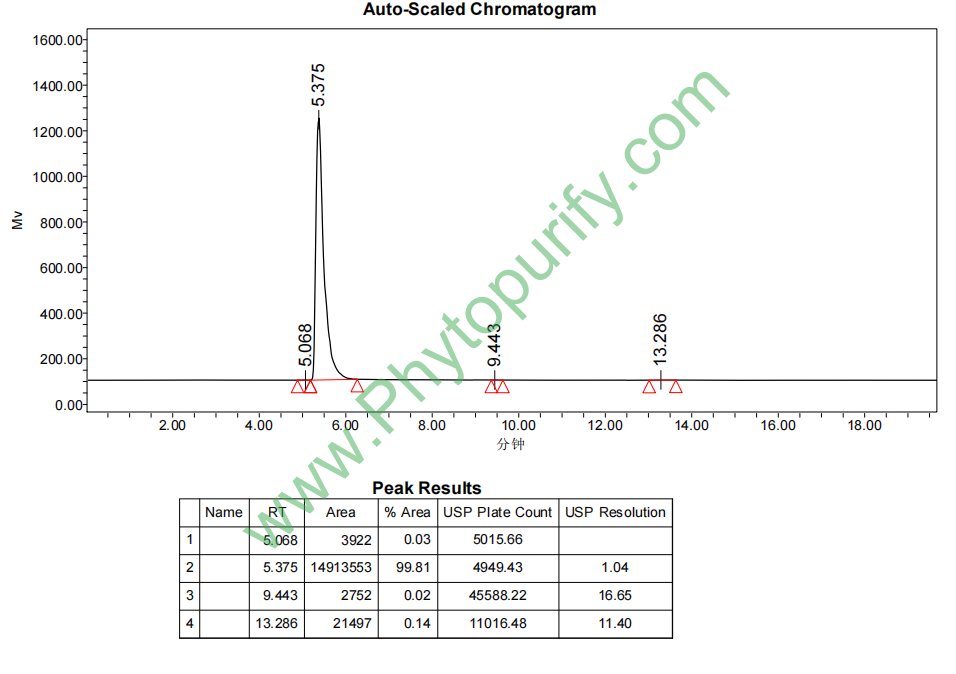
HPLC of Gamma-Aminobutyric acid
Storage conditions:Short-term storage at 2~8℃, long-term storage at -20 ~ -80℃
63.3200
-.9309
-.9314
125.3986
.4556
1.7213
High
9.2252
1.8475
Yes
No
No
No
No
No
0.0
No
No
No
No
4-Aminobutyric acid (GABA) is an important natural compound that is widely present in animals and plants, and has attracted much attention as a major inhibitory neurotransmitter in the central nervous system of mammals. Since its discovery in the mid-20th century, GABA has become a hot topic in neuroscience and pharmacology research due to its critical role in neural signal transmission, emotion regulation, and various physiological functions. GABA not only participates in inhibitory conduction between neurons, but also acts as a signaling molecule to regulate cellular metabolism and gene expression, demonstrating multi-level biological functions.
In recent years, with a deeper understanding of the pathogenesis of neurological and psychiatric disorders, GABA and its related pathways have become important targets for the development of anti anxiety, anti depression, and neuroprotective drugs. This article provides a systematic review of the chemical structure and physicochemical properties, plant sources and extraction methods, pharmacological activity and mechanism of action of gamma aminobutyric acid. Combined with its pharmacological evaluation and pharmacokinetic characteristics, it explores its potential and development prospects in clinical applications, providing a comprehensive theoretical basis and research guidance for the field of natural product pharmacology.
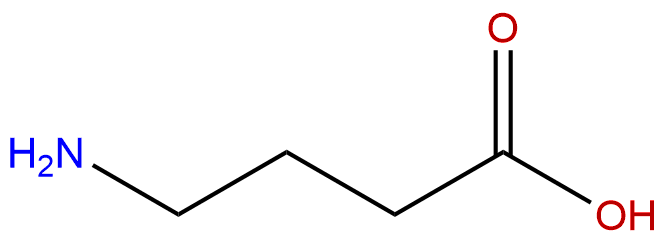
Gamma aminobutyric acid (CAS number: 56-12-2) is a gamma amino acid with the molecular formula C4H9NO2 and a molecular weight of 103.1210. Structurally, GABA is composed of a four carbon linear butyric acid backbone, with the amino group located at the gamma position (i.e. the fourth carbon atom). Unlike common alpha amino acids, the amino group is not located at the alpha position but at the gamma position. This structural feature endows it with special biological functions. The structural formula of GABA can be expressed as NH2- (CH2) 3-COOH.
In terms of physicochemical properties, GABA is a monocarboxylic acid with zwitterionic characteristics and can exhibit different ionization states under different pH conditions. Its topological polar surface area (TPSA) is 63.32 Å ², indicating strong polarity and good water solubility (approximately 125.4 mg/mL), which gives it good distribution characteristics in living organisms. The LogP value is -0.9309, indicating its strong hydrophilicity and difficulty in passing through non-polar lipid membranes. However, studies have shown that GABA can effectively cross the blood-brain barrier (BBB), which is closely related to its specific transport mechanism. GABA does not have hERG channel inhibitory effects and the Ames mutagenicity test is negative, indicating its high safety.
In addition, GABA exists in a zwitterionic tautomeric form, where the balance of conjugated acid and ion states affects its activity and stability in different physiological environments. These physicochemical properties lay the foundation for its function as a neurotransmitter and potential drug molecule.
Although GABA functions significantly in the animal nervous system, it is also widely distributed in the plant kingdom as a plant metabolite involved in stress response and signal transduction. GABA can be detected in various plants, especially in grains (such as rice, wheat, corn), legumes (such as soybeans), vegetables (such as tomatoes, spinach), and fermented foods.
The synthesis of GABA in plants is mainly catalyzed by glutamate decarboxylase (GAD), and its content significantly increases in response to environmental stress such as salt alkali, low temperature, and mechanical damage. GABA not only acts as a metabolic intermediate in plants, but also participates in regulating intracellular pH, osmotic pressure, and signal transduction.
The traditional methods for extracting GABA mainly rely on water extraction and alcohol extraction, combined with techniques such as ultrasound assisted extraction and enzymatic hydrolysis to improve extraction efficiency. The specific steps include:
In recent years, biological fermentation technology has become an important way to prepare high-purity GABA, using microorganisms such as brewing yeast and lactic acid bacteria to ferment glutamic acid precursors, with high yield and low cost, suitable for industrial production.
GABA, as the main inhibitory neurotransmitter in the central nervous system, has pharmacological activities mainly reflected in regulating neural excitability, alleviating anxiety, and protecting nerve cells. Numerous in vitro and in vivo experiments have shown that GABA has significant anti anxiety, sedative, antidepressant, and neuroprotective effects.
GABA activates GABA_A and GABA_B receptors, enhances chloride ion influx into neuronal membranes, reduces neuronal excitability, and thus exerts anti anxiety and sedative effects. In animal experiments, GABA and its analogues can significantly reduce anxiety like behavior, manifested as reduced activity and exploratory behavior in open field and maze tests. In addition, GABA can regulate the balance of neurotransmitters such as dopamine and serotonin in the brain, synergistically improving emotional states.
GABA not only inhibits overexcited neurons, preventing excitotoxicity, but also promotes neuronal survival and synaptic plasticity by regulating the CREB (cAMP responsive element binding protein) and BDNF (brain-derived neurotrophic factor) signaling pathways, demonstrating potential antidepressant and neuroreparative functions.
GABA is also involved in regulating the endocrine system, immune response, and intestinal function. It serves as an important metabolite in the metabolism of brewing yeast, affecting the fermentation process and product flavor, exhibiting multifunctional biological characteristics.
The biological effects of GABA are mainly achieved through interactions with specific receptors and related signaling molecules, and its mechanism of action is complex and multi-level.
The main targets of GABA are GABA_A and GABA_B receptors:
GABA regulates dopamine receptors DRD2, serotonin receptors HTR1A, and HTR2A, affecting neurotransmitter release and signal transduction, and participating in emotional and cognitive regulation.
Monoamine oxidase A (MAOA) is involved in neurotransmitter metabolism, and GABA affects neurotransmitter levels by regulating MAOA activity. The serotonin transporter encoded by SLC6A4 regulates serotonin reuptake, and GABA indirectly affects its function.
GABA regulates the expression of neurotrophic factor BDNF by activating CREB1, promoting neural plasticity and cell survival, and enhancing the adaptive capacity of the nervous system.
In summary, the mechanism of action of GABA includes receptor activation, neurotransmitter regulation, metabolic enzyme regulation, and gene expression regulation, forming a complex neural regulatory network.
GABA, as a natural neurotransmitter, has shown good safety and pharmacokinetic characteristics in its pharmacological evaluation.
GABA has a low molecular weight (103.1210), high water solubility, and a LogP value of -0.9309, indicating its strong hydrophilicity and suitability for oral administration. Its TPSA is 63.32, which meets the requirement for drug molecules to penetrate the cell membrane.
Although GABA has strong hydrophilicity and is difficult to passively diffuse across the blood-brain barrier, it achieves efficient brain distribution through specific transporters such as GABA transporters, ensuring its neurological activity.
GABA does not inhibit hERG potassium channels, reducing the risk of cardiac toxicity. The Ames test result is negative, indicating no mutagenicity. In clinical and animal experiments, GABA has good tolerance and few side effects.
After oral administration of GABA, the absorption is rapid, and the peak plasma concentration appears quickly, but the half-life is short, indicating the need for a reasonable dosage and administration frequency design to maintain efficacy. Liver metabolism is limited and mainly excreted through the kidneys.
These characteristics support GABA as a safe and effective candidate molecule for neuroregulatory drugs.
Based on its significant anti anxiety, sedative, and neuroprotective effects, GABA has shown broad application prospects in the treatment of neurological and psychiatric disorders.
GABA and its analogues can serve as the basis for the development of anti anxiety drugs, especially for patients with mild to moderate anxiety disorders. Existing studies have shown that GABA supplements can improve sleep quality, alleviate stress-related symptoms, and have good clinical application potential.
GABA has potential value in the adjuvant therapy of neurodegenerative diseases such as Alzheimer's disease and Parkinson's disease by regulating neural plasticity and promoting neural repair. In the future, other neuroprotective agents can be combined to explore multi-target combination therapies.
GABA is involved in metabolic regulation and intestinal nervous system function, which may have a positive impact on diabetes, obesity and gastrointestinal brain axis related diseases, providing new ideas for drug development in related fields.
Gamma aminobutyric acid, as an important natural product and neurotransmitter, occupies a core position in the field of neuropharmacology due to its unique chemical structure, excellent physicochemical properties, and diverse biological functions. Its multiple mechanisms of anti anxiety, neuroprotection, and regulation of neurotransmitters provide a solid theoretical basis for the treatment of related diseases. The pharmacological evaluation shows that GABA has good safety and pharmacokinetic properties, supporting its further development as a potential drug molecule.
In the future, with the advancement of molecular biology and medicinal chemistry technologies, GABA and its derivatives are expected to play a greater role in fields such as neurological and psychiatric disorders, metabolic disorders, and gut brain axis regulation. Thoroughly analyzing its mechanism of action, optimizing drug design and delivery strategies, will promote the clinical translation of GABA related drugs and drive the development and innovation of natural product pharmacology.
