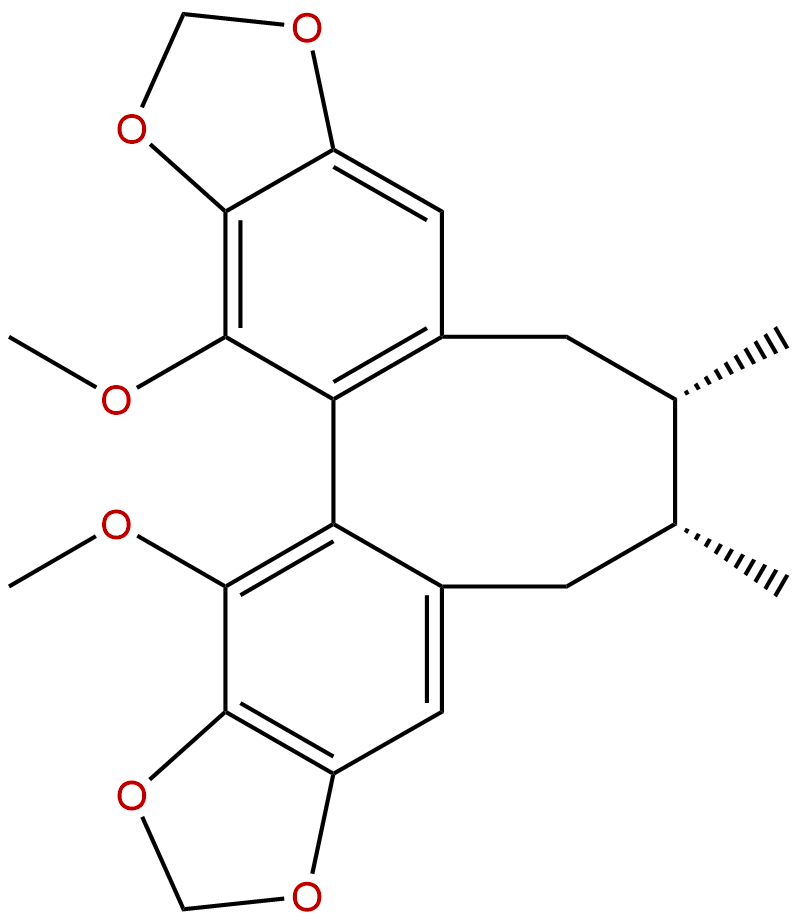


Product name: Schisandrin C
Synonym name: Schizandrin C; Wuweizisu C
Catalogue No.: BP1263
Cas No.: 61301-33-5
Formula: C22H24O6
Mol Weight: 384.428
Botanical Source: Schisandra chinensis(Turcz.)Baill.
Physical Description:
Type of Compound: Lignans
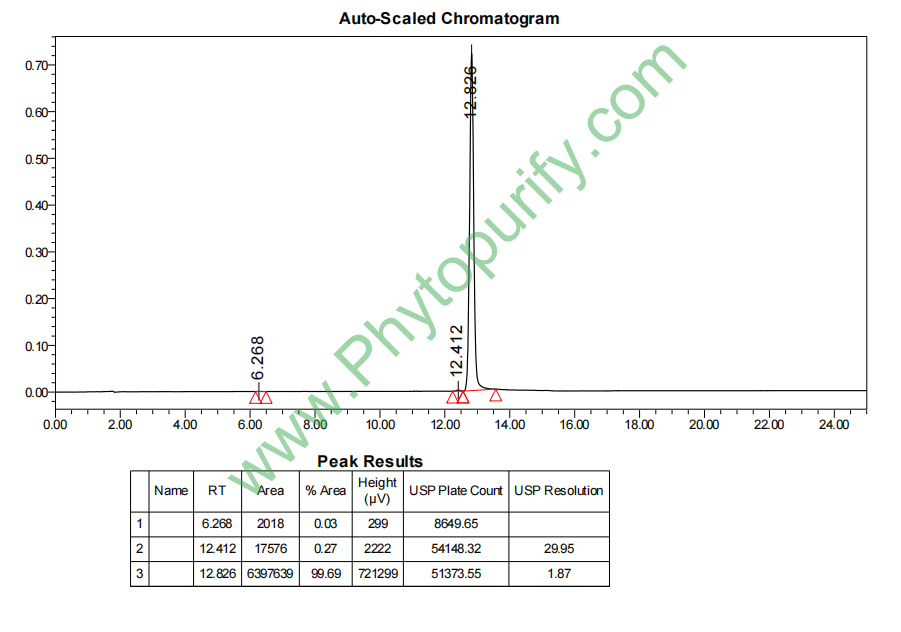
Purity: 95%~99%
Analysis Method: HPLC-DAD or/and HPLC-ELSD
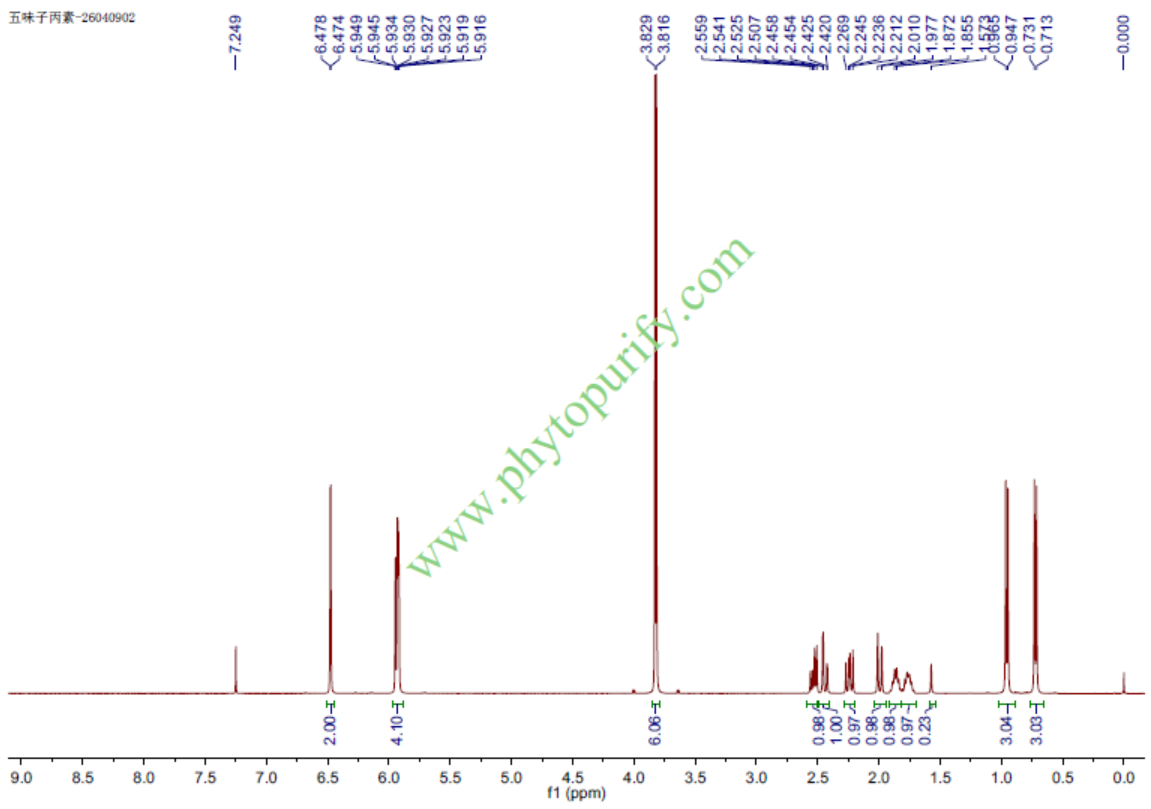
Identification Method: Mass, NMR
Packing: Brown vial or HDPE plastic bottle
Storage: Store in a well closed container, protected from air and light. Put into refrigerate or freeze for long term storage.
Whenever possible, you should prepare and use solutions on the same day. However, if you need to make up stock solutions in advance, we recommend that you store the solution as aliquots in tightly sealed vials at -20℃. Generally, these will be useable for up to two weeks.
The product could be supplied from milligrams to grams
Inquire for bulk scale.
Chengdu Biopurify Phytochemicals Ltd. is a leading company in the research, development, manufacture and marketing of High Quality Phytochemicals and Extracts(especially Active Ingredients from Traditional Chinese Medicine,TCM), Natural Active Pharmaceutical Ingredients worldwide.
The main services:
A. Supply active ingredients and reference standards of TCM, from mgs to kgs scale
B. Custom extraction and purification, target Herb Active Ingredients
C. Custom synthesis and semi-synthesis for Natural Active Ingredients
D. CR(contract research), CM(contract manufacture) and PD(process development) services from lab scale, pilot scale to commercial scale(GMP is also available)
E. TCM compounds library for drug screen,more than 3000 compounds available, many of them are rare and unique.
HPLC of Schisandrin C
HNMR of Schisandrin C
Storage conditions:Short-term storage at 2~8℃, long-term storage at -20 ~ -80℃
55.3800
4.2365
4.2365
.0004
5.7593
28.7750
High
90.3980
3.7160
Yes
No
Yes
No
No
Yes
0.6
Yes
No
No
Yes
Schisandrin C (CAS number: 61301-33-5) is a natural lignan product isolated from the traditional Chinese medicine Schisandra chinensis. Schisandra chinensis, as a classic traditional Chinese medicine, has been widely studied due to its various pharmacological activities. Schisandra chinensis extract, as one of the important active ingredients, has attracted widespread attention in the field of natural product pharmacology in recent years. Numerous studies have shown that Schisandrin C has significant anti-cancer, anti-inflammatory, antioxidant, and neuroprotective effects, and has shown good therapeutic potential in various disease models such as liver disease and neurodegenerative diseases (such as Alzheimer's disease).
This article aims to systematically review the chemical structure and physicochemical properties, plant sources, and extraction methods of schisandrin, with a focus on analyzing its pharmacological activity and mechanism of action, exploring its pharmacological properties and pharmacokinetic characteristics, and looking forward to its clinical application prospects, providing theoretical basis and reference for subsequent research and drug development.
Schisandrin C belongs to the lignan class of compounds, with a molecular formula of C24H32O6 and a molecular weight of 384.4280. Its structural characteristics are lignans with a biphenylpropane skeleton, containing multiple methoxy and hydroxyl substituents, with a complex structure and strong biological activity. The LogP value of schisandrin C is 4.2365, indicating its high lipid solubility, which is beneficial for cell membrane penetration and blood-brain barrier penetration. Its topological polar surface area (TPSA) is 55.38 Å ², indicating moderate molecular polarity and a certain degree of water and lipid solubility.
The water solubility is extremely low, only 0.0004 mg/mL, indicating poor solubility in the aqueous phase, but this is not necessarily a limiting factor for oral absorption. Importantly, Schisandrin C has a high blood-brain barrier penetration ability, supporting its potential application in neurological diseases. The negative result of hERG channel inhibition experiment indicates a low risk of cardiac toxicity. The Ames mutagenicity test score is 0.6, indicating a low risk of genetic toxicity and good safety.
Schisandra chinensis mainly exists in the fruit of Schisandra chinensis, which is a dry and mature fruit of the Schisandra chinensis plant in the Schisandra family. It is widely distributed in Northeast China and the Korean Peninsula. Schisandra contains abundant lignans, among which schisandrin C is one of the representative components. Although its content is not the highest, it has significant pharmacological activity.
Traditional extraction methods often use organic solvent extraction combined with column chromatography for separation and purification. The specific steps usually include:
In recent years, new technologies such as ultrasound assisted extraction and microwave-assisted extraction have been introduced, significantly improving extraction efficiency and purity, reducing solvent usage and time costs, and providing technical support for the large-scale preparation of schisandrin.
Schisandrin C exhibits significant anti proliferative and pro apoptotic effects in various cancer cell lines. Research has shown that Schisandrin C can induce cancer cell apoptosis and inhibit tumor cell migration and invasion by regulating cell cycle related proteins and apoptosis signaling pathways. For example, in liver cancer, breast cancer and lung cancer cells, schisandrin C promotes cell apoptosis and inhibits tumor growth by activating CASP3 and down regulating BCL2 expression. In addition, its antioxidant properties help alleviate oxidative stress in the tumor microenvironment and enhance the efficacy of chemotherapy drugs.
Schisandrin C can significantly inhibit the production and release of inflammatory mediators, and alleviate inflammatory reactions. Both in vitro and in vivo experiments have confirmed that it exerts anti-inflammatory effects by inhibiting the NF - κ B signaling pathway and MAPK pathway, reducing the expression of pro-inflammatory cytokines such as TNF - α, IL-6, IL-1 β. This role makes it potentially valuable in the treatment of chronic inflammatory diseases and autoimmune diseases.
Schisandrin C has strong free radical scavenging ability and can activate the intracellular antioxidant defense system. It enhances the cell's resistance to oxidative stress and protects cells from oxidative damage by upregulating the expression of NRF2 and its downstream antioxidant enzymes such as HO-1 and SOD. This mechanism is particularly important for neuroprotection and liver protection.
Schisandrin C exhibits significant neuroprotective effects in neurodegenerative disease models. It can regulate various neuroprotective targets, such as BCL2, SIRT1, MAPK1, CASP3, etc., inhibit neuronal apoptosis, alleviate neuroinflammation, reduce abnormal expression of β - amyloid precursor protein (APP) and β - secretase 1 (BACE1), and delay the pathological progression of Alzheimer's disease. In addition, Schisandrin B promotes the survival and functional recovery of neurons, demonstrating good potential for neural repair.
Schisandrin C has a significant protective effect on the liver, which can alleviate liver damage, inhibit liver fibrosis, and promote liver cell regeneration. Its antioxidant and anti-inflammatory properties help alleviate oxidative stress and inflammatory reactions in the liver, regulate liver metabolic function, improve the liver microenvironment, and promote liver cell repair and functional recovery.
The multi-target mechanism of action of schisandrin C is the basis of its multiple pharmacological activities. It mainly involves the following key targets and signaling pathways:
In summary, Schisandrin C achieves a wide range of pharmacological effects through multi-target and multi pathway synergistic effects, reflecting the advantages of natural product multi-target drugs.
The pharmacological parameters of Schisandrin C indicate that it has good potential for drug development. Its molecular weight is moderate (384.43 Da), meeting the basic requirements of Lipinski's rule. The LogP value is 4.2365, indicating that it has high lipid solubility, which is beneficial for cell membrane penetration and blood-brain barrier penetration, supporting its pharmacological basis for neuroprotective effects.
The TPSA is 55.38 Å ², indicating moderate molecular polarity that is favorable for oral absorption and in vivo distribution. Very low water solubility may affect its oral bioavailability, but its solubility and absorption can be improved through formulation techniques such as nanocarriers and liposomes.
The high permeability of the blood-brain barrier is an important advantage of its application in neurological diseases. HERG channel inhibition is negative, indicating good cardiac safety. The Ames test has low mutagenicity and high safety.
In terms of pharmacokinetics, existing studies have shown that Schisandrin C is absorbed quickly and widely distributed after oral administration, especially at higher concentrations in brain tissue. Its metabolism is mainly carried out through the phase I and phase II enzyme systems of the liver, and the metabolites are mostly hydroxylation and glucuronic acid conjugates. Excretion is mainly through bile and urine. Moderate half-life, suitable for daily administration.
In the future, further systematic research is needed on its pharmacokinetic parameters, including bioavailability, tissue distribution, metabolic pathways, and drug interactions, to guide clinical dose design and safety evaluation.
Due to its multi-target and multifunctional pharmacological properties, schisandrin C has shown broad clinical application prospects in various disease fields.
cancer treatment As a natural anti-cancer active ingredient, schisandrin C can be used as an auxiliary chemotherapy drug to enhance the chemotherapy effect and reduce side effects, especially in solid tumors such as liver cancer and breast cancer.
Neurodegenerative diseases Its excellent blood-brain barrier penetration and neuroprotective effects make it a potential therapeutic drug for neurodegenerative diseases such as Alzheimer's disease and Parkinson's disease. In the future, targeted therapy can be achieved by combining modern drug delivery technology.
liver disease The liver protective effect of schisandrin C provides new ideas for the treatment of diseases such as hepatitis, liver fibrosis, and cirrhosis, especially suitable for long-term medication in patients with chronic liver disease.
Anti inflammatory and antioxidant applications Schisandrin C has great potential for application in chronic inflammation, autoimmune diseases, and oxidative stress-related diseases.
However, the clinical research on schisandrin C is still in its infancy and lacks systematic clinical trial data. In the future, it is necessary to strengthen its pharmacological, pharmacokinetic, and safety evaluations, conduct phase I and II clinical trials, and verify its efficacy and safety. At the same time, developing new formulation technologies to improve their bioavailability and targeting will promote their clinical translation.
Schisandrin C, as an important lignan active ingredient in Schisandra chinensis, has demonstrated potential applications in various fields such as anti-cancer, neuroprotective, liver protective, anti-inflammatory, and antioxidant due to its diverse pharmacological activities and good medicinal properties. Its multi-target and multi mechanism mode of action provides a valuable example for the development of natural product drugs.
In the future, by combining modern pharmacology, molecular biology, and medicinal chemistry techniques, we will deeply analyze the mechanism of action of schisandrin, optimize its pharmacokinetic properties, and conduct systematic clinical research, which is expected to promote it as a new natural medicine or drug lead compound, bringing new breakthroughs to the treatment of related diseases. The research and development of schisandrin C not only enriches the theoretical system of natural product pharmacology, but also provides important support for the modernization and internationalization of traditional Chinese medicine.
