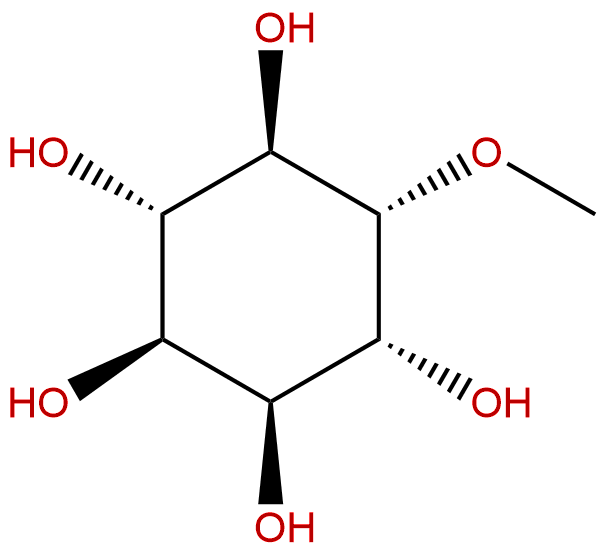


Product name: L-Quebrachitol
Synonym name:
Catalogue No.: BP3237
Cas No.: 642-38-6
Formula: C7H14O6
Mol Weight: 194.183
Botanical Source:
Physical Description: Powder
Type of Compound: Miscellaneous
Purity: 95%~99%
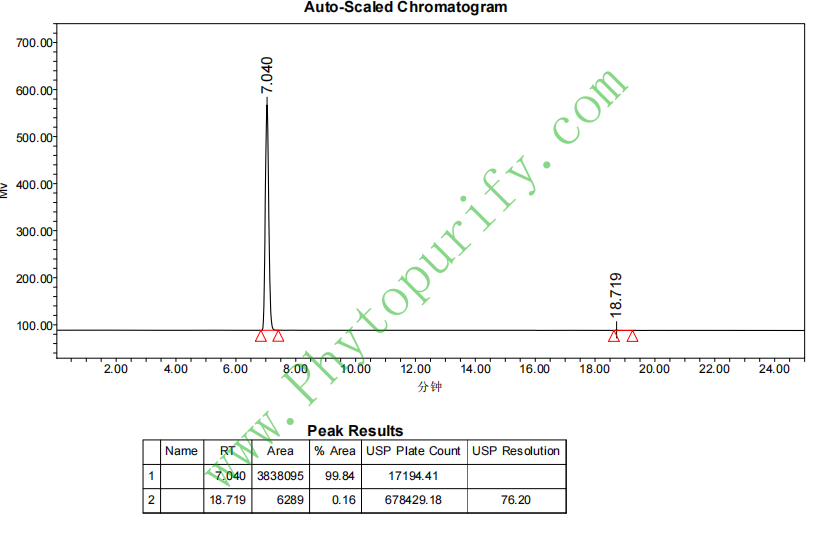
Analysis Method: HPLC-ELSD
Identification Method: Mass, NMR
Packing: Brown vial or HDPE plastic bottle
The product could be supplied from milligrams to grams, Up to kilograms.
Inquire for bulk scale.
Quebrachitol is a naturally occurring optically active cyclitol, a cyclic polyol. It can be found in Allophylus edulis and in the serum left after the coagulation of the Hevea brasiliensis latex in the operation of rubber tapping. It is also found in Cannabis sativa, in Paullinia pinnata and in seabuckthorn.
It was first isolated by Tanret in 1887 from the bark of Aspidosperma quebracho. The substance was tested as a sweetening agent for diabetics in 1933. It shows a sweetening property half of that of sucrose but induces colic or diarrhoea at concentration used to render the food palatable.
Quebrachitol is a versatile building block in the construction of naturally occurring bioactive materials. For example, its conversion into antifungal (E)-β-methoxyacrylate, oudemansin X has been made.
HPLC of L-Quebrachitol
Storage conditions:Short-term storage at 2~8℃, long-term storage at -20 ~ -80℃
110.3800
-2.0723
-2.0723
397.4574
.4589
.8142
Low
10.6647
3.4425
Yes
No
No
No
No
No
0.0
Yes
Yes
Yes
Yes
As an important treasure trove for drug discovery and development, natural products continue to provide modern medicine with lead compounds with novel structures and diverse activities. Among them, inositol and its derivatives have attracted much attention due to their extensive biological activities. L-Quebrachitol, also known as 1D-1-O-methyl-inositol, is a naturally occurring inositol methoxy analogue. Since its first isolation from the genus Platycodon, this compound has been found in various medicinal plants. Traditionally, plant extracts containing spartanol have been used in folk medicine, while modern pharmacological research has gradually revealed its biological activities in many aspects, including antioxidant, stomach protection, antiplatelet aggregation, anti diabetes and bone formation. In particular, its anti diabetes and promoting bone activity provide a potential candidate molecule for the development of new treatment strategies for type 2 diabetes and its complications (such as osteoporosis). This article aims to systematically review the chemical properties, plant sources, pharmacological activities, mechanisms of action, and medicinal properties of Baiquemu alcohol, and to explore its clinical application prospects.
The chemical name of Baiquemu alcohol is (1R, 2S, 3R, 4S, 5S, 6R) -2-methoxycyclohexane-1,3,4,5,6-pentanol, with a CAS number of 642-38-6. Its molecular formula is C7H14O6 and its molecular weight is 194.1830. Structurally, quercetin is a methyl ether derivative of inositol (cyclohexanol), in which one hydroxyl group is replaced by a methoxy group located at position 1 of inositol and has a specific stereoconfiguration (L-type or 1D type). This structural modification introduces slight hydrophobic groups while retaining the hydrophilicity of inositol, thereby affecting its physicochemical properties and biological activity.
The key physicochemical parameters are as follows: the calculated lipid water partition coefficient (LogP) is -2.0723, indicating that the compound has high hydrophilicity. The topologically polar surface area (TPSA) is as high as 110.38 Å ², which is closely related to the presence of multiple hydroxyl and methoxy oxygen atoms in its molecule, indicating good water solubility and poor membrane permeability. The theoretically calculated water solubility value is as high as 397.46 mg/L, further confirming its easy solubility in water. These properties collectively determine the distribution characteristics of resveratrol in organisms: its ability to cross the blood-brain barrier is predicted to be "low", which to some extent limits its effects on the central nervous system, but may also reduce the potential risk of neurotoxicity. In addition, preliminary pharmacological risk assessment showed no inhibitory activity on hERG potassium channels (predicted as' no '), and the Ames test predicted a result of 0.0 (negative), suggesting that it may not have mutagenicity and cardiotoxicity risks, providing preliminary favorable evidence for its safety.
Baiquemu alcohol is widely distributed in nature and mainly exists in the bark, leaves, and seeds of various plants. Its name comes from the genus Platycodon in South America, especially Platycodon, whose bark was the main source of early isolation. In addition, the presence of quercetin has been found in many plants with economic or medicinal value, such as by-products of rubber trees (such as rubber seeds, latex serum), Acacia macrophylla, and various Eucommia ulmoides plants. The diversity of these plant sources provides the possibility for the sustainable acquisition of Baiquechun, especially from the waste of the rubber industry, which is in line with the concepts of green chemistry and comprehensive resource utilization.
The extraction of quercetin from plant materials is usually carried out using solvent extraction method. Water, methanol, ethanol, or mixtures of alcohol and water in different proportions are commonly used extraction solvents. Due to its good water solubility, hot water extraction is a simple and effective method. The extraction process generally includes: drying and crushing plant materials (such as bark and seeds) using solvent reflux or ultrasound assisted extraction, followed by filtration and concentration to obtain crude extract. Further purification steps are crucial and column chromatography techniques such as silica gel column chromatography, macroporous adsorption resin column chromatography (such as D101 type), or ion exchange chromatography are commonly used. In recent years, modern separation techniques such as high-speed countercurrent chromatography have also been applied to efficiently prepare high-purity quercetin. The isolated compounds can be structurally confirmed by methods such as nuclear magnetic resonance, mass spectrometry, and specific rotation determination.
A large number of in vitro and in vivo studies have revealed the diverse pharmacological activities of resveratrol, making it a natural product with multi-target effects.
Antidiabetic activity This is one of the most promising pharmacological effects of Baiquemu alcohol. In the streptozotocin induced diabetes rat model, the treatment of sparganol can significantly reduce the fasting blood glucose level, improve glucose tolerance, and increase insulin sensitivity. Its effect is not only limited to reducing blood sugar, but also can reduce diabetes related oxidative stress and inflammatory reaction, showing a protective effect on diabetes nephropathy and other complications.
Promoting bone and anti osteoporosis activity Baiquemu alcohol can significantly promote the differentiation, proliferation, and mineralization of osteoblasts. In cell experiments, it can upregulate the expression of key markers of osteogenic differentiation, such as alkaline phosphatase and osteocalcin. In a rat model of osteoporosis induced by ovariectomy, administration of resveratrol can effectively increase bone density, improve bone microstructure, and demonstrate potential for preventing and treating postmenopausal osteoporosis.
Antioxidant and free radical scavenging activity Baiquemu alcohol itself has direct free radical scavenging ability and can effectively scavenge free radicals such as DPPH and ABTS. In biological systems, it can enhance the activity of endogenous antioxidant enzymes such as superoxide dismutase and glutathione peroxidase, reduce malondialdehyde levels, and protect cells from oxidative damage.
Gastric protective activity In animal models of gastric ulcers induced by ethanol or indomethacin, pre-treatment with quercetin can significantly reduce the area of gastric mucosal damage. Its mechanism is related to enhancing mucosal defense factors (such as mucus secretion), inhibiting excessive gastric acid secretion, and anti-inflammatory and antioxidant effects.
Antiplatelet aggregation activity Research has shown that resveratrol can inhibit platelet aggregation induced by ADP, collagen, etc. Its effect may be related to interference with platelet signaling pathways, suggesting that it may have a preventive effect on thrombotic diseases.
Other activities In addition, there are research reports that Baiquemu alcohol has potential activities such as anti-inflammatory and neuroprotective effects, but its research depth is not as deep as the above aspects.
The multiple pharmacological activities of Baiquemu alcohol stem from its regulatory effects on multiple key signaling pathways, and its molecular target network is gradually being elucidated.
1. Anti diabetes mechanism:
The anti diabetes effect of spartanol involves a complex multi target network, which is mainly achieved by enhancing insulin signaling pathway and regulating key links of glucose metabolism.
* Activate AMPK pathway AMP activated protein kinase is a core regulator of cellular energy metabolism. Baiquemu alcohol can activate AMPK (composed of subunits such as PRKAA1), thereby promoting the translocation of glucose transporter 4 (GLUT4, encoded by SLC2A4 gene) to the cell membrane, increasing the uptake of glucose by muscles and adipocytes. Meanwhile, AMPK activation inhibits hepatic gluconeogenesis.
* Enhance insulin signaling pathway Baiquemu alcohol can promote tyrosine phosphorylation of insulin receptor substrate 1 (IRS1) and activate the downstream PI3K/Akt pathway (involving PIK3R1 and AKT1). Activated Akt further promotes membrane translocation of GLUT4 and regulates metabolic processes such as glycogen synthesis.
* Adjust other key targets Research has shown that resveratrol may increase endogenous GLP-1 levels by activating glucagon like peptide-1 receptors or directly inhibiting dipeptidyl peptidase-4 (DPP4). It may also act as a regulator of peroxisome proliferator activated receptor gamma (PPARG) to improve insulin sensitivity. In addition, the potential inhibitory effect on sodium glucose cotransporter 2 (SGLT2) and the regulation of glucokinase (GCK) may also contribute to its hypoglycemic effect.
2. Facilitate the mechanism of bone action:
The bone promoting effect of Baiquemu alcohol is mainly achieved by activating the classical signaling pathway of osteoblast differentiation.
* Activate BMP-2/Runx2 pathway Bone morphogenetic protein-2 is a powerful osteogenic factor. Baiquemu alcohol can upregulate the expression of BMP-2, thereby activating its downstream key transcription factor Runx2, which is the main regulator of osteoblast differentiation.
* Activate MAPK pathway Members of the mitogen activated protein kinase family (ERK, JNK, p38) play important roles in cell proliferation and differentiation. Baiquemu alcohol can activate these kinases, and their signals converge at Runx2, synergistically promoting the expression of osteogenic genes.
* Activate Wnt/β - catenin pathway Wnt signaling is another core pathway that regulates bone metabolism. Baiquemu alcohol can activate this pathway, stabilize β - catenin, allow it to enter the nucleus and bind with transcription factors, and promote the transcription of osteogenic related genes.
3. Other mechanisms of action:
Its antioxidant activity is related to its direct provision of electrons to neutralize free radicals and activation of the Nrf2/ARE antioxidant defense pathway. The gastroprotective effect is related to upregulating prostaglandin E2 and inhibiting the NF - κ B inflammatory pathway.
Based on the calculation analysis and preliminary experimental data of its physical and chemical properties, Baiquemu alcohol has shown certain potential as a drug, but there are also challenges.
Pharmaceutical advantages:
* High potential for safety Predicting the absence of hERG inhibition and mutagenicity (Ames negative) provides a good preliminary indicator for its cardiovascular safety and genotoxicity safety.
* Excellent water solubility Beneficial for the development of formulations, especially oral and injection forms.
* Wide range of natural sources It can be obtained from renewable plant resources, especially agricultural by-products, with relatively sustainable sources.
Drug Challenge:
* Membrane permeability may be poor High hydrophilicity (low LogP) and high TPSA typically indicate limited passive transmembrane diffusion ability, which may lead to low oral bioavailability. The low blood-brain barrier permeability also confirms this.
* Lack of pharmacokinetic data At present, there are very limited public reports on the systematic pharmacokinetic studies of Baiquemu alcohol, such as absorption, distribution, metabolism, and excretion. Key information such as oral absorption degree, metabolic pathways in the body, major metabolites, half-life, and excretion mode urgently need to be clarified through standardized preclinical studies.
* Formulation and delivery strategy To improve its bioavailability, it may be necessary to develop special drug delivery systems, such as phospholipid complexes, nanoparticles, prodrug modifications, or in combination with absorption enhancers.
As a natural small molecule with multiple targets and activities, the clinical application prospects of Baiquemu alcohol mainly focus on the following directions:
Future research priorities should include:
* In depth study on the mechanism of action Using chemical biology methods (such as molecular probes) to accurately identify its direct target and draw clearer signal network diagrams.
* Preclinical development of the system Complete pharmacological, pharmacokinetic, and toxicological evaluations that comply with regulations, clarify the effective dose range, safety window, and potential toxicity.
* Formulation technology research and development Develop a new drug delivery system that can improve its oral bioavailability.
* Exploration of clinical research After obtaining sufficient preclinical data support, gradually promote human clinical trials to verify their safety and effectiveness.
Baiquemu alcohol is a naturally occurring inositol derivative with a unique structure and abundant sources. Modern pharmacological research has fully confirmed that it has multiple biological activities, such as anti diabetes, bone promotion, antioxidant, gastric protection, etc. Its mechanism of action involves the regulation of multiple key signal pathways, such as AMPK, PI3K/Akt, BMP-2/Runx2, Wnt/β - catenin, etc. Although it faces challenges such as poor membrane permeability in terms of its pharmaceutical properties, its excellent water solubility, good preliminary safety prediction and multi-target action characteristics make it have significant potential in developing innovative drugs or functional products for metabolic diseases (especially diabetes and osteoporosis). In the future, through interdisciplinary collaboration, in-depth systematic pharmacokinetic research, target confirmation, and formulation technology innovation are expected to transform this ancient natural molecule into modern drugs with clear clinical value, contributing to the cause of human health.
