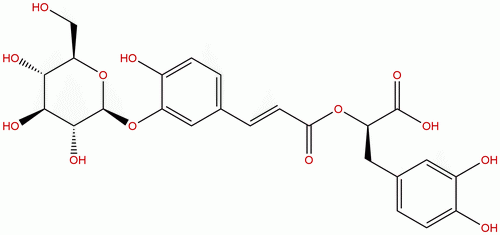


Product name: Salviaflaside
Synonym name: Rosmarinic acid 3'-glucoside
Catalogue No.: BP3975
Cas No.: 178895-25-5
Formula: C24H26O13
Mol Weight: 522.459
Botanical Source: Salvia flava
Physical Description:
Type of Compound:
Purity: 95%~99%
Analysis Method: HPLC-DAD or/and HPLC-ELSD
Identification Method: Mass, NMR
Packing: Brown vial or HDPE plastic bottle
The product could be supplied from milligrams to grams
Inquire for bulk scale.
For Reference Standard and R&D, Not for Human Use Directly.
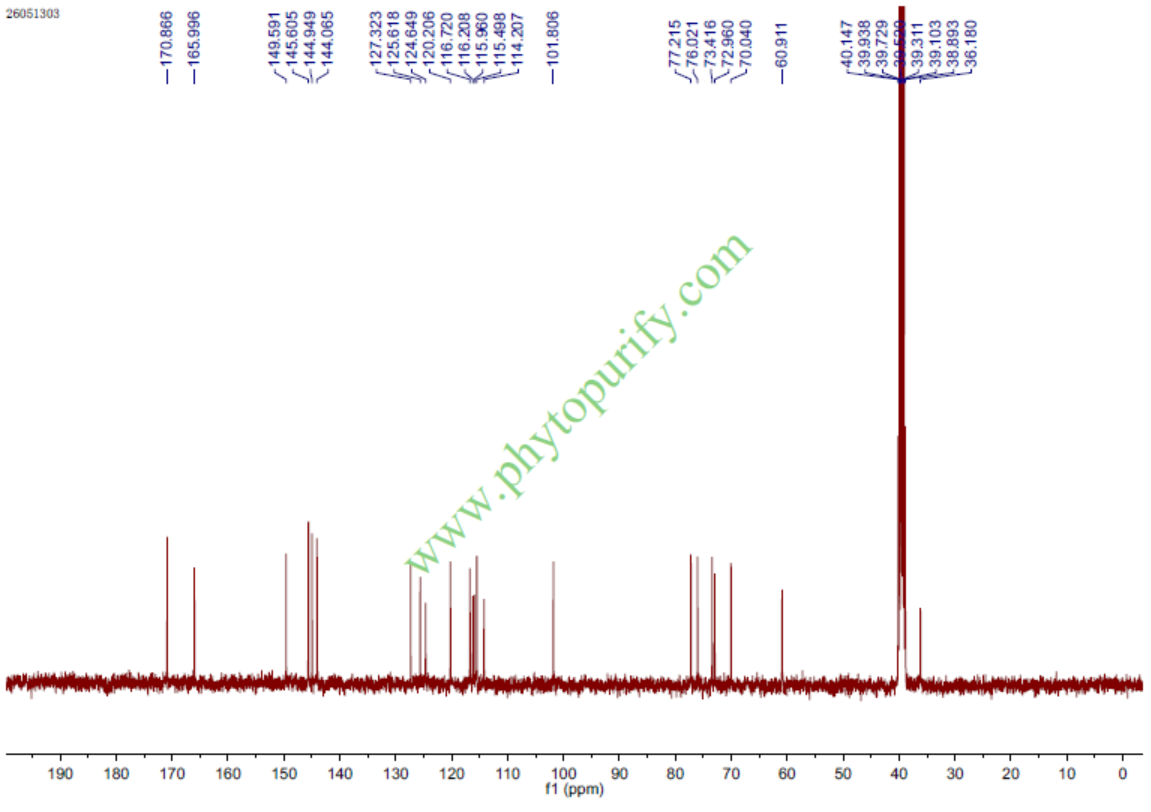
NMR of 异迷迭香酸苷
Storage conditions:Short-term storage at 2~8℃, long-term storage at -20 ~ -80℃
223.6700
.0129
-2.2494
6.6346
.5510
.0228
Low
79.6616
4.1112
Yes
No
No
No
Yes
No
0.0
Yes
Yes
Yes
Yes
Natural products, as an important source of drug discovery, play an irreplaceable role in maintaining human health and preventing diseases. Among numerous natural compounds with biological activity, phenolic acid compounds have attracted much attention due to their extensive pharmacological activities. Salviaflavide, a water-soluble phenolic glycoside derived from plants in the family Lamiaceae, has gradually entered the field of researchers in recent years. This compound is first derived from Prunella vulgaris(Prunella vulgaris L. It was isolated and identified in Spica Prunellae that its chemical structure belongs to the glycoside form of caffeic acid derivatives combined with sugar groups.
The discovery of isorosmarinic acid glycoside can be traced back to a systematic study of the active ingredients in traditional Chinese medicine, Prunella vulgaris. Prunella vulgaris, as a commonly used traditional Chinese medicine, has the effects of clearing the liver, improving vision, dispersing nodules, and reducing swelling. It is clinically used in traditional Chinese medicine to treat conditions such as redness, swelling, pain, headache, dizziness, and scrofula. Modern pharmacological studies have shown that Prunella vulgaris contains various phenolic acids, triterpenoids, flavonoids, and sterols, among which phenolic acid components are considered the main material basis for its antioxidant, anti-inflammatory, and anti-tumor activities. Isorosmarinic acid glycoside, as one of the high content phenolic acid glycosides in Prunella vulgaris, has attracted widespread attention for its unique chemical structure and potential biological activity.
From a chemical classification perspective, isorosmarinic acid glycosides belong to the phenylpropanoid class of compounds, specifically glycoside derivatives of rosmarinic acid. Rosmarinic acid is a widely distributed phenolic acid compound in nature, with significant antioxidant, anti-inflammatory, antiviral, and neuroprotective activities. Isorosmarinic acid glycoside introduces glycosylation modification on the basis of rosmarinic acid parent nucleus, which not only changes the physicochemical properties of the compound, but may also affect its bioavailability and pharmacological activity spectrum. In recent years, with the advancement of separation and purification technology and activity screening methods, research on isorosmarinic acid glycosides has gradually deepened, and its potential application value in antioxidant, anti-inflammatory, anti-aging and other fields has become increasingly prominent.
This article will provide a systematic review of the research progress of isorosmarinic acid glycoside from multiple dimensions, including chemical structure, plant origin, pharmacological activity, mechanism of action, pharmacological evaluation, and clinical application prospects, aiming to provide reference for the in-depth research and development of this compound.
The chemical name of isorosmarinic acid glycoside is 3- (3,4-dihydroxyphenyl) -2- [(2E) -3- (3,4-dihydroxyphenyl) -1-oxo-2-propen-1-yl] oxy] propionic acid - β - D-glucopyranose ester, with a molecular formula of C ₂₄ H ₂₆ O ₁ I3 and a molecular weight of 522.4590. From the analysis of structural characteristics, the compound consists of three basic structural units: a caffeoyl group, a danshensu group, and a glucose group. Specifically, the caffeoyl group is linked to the alpha hydroxyl group of danshensu through ester bonds, forming the core skeleton of rosmarinic acid; The glucose group is connected to the carboxyl group of the danshensu group through glycosidic bonds, forming a complete glycoside structure.
The stereochemical characteristics of isorosmarinic acid glycoside are worth paying attention to. There are two chiral centers in its molecule: one located at the α - carbon (C-2 ') of the danshensu group, and the other located at the terminal carbon (C-1' ') of the glucose group. The naturally occurring isorosmarinic acid glycosides are usually in the S configuration, which is consistent with the stereochemical characteristics of other members of the rosmarinic acid family. It is worth noting that the structural difference between isorosmarinic acid glycoside and rosmarinic acid lies in the lack of glucose based modification in the latter, which leads to significant differences in polarity and water solubility between the two.
The physicochemical properties of isorosmarinic acid glycoside provide important basis for its pharmacological evaluation. According to computational chemistry and experimental measurement data, the key physicochemical parameters of this compound are as follows:
Lipid water partition coefficient (LogP): 0.0129. This value indicates that isorosmarinic acid glycoside has extremely low lipid solubility and is almost entirely inclined towards aqueous distribution. The low LogP value is closely related to the presence of multiple phenolic hydroxyl and sugar groups in its molecule, which endow the compound with good water solubility.
Topological Polarity Surface Area (TPSA)223.6700 Å ². TPSA is an important parameter for evaluating the oral bioavailability and membrane permeability of compounds. The TPSA value of isorosmarinic acid glycoside is much higher than the recommended 140 Å ² threshold for oral medication, indicating that its intestinal absorption may be poor and oral bioavailability may be limited.
Water solubility 6.6346 (LogS). This value indicates that isorosmarinic acid glycoside has good water solubility, which is consistent with its polyhydroxy structure. Good water solubility is beneficial for the distribution and transportation of compounds in body fluids, but it may also limit their ability to penetrate biological membranes.
Blood-brain barrier permeability: Low. Based on the prediction of physicochemical parameters, isorosmarinic acid glycoside is difficult to penetrate the blood-brain barrier and enter the central nervous system. This characteristic limits its potential application in the treatment of neurodegenerative diseases, but it also means that the selectivity of its peripheral effects may be higher.
HERG inhibition: No. HERG potassium channel inhibition is an important predictor of drug cardiac toxicity. Isorosmarinic acid glycoside has no inhibitory effect on hERG channels, indicating a low risk of cardiac safety.
Ames test: 0.0. The Ames test is used to evaluate the mutagenicity of compounds, and the result of isorosmarinic acid glycoside in this test is negative, indicating a low risk of genetic toxicity.
Based on the above physical and chemical properties, isorosmarinic acid glycosides exhibit typical characteristics of water-soluble phenolic acid glycosides: high polarity, low fat solubility, good water solubility, low membrane permeability, and low toxicity risk. These properties not only provide a structural basis for its antioxidant activity, but also pose special requirements for its pharmacokinetic behavior and administration route design.
Isorosmarinic acid glycoside was originally derived from the Lamiaceae plant Prunella vulgaris(Prunella vulgaris L. Separation and identification in (). Prunella vulgaris, as the main source of this compound, is widely distributed in temperate and subtropical regions such as China, Japan, South Korea, Europe, and North America. In China, Prunella vulgaris is mainly produced in Jiangsu, Zhejiang, Anhui, Henan, Hubei and other places, and is a commonly used traditional Chinese medicine recorded in the Chinese Pharmacopoeia.
Besides Prunella vulgaris, isorosmarinic acid glycoside has also been found in other plants of the Lamiaceae family. Research has shown that rosemary(Rosmarinus officinalis L.)、 Perilla frutescens(Perilla frutescens (L.) Britt.)、 Fragrant Elsholtzia(Mosla chinensis Maxim. and other plants also contain this compound, but the content is usually lower than that of Prunella vulgaris. In addition, some Scrophulariaceae plants such as Rehmannia glutinosa(Rehmannia glutinosa The presence of isorosmarinic acid glycoside was also detected in Libosch.
It is worth noting that the content of isorosmarinic acid glycoside in plants is influenced by various factors, including variety, place of origin, harvest time, growth conditions, etc. Research has shown that the content of isorosmarinic acid glycosides is highest in the flower spikes of Prunella vulgaris, followed by the leaves, and lowest in the stems. The content of this compound is usually higher in summer flowering period harvested summer dry grass than in other periods.
The extraction method of isorosmarinic acid glycoside is mainly based on its water-soluble characteristics, and commonly used extraction techniques include:
Solvent extraction method This is the most commonly used extraction method. Due to the good water solubility of isorosmarinic acid glycoside, water or ethanol water mixed solvents of different concentrations are usually used as extraction media. Research has shown that a 50% -70% ethanol water solution has the highest extraction efficiency for isorosmarinic acid glycoside, which can fully dissolve the target compound and effectively remove some lipid soluble impurities. The extraction conditions are usually: a solid-liquid ratio of 1:10-1:20 (w/v), an extraction temperature of 60-80 ° C, an extraction time of 1-2 hours, and repeated extraction 2-3 times.
Ultrasound assisted extraction The cavitation effect of ultrasound can destroy the structure of plant cell walls and promote the release of target compounds. Compared with traditional solvent extraction, ultrasound assisted extraction can significantly shorten the extraction time (usually 30-60 minutes), improve extraction efficiency, and can be carried out at lower temperatures, which is beneficial for protecting thermosensitive components.
Microwave assisted extraction Microwave heating can rapidly increase the internal temperature of plant cells, causing cell wall rupture and accelerating the dissolution of target compounds. This method has the advantages of short extraction time (several minutes), low solvent dosage, and high extraction efficiency, but the equipment cost is high, and the effect of microwave on compound structure needs further evaluation.
Enzyme assisted extraction Cell wall degrading enzymes such as cellulase and pectinase can disrupt the structure of plant cell walls and promote the release of isorosmarinic acid glycosides. Enzyme assisted extraction is usually carried out under mild conditions (pH 4.5-5.5, temperature 40-50 ° C), which is beneficial for maintaining the structural integrity of the compound.
The crude extract after extraction needs to be further purified to obtain high-purity isorosmarinic acid glycoside. Common purification methods include:
Macroporous adsorption resin chromatography This is the most commonly used preliminary purification method. HPD-100, D101, AB-8 and other macroporous adsorption resins have good adsorption and desorption properties for isorosmarinic acid glycoside. Usually, gradient ethanol water solution is used for elution, and the target compound is enriched in the 30% -50% ethanol elution site.
Preparation type high-performance liquid chromatography For the preparation of high-purity samples, preparative HPLC is the preferred method. The commonly used chromatographic conditions are: C18 reverse phase column, mobile phase acetonitrile water (containing 0.1% formic acid) gradient elution system, detection wavelength 280-330 nm.
High-speed countercurrent chromatography This is a liquid-liquid distribution chromatography technique suitable for the separation and purification of polar compounds. By using solvent systems such as n-butanol ethyl acetate water, high-purity isorosmarinic acid glycoside can be obtained in a relatively short period of time.
Antioxidant activity is one of the most closely studied pharmacological effects of isorosmarinic acid glycoside. A large number of in vitro and in vivo studies have confirmed that this compound has significant antioxidant capacity, and its mechanism of action involves multiple aspects such as direct clearance of free radicals, chelation of transition metal ions, and activation of endogenous antioxidant defense systems.
In vitro free radical scavenging activity Multiple methods were used to evaluate the concentration dependent free radical scavenging activity of isorosmarinic acid glycoside, including DPPH (1,1-diphenyl-2-picrylhydrazone) free radical scavenging experiment, ABTS (2,2 '- diazobis (3-ethylbenzothiazoline-6-sulfonic acid) free radical scavenging experiment, and FRAP (iron ion reduction antioxidant capacity) experiment. The IC ₅₀ value of its DPPH radical scavenging is about 15-25 μ M, which is comparable to the positive controls vitamin C (IC ₅₀ about 20 μ M) and rosmarinic acid (IC ₅₀ about 12 μ M). It is worth noting that the antioxidant activity of isorosmarinic acid glycoside is slightly lower than that of its parent compound rosmarinic acid, which may be related to the reduced hydrogen supply ability of phenolic hydroxyl groups by glycosylation modification.
Metal ion chelating ability The ortho dihydroxy structure in the isorosmarinic acid glycoside molecule endows it with the ability to chelate transition metal ions (such as Fe ² ⁺, Cu ² ⁺). By chelating these metal ions, the compound can inhibit the Fenton reaction and Haber Weiss reaction, thereby reducing the generation of hydroxyl radicals. Research has shown that the chelating ability of isorosmarinic acid glycoside on Fe ² ⁺ is concentration dependent, with a chelating rate of over 60% at a concentration of 100 μ M.
Protective effect of cellular oxidative damage In the H ₂ O ₂ - induced oxidative stress cell model, pretreatment with isorosmarinic acid glycoside significantly reduced intracellular reactive oxygen species (ROS) levels, decreased the production of lipid peroxidation product malondialdehyde (MDA), and increased the activity of superoxide dismutase (SOD), catalase (CAT), and glutathione peroxidase (GPx). In addition, the compound can inhibit oxidative stress-induced apoptosis, protect mitochondrial membrane potential, and maintain normal cell morphology and function.
Inflammatory response is closely related to oxidative stress, and the antioxidant activity of isorosmarinic acid glycoside lays the foundation for its anti-inflammatory effect. Research has shown that this compound exhibits significant anti-inflammatory activity in various inflammatory models.
Inhibition of pro-inflammatory cytokine expression In a macrophage model stimulated by lipopolysaccharide (LPS), isorosmarinic acid glycoside can dose dependently inhibit the expression and release of pro-inflammatory factors such as tumor necrosis factor - α (TNF - α), interleukin-1 β (IL-1 β), and interleukin-6 (IL-6). Meanwhile, the compound can also reduce the production of nitric oxide (NO) and prostaglandin E ₂ (PGE ₂), which is related to the downregulation of inducible nitric oxide synthase (iNOS) and cyclooxygenase-2 (COX-2) expression.
Regulating the inflammatory signaling pathway The anti-inflammatory effect of isorosmarinic acid glycoside is closely related to its regulation of the nuclear factor kappa B (NF - κ B) signaling pathway. This compound can inhibit the phosphorylation and degradation of I κ B α, prevent the nuclear translocation of NF - κ B p65 subunit, and thus suppress the transcription of downstream inflammatory genes. In addition, the compound can also regulate the mitogen activated protein kinase (MAPK) signaling pathway, including inhibiting the phosphorylation of p38, JNK, and ERK.
Based on its antioxidant and anti-inflammatory activities, isorosmarinic acid glycoside has shown potential application value in the fields of skin protection and anti-aging.
Inhibition of matrix metalloproteinase activity Matrix metalloproteinases (MMPs) are key enzymes that degrade the extracellular matrix, and their overactivation is closely related to skin photoaging. Research has shown that isorosmarinic acid glycoside can inhibit the expression of MMP-1 and MMP-3 induced by ultraviolet radiation, reduce the degradation of collagen, and thus delay the process of skin aging. This effect is related to its inhibition of AP-1 transcription factor activity and MAPK signaling pathway.
Inhibit tyrosinase activity Tyrosinase (TYR) is the rate limiting enzyme in melanin synthesis, and abnormally elevated activity can lead to pigmentation disorders. Isorosmarinic acid glycoside has an inhibitory effect on tyrosinase, with an IC50 value of approximately 50-80 μ M, indicating that the compound may have whitening effects. Molecular docking studies suggest that isorosmarinic acid glycoside can competitively inhibit the catalytic activity of tyrosinase by chelating with copper ions in the active center of the enzyme.
In addition to the aforementioned activities, isorosmarinic acid glycoside also exhibits other potential pharmacological effects:
Antibacterial activity This compound has inhibitory effects on common pathogenic bacteria such as Staphylococcus aureus and Escherichia coli, with a minimum inhibitory concentration (MIC) in the range of 50-200 μ g/mL. The antibacterial mechanism may be related to the disruption of bacterial cell membrane integrity.
Hepatoprotective activity In an animal model of liver injury induced by carbon tetrachloride, isorosmarinic acid glycoside can reduce serum transaminase levels and alleviate pathological damage to liver tissue. Its hepatoprotective effect is closely related to antioxidant and anti-inflammatory mechanisms.
Neuroprotective activity Although rosmarinic acid glycoside is difficult to penetrate the blood-brain barrier, some studies suggest that it may indirectly exert neuroprotective effects by regulating peripheral oxidative stress and inflammatory responses in models of cerebral ischemia-reperfusion injury.
The direct antioxidant activity of isorosmarinic acid glycoside originates from its catechol structure, which contains the ortho dihydroxy group. This structure can exert antioxidant effects through the following mechanisms:
free radical scavenging Phenolic hydroxyl groups can act as hydrogen atom donors and react with free radicals (such as hydroxyl radicals, superoxide anions, lipid peroxide radicals, etc.) to generate relatively stable phenolic oxygen radicals, thereby interrupting the chain reaction of free radicals. Quantum chemistry calculations indicate that the 4 '- hydroxyl group of the caffeoyl group in the isorosmarinic acid glycoside molecule has the highest hydrogen atom donor activity and is the main active site for free radical scavenging.
Metal ion chelation Phthalate hydroxyl groups can form stable chelating rings with transition metal ions (Fe ² ⁺, Cu ² ⁺, etc.), inhibiting metal ion catalyzed free radical generation reactions. This mechanism is particularly important in inhibiting Fenton reaction and lipid peroxidation.
The indirect antioxidant effect of isorosmarinic acid glycoside is mainly achieved by activating the nuclear factor E2 related factor 2 (NRF2)/antioxidant response element (ARE) signaling pathway. NRF2 is a key transcription factor that regulates cellular oxidative stress response, and its downstream target genes include various antioxidant enzymes and detoxifying enzymes.
molecular mechanism In the basal state, NRF2 binds to Kelch like ECH related protein 1 (KEAP1) and is rapidly degraded through the ubiquitin proteasome pathway. Oxidative stress or electrophilic agents can modify the thiol group of KEAP1, leading to the release and translocation of NRF2 to the nucleus. Isorosmarinic acid glycoside can activate the NRF2 signaling pathway through the following ways: (1) its oxidation products (quinones) can modify the cysteine residues of KEAP1; (2) Indirectly activate NRF2 by generating low levels of ROS; (3) Regulate the activity of upstream kinases such as protein kinase C (PKC) and mitogen activated protein kinase (MAPK).
Downstream target genes After activation, NRF2 binds to ARE and initiates transcription of downstream target genes, including superoxide dismutase 1 (SOD1) and superoxide dismutase 2 (SOD2), catalase (CAT), glutathione peroxidase 1 (GPX1), heme oxygenase 1 (HMOX1), NAD (P) H quinone oxidoreductase 1 (NQO1), etc. These enzymes work together to form a cellular antioxidant defense network.
Matrix metalloproteinases (MMPs) are a family of zinc dependent endopeptidases involved in the degradation and remodeling of extracellular matrix. The inhibitory effects of rosmarinic acid glycoside on MMP-1 and MMP-3 involve multiple levels:
Transcriptional level regulation This compound can inhibit the activity of transcription factors such as activator protein-1 (AP-1) and NF - κ B, and reduce gene transcription of MMP-1 and MMP-3. The inhibition of AP-1 is related to the regulation of the MAPK signaling pathway, especially JNK and ERK.
Direct inhibition of enzyme activity Isorosmarinic acid glycoside can directly inhibit the catalytic activity of enzymes by chelating its phenolic hydroxyl group with zinc ions in the active center of MMPs. Molecular docking studies have shown that the compound can occupy the active site of MMP-1 and form coordination bonds with zinc ions.
Tyrosinase (TYR) is a key enzyme in the melanin synthesis pathway, catalyzing the hydroxylation of tyrosine to dopa quinone. The inhibitory mechanism of isorosmarinic acid glycoside on TYR includes:
Competitive inhibition This compound can compete with tyrosine to bind to the active site of TYR, and its inhibitory effect is reversible competitive inhibition. Molecular simulations indicate that the phenolic hydroxyl group of isorosmarinic acid glycoside chelates with the copper ion in the TYR active center, while its aromatic ring interacts with the hydrophobic pocket of the enzyme.
Multi target regulation In addition to directly inhibiting TYR activity, isorosmarinic acid glycoside can also indirectly regulate melanin synthesis by downregulating TYR protein expression and inhibiting the activity of TYR related transcription factors (such as MITF).
Based on evaluation criteria such as Lipinski's Five Rules and Veber's Rules, the pharmacological characteristics of isorosmarinic acid glycoside are as follows:
molecular weight:522.46 Da, Slightly above the recommended upper limit of 500 Da, it suggests that it may not meet the molecular weight requirements of traditional oral medications.
LogP 0.0129, far below the recommended upper limit of 5, indicates that the compound has extremely low lipid solubility, which may affect its membrane permeability.
Hydrogen bond donor/acceptor This compound contains multiple phenolic and glycosyl hydroxyl groups, with approximately 9 hydrogen bond donors and 13 hydrogen bond acceptors, both exceeding the recommended upper limits (hydrogen bond donors ≤ 5, hydrogen bond acceptors ≤ 10), suggesting that its oral absorption may be limited.
Number of rotatable keys About 10, exceeding the recommended upper limit of 10, indicates that the molecule has high flexibility and may affect its binding efficiency with the target.
Based on the above parameters, isorosmarinic acid glycoside does not meet the pharmacological standards of traditional oral drugs and belongs to the category of "non class drug" compounds. However, this does not negate its potential as a candidate drug, as many natural products (especially glycosides), although not conforming to Lipinski's rules, can still be administered through non oral routes or structurally modified as lead compounds.
At present, there is insufficient systematic research on the pharmacokinetics of isorosmarinic acid glycoside, but based on its physicochemical properties and studies of similar compounds, its pharmacokinetic characteristics can be inferred
absorb Due to its large molecular weight, high polarity, and low lipid solubility, the oral absorption of isorosmarinic acid glycoside may be poor. Intestinal absorption mainly occurs through two pathways: passive diffusion and carrier mediated transport. Research has shown that phenolic acid glycosides can be metabolized by gut microbiota into aglycones (rosmarinic acid) and absorbed, therefore their oral bioavailability may depend on the metabolic activity of gut microbiota.
distribution Isorosmarinic acid glycoside is mainly distributed in extracellular fluid and the circulatory system, making it difficult to enter cells and cross the blood-brain barrier. Its distribution volume may be small, and its binding rate with plasma proteins still needs to be experimentally determined.
Metabolism The metabolic pathways of this compound in vivo mainly include: (1) hydrolysis of glycosidic bonds by gut microbiota, releasing rosmarinic acid; (2) The binding reaction of glucuronidation and sulfation in the liver; (3) Phase I metabolic reactions such as methylation and hydroxylation. Metabolites may retain some biological activity.
excretion Isorosmarinic acid glycoside and its metabolites are mainly excreted through bile and urine. Due to the high polarity of the molecule, renal tubular reabsorption may be reduced, and urinary excretion may be the main clearance pathway.
Given that the oral bioavailability of isorosmarinic acid glycoside may be low, developing non oral routes of administration or novel delivery systems is a key strategy to enhance its pharmacological properties
Transdermal drug delivery The good water solubility and antioxidant activity of this compound make it suitable for development as an external preparation for skin protection and anti-aging. Liposomes, nanoemulsions, and other carriers can improve their transdermal permeability efficiency.
Injection administration Intravenous injection can bypass the absorption barrier and directly enter the bloodstream, suitable for the treatment of acute oxidative stress-related diseases.
Prodrug design By chemical modifications such as esterification and etherification, polar groups can be temporarily protected, which can improve the lipid solubility and membrane permeability of compounds. The prodrug releases active parent compounds after enzymatic or chemical hydrolysis in the body.
Nano drug delivery system Lipid nanoparticles, polymer nanoparticles, mesoporous silica and other carriers can encapsulate isorosmarinic acid glycoside, improving its stability, prolonging circulation time, and improving tissue distribution.
Based on the pharmacological activity and safety characteristics of isorosmarinic acid glycoside, its potential clinical application areas mainly include:
Skin care and anti-aging As a natural antioxidant and MMPs inhibitor, isorosmarinic acid glycoside can be used to develop anti-aging skincare products, sunscreen products, and topical preparations for treating photoaging. Its ability to inhibit tyrosinase activity also suggests its potential application in whitening products.
Inflammatory diseases The anti-inflammatory activity of this compound provides a theoretical basis for its application in inflammatory skin diseases (such as eczema, psoriasis), inflammatory bowel disease, arthritis and other diseases. Local administration or targeted delivery systems may enhance its therapeutic efficacy.
Oxidative stress-related diseases The antioxidant activity of isorosmarin glycoside has potential value in the adjuvant treatment of oxidative stress related diseases such as cardiovascular disease, diabetes complications, liver injury, etc.
Food preservation and functional foods As a natural antioxidant, this compound can be used for food preservation and extending the shelf life of food. Meanwhile, plant extracts rich in isorosmarinic acid glycosides can be developed into functional foods or dietary supplements.
Although isorosmarinic acid glycoside exhibits various pharmacological activities, its clinical translation still faces many challenges:
Pharmacokinetic optimization Improving oral bioavailability is currently the focus of research. Strategies such as prodrug design, nanocarriers, and absorption enhancers are worth exploring in depth.
Deepening the mechanism of action Although multiple molecular targets have been identified, the precise network of action of isorosmarinic acid glycoside in vivo is not yet fully understood. Systems pharmacology and network pharmacology methods can help reveal its multi-target mechanism of action.
Study on Structure Activity Relationship The systematic study of the structure-activity relationship of isorosmarinic acid glycoside and its structural analogues can provide guidance for structural optimization and lead compound discovery.
safety evaluation Although the preliminary toxicity evaluation shows good safety, systematic safety evaluations such as long-term toxicity, reproductive toxicity, and carcinogenicity still need to be conducted.
industrialized production Develop efficient and economical extraction and purification processes or biosynthetic methods to meet the needs of large-scale production and commercialization.
Isorosmarinic acid glycoside, as a characteristic phenolic acid glycoside compound in plants of the Lamiaceae family such as Prunella vulgaris, has become an important research object in the field of natural products due to its unique chemical structure and multifaceted pharmacological activities. This compound exhibits various biological activities such as antioxidant, anti-inflammatory, anti-aging, and skin protection by directly scavenging free radicals, chelating metal ions, activating the NRF2/ARE signaling pathway, and inhibiting the activity of MMPs and TYR. Its good water solubility, low toxicity risk, and clear pharmacological mechanism of action have laid the foundation for its application in skin care, inflammatory diseases, and oxidative stress-related diseases.
However, the pharmaceutical challenges of isorosmarinic acid glycoside cannot be ignored, especially its low oral bioavailability and membrane permeability, which limit its clinical translation. Future research should focus on pharmacokinetic optimization, deepening the mechanism of action, elucidating structure-activity relationships, and developing industrial production technologies. With advances in nanotechnology, prodrug design, and biosynthesis, isorosmarinic acid glycosides are expected to move from laboratory research to clinical applications, contributing to human health.
From a broader perspective, the research process of isorosmarinic acid glycoside reflects a typical paradigm of natural product drug discovery: identifying active ingredients from traditional medicinal plants, elucidating their mechanisms of action through modern pharmacological methods, and optimizing their medicinal properties through medicinal chemistry and pharmacology. This paradigm will continue to guide natural product research and drive more natural compounds with unique structures and activities towards clinical applications.
