Introduction/Overview
Osteoarthritis (OA) is a chronic degenerative joint disease characterized by progressive degeneration of articular cartilage, subchondral bone sclerosis, osteophyte formation, and synovitis. It is one of the leading causes of disability worldwide. The pathological process is complex, involving multiple factors such as mechanical stress, inflammatory response, oxidative stress, and cellular metabolic imbalance. At present, the clinical treatment of OA mainly focuses on symptomatic treatment to relieve pain and improve function, such as nonsteroidal anti-inflammatory drugs (NSAIDs) and analgesics. However, long-term use of these drugs often accompanies adverse reactions in the gastrointestinal, cardiovascular, and renal tracts, and cannot reverse or delay cartilage degeneration. Therefore, the search for safe, effective, and disease modifying OA drugs (DMOADs) that can improve disease progression has become a research hotspot in this field.
In this context, D-Glucosamine hydrochloride (CAS: 66-84-2), as a naturally occurring amino monosaccharide, has attracted much attention since the mid-20th century. Glucosamine is a precursor substance for the synthesis of important components of the articular cartilage matrix, such as proteoglycans and hyaluronic acid. In theory, exogenous supplementation of glucosamine may provide synthetic materials for chondrocytes, promote cartilage matrix repair, and intervene in the pathological process of OA through multiple signaling pathways. Although its clinical efficacy is somewhat controversial in the academic community, a large amount of basic research and partial clinical evidence indicate that glucosamine hydrochloride not only has potential cartilage protective effects, but also exhibits multiple pharmacological activities such as anti-inflammatory, antioxidant, and anti apoptotic effects. This article aims to systematically review the chemical properties, pharmacological activities, multi-target mechanisms of action, drug properties, and application prospects of glucosamine hydrochloride in the treatment of osteoarthritis, in order to provide scientific references for the in-depth research and rational application of this natural product.
Chemical structure and physicochemical properties
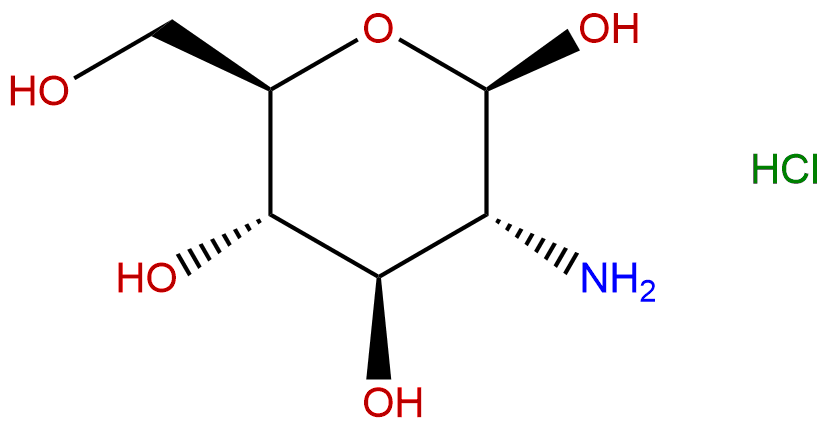
Glucosamine hydrochloride is the hydrochloride form of glucosamine, with the chemical name 2-amino-2-deoxy-D-glucose hydrochloride. Its molecular formula is C ₆ H ₁ ∝ NO ₅ · HCl, and its molecular weight is 179.1720 g/mol.
From a chemical structure perspective, its parent nucleus is a pyranose glucose ring, which differs from regular glucose in that the hydroxyl group (- OH) on the second carbon is replaced by an amino group (- NH ₂). This key modification makes it an essential precursor for the synthesis of glycosaminoglycans such as chondroitin sulfate, keratin sulfate, and hyaluronic acid. Its hydrochloride form enhances the stability and water solubility of the compound.
In terms of physical and chemical properties, glucosamine hydrochloride presents as a white to off white crystalline powder with a slightly sweet taste followed by a salty astringency. The key pharmacological parameters are as follows:
* solubility Very soluble in water, with a calculated water solubility of up to 341.63 mg/mL. This is closely related to the presence of multiple hydrophilic hydroxyl groups (- OH) and amino groups (- NH ∝⁺ Cl ⁻) in its molecular structure, ensuring good oral absorption and formulation feasibility.
* Lipophilic nature The calculated LogP value is -3.0146, indicating that it is a highly hydrophilic compound that is not easily able to penetrate the lipid bilayer Low blood-brain barrier permeability The characteristics are consistent.
* Polar Surface Area The topological polar surface area (TPSA) is 116.17 Å ², reflecting the high surface polarity of the molecule, which is consistent with its high water solubility characteristics.
* Preliminary Safety Assessment The Ames test value is 1.2 (usually considered negative if the ratio is less than 2), indicating no significant mutagenicity. In addition, existing data indicates that it No significant hERG potassium channel inhibitory activity Implying a lower risk of cardiac toxicity.
These physicochemical properties together form the basis for the excellent safety and bioavailability potential of glucosamine hydrochloride as an oral medication.
Plant sources and extraction methods
Although glucosamine is a substance that can be self synthesized in the human body (catalyzed by glucose-6-phosphate fructose transaminase), as a commercial product, it is not directly extracted from plants. In nature, glucosamine is widely present in the shells of crustaceans (such as shrimp and crabs), the cell walls of fungi (such as mushrooms), and glycoproteins of some higher plants, usually in N-acetylglucosamine or polymerized forms (such as chitin).
At present, the industrial production of glucosamine hydrochloride mainly adopts the following methods:
1. Acid hydrolysis method This is the most traditional and primary technique. Using by-products (shells) from aquatic processing such as shrimp and crab as raw materials, the main component is chitin (chitin). Firstly, use dilute alkaline solution to remove proteins and minerals (calcium carbonate), and obtain purified chitin. Subsequently, under high temperature conditions, hydrolysis was carried out using concentrated hydrochloric acid to break the β - (1,4) - glycosidic bond in the chitosan long chain, and the acetyl group was removed to generate glucosamine monomer. Finally, glucosamine hydrochloride was obtained through neutralization, concentration, crystallization and other steps. This process is mature and cost-effective, but it may involve strong acids and bases, which have a certain impact on the environment, and trace amounts of protein or inorganic salts may remain in the product.
2. Microbial fermentation method This is an increasingly valued green production process. Using genetically engineered or screened microorganisms (such as Escherichia coli, Corynebacterium glutamicum, Aspergillus niger, etc.) to directly produce glucosamine through fermentation technology. Microorganisms accumulate carbon sources such as glucose through their own pathway of synthesis and metabolism of glucosamine. The fermentation method has mild production conditions, controllable process, high product purity, and is suitable for people who are allergic to crustaceans, but the technical threshold and cost are relatively high.
3. Enzymatic hydrolysis Using specific enzymes such as chitinase and deacetylase, chitin is gradually degraded into glucosamine under mild conditions. This method has mild conditions, strong specificity, and environmental friendliness, and is the future direction of development. However, the cost of enzymes is currently high, and large-scale industrial applications still need to be breakthrough.
At present, the commercially available glucosamine hydrochloride products mainly come from the hydrolysis of crustaceans, while fermentation products are gradually occupying the high-end market due to their purity and safety advantages.
Pharmacological activity research
Numerous in vitro and in vivo studies have confirmed that glucosamine hydrochloride exhibits multifaceted pharmacological activities in osteoarthritis models, surpassing the scope of simple "nutritional supplementation".
- Cartilage protection and promotion of synthetic metabolic activity Basic research has shown that glucosamine can be taken up by chondrocytes as a substrate for synthesizing proteoglycans and glycosaminoglycans. In the chondrocyte degeneration model induced by inflammatory factors such as interleukin-1 β (IL-1 β), glucosamine can dose dependently promote the synthesis of type II collagen and proteoglycans, inhibit their degradation, and maintain the homeostasis of the extracellular matrix of chondrocytes.
- anti-inflammatory activity Glucosamine can significantly inhibit the production of pro-inflammatory mediators in OA synovium and cartilage. In cell and animal models, it can reduce the expression of cyclooxygenase-2 (COX-2) and inducible nitric oxide synthase (iNOS) induced by low-fat polysaccharides (LPS) or IL-1 β, thereby reducing the production of prostaglandin E2 (PGE2) and nitric oxide (NO). Meanwhile, it can inhibit the release of various inflammatory cytokines, such as tumor necrosis factor - α (TNF - α), IL-6, and IL-8.
- Antioxidant activation Oxidative stress is an important driving factor for the progression of osteoarthritis. Glucosamine can enhance the antioxidant defense ability of cells. Research has shown that it can increase intracellular glutathione (GSH) levels and upregulate the activity of antioxidant enzymes such as superoxide dismutase (SOD) and catalase (CAT), effectively clearing reactive oxygen species (ROS) and reducing oxidative damage to chondrocytes.
- Anti apoptotic activity Apoptosis of chondrocytes is an important cause of thinning of OA cartilage. Glucosamine protects chondrocytes from IL-1 β, NO, or mechanical stress-induced apoptosis by regulating the expression of apoptosis related proteins, such as upregulating anti apoptotic protein Bcl-2, downregulating pro apoptotic protein Bax, and inhibiting caspase-3 activation.
- Anti matrix degradation activity Glucosamine can inhibit the expression and activity of matrix metalloproteinases (MMPs) and members of the platelet reactive protein disintegrin metallopeptidase (ADAMTS) family. Especially the inhibition of MMP-1, MMP-3, MMP-13, and ADAMTS-4/5 effectively reduces the excessive degradation of collagen and proteoglycans.
Mechanism of action and molecular targets
The multiple pharmacological activities of glucosamine hydrochloride stem from its extensive regulation of the complex signaling network of OA, involving multiple key molecular targets and pathways
- Inhibition of nuclear factor kappa B (NF - κ B) signaling pathway This is the core mechanism by which glucosamine exerts anti-inflammatory effects. Inflammatory cytokines (such as IL-1 β, TNF - α) or LPS activate cell membrane receptors (such as TLR4)Initiate downstream signaling cascade, leading to inhibition of protein I κ B phosphorylation degradation, thereby releasing transcription factors NF - κ B (mainly composed of RELA/p65 subunits) Enters the nucleus and initiates the transcription of numerous inflammatory genes (COX-2, iNOS, TNF - α, IL-6, etc.) and matrix degrading enzymes (MMPs). Glucosamine can effectively block the degradation of I κ B and the nuclear translocation of NF - κ B p65, thereby inhibiting the amplification of inflammatory reactions upstream.
- Activate the nuclear factor E2 related factor 2 (Nrf2)/antioxidant response element (ARE) pathway This is a key pathway for its antioxidant stress response. In the resting state, Nrf2 binds to Keap1 and is degraded by ubiquitination. Glucosamine may promote Keap1 by modifying its thiol group or activating upstream kinases Nrf2(NFE2L2) Dissociation with Keap1 and transfer to the nucleus, binding with ARE, initiating the transcription of a series of phase II detoxifying enzymes and antioxidant proteins (such as HO-1, NQO1, GCLC), thereby enhancing the overall antioxidant capacity of the cell.
- Regulating the AMP activated protein kinase (AMPK) signaling pathway:AMPK(PRKAA1) It is a key regulator of cellular energy metabolism and autophagy. In OA, AMPK activity is often inhibited. Research has shown that glucosamine can activate AMPK. The activation of AMPK can inhibit the activity of NF - κ B and exert anti-inflammatory effects; On the other hand, it can induce cellular autophagy, clear damaged organelles, maintain chondrocyte homeostasis, and may exert a protective effect by affecting cellular metabolism.
- Regulating the apoptotic pathway of cells Glucosamine is upregulated Bcl-2 To maintain mitochondrial membrane stability and prevent the release of cytochrome C, thereby inhibiting the initiation of caspase cascade reactions (such as Caspase-1, -3)Ultimately, it resists programmed cell death of chondrocytes.
- Affects the synthesis pathways of other inflammatory mediators Glucosamine can also directly or indirectly inhibit the production of other pro-inflammatory mediators. For example, it may affect 5-Lipoxygenase (ALOX5) Pathway, reducing the production of inflammatory mediators such as leukotrienes; By inhibiting Prostaglandin E synthase (PTGES) Reduce the activity and ultimately decrease the synthesis of PGE2.
- Directly inhibit matrix degrading enzymes In addition to transcriptional regulation, studies suggest that glucosamine or its metabolites may have an impact on MMP-1 There is a certain direct inhibitory effect on enzyme activity.
In summary, glucosamine hydrochloride does not act on a single target, but rather exerts a potential disease modifying effect on osteoarthritis through a multi target, multi pathway network that promotes synthesis, inhibits degradation, reduces inflammation, resists oxidation and apoptosis, and other dimensions.
Evaluation of drug properties and pharmacokinetics
Glucosamine hydrochloride, as an oral dietary supplement and prescription drug (in some countries), has been widely studied for its pharmacological characteristics and pharmacokinetic behavior.
- absorb After oral administration, glucosamine hydrochloride is rapidly and well absorbed in the gastrointestinal tract. Its absorption mechanism mainly combines active transport and passive diffusion. Due to the high polarity of the molecules, the reported absolute bioavailability varies (about 20-50%), but long-term use can achieve effective concentrations in articular cartilage. Food may delay but not significantly reduce its absorption.
- distribution After absorption, the drug is widely distributed in various tissues, especially in the liver, kidneys, and articular cartilage. Due to its high hydrophilicity and low LogP value, it is difficult to pass through blood-brain barrier The distribution of the central nervous system is extremely rare, which is consistent with its good central safety. In articular cartilage, glucosamine can be specifically taken up and utilized by chondrocytes.
- Metabolism The metabolism of glucosamine in the body is relatively simple. Most drugs work in their original form. Part of it undergoes metabolism in the first pass effect of the liver, mainly through the synthesis of glycosaminoglycans and glycoproteins; 2) Generate UDP-N-acetylglucosamine and other products through the biosynthesis pathway of hexosamine; 3) A small amount may be oxidized or degraded.
- excretion Mainly excreted through the kidneys and urine, with some being excreted through respiration in the form of carbon dioxide. The elimination half-life is about several hours and supports daily divided dosing regimen.
- safety Long term clinical use has shown that glucosamine hydrochloride has good safety. Common adverse reactions are mild, including gastrointestinal discomfort (bloating, indigestion), headache, drowsiness, or rash. It has no obvious HERG inhibition Activity and mutagenicity(Ames test negative)This further supports the safety of its long-term use. It is worth noting that it comes from crustaceans, and those who are severely allergic to seafood should use it with caution.
Clinical application prospects and prospects
The clinical application of glucosamine hydrochloride in osteoarthritis presents both prospects and challenges.
- Current clinical status and controversy Multiple randomized controlled trials (RCTs) and meta-analyses have inconsistent conclusions regarding its efficacy. Some high-quality studies, such as the GAIT trial, have shown that it has no significant difference in relieving OA pain and improving joint function compared to placebo, or only has moderate effects on patients with moderate to severe pain. However, many other studies and long-term observational data suggest that continuous use (especially in sulfate form, but hydrochloride also shows efficacy) can effectively alleviate pain, improve function, and may delay the imaging progression of joint stenosis. The controversy may stem from differences in research design, drug source, dosage, treatment duration, heterogeneity of OA patients, and efficacy evaluation indicators.
- Future research directions and prospects:
- Precision Medicine and Biomarkers Future research needs to identify OA subtype patients who respond to glucosamine therapy (such as inflammatory phenotype, metabolic phenotype), and search for biomarkers that can predict therapeutic efficacy to achieve personalized treatment.
- Combination therapy strategy Given the multifactorial pathogenesis of OA, the combination of glucosamine hydrochloride with other drugs with synergistic effects is an important direction. For example, the combination with chondroitin sulfate (often used as a compound) may provide a more comprehensive matrix synthesis material; Combined use with diacerein (IL-1 inhibitor) may enhance anti-inflammatory effects; The combination with natural antioxidants such as curcumin and resveratrol may be more effective in controlling oxidative stress.
- New delivery system To improve bioavailability and targeting, the development of novel drug delivery systems, such as nanoparticles, liposomes, or local transdermal formulations, may enable more effective drug enrichment in diseased joints and enhance therapeutic efficacy.
- Confirmation of disease modifying effects More rigorous and longer cycle RCTs (such as 2-3 years or more) need to be designed, using more sensitive imaging techniques (such as MRI cartilage quantification) and molecular biomarkers to confirm whether they can truly delay or prevent the structural progression of OA, i.e. their DMOAD potential.
- Expand the exploration of indications Based on its anti-inflammatory and cartilage protective mechanisms, the research value of glucosamine in other arthritis fields (such as cartilage protective adjuvant therapy for rheumatoid arthritis), tendinopathy, and even intestinal inflammation is also worth exploring.
Conclusion
Glucosamine hydrochloride, as a natural product with a long history and excellent safety, has surpassed the simple concept of nutritional supplementation in the treatment of osteoarthritis. Modern pharmacological research has revealed that it exerts multiple network pharmacological effects, including anti-inflammatory, antioxidant, anti apoptotic, and cartilage protection, by regulating multiple key signaling pathways such as NF - κ B, Nrf2, AMPK, and acting on multiple molecular targets such as TLR4, BCL2, and MMP1. Although there is still academic controversy over its clinical efficacy, this precisely reflects the complexity of osteoarthritis disease and the challenges of clinical research. Its excellent medicinal properties and long-term safety record have laid the foundation for its sustained application. In the future, through precise patient stratification, optimized combination therapy, innovative drug delivery technologies, and more rigorous long-term clinical research, glucosamine hydrochloride is expected to establish a clearer and more important position in the disease modifying treatment strategy of osteoarthritis, providing a safe and effective comprehensive management option for billions of OA patients worldwide.