| Catalog No | Package | Original Price | Price | Inventory | Quantity | Operating |
|---|---|---|---|---|---|---|
| BP1430-100mg | 100mg | $30.00 | Sign in |
|


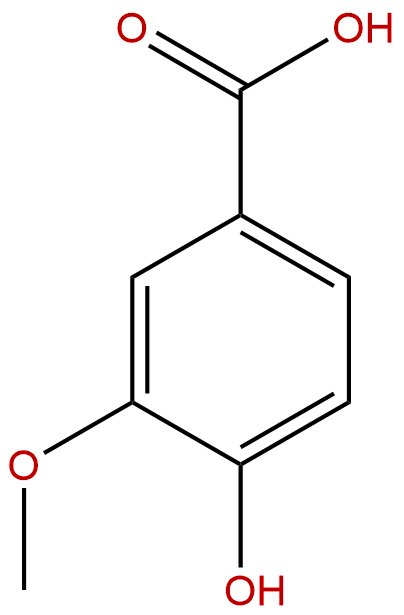
Product name: Vanillic acid
Synonym name: 4-Hydroxy-3-methoxybenzoic acid
Catalogue No.: BP1430
Cas No.: 121-34-6
Formula: C8H8O4
Mol Weight: 168.148
Botanical Source: Prod. of alkaline oxid. of chlorite-treated woodpulp. Isol. in free state from various higher plants
Physical Description: Powder
Type of Compound: Phenols
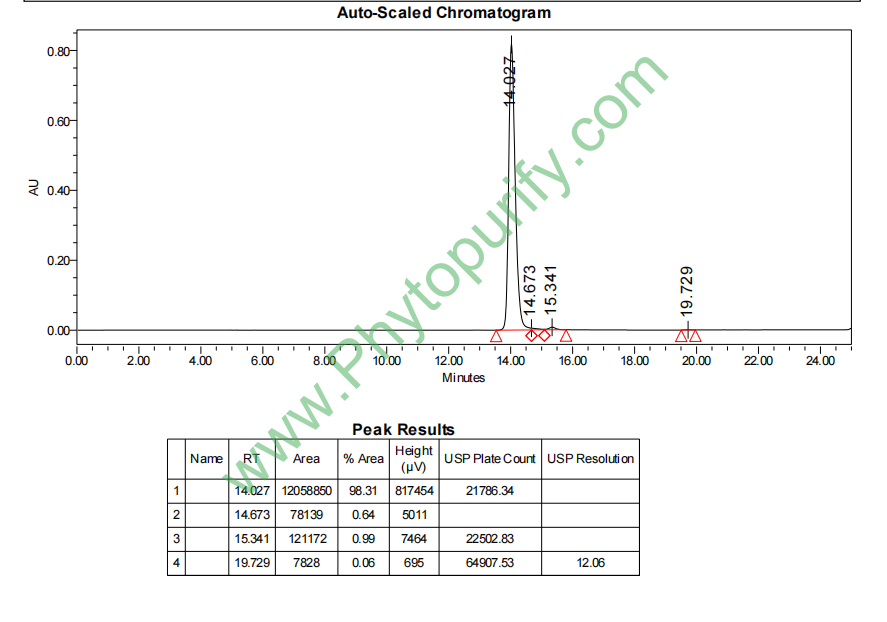
Purity: 95%~99%
Analysis Method: HPLC-DAD or/and HPLC-ELSD
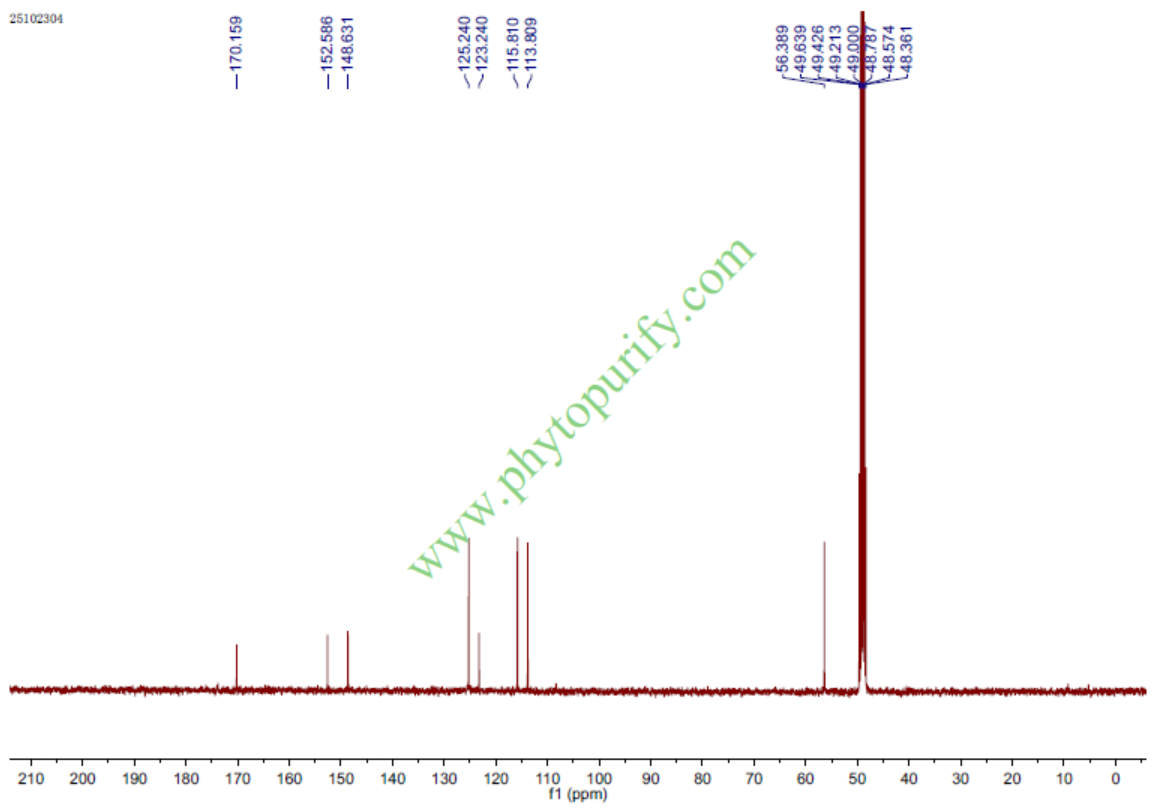
Identification Method: Mass, NMR
Packing: Brown vial or HDPE plastic bottle
Storage: Store in a well closed container, protected from air and light. Put into refrigerate or freeze for long term storage.
Whenever possible, you should prepare and use solutions on the same day. However, if you need to make up stock solutions in advance, we recommend that you store the solution as aliquots in tightly sealed vials at -20℃. Generally, these will be useable for up to two weeks.
The product could be supplied from milligrams to grams, up to kilograms
Inquire for bulk scale.
Descriptions:
Vanillic acid is a potent free radical scavenger, thus, it exerts protective effects in isoproterenol induced cardiotoxic rats due to its free radical scavenging, antioxidant and anti-inflammatory properties. [1]
Vanillic acid has inhibitory effect on methylglyoxal-mediated glycation in apoptotic Neuro-2A cells.[2]
Vanillic acid has hepatoprotective effect on CCl4-induced liver injury.[3]
References:
[1] Prince P S M, Rajakumar S, Dhanasekar K. Eur J Pharmacol, 2011, 668(1–2):233-40.
[2] Huang S M, Hsu C L, Chuang H C, et al. Neurotoxicology, 2008, 29(6):1016-22.
[3] Itoh A, Isoda K, Kondoh M, et al. Biol Pharm Bull, 2010, 33(6):983-7.
[4] Li K, Jia Y, Bi K, et al. Yakugaku Zasshi , 2004, 124(7):465-8.
NMR of Vanillic acid
HPLC of Vanillic acid
Storage conditions:Short-term storage at 2~8℃, long-term storage at -20 ~ -80℃
66.7600
1.5935
-1.1887
3.4199
4.2689
5.6778
Low
80.8679
1.5422
Yes
No
No
No
Yes
No
0.0
Yes
No
Yes
No
Vanillic acid, also known as 4-hydroxy-3-methoxybenzoic acid, is a widely occurring derivative of benzoic acid in nature, with a CAS number of 121-34-6. As an important secondary metabolite of plants, it is not only a key flavoring substance in many edible plants, spices (such as vanilla beans), and fruits, but also found in the roots of traditional medicinal plants such as Angelica sinensis. For a long time, vanillic acid has been considered a safe food additive and flavoring ingredient due to its mild aroma and flavor. However, with the deepening of modern pharmacological research, its extensive biological activity beyond seasoning function has gradually been revealed, making it a hot topic molecule in the field of natural product pharmacology research.
Modern research has shown that vanillic acid exhibits multiple pharmacological potentials, including significant anti-inflammatory, antibacterial, antioxidant, neuroprotective, anti-tumor, and cardiovascular protective activities. Among them, its ability to inhibit the activation of the nuclear factor kappa B (NF - κ B) signaling pathway is considered a key molecular basis for its core anti-inflammatory effects. NF - κ B is a core transcription factor that regulates inflammatory response, cell proliferation, and apoptosis. Its abnormal activation is closely related to various pathological processes such as chronic inflammation, autoimmune diseases, and cancer. Therefore, vanillic acid, as a natural inhibitor of NF - κ B, has important intervention value.
Of particular note is that vanillic acid exhibits clear effects in combating oxidative stress damage. Oxidative stress is a state caused by the imbalance between the production and elimination of reactive oxygen species (ROS), and is the common pathological basis of aging, neurodegenerative diseases (such as Alzheimer's disease, Parkinson's disease), metabolic syndrome, atherosclerosis and other diseases. Vanillin acid can activate the cell defense system centered around nuclear factor E2 related factor 2 (NRF2, encoded by NFE2L2 gene), upregulate the expression of a series of antioxidant enzymes and phase II detoxifying enzymes, thereby enhancing the antioxidant capacity of cells and protecting them from oxidative damage. This mechanism has shown great potential in the prevention and treatment of oxidative stress-related diseases.
This article aims to provide a systematic review of the chemical properties, natural sources, pharmacological activities, molecular mechanisms of action, pharmacological characteristics, and clinical application potential of oxalic acid, in order to provide scientific references for the deep development and utilization of this natural product.
The chemical structure of vanillic acid is relatively simple, it is a hydroxymethoxy substituted derivative of benzoic acid, and its systematic name is 4-hydroxy-3-methoxybenzoic acid. Its molecular formula is C8H8O4 and its molecular weight is 168.15 g/mol. Structurally, the para position (position 4) of the benzene ring is connected to a hydroxyl group (- OH), the meta position (position 3) is connected to a methoxy group (- OCH3), and the carboxyl group (- COOH) is connected to position 1 of the benzene ring. The substitution mode of adjacent methoxy to para hydroxyl groups is an important structural basis for its biological activity, which not only affects its electron distribution and hydrogen bonding ability, but also determines its interaction with specific biological targets.
From the perspective of physical and chemical properties, vanillic acid usually appears as white to slightly yellow needle shaped crystals or crystalline powders. Its melting point is around 210 ° C. In terms of pharmacological parameters, its lipid water partition coefficient (LogP) is about 1.59, indicating that it has a certain degree of lipophilicity, but overall it still leans towards hydrophilicity. Its topological polar surface area (TPSA) is 66.76 Å ², reflecting the proportion of polar groups (oxygen atoms in carboxyl, hydroxyl, and methoxy groups) in the surface area of the molecule. Vanillin acid is slightly soluble in cold water, but easily soluble in organic solvents such as hot water, ethanol, and ether. Its calculated water solubility is about 3.42 mg/mL. These properties collectively affect its absorption, distribution, and metabolic processes within living organisms.
The phenolic hydroxyl group in the structure of vanillic acid gives it the ability to provide hydrogen protons, which is the chemical basis for its main antioxidant activity. It can exert antioxidant effects by directly scavenging free radicals (such as DPPH free radicals, ABTS free radical cations) or chelating metal ions. In addition, its carboxyl and phenolic hydroxyl groups make it easy to form hydrogen bonds and participate in interactions with various enzymes or receptors.
Vanillic acid is widely distributed in the plant kingdom, both in the form of free acids and often in the form of glycosides (such as vanillic acid glucoside) or esterified with other molecules.
Main plant sources:
1. Spices and edible plants The most well-known source is Vanilla planifolia, but its content in beans is not the highest. It is widely present in various daily diets, such as whole grains (oats, corn), fruits (kiwi, strawberries), vegetables (tomatoes, olives), nuts, as well as fermented products such as tea, wine, beer, etc.
2. medicinal plants Many plants used in traditional medical systems are rich in vanillic acid. For example, the roots of traditional Chinese medicine Angelica sinensis contain a high content of vanillic acid, which may be related to its effects of nourishing blood, promoting blood circulation, regulating menstruation, and relieving pain. In addition, it has also been detected in various medicinal plants such as Ganoderma lucidum, Houttuynia cordata, and centella asiatica.
3. Other sources Vanillic acid is also one of the products of lignin biodegradation, so it can also be found in some wood processing by-products or microbial fermentation broths.
Extraction and Separation Methods:
Obtaining vanillic acid from plant materials usually follows the conventional process of natural product chemistry.
1. Solvent extraction method The most commonly used preliminary extraction method. According to the properties of the raw materials and subsequent processes, solvents of different polarities can be selected, such as methanol, ethanol, acetone, or water (especially hot water). Ultrasound assisted extraction and microwave-assisted extraction can significantly improve extraction efficiency and shorten time.
2. Separation and purification After filtration and concentration, the crude extract needs further separation and purification. The commonly used methods include:
* Liquid-liquid extraction Enrich by utilizing the difference in distribution coefficients of vanillic acid in different polar solvents.
* column chromatography This is a key step in obtaining high-purity vanillic acid. Silica gel, reverse phase C18 packing, or macroporous adsorption resin are commonly used as stationary phases for gradient elution with different ratios of organic solvents (such as petroleum ether ethyl acetate, methanol water).
* Crystallization method The use of temperature differences in the solubility of vanillic acid in specific solvents (such as hot water) for recrystallization is a classic method for obtaining high-purity crystals.
* Modern preparation technology High speed countercurrent chromatography (HSCCC) and preparative high-performance liquid chromatography (Prep HPLC) have become powerful tools for laboratory scale preparation of high-purity vanillic acid standards or in-depth biological research due to their high resolution and high recovery rates.
With the popularization of green chemistry concepts, environmentally friendly technologies such as supercritical CO2 extraction are also being explored, but their costs are relatively high.
Numerous in vitro and in vivo studies have confirmed that vanillic acid has diverse pharmacological activities, demonstrating its potential in multiple disease prevention and treatment fields.
1. Antioxidant activity
This is one of the most widely studied activities of vanillic acid. At the chemical level, it can effectively scavenge various free radicals such as DPPH, ABTS, superoxide anions, hydroxyl radicals, etc. In cell and animal models, vanillic acid can significantly alleviate oxidative damage induced by exogenous stimuli such as hydrogen peroxide (H2O2), paraquat, and radiation. For example, in models of liver cells, neurons, myocardial cells, etc., vanillic acid pretreatment can improve cell survival rate, reduce the level of lipid peroxidation product malondialdehyde (MDA), and increase the content of endogenous antioxidants such as glutathione (GSH).
2. Anti inflammatory activity
Vanillin acid can effectively downregulate the expression of various pro-inflammatory mediators by inhibiting the NF - κ B pathway. In the lipopolysaccharide (LPS) - induced macrophage (such as RAW 264.7) inflammation model, vanillic acid can dose dependently inhibit the production of nitric oxide (NO) and prostaglandin E2 (PGE2), as well as the protein expression of inducible nitric oxide synthase (iNOS) and cyclooxygenase-2 (COX-2). At the same time, the secretion of cytokines such as tumor necrosis factor - α (TNF - α), interleukin-6 (IL-6), and IL-1 β was significantly inhibited. Vanillic acid also showed good anti-inflammatory effects in rat paw swelling, arthritis and other in vivo inflammatory models induced by carrageenan or Freund's complete adjuvant.
3. Antibacterial activity
Vanillin acid has inhibitory effects on various bacteria and fungi. Research has shown that it has a certain inhibitory effect on common pathogens such as Staphylococcus aureus, Bacillus subtilis, Escherichia coli, Pseudomonas aeruginosa, as well as fungi such as Candida albicans. Its antibacterial mechanism may involve disrupting the integrity of microbial cell membranes, interfering with energy metabolism, or inhibiting biofilm formation.
4. Neuroprotective activity
Based on its strong antioxidant and anti-inflammatory properties, vanillic acid has shown protective effects in neurological disease models. In Alzheimer's disease models, it can alleviate beta amyloid induced neurotoxicity and improve memory and cognitive function deficits. In Parkinson's disease models, it can protect dopaminergic neurons from damage by neurotoxins such as MPTP/MPP+. In the model of cerebral ischemia/reperfusion injury, vanillic acid can reduce the area of cerebral infarction and alleviate neurological deficits.
5. Cardiovascular protective activity
Vanillin acid has multiple benefits for the cardiovascular system. It can improve atherosclerosis induced by high-fat diet and reduce the formation of arterial plaque. Its mechanism is related to lowering blood lipid, antioxidation and inhibiting vascular endothelial inflammatory reaction. In addition, it can alleviate myocardial ischemia/reperfusion injury and improve cardiac function.
6. Antitumor activity
Some studies suggest that vanillic acid can inhibit the proliferation and promote apoptosis of some cancer cell lines (such as breast cancer, liver cancer, colon cancer cells), but its anti-tumor activity is generally weaker than its structural analog (such as vanillin), and the specific mechanism and in vivo effectiveness still need more research to confirm.
The multiple pharmacological activities of vanillic acid stem from its regulation of key intracellular signaling pathways, and its core mechanism of action revolves around anti-oxidative stress and anti-inflammatory Two main themes unfold.
1. Activate the NRF2/ARE antioxidant defense pathway (core mechanism)
This is the most important molecular mechanism of vanillic acid in combating oxidative damage. Nuclear factor E2 related factor 2 (NRF2) is the main transcription factor that regulates cellular redox balance. In the resting state, NRF2 binds to its inhibitory protein Keap1 in the cytoplasm and is degraded by ubiquitination. When stimulated by oxidative stress or electrophilic compounds such as vanillic acid, the conformation of Keap1 changes and releases NRF2. NRF2 subsequently translocates to the nucleus and binds to antioxidant response elements (ARE), initiating the transcription of a series of cell protective genes.
Vanillin acid has been proven to effectively activate NRF2. The downstream target genes include:
* antioxidant enzyme Superoxide dismutase (SOD1, SOD2), catalase (CAT), glutathione peroxidase (GPX1). These enzymes form the first line of defense, directly clearing ROS such as superoxide anions and hydrogen peroxide.
* Phase II detoxifying enzyme Heme oxygenase-1 (HMOX1) is one of the most important representatives. HMOX1 catalyzes the degradation of hemoglobin into biliverdin, carbon monoxide, and iron ions. biliverdin and its reduced product bilirubin are potent endogenous antioxidants. In addition, it also includes glutathione S-transferase (GST), quinone oxidoreductase 1 (NQO1), etc., which jointly promote the metabolism and detoxification of toxic electrophilic substances and oxidative products.
Through this pathway, vanillic acid systematically enhances the intrinsic ability of cells to resist oxidative and electrophilic attacks.
2. Inhibit the NF - κ B inflammatory pathway
NF - κ B is the "master switch" of the inflammatory response. Under stimulation by TNF - α, IL-1 β, or LPS, its inhibitory protein I κ B is phosphorylated and degraded, activating NF - κ B (usually p65/p50 dimer) and entering the nucleus, initiating pro-inflammatory gene transcription. Vanillin acid can inhibit the phosphorylation and degradation of I κ B, thereby preventing the nuclear translocation of NF - κ B. This leads to the inhibition of the expression of downstream pro-inflammatory mediators such as iNOS, COX-2, TNF - α, IL-6, IL-1 β, etc. It is worth noting that there is a "crosstalk" between the activation of NRF2 and the inhibition of NF - κ B. Activated NRF2 can negatively regulate NF - κ B signaling in multiple ways, and vanillic acid may act on both key nodes simultaneously, forming a synergistic anti-inflammatory and antioxidant network.
3. Other potential targets and pathways
In addition to the core pathways mentioned above, research also suggests that vanillic acid may exert its effects through other mechanisms, such as:
* Activate AMPK pathway AMPK is a receptor for cellular energy metabolism, and its activation can promote fatty acid oxidation and inhibit inflammation. Vanillin acid may participate in its metabolic regulation and cardiovascular protection by activating AMPK.
* Regulating the MAPK pathway The mitogen activated protein kinase (MAPK) family (such as ERK, JNK, p38) is involved in the regulation of cellular stress, proliferation, and apoptosis. The regulation of its activity by vanillic acid may affect its cell protective or anti proliferative effects.
* Mitochondrial function regulation As an antioxidant, vanillic acid may protect mitochondrial function by stabilizing mitochondrial membrane potential and reducing mitochondrial ROS production.
Although vanillic acid has a wide range of biological activities, whether it can be developed into a drug or functional ingredient still requires a systematic evaluation of its drug like and pharmacokinetic (PK) properties.
Analysis of drug properties parameters:
According to the provided parameters, vanillic acid exhibits some favorable medicinal properties:
* Molecular weight (168.15)Far less than 500 Da, it meets the Lipinski "Five Rules" for the molecular weight requirements of oral drugs and is conducive to transmembrane absorption.
* LogP(~1.59)Between 1-3, it indicates moderate lipophilicity, which can ensure a certain membrane permeability without causing distribution or metabolic problems due to high lipid solubility.
* TPSA(66.76 Ų)Less than 140 Å ² is beneficial for cell infiltration and oral absorption.
* Water solubility (~3.42 mg/mL)Belonging to slightly soluble, but sufficient to form the required concentration for absorption in the gastrointestinal tract.
* Preliminary safety warning HERG inhibition is' no ', indicating a low risk of potential cardiac toxicity (inducing long QT syndrome). The Ames test result is 0.0, which preliminarily indicates that it has no mutagenicity under the conditions of this experiment, but more complete genetic toxicity testing is needed to confirm.
* Blood-brain barrier (BBB) permeability Annotated as' low '. This is a challenge for the treatment of central nervous system diseases, which means that the efficiency of prototype drugs entering the brain may be limited. This suggests that in the future, if neuroprotective drugs are developed, it may be necessary to improve their BBB penetration ability through structural modification (prodrug preparation) or the use of drug delivery systems.
Pharmacokinetic study:
Animal and limited human studies provide a preliminary understanding of the PK characteristics of vanillic acid:
* absorb After oral administration, it can be absorbed in the gastrointestinal tract, but its absorption rate and degree are affected by factors such as dosage form and food. Its moderate LogP is conducive to passive diffusion absorption.
* distribution After absorption, it is widely distributed throughout the body, but as mentioned earlier, the amount entering the central nervous system may be relatively small. The binding rate data with plasma proteins is not yet complete.
* Metabolism Vanillin acid mainly undergoes in the body Combination reaction Its phenolic hydroxyl and carboxyl groups are easily bound to glucuronic acid or sulfuric acid, forming corresponding glucuronic acid glycosides or sulfate ester complexes. This is a typical metabolic elimination pathway for phenolic compounds and the main reason for their typically short half-life in vivo.
* excretion Metabolites are mainly rapidly excreted from the body through the kidneys and urine. The prototype drug was also detected in small amounts in urine.
Overall, vanillic acid exhibits typical phenolic acid compound PK characteristics: oral absorption, but significant first pass effect, rapid metabolism, short half-life, and possibly low bioavailability. This poses challenges for its development as a drug, but also provides a basis for its safety as a dietary supplement or functional food ingredient (less likely to accumulate in the body).
Vanillin acid, as a safe and widely available natural active molecule, can be explored from multiple dimensions for its clinical application development:
1. As a dietary supplement or functional food ingredient
This is the most direct and easy to implement conversion path. By utilizing its antioxidant and anti-inflammatory properties, it can be developed to assist in improving chronic low-grade inflammation, delaying aging, and enhancing the body's antioxidant defense capabilities. Can be added to specialty foods, sports nutrition products, or daily health products.
2. Optimize the structure as a lead compound
In response to its pharmacological shortcomings, such as low BBB penetration, fast metabolism, and low bioavailability, medicinal chemists can use vanillic acid as the parent nucleus for structural modification. For example, by esterification, amidation, or preparation of prodrugs to mask their carboxyl or phenolic hydroxyl groups, their lipid solubility, BBB penetration, or metabolic stability can be improved, leading to the development of more promising new drug molecules.
3. Application prospects in adjuvant therapy for specific diseases
* Neurodegenerative diseases Although BBB permeability is a barrier, its strong NRF2 activation ability has clear pathological significance for diseases such as Alzheimer's and Parkinson's. Research can focus on developing nano drug delivery systems (such as liposomes, polymer nanoparticles) that can promote their entry into the brain, or searching for their active metabolites that can penetrate the BBB.
* Metabolic diseases and cardiovascular diseases: In diabetes, nonalcoholic fatty liver, atherosclerosis and other diseases closely related to oxidative stress and inflammation, vanillic acid can play a systemic protective role by oral administration and has the potential of adjuvant treatment.
* Inflammatory bowel disease (IBD)After oral administration, it can reach a high concentration locally in the intestine and directly act on the intestinal mucosa. Its anti-inflammatory and antioxidant effects may be beneficial for relieving symptoms such as ulcerative colitis and Crohn's disease.
4. Combination therapy
Vanillin acid may have a synergistic effect with other drugs such as conventional anti-inflammatory drugs and chemotherapy drugs, reducing their dosage or side effects. For example, its antioxidant properties may protect normal cells from oxidative damage caused by chemotherapy drugs.
Challenges and Future Research Directions:
* In depth study on the mechanism of action It is necessary to elucidate the synergistic relationship of multi-target effects in more complex animal models of diseases and at a finer cellular signaling network level.
* Preclinical and clinical evaluation of the system Currently, there is a lack of high-quality human clinical trial evidence. In the future, standardized clinical studies on pharmacokinetics, safety, and efficacy are needed.
* Strategies for improving bioavailability Developing new formulation technologies (such as solid dispersions, cyclodextrin inclusion complexes, nanocrystals, self microemulsion systems, etc.) to improve their solubility and oral bioavailability is the key to promoting their application.
* Source and Sustainable Production In addition to plant extraction, exploring the efficient and green production of vanillic acid using microbial fermentation or synthetic biology techniques is also an important direction to ensure its large-scale application.
Vanillin acid, a simple phenolic acid derived from daily diet and traditional herbs, has risen from a simple seasoning to an important object in natural product pharmacology research due to its wide plant sources, good safety, and multifaceted pharmacological activities. Its core value lies in its ability to intervene in the pathological core of oxidative stress and chronic inflammation by activating the endogenous antioxidant defense system mediated by NRF2 and inhibiting the inflammatory response driven by NF - κ B from the root. Despite facing challenges such as rapid metabolism and low blood-brain barrier permeability in drug development, these have not obscured its enormous potential as a functional ingredient, lead compound, or adjuvant therapy.
Future research should aim to deepen the understanding of its molecular mechanism network, overcome its pharmaceutical deficiencies through modern pharmaceutical and medicinal chemistry methods, and ultimately verify its exact effectiveness in the prevention and treatment of human diseases through rigorous clinical studies. The research example of vanillic acid fully demonstrates that there are countless structurally simple yet functionally powerful molecules in nature, which are not only tools for exploring life processes, but also valuable sources for developing new prevention and treatment strategies. With the deepening of interdisciplinary integration, vanillic acid is expected to play a more important role in nutritional intervention, disease prevention, and adjuvant therapy, contributing its unique value to human health.
