Introduction/Overview
Colchicine, as a classic anti-inflammatory and anti gout drug, has been clinically used for over a thousand years. However, its significant toxic side effects such as bone marrow suppression and gastrointestinal reactions limit its wider application. Therefore, in-depth research on its metabolic processes and the biological activity of metabolites in vivo is of great value for developing safer and more effective derivative drugs. Colchicine, also known as 3-demethylated colchicine, is one of the main active metabolites of colchicine produced by cytochrome P450 enzymes (mainly CYP3A4) in human and animal bodies. Compared to its parent compound, Genshin alkaloid exhibits different toxicological and pharmacokinetic characteristics while retaining its core pharmacological activity, especially in the fields of anti-tumor and anti fibrosis, demonstrating unique potential. In recent years, with the development of molecular pharmacology and structural biology, the understanding of the mechanism of action of protoporphyrin has expanded from traditional microtubule inhibition to the regulation of various key signaling pathways and apoptosis related proteins. This article aims to provide a systematic review of the chemical properties, plant sources, pharmacological activities, multi-target mechanisms of action, medicinal properties, and clinical application prospects of original narcissus alkaloids, in order to provide comprehensive academic references for the in-depth development and transformation research of this natural product derivative.
Chemical structure and physicochemical properties
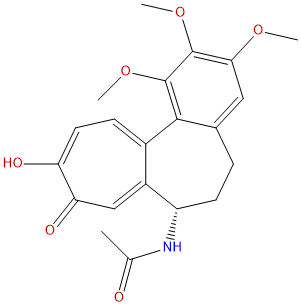
The molecular formula of Yuanshui Xianjian (CAS number: 477-27-0) is C21H23NO6, with a molecular weight of 385.4160. Its chemical structure is based on the tricyclic core skeleton of colchicine (7-membered carbon ring A, 7-membered nitrogen-containing B ring, and 6-membered carbon ring C), but the key difference from colchicine is that the methoxy group (- OCH3) at the third position of the C ring is replaced by a hydroxyl group (- OH), which undergoes demethylation reaction. Although this structural modification is small, it significantly changes its physicochemical properties and biological activity.
From the perspective of physical and chemical parameters, the calculated lipid water partition coefficient (LogP) of raw water alkaloids is 1.2118, indicating moderate lipophilicity, but lower than colchicine (LogP of about 1.9), suggesting a slight increase in hydrophilicity. Its topological polar surface area (TPSA) is 94.09 Å ², reflecting the presence of polar groups such as hydroxyl and carbonyl groups in the structure. The theoretical water solubility is about 0.3286 mg/mL, which belongs to the category of slight solubility. These properties collectively affect its distribution within the body: its blood-brain barrier (BBB) permeability is predicted to be "low," meaning it is less likely to enter the central nervous system, which may help reduce potential neurotoxicity. In early toxicology screening, the Ames test result of the original water alkaloid was 0.6 (usually considered to be potentially mutagenic positive if>1.5), indicating a low risk of mutagenicity; At the same time, it has no significant inhibitory effect on hERG potassium channels, indicating a lower risk of causing QT interval prolongation in the heart. These provide preliminary evidence for its relatively good safety characteristics.
Plant sources and extraction methods
Raw water alkaloid is not a native compound abundant in plants, but is mainly recognized as a metabolic product of colchicine in the body. Its direct plant source is the same as that of colchicine, mainly found in the genus Colchicine in the family Liliaceae(Colchicum)Plants, such as autumn daffodils(Colchicum autumnale)In the corms and seeds, as well as in the genus Magnolia(Gloriosa)Shanci mushroom genus(Iphigenia)Waiting in the plants. In these plants, colchicine is produced through a biosynthetic pathway, while protonarcissine may exist in trace amounts or as a biosynthetic intermediate.
There are two main ways to obtain original narcissus alkaloids in the laboratory:
1. Plant extraction and semi synthesis Firstly, extract colchicine from the material of autumn narcissus plants. Common methods include extraction with organic solvents such as methanol and ethanol, concentration, and purification using chromatographic techniques such as silica gel column chromatography and high-performance liquid chromatography. After obtaining high-purity colchicine, its C-3 methoxy group can be converted to a hydroxyl group through selective chemical demethylation reaction (such as using demethylating reagents such as boron tribromide) to obtain raw colchicine. This method is the main way of laboratory preparation.
2. Biotransformation method Biocatalytic demethylation of colchicine using microbial or hepatic microsomal enzyme systems. This method has mild conditions and more green chemical characteristics, but conversion rate and product separation and purification are technical challenges.
Regardless of the method used, the obtained original narcissus alkaloid must undergo rigorous structural confirmation through techniques such as nuclear magnetic resonance (NMR) and mass spectrometry (MS).
Pharmacological activity research
Raw water alkaloids inherit some of the core pharmacological activities of colchicine and exhibit unique advantages in certain aspects.
-
Anti inflammatory and anti fibrotic activity This is one of the earliest activities that attracted attention in the field of raw water alkaloids. Research has shown that Genshin alkaloids can effectively protect rats from acute liver injury and chronic liver fibrosis induced by chemicals such as carbon tetrachloride and thioacetamide. Its mechanism of action is not limited to inhibiting microtubule polymerization to interfere with inflammatory cell migration and collagen secretion, but also involves antioxidant stress and inhibition of pro fibrotic cytokines. Compared to colchicine, it has shown considerable efficacy in anti fibrotic models, but its systemic toxicity may be lower, providing clues for its treatment of fibrotic diseases in organs such as the liver and lungs.
-
Antitumor activity: Protonarcissus has a broad spectrum of anti-tumor activity in vitro, which can inhibit the proliferation of a variety of cancer cell lines (such as breast cancer, liver cancer, colon cancer, leukemia, etc.). Its anti-tumor effect intensity is usually slightly lower than that of colchicine, but the improvement of the treatment window (the ratio of effective dose to toxic dose) is its potential advantage. Research has shown that it can induce cancer cell cycle arrest (mainly in the G2/M phase) and trigger caspase dependent and non dependent apoptotic pathways. It is worth noting that it still exhibits activity against certain tumor cells that are resistant to colchicine, indicating differences in its mechanism of action.
-
The relieving effect on acute gout attacks As an active metabolite of colchicine, matrine itself also has anti gout activity. It inhibits microtubule aggregation, interferes with neutrophil chemotaxis, adhesion, and phagocytosis, thereby reducing inflammation in the joint cavity. Although there are few clinical studies on its direct use in the treatment of gout, it contributes to the partial therapeutic effect of colchicine in the body.
Mechanism of action and molecular targets
The mechanism of action of Genshin alkaloids has multi-target characteristics, surpassing simple microtubule interference.
-
Classic target: microtubule protein Similar to colchicine, matrine can reversibly bind to the colchicine binding site of microtubules, inhibiting microtubule polymerization into microtubules and disrupting the dynamic balance of the cytoskeleton. This directly leads to the obstruction of mitotic spindle formation, causing the cell cycle to stagnate in mid division, which is the basis for its anti proliferative and anti-inflammatory (inhibiting leukocyte migration) effects.
-
Apoptosis regulation related targets:
- BCL2 family proteins Raw water alkaloids can downregulate the expression or function of anti apoptotic proteins BCL2 and MCL1, while possibly upregulating pro apoptotic proteins, thereby reducing mitochondrial membrane potential, promoting cytochrome C release, and activating endogenous apoptotic pathways.
- STAT3 signaling pathway Signal transducer and activator of transcription factor 3 (STAT3) is an important oncogene. Genshin alkaloids have been shown to inhibit the phosphorylation (activation) of STAT3 and the expression of downstream target genes such as Survivor and Cyclin D1, thereby suppressing tumor cell survival, proliferation, and angiogenesis.
-
Cell invasion and metastasis related targets:
- Matrix metalloproteinases (MMP2)Raw water alkaloids can inhibit the expression and activity of MMP2. MMP2 is a key enzyme that degrades the extracellular matrix, and its inhibition helps to block the invasion and metastasis of tumor cells.
- HIF1A Under hypoxic conditions, matrine can inhibit the stability and transcriptional activity of hypoxia inducible factor 1 alpha (HIF1A), thereby interfering with the ability of tumor cells to adapt to the hypoxic microenvironment and promote angiogenesis.
-
Other molecular targets:
- Topoisomerase (TOP1/TOP2A)There are studies suggesting that the original narcissus alkaloid may interfere with the activity of topoisomerases I and II α, affecting DNA replication and transcription, providing another mechanism for its anti-tumor effect.
- MAPK/ERK pathway Raw water alkaloids can regulate the phosphorylation level of MAPK1 (ERK2), affecting cell proliferation and survival signals.
- Estrogen related targets For hormone dependent tumors (such as breast cancer), protonarcissus may play an anti estrogen effect by interfering with estrogen receptor alpha (ESR1) signal or inhibiting the activity of aromatase (CYP19A1).
In summary, the original water alkaloids exert their effects through a complex "network pharmacology" model, synergistically acting on multiple key nodes such as the cytoskeleton, apoptosis, signal transduction, and metabolism, collectively leading to cell growth inhibition and death.
Evaluation of drug properties and pharmacokinetics
As an active metabolite, the pharmacological characteristics of Genshin alkaloids are both related and different from those of colchicine.
- Absorption and distribution After oral administration, matrine can be absorbed through the gastrointestinal tract. Due to its moderate LogP value and high TPSA, its absorption degree and rate may be slightly inferior to colchicine. The distribution volume is moderate, but due to its increased polarity compared to the mother, its blood-brain barrier penetration ability is low, which limits central exposure and may reduce the risk of neurotoxicity. It can be distributed to tissues such as the liver and kidneys, and is compatible with its target organs for anti fibrosis and anti-tumor effects.
- Metabolism and excretion Raw water alkaloid itself is a product of colchicine metabolism, and its further metabolic pathways include II combination reactions such as glucuronidation and sulfation, generating more water-soluble metabolites that are mainly excreted through the kidneys and urine. The metabolism and clearance of matrine may be faster, which may result in a shorter half-life in the body compared to colchicine.
- Analysis of drug properties parameters Based on its physical and chemical properties, the raw water alkaloid meets the Rule of Five and has the potential for oral absorption. The lower risk of hERG inhibition and negative Ames test results provide preliminary support for its safety. However, its water solubility is generally low, and suitable dosage forms (such as solid dispersions, nano formulations) may be required to improve bioavailability. The main challenges in drug development may lie in the need to clarify its therapeutic window in more comprehensive preclinical toxicology studies, as well as the potential need to optimize its metabolic stability to prolong its duration of action.
Clinical application prospects and prospects
The clinical application prospects of Genshin alkaloids mainly rely on exploring their multi-target activity and potential safety improvements.
- Anti fibrotic diseases Given its significant anti fibrotic effect in animal models, Genshin Impact is expected to be developed for the treatment of liver fibrosis and cirrhosis caused by chronic hepatitis, non-alcoholic steatohepatitis (NASH), and other conditions. Its potential therapeutic effects on pulmonary fibrosis and renal fibrosis are also worth studying.
- Antitumor therapy Its multi-target anti-tumor mechanism, especially the inhibition of key cancer proteins such as STAT3 and BCL2, makes it a potential candidate drug for the treatment of various solid and hematological tumors. Especially, its therapeutic value can be explored for tumors that are resistant to colchicine or insensitive to existing microtubule inhibitors. The combination application with other targeted drugs or chemotherapy drugs is also an important direction.
- Gout and inflammatory diseases As the active form of colchicine, the development of original colchicine or its prodrug for acute gout attacks may aim to seek a new option that is comparable in efficacy to colchicine but with fewer gastrointestinal side effects. In addition, it may also be effective for self inflammatory diseases such as familial Mediterranean fever.
- Outlook and Challenges:
- structural optimization By chemically modifying the C-3 hydroxyl group and other sites of the original narcissus alkaloid, a series of derivatives are synthesized with the aim of improving its potency, selectivity, and metabolic stability while reducing potential toxicity.
- Formulation innovation Developing targeted delivery systems such as nanoparticles and liposomes can increase the local concentration of tumors or fibrotic lesions, enhance therapeutic efficacy, and reduce systemic exposure.
- Deep exploration of mechanisms Using omics techniques and chemical biology methods, comprehensively map the interaction proteome and affected signal network of original narcissus alkaloids, and discover new biomarkers and combination therapy targets.
- clinical translation The most crucial step is to conduct a systematic preclinical safety evaluation (GLP toxicology study) and subsequent clinical trials to confirm its safety, pharmacokinetic characteristics, and ultimate efficacy in humans.
Conclusion
Raw water alkaloid, a major metabolite of colchicine, has gradually developed into a natural product derivative with independent research value. It not only demonstrates potential applications in anti-inflammatory and anti fibrotic fields, but its multi-target anti-tumor mechanism has also attracted widespread academic attention. From inhibiting microtubules as a classic function to regulating multiple key targets closely related to tumor occurrence and development, such as STAT3, BCL2, MMP2, etc., matrine embodies the complexity and advantages of natural product multi-component and multi-target synergistic effects. Although challenges such as solubility and metabolic stability still exist in drug development, these challenges are expected to be gradually overcome through the intervention of modern medicinal chemistry, pharmacy, and pharmacology methods. In the future, in-depth research on original narcissus alkaloids will not only help develop safer and more effective anti fibrotic and anti-tumor drugs, but also provide an inspiring paradigm for new drug development based on classical natural product active metabolites.