Introduction/Overview
Gout is a crystal related joint disease caused by the deposition of monosodium urate, which is directly related to hyperuricemia caused by purine metabolism disorders and/or reduced uric acid excretion. Its acute attack is characterized by severe joint inflammation, which seriously affects the patient's quality of life. Although traditional drugs such as colchicine and nonsteroidal anti-inflammatory drugs play an important role in the treatment of acute gout, their narrow treatment window and significant side effects have prompted researchers to continuously explore safer and more effective treatment strategies. In this context, the structural analogue of colchicine, N-methyl colchichamine (CAS number: 7336-40-5), has attracted attention due to its potential pharmacological activity and potential improvement in drug properties. As a semi synthetic or naturally occurring alkaloid derived from the structural modification of colchicine, N-methyl colchicine retains its core tricyclic skeleton while altering its physicochemical properties and biological activity spectrum through acetylation modification. This article aims to provide a systematic review of the chemical properties, plant sources, pharmacological activities, molecular mechanisms of action, drug properties, and application prospects of N-methylcolchicine in the field of gout resistance, in order to provide comprehensive scientific references for the in-depth research and potential development of this compound.
Chemical structure and physicochemical properties
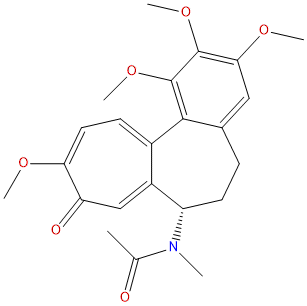
The molecular formula of N-methyl colchicine is C22H27NO6, with a molecular weight of 413.4700. Its core structure is highly similar to Colchicine, both containing a tricyclic phenanthrene nucleus (A, B, C rings) and a seven membered nitrogen-containing C ring (trophinone ring). The key difference is that the methoxy group (- OCH3) on the C-ring of colchicine is replaced by an acetylamino group (- NHCOCH3), which means that the methyl group connected to the nitrogen atom in the colchicine molecule is replaced by an acetyl group, thus forming N-acetylated derivatives. Although this structural modification is small, it significantly affects the polarity, spatial conformation, and interaction mode with the target protein of the molecule.
From the analysis of physical and chemical properties, the lipid water partition coefficient (LogP) of this compound is 1.7497, indicating that it has moderate lipophilicity and is conducive to transmembrane transport. The topological polar surface area (TPSA) is 74.3000 Å ², indicating that the molecule has a certain degree of polarity. Its water solubility value is 0.2144 mg/mL, belonging to the category of slight solubility, which is related to its crystal structure and intramolecular hydrogen bonds. A higher predictive value of blood-brain barrier permeability suggests that it may have potential central nervous system effects, which may be meaningful in anti neuroinflammation. In addition, preliminary pharmacological predictions indicate no significant risk of hERG potassium channel inhibition (hERG inhibition: no) and genetic toxicity warning (Ames test: 0.0), providing preliminary positive signals for its safety assessment.
Plant sources and extraction methods
N-Methyl-colchicine is not a widely present major alkaloid, but mainly exists as a trace metabolite or structural analog of colchicine in plants of the Colchicum genus, such as Colchicum autumnale and Gloriosa. In plants, it may be catalyzed by colchicine via acetyl CoA dependent N-acetyltransferase and is a branch product of alkaloid biosynthesis pathway.
Due to its extremely low natural content, the large-scale extraction and isolation of N-methyl colchicine directly from plants is costly and inefficient. Therefore, current laboratory research and potential drug development mainly rely on chemical synthesis or semi synthetic pathways. The most commonly used method is Selective N-demethylation using colchicine as the starting material To obtain Demecolchicine, it is then reacted with acetylation reagents (such as acetic anhydride and acetyl chloride) under alkaline conditions to efficiently and selectively introduce acetyl groups, thereby synthesizing N-methylcolchicine. This route has short steps, high yield, and can obtain high-purity products, making it the main means of obtaining this compound. Separation and purification are usually combined with techniques such as silica gel column chromatography and high-performance liquid chromatography (HPLC), and structural confirmation is performed through nuclear magnetic resonance (NMR), mass spectrometry (MS), and other methods.
Pharmacological activity research
Although the pharmacological activity research of N-methyl colchicine is not as in-depth as that of colchicine, existing evidence shows that it has potential for attention in multiple aspects, especially in the fields of anti-inflammatory and anti gout.
-
Anti inflammatory and anti gout activity This is the most concerned active direction of the compound. In various animal models of acute inflammation and gouty arthritis, N-methyl colchicine exhibits significant anti-inflammatory effects. Its strength of action may be comparable to or slightly different from that of colchicine, but the key point is that it The therapeutic index (the ratio of effective dose to toxic dose) may be better Research has shown that it can effectively inhibit sodium urate crystal induced paw swelling and synovial inflammation in rats, reduce neutrophil infiltration and pro-inflammatory mediator levels at the site of inflammation.
-
Anti mitotic activity As an analog of colchicine, N-methyl colchicine can also bind to microtubule proteins, inhibit microtubule polymerization, and thus block cell mitosis in the middle stage. However, due to its structural modifications, its binding affinity and kinetics with microtubule proteins may differ from those of colchicine, resulting in differences in its cytotoxicity profile and anti proliferative activity. Some studies suggest that its anti mitotic activity may be weaker than that of colchicine, which may be related to its lower gastrointestinal toxicity at anti-inflammatory doses.
-
Other potential activities Based on its anti-inflammatory mechanism, it has also shown exploratory value in other inflammation related disease models, such as certain autoimmune diseases and neuroinflammation models. Its high blood-brain barrier permeability provides the possibility for its application in central nervous system diseases.
Mechanism of action and molecular targets
The anti gout and anti-inflammatory mechanisms of N-methyl colchicine are complex, involving interventions in multiple key links of the inflammatory signaling pathway. Its molecular target network overlaps with colchicine but also has its own characteristics.
-
Core mechanism: Inhibiting NLRP3 inflammasome activation This is the core link of its anti gout effect. The initiating factor of acute gout attacks is the recognition of urate crystals by innate immune cells such as macrophages. N-Methyl-colchicine can effectively inhibit the triggering of this process NLRP3 inflammasome Assembly and activation. It may interfere with microtubule dynamics, affect the transport and docking of inflammasome related organelles, or directly interact with components such as NLRP3, ASC, or CASP1, thereby preventing complete activation of inflammasomes.
-
Key target effects:
- CASP1 (cysteine protease-1)Downstream effector proteins of inflammasome activation. N-Methyl-colchicine indirectly blocks the self splicing activation of CASP1 by inhibiting inflammasomes.
- IL-1 β (interleukin-1 β)The main substrate of CASP1. Activated CASP1 cleaves inactive pro-IL-1 β into IL-1 β with strong pro-inflammatory activity. N-Methyl-colchicine significantly reduces the production and release of mature IL-1 β through upstream inhibition, which is key to alleviating gout inflammation.
- P2RX7 (purinergic receptor P2X7)This receptor is an important channel for sensing extracellular ATP (damage signal), and its activation can promote K+efflux, which is one of the key trigger signals for NLRP3 inflammasome activation. Some studies speculate that colchicine compounds may regulate the function or downstream signaling of P2RX7.
- XDH (xanthine oxidoreductase)This is the key enzyme for uric acid production. Although the direct inhibition of XDH by colchicine is weak, it remains to be studied whether N-methyl colchicine, as a derivative, has a regulatory effect on uric acid production. However, its main anti-inflammatory effect does not depend on uric acid lowering.
- MEFV (pyrin protein)Under certain genetic backgrounds, pyrin inflammasomes are also involved in gout inflammation. Colchicine is a specific medicine for familial Mediterranean fever, and its effect is related to regulating pyrin. N-Methyl-colchicine may retain its regulatory ability on the pyrin pathway.
-
Microtubule dependent mechanism Like colchicine, N-methyl colchicine alters microtubule dynamics by binding to microtubule proteins, which is not only the basis of its anti mitotic effect, but also widely affects cell migration, vesicle transport, and inflammatory signal transduction. The inhibition of NLRP3 inflammasome mentioned above is partly due to this.
Evaluation of drug properties and pharmacokinetics
Based on computational predictions and limited preclinical data, N-methylcolchicine exhibits attractive pharmacological characteristics.
-
Prediction and Preliminary Study of Absorption, Distribution, Metabolism, and Excretion (ADME):
- absorb Moderate LogP values and TPSA are beneficial for its oral absorption. Although its water solubility is not high, it can be improved through formulation techniques such as salt formation and solid dispersion.
- distribution It is predicted to have high blood-brain barrier permeability, indicating that its tissue distribution is widespread and may reach effective concentrations in the central nervous system.
- Metabolism As a derivative of colchicine, its metabolic pathway may be similar, mainly through the liver cytochrome P450 enzyme system (especially CYP3A4) metabolism, and undergoes deacetylation and other reactions in the intestine. Its acetyl structure may affect metabolic rate and products, and specific research is needed.
- excretion The prototype drug and its metabolites may be mainly excreted through bile and kidneys.
-
Preliminary evaluation of safety:
- cardiotoxicity Predicting the absence of hERG inhibition reduces the risk of QT interval prolongation and apical torsion ventricular tachycardia, which is a potential safety feature superior to many drugs.
- Genotoxicity The Ames test predicts a negative result (0.0), indicating that there may be no direct genetic mutation induction.
- Treatment window Compared to colchicine, the degree of separation between its anti-inflammatory activity and cytotoxicity/anti mitotic activity may be a key factor in evaluating its safety. Preliminary animal experiments suggest that its effective anti-inflammatory dose may be lower than the dose that causes severe gastrointestinal toxicity (such as diarrhea) and bone marrow suppression, suggesting that its therapeutic window may be wider, but this requires rigorous toxicological studies to confirm.
-
Drug interactions Similar to colchicine, when used in combination with potent CYP3A4 inhibitors or P-glycoprotein inhibitors, it may significantly increase its blood drug concentration, increase the risk of poisoning, and should be cautious in clinical applications.
Clinical application prospects and prospects
The clinical application prospects of N-methylcolchicine mainly revolve around its anti-inflammatory properties, especially in the field of gout treatment, but it also faces challenges.
-
Main application directions:
- Acute gouty arthritis As a derivative of colchicine, its most direct application prospect is to treat acute gout attacks. If subsequent clinical studies can confirm that it does have lower gastrointestinal toxicity and a wider safety window while maintaining or enhancing anti-inflammatory efficacy, it is expected to become the preferred drug to replace or supplement traditional colchicine.
- Gout prevention and treatment Low dose colchicine is commonly used for inflammation prevention in the early stage of uric acid lowering in gout. If N-methyl colchicine is safer, it may be more suitable for long-term use in preventing gout attacks.
- Other NLRP3 inflammasome related diseases NLRP3 inflammasome plays an important role in familial Mediterranean fever, some autoinflammatory diseases, atherosclerosis, type 2 diabetes, etc. N-Methyl-colchicine may become a potential therapeutic candidate molecule for these diseases.
- Inflammatory diseases of the central nervous system Its high blood-brain barrier permeability provides the possibility for its treatment of neuroinflammatory diseases such as multiple sclerosis and Alzheimer's disease.
-
Challenges faced and future research directions:
- In depth preclinical development A comprehensive evaluation of its pharmacodynamics, pharmacokinetics, toxicology (acute, subchronic, reproductive toxicity, etc.) needs to be completed systematically to clarify its safe dosage range.
- Refined mechanism of action It is necessary to more accurately elucidate the similarities and differences in target binding and signaling pathway regulation between colchicine and colchicine at the molecular and cellular levels, especially the structural basis for its "efficacy toxicity" separation.
- Formulation Development Develop stable and efficient formulations suitable for oral or injection based on their water-soluble characteristics.
- Clinical trial validation Ultimately, rigorous Phase I-III clinical trials must be conducted to verify its effectiveness, safety, and pharmacokinetic characteristics in humans, which is the necessary path for it to enter the market.
- Intellectual Property and Market Positioning As derivatives of known compounds, their novelty and creativity require strong patent protection and a clear differentiation positioning in the already crowded gout treatment drug market.
Conclusion
N-Methyl-colchicine, as a structural modification of colchicine, inherits its strong anti-inflammatory activity while exhibiting potentially better pharmacological characteristics through key acetylation changes in theoretical calculations and preliminary experiments, especially with a potentially wider therapeutic window and good prediction of cardiac safety. Its mechanism of action focuses on inhibiting NLRP3 inflammasome activation and downstream IL-1 β release, which is the core pathway of gout inflammation, and has clear targeting. Although the compound is still in a relatively early stage of research and there is still a lot of work to be done before clinical translation, it undoubtedly provides a valuable lead compound for the development of a new generation of safer and more effective anti gout and anti-inflammatory drugs. Future research should aim to deepen its understanding of pharmacology and toxicology, explore its applications in different inflammatory disease models, and promote its progress towards clinical research, ultimately bringing new treatment options for patients with inflammatory diseases such as gout.