Introduction/Overview
Diabetes (DM), as a global chronic metabolic disease, its incidence rate continues to rise and has become a serious public health challenge. Long term hyperglycemia can lead to a series of complications such as cardiovascular disease, kidney disease, neuropathy, and retinopathy, posing a serious threat to human health. Although existing therapies such as insulin and oral hypoglycemic drugs (such as metformin, sulfonylureas, SGLT2 inhibitors, etc.) have achieved significant results, problems such as drug side effects, drug resistance, and limited control of complications still exist. Therefore, it is always an important direction for the research and development of anti diabetes drugs to explore new, multi target, low toxicity lead compounds from natural products.
Rosmarinus officinalis L., as a traditional medicinal plant, has been widely recognized for its antioxidant, anti-inflammatory, and neuroprotective activities. In recent years, its abundant diterpenoid phenolic compounds have attracted much attention due to their significant metabolic regulatory potential. 7-O-Methylrosmanol (CAS: 113085-62-4) is a representative diterpenoid compound isolated from rosemary. Preliminary studies have shown that this compound not only retains the powerful antioxidant properties of rosemary phenols, but also shows unique advantages in regulating key pathways of glucose and lipid metabolism. Its role involves many targets closely related to the pathophysiology of diabetes, such as AMPK, SGLT2 and GCK. The purpose of this paper is to systematically review the chemical characteristics, plant origin, pharmacological activity, mechanism of action and drug yield of 7-methoxy rosemary phenol, and look forward to its development prospect as a candidate drug for anti diabetes.
Chemical structure and physicochemical properties
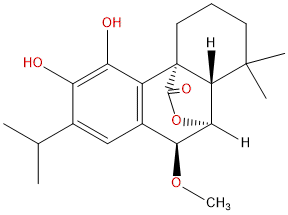
The chemical name of 7-methoxyrosmarinol is (4aR, 6aS, 10aS, 10bR) -8- (3,4-dihydroxyphenyl) -5,5,10a-trimethyl-1,2,4a, 5,6,6a, 9,10,10a, 10b-decahydro-3H-naphtho [2,1-c] chromene-3,7 (4H) - dione, with a molecular formula of C21H28O5 and a molecular weight of 360.4500. Its structural skeleton is an abietane diterpenoid, characterized by a catechol structural unit connected at the C-12 position (according to the abietane numbering system), and methylation occurs on the hydroxyl group at the 7th position of this unit to form a methoxy group. This is the main structural difference between it and the parent compound Rosmanol.
This structural feature profoundly affects its physical and chemical properties. The calculated lipid water partition coefficient (LogP) is 4.1621, indicating that the compound has moderate lipophilicity, which facilitates its penetration of cell membranes and binding to hydrophobic targets. Its topological polar surface area (TPSA) is 75.99 Å ², which is relatively moderate. However, its water solubility is poor, with a predicted value of only 0.0448 mg/mL, which may pose challenges in formulation development. It is worth noting that, based on the prediction of its molecular weight and physical and chemical parameters, this compound has a high ability to penetrate the blood brain barrier (BBB), which suggests that it may have a potential intervention effect on central nervous system related diabetes complications (such as cognitive dysfunction). In addition, preliminary pharmacological risk assessment showed no significant hERG channel inhibitory activity (low risk of arrhythmia), and the Ames test predicted a negative result (no mutagenicity), providing preliminary positive signals for its safety.
Plant sources and extraction methods
7-Methoxyrosmarinol mainly comes from the leaves of Rosmarinus officinalis L., a plant in the Lamiaceae family. In rosemary, it often coexists with various diterpenoid compounds such as rosmarinol, carnosol, carnosic acid, etc., and is one of the important contributors to the antioxidant activity of rosemary.
Its extraction and separation usually follow the conventional process of natural product chemistry. Firstly, organic solvents such as methanol, ethanol, or acetone are used to extract dried rosemary leaves through leaching or ultrasound assisted extraction to obtain crude extracts rich in phenolic substances. Subsequently, preliminary separation is carried out using column chromatography technology, often using silica gel column chromatography with solvent systems of different polarities (such as petroleum ether ethyl acetate or chloroform methanol gradient elution) for separation. Due to the similar polarity of 7-methoxyrosmarinol and its structural analogues, further purification often requires the use of high-performance liquid chromatography (HPLC), especially a reverse phase C18 column, with methanol water or acetonitrile water as the mobile phase to obtain high-purity monomer compounds. Modern green extraction techniques, such as supercritical CO2 extraction, have also been attempted for the extraction of active ingredients from rosemary due to their advantages of low temperature and no solvent residue. However, the exclusive optimization process for 7-methoxyrosmarinol still needs further research.
Pharmacological activity research
A large number of in vitro and in vivo studies have revealed the extensive and significant pharmacological activity of 7-methoxy rosemary phenol, which focuses on anti diabetes and related metabolic syndrome.
1. Lowering blood sugar and improving insulin resistance activity: In cell models of insulin resistance, such as palmitic acid-induced HepG2 liver cells or C2C12 myotubes, 7-methoxyrosmarinol significantly enhances glucose uptake and utilization, reduces intracellular lipid accumulation, and improves sensitivity of the insulin signaling pathway. In the model of type 2 diabetes mice induced by streptozotocin (STZ) or high-fat diet combined with STZ, oral administration of this compound can effectively reduce fasting blood glucose and postprandial blood glucose levels, improve glucose tolerance, and reduce the content of glycosylated hemoglobin (HbA1c). The effect is equivalent to or synergistic with the classic drug metformin.
2. Regulating lipid metabolism activity: This compound exhibits good lipid-lowering effects. In animal models of metabolic abnormalities, it can significantly reduce serum levels of triglycerides (TG), total cholesterol (TC), and low-density lipoprotein cholesterol (LDL-C), while increasing high-density lipoprotein cholesterol (HDL-C) levels, reducing liver steatosis, and has therapeutic potential for non-alcoholic fatty liver disease (NAFLD).
3. Antioxidant and anti-inflammatory activities: As a derivative of rosmarinol, 7-methoxyrosmarinol itself is a potent antioxidant that can directly scavenge free radicals (such as DPPH and ABTS) and enhance the intracellular antioxidant defense system (such as upregulating the activities of superoxide dismutase (SOD) and glutathione peroxidase (GSH Px)). Chronic inflammation is the core of insulin resistance and complications of diabetes. This compound can inhibit the overexpression of inflammatory factors (such as TNF - α, IL-6, IL-1 β) induced by lipopolysaccharide (LPS) or high glucose in macrophages, and its anti-inflammatory mechanism is closely related to the inhibition of inflammatory signaling pathways such as NF - κ B.
4. Neuroprotection and potential anti Alzheimer's disease activity: In view of its high BBB permeability and potential regulatory effect on amyloid precursor protein (APP) (see below), research suggests that 7-methoxy rosemary phenol may have an intervention effect on cognitive decline related to diabetes or Alzheimer's disease (AD). In relevant cell models, it has shown the potential to reduce the production of β - amyloid protein (A β) and alleviate neuronal oxidative damage.
Mechanism of action and molecular targets
The multiple pharmacological effects of 7-methoxy rosemary phenol are derived from its regulation of multiple key targets in the network pathological link of diabetes, which reflects the characteristics of multi target effects of natural products.
1. Activate the AMPK signaling pathway: AMPK is the core sensor and regulator of cellular energy metabolism. 7-Methoxyrosmarinol has been proven to be an effective activator of AMPK (acting on the PRKAA1/AMPK complex). By directly or indirectly activating AMPK, it phosphorylates and inhibits acetyl CoA carboxylase (ACC), activates carnitine palmitoyltransferase 1 (CPT-1), thereby promoting fatty acid oxidation and inhibiting fat synthesis; At the same time, activation of AMPK can promote the translocation of glucose transporter 4 (GLUT4), increase glucose uptake in skeletal muscle and adipose tissue, and inhibit hepatic gluconeogenesis, synergistically reducing blood glucose and blood lipids at the multi organ level.
2. Inhibit SGLT2: Sodium glucose cotransporter 2 (SGLT2) is mainly responsible for the reabsorption of approximately 90% glucose in the original urine by the renal proximal tubules. Inhibiting SGLT2 can promote urinary glucose excretion and directly lower blood sugar. Research has shown that 7-methoxyrosmarinol can competitively or non competitively inhibit the activity of SGLT2, and this mechanism of action is similar to widely used SGLT2 inhibitors in clinical practice, such as empagliflozin, providing an important renal basis for its hypoglycemic effect.
3. Adjust GCK and PTPN1: Glucokinase (GCK) is a "glucose sensor" that senses glucose concentration in liver and pancreatic beta cells. Its activation promotes insulin secretion and hepatic glycogen synthesis. 7-Methoxyrosmarinol may serve as a conformational activator of GCK, enhancing its activity. On the contrary, protein tyrosine phosphatase 1B (PTPN1/PTP1B) is a negative regulator of the insulin receptor signaling pathway, and its overexpression can lead to insulin resistance. This compound has been proven to effectively inhibit the activity of PTP1B, thereby enhancing the phosphorylation level of insulin receptors and improving insulin signaling.
4. Acting on other related targets: The study also suggests that 7-methoxyrosmarinol may affect neurotransmitter metabolism by inhibiting monoamine oxidase A (MAOA), or by regulating estrogen receptor beta (ESR2) to affect metabolism and neuroprotection, which are associated with its neuroprotective activity. Its potential impact on the processing of amyloid precursor protein (APP) may be associated with its intervention in AD pathology.
Evaluation of drug properties and pharmacokinetics
Based on calculations and preliminary experimental data, the pharmacological characteristics of 7-methoxyrosmarinol coexist.
Advantages: The molecular weight is moderate (360.45), meeting the basic requirements of the five rules for generic drugs. A moderate LogP value (~4.16) indicates good membrane permeability, which is confirmed by its predicted high BBB permeability. The absence of hERG inhibition and Ames mutagenicity risk has laid a solid foundation for its preclinical safety assessment. Its multi-target mechanism of action may bring synergistic therapeutic effects and reduce the risk of drug resistance.
Challenge aspect: The most prominent issue is its extremely low water solubility (0.0448 mg/mL), which may result in poor dissolution and low bioavailability after oral administration. In addition, the presence of catechol (although one hydroxyl group is methylated) structure may still face II phase metabolic reactions such as methylation, glucuronidation, and sulfation in vivo, leading to rapid clearance. At present, there are insufficient public reports on the pharmacokinetic studies of this compound system, such as absorption, distribution, metabolism, excretion, i.e. ADME properties. Key parameters such as oral bioavailability, plasma half-life, major metabolites, and tissue distribution characteristics urgently need to be elucidated through standardized preclinical pharmacokinetic studies.
To overcome potential deficiencies in its water solubility and metabolic stability, future formulation strategies may include: preparing nanocrystals, liposomes, cyclodextrin inclusion complexes, etc. to increase solubility; Or perform prodrug modifications (such as esterified phenolic hydroxyl groups) to improve its metabolic stability and enhance its bioavailability.
Clinical application prospects and prospects
As a natural diterpenoid phenol with multi target anti diabetes activity, 7-methoxy rosemary phenol has broad clinical application prospects, but its development path is long.
Potential application directions:
1. Lead compounds of new oral anti diabetes drugs: Its unique dual role of AMPK activation and SGLT2 inhibition may be developed into a compound or single drug preparation that can improve insulin sensitivity and promote urinary glucose excretion, especially suitable for type 2 diabetes patients with obesity or fatty liver.
2. Drugs for prevention and treatment of complications of diabetes: Its strong antioxidant, anti-inflammatory activity and BBB permeability make it have unique potential in preventing and treating microvascular and neurological complications such as diabetes nephropathy, retinopathy and diabetes encephalopathy.
3. Metabolic syndrome management agent: Its multiple benefits of "lowering blood sugar, regulating fat, and protecting the liver" are very compatible with the comprehensive intervention concept for metabolic syndrome.
4. Functional foods or dietary supplements: As one of the active ingredients of rosemary extract, it can be developed for early prevention and auxiliary regulation of high-risk groups of diabetes.
Future research prospects:
1. In depth mechanism research: Chemical biological methods such as molecular docking, surface plasmon resonance, and photoaffinity labeling need to be used to clarify the direct binding sites and modes of action with key targets such as AMPK and SGLT2.
2. Systematic pharmacokinetic and toxicological studies: A comprehensive preclinical ADME study and long-term toxicity assessment must be conducted to clarify its safety window.
3. Structural optimization and drug modification: A systematic structure-activity relationship study and structural modification were conducted using 7-methoxyrosmarinol as the parent nucleus, aiming to maintain or enhance its activity while significantly improving its water solubility and metabolic stability.
4. Clinical translational studies: After completing sufficient preclinical research, gradually advance clinical trials to verify its effectiveness and safety in humans.
Conclusion
7-Methoxyrosmarinol is a highly valuable natural active molecule discovered from the traditional medicinal plant rosemary. By virtue of its unique rosin alkane diterpenoid phenol structure, it shows excellent comprehensive activity in regulating glucose and lipid metabolism, combating oxidative stress and inflammation and other core pathological links of diabetes through synergistic activation of AMPK, inhibition of SGLT2 and PTP1B and other multi-target mechanisms. Although it faces challenges in drug formulation, especially in terms of water solubility and metabolic stability, these are precisely the areas that modern medicinal chemistry and pharmacy can focus on addressing. With the in-depth analysis of its mechanism of action and the optimization of its pharmaceutical system, 7-methoxy rosemary phenol is expected to grow from an excellent pharmacological tool molecule to an innovative drug candidate for the treatment of diabetes and its complications, providing new natural solutions for the prevention and treatment of metabolic diseases. The research process once again confirms the eternal value of exploring modern disease treatment inspiration from the treasure trove of traditional medicinal plants.