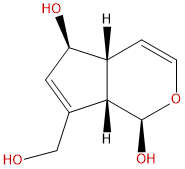
| Catalog No | Package | Original Price | Price | Inventory | Quantity | Operating |
|---|---|---|---|---|---|---|
| BP4218-5mg | 5mg | $190.00 | Sign in |
|


Product name: Aucubigenin
Synonym name:
Catalogue No.: BP4218
Cas No.: 64274-28-8
Formula: C9H12O4
Mol Weight: 184.191
Botanical Source: Eucommia ulmoides Oliv.
Type of Compound: Iridoids
Purity: 95%~99%
Analysis Method: HPLC-DAD or/and HPLC-ELSD
Identification Method: Mass, NMR
Packing: Brown vial or HDPE plastic bottle
Storage: Store in a well closed container, protected from air and light. Put into refrigerate or freeze for long term storage.
Whenever possible, you should prepare and use solutions on the same day. However, if you need to make up stock solutions in advance, we recommend that you store the solution as aliquots in tightly sealed vials at -20℃. Generally, these will be useable for up to two weeks.
The product could be supplied from milligrams to grams
Inquire for bulk scale.
For Reference Standard and R&D, Not for Human Use Directly.
Storage conditions:Short-term storage at 2~8℃, long-term storage at -20 ~ -80℃
69.9200
-.5743
-.5743
32.7772
.9131
7.0075
High
29.7783
4.9149
No
Yes
No
No
Yes
No
0.6
Yes
Yes
Yes
Yes
Aucubigenin (CAS number: 64274-28-8), as a glycoside component of iridoid glycosides, has received widespread attention in the field of natural product pharmacology in recent years. Its unique chemical structure and diverse biological activities make it an emerging candidate molecule for studying liver protection and related disease treatment. The liver, as an important metabolic organ in the human body, is susceptible to damage from various internal and external toxins and pathological factors, leading to diseases such as liver fibrosis, hepatitis, and even cirrhosis. Peach leaf coral glycoside exhibits significant liver protective effects by regulating multiple signaling pathways and key molecular targets, and has potential clinical application value. This article will provide a systematic review of the chemical structure, physicochemical properties, plant origin, pharmacological activity, mechanism of action, pharmacological evaluation, and clinical prospects of peach leaf coral glycoside, aiming to provide scientific basis for its subsequent drug development.
Peach leaf coral glycoside belongs to the glycoside part of iridoid glycosides, with a molecular formula of C10H16O3 and a molecular weight of 184.1910. According to X-ray crystallographic analysis, the peach leaf coral glycoside has a monoclinic symmetric crystal structure, containing specific configurations of cyclopentane and pyran rings in the molecule, forming a stable three-dimensional skeleton structure. The cyclopentane ring and pyran ring of this structure are connected to each other through a specific stereoconfiguration, giving it a unique spatial conformation that may affect its binding affinity with biological targets.
In terms of physicochemical properties, the LogP value of peach leaf coral glycoside is -0.5743, indicating its strong hydrophilicity and good water solubility (32.7772 mg/mL), which is beneficial for its absorption and distribution in vivo. Its topological polar surface area (TPSA) is 69.92 Å ², indicating moderate molecular polarity and favorable transmembrane transport. It is worth noting that aucubin has a high blood-brain barrier penetration ability, suggesting its potential role in the central nervous system. In addition, the hERG channel inhibition test result was negative, indicating a low risk of cardiac toxicity. The Ames test result was 0.6, indicating low mutagenicity and good safety.
The main source of peach leaf coral glycosides comes from plants rich in iridoid glycosides such as Aucuba japonica Thunb. Peach leaf coral is a plant of the Rhododendron family, widely distributed in East Asia. It is commonly used in traditional Chinese medicine to treat rheumatism, liver disease, and inflammation related diseases. Peach leaf coral glycoside, as one of the main active ingredients in this plant, usually exists in the form of glycoside in plant tissues.
The extraction method often uses solvent extraction combined with chromatographic separation technology. Common extraction solvents include methanol, ethanol, and their aqueous solutions. Ultrasonic assisted extraction or reflux extraction is used to improve extraction efficiency. After crude separation, the extract was purified using methods such as silica gel column chromatography and reverse phase high performance liquid chromatography (RP-HPLC) to obtain high-purity aucubin. In recent years, the application of supercritical CO2 extraction and membrane separation technology has also provided new ideas for the efficient extraction of aucubin from peach leaves.
The pharmacological activity research of peach leaf coral glycoside mainly focuses on its liver protective effect and related disease models. Multiple in vitro and in vivo experiments have shown that aucubin can significantly reduce liver cell damage, inhibit liver fibrosis process, and improve liver function indicators.
Liver protective effect
In chemical liver injury models such as carbon tetrachloride and alcohol induced liver injury, aucubin has shown good liver protective effects by reducing serum transaminase (ALT, AST) levels, alleviating liver tissue inflammation and necrosis. Its mechanism of action involves multiple pathways of antioxidant, anti-inflammatory, and anti fibrotic effects.
antioxidant activity
Peach leaf coral glycoside can significantly enhance the activity of antioxidant enzymes such as superoxide dismutase (SOD1, SOD2), catalase (CAT), and glutathione peroxidase (GPX1) in the liver, reduce the generation of reactive oxygen species (ROS), and alleviate oxidative stress damage.
Anti fibrotic effect
By inhibiting the expression of transforming growth factor beta 1 (TGFB1) and actin alpha 2 (ACTA2), aucubin effectively blocks the activation of hepatic stellate cells, inhibits collagen deposition, and alleviates the pathological process of liver fibrosis.
anti-inflammatory effect
Peach leaf coral glycoside can regulate the nuclear factor erythroid 2-related factor 2 (NRF2) signaling pathway, promote the expression of downstream antioxidant enzymes NQO1 and heme oxygenase 1 (HMOX1), reduce the release of inflammatory mediators, and alleviate liver inflammation.
In addition, some studies have found that aucubin from peach leaves has potential activities in neuroprotection, anti-tumor effects, etc., but the relevant mechanisms still need further clarification.
The liver protective effect of peach leaf coral glycoside is attributed to its multi-target and multi pathway regulatory characteristics. The main mechanisms of action include:
Regulation of antioxidant stress
Peach leaf coral glycoside activates the NRF2 signaling pathway, promotes the translocation of NRF2 from the cytoplasm to the nucleus, binds to antioxidant response elements (ARE), upregulates the expression of antioxidant enzymes such as NQO1, HMOX1, SOD1, SOD2, CAT, and GPX1, enhances the cell's ability to clear free radicals, and reduces oxidative damage.
Matrix metalloproteinase 9 (MMP9) regulation
MMP9 mediates the degradation and remodeling of extracellular matrix during liver fibrosis, and aucubin regulates MMP9 activity to maintain matrix balance and prevent excessive fibrosis.
Inhibition of anti fibrotic signaling pathway
Peach leaf coral glycoside inhibits the expression of TGFB1 and its downstream effector molecule ACTA2, blocks hepatic stellate cell activation and myofibroblast transformation, reduces collagen deposition, and delays the progression of liver fibrosis.
Anti inflammatory and Cellular Protection
By regulating the redox state and cellular stress response, aucubin reduces the release of pro-inflammatory factors and protects liver cells from inflammation mediated damage.
In summary, the peach leaf coral glycoside exerts significant liver protective effects through multi-target synergistic effects, regulating oxidative stress, inflammatory response, and fibrosis processes in the liver.
Peach leaf coral glycoside has shown good potential in the evaluation of medicinal properties. Its molecular weight is 184.1910, which meets the Lipinski rule for the molecular weight requirements of oral active drugs. A negative LogP value (-0.5743) indicates good hydrophilicity, which is beneficial for improving solubility and bioavailability. The TPSA is 69.92 Å ², which is within the range suitable for cell membrane penetration, and experimental data shows that it has high blood-brain barrier penetration ability, suggesting its potential application in central nervous system diseases.
In terms of safety, the hERG inhibition test was negative, indicating a low risk of cardiac toxicity from aucubin in peach leaves. The Ames mutagenicity test result is 0.6, indicating low mutagenicity and good safety. High water solubility (32.7772 mg/mL) is helpful for formulation development and in vivo distribution.
Pharmacokinetic studies have shown that aucubin has good oral absorption, moderate plasma half-life, and wide distribution in the body, especially at high concentrations in liver and brain tissues, which meets its pharmacological activity requirements for liver protection and neuroprotection. The metabolic pathway mainly involves corresponding redox and binding reactions through the liver enzyme system, while the excretion pathway is mainly through the kidneys.
Peach leaf coral glycoside, as a natural iridoid glycoside, has broad clinical application prospects due to its significant liver protective effect and good medicinal properties. The current treatment options for liver diseases, especially liver fibrosis and hepatitis, are limited and often involve side effects and drug resistance issues. Peach leaf coral glycoside provides a new therapeutic strategy through multi-target and multi mechanism synergistic effects.
Future research should focus on the following aspects:
In depth mechanism research
Using genomics, proteomics, and metabolomics techniques, systematically analyze the molecular network and signaling pathways of the action of peach leaf coral glycosides, and clarify their specific mechanisms of action in different liver disease models.
Pharmacokinetic and safety evaluation
Improve its in vivo metabolic kinetic parameters, conduct long-term toxicology and safety evaluations, and lay the foundation for clinical trials.
Formulation development and clinical translation
Optimize the formulation form, enhance bioavailability and targeting, and promote its translational application to the clinical stage.
Expand indication research
Explore its potential applications in neuroprotection, anti-inflammatory, and anti-tumor fields, and broaden its clinical applicability.
In summary, as a natural product with multiple biological activities, peach leaf coral glycoside is expected to become an important drug candidate molecule in the field of liver disease treatment in the future.
Peach leaf coral glycoside, as a glycoside component of natural iridoid glycosides, exhibits significant liver protection and anti fibrotic activity due to its unique chemical structure and excellent physicochemical properties. By regulating key molecular targets such as NRF2, MMP9, TGFB1, etc., aucubin effectively reduces oxidative stress, inflammatory response, and liver fibrosis process, and has good safety and pharmacological properties. In the future, with the deepening of mechanism research and the improvement of pharmacokinetics, aucubin from peach leaves is expected to become a new natural medicine for the treatment of liver diseases, providing new ideas and choices for the clinical treatment of related diseases.
