


Synonym name:
Catalogue No.: BP1108
Cas No.: 63902-38-5
Formula: C32H42O16
Mol Weight: 682.672
Botanical Source: the bark of Eucommia ulmoides
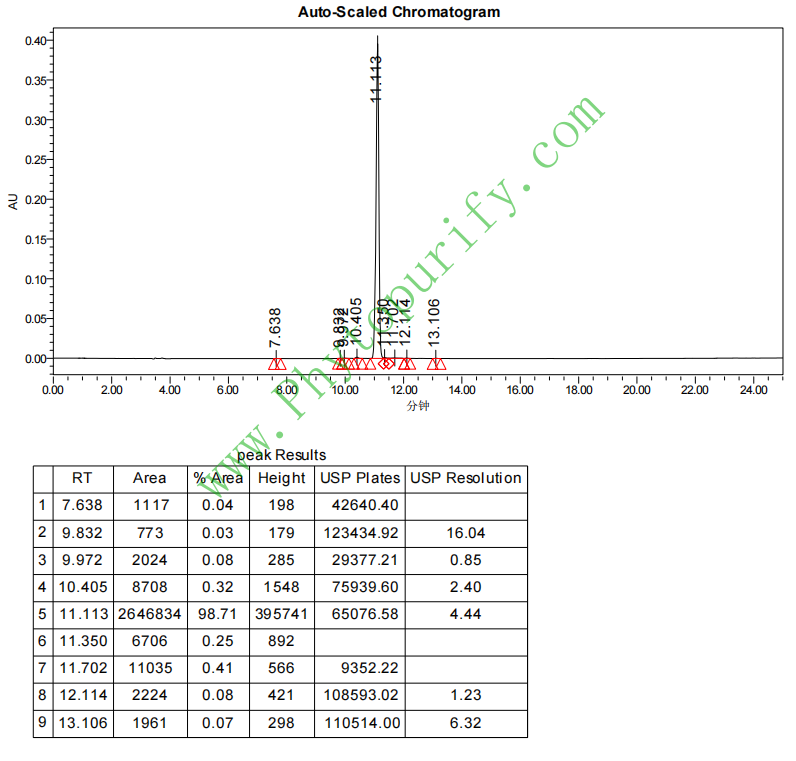
Purity: 95%~99%
Analysis Method: HPLC-DAD or/and HPLC-ELSD
Identification Method: Mass, NMR
Packing: Brown vial or HDPE plastic bottle
Can be supplied from milligrams to grams.
For Reference Standard and R&D, Not for Human Use Directly.
Inquire for bulk scale.
Description:
Pinoresinol diglucoside is a putative α-glucosidase inhibiting compound, has antihypertensive activity. It is a heat shock factor 1 inducer, increased expression of HSF1 by a factor of 1.041 at 3 μM.
References:
Chem Biodivers. 2013 Jul;10(7):1322-7.
Heat shock factor 1 inducers from the bark of Eucommia ulmoides as cytoprotective agents.
The barks of Eucommia ulmoides (Eucommiae Cortex, Eucommiaceae) have been used as a traditional medicine in Korea, Japan, and China to treat hypertension, reinforce the muscles and bones, and recover the damaged liver and kidney functions.
METHODS AND RESULTS:
Among these traditional uses, to establish the recovery effects on the damaged organs on the basis of phytochemistry, the barks of E. ulmoides have been investigated to afford three known phenolic compounds, coniferaldehyde glucoside (1), bartsioside (2), and feretoside (3), which were found in the family Eucommiaceae for the first time. The compounds 1-3 were evaluated for their inducible activities on the heat shock factor 1 (HSF1), and heat shock proteins (HSPs) 27 and 70, along with four compounds, geniposide (4), geniposidic acid (5), Pinoresinol diglucoside (6), and liriodendrin (7), which were previously reported from E. ulmoides. Compounds 1-7 increased expression of HSF1 by a factor of 1.214, 1.144, 1.153, 1.114, 1.159, 1.041, and 1.167 at 3 μM, respectively.
CONCLUSIONS:
Coniferaldehyde glucoside (1) showed the most effective increase of HSF1 and induced successive expressions of HSP27 and HSP70 in a dose-dependent manner without cellular cytotoxicity, suggesting a possible application as a HSP inducer to act as cytoprotective agent.
HPLC of Pinoresinol diglucoside
Storage conditions:Short-term storage at 2~8℃, long-term storage at -20 ~ -80℃
235.6800
-.2837
-.2835
4.4615
.6246
.2265
Low
66.0728
5.0585
Yes
No
No
No
No
No
0.0
Yes
No
No
Yes
Natural products, as an important source of drug discovery, play an irreplaceable role in the history of human disease prevention and treatment. Lignin compounds are a class of phenylpropanoid secondary metabolites widely present in the plant kingdom, and have attracted much attention due to their diverse chemical structures and extensive biological activities. Pine resin diglucoside, also known as pine resin alcohol diglucoside, is a representative lignan glycoside compound with a CAS number of 63902-38-5. This compound is a traditional precious Chinese medicinal herb, Eucommia ulmoides(Eucommia ulmoides One of the characteristic active ingredients in Oliv. is also present in plants such as sesame and olive. Modern pharmacological research has preliminarily revealed that turpentine diglucoside exhibits significant multiple pharmacological activities such as anti-inflammatory, antioxidant, neuroprotective, and bone metabolism regulation, especially in the field of anti-inflammatory, showing great potential. Inflammation is a common pathological basis for many chronic diseases, such as arthritis, metabolic syndrome, neurodegenerative diseases, and cancer. Therefore, the development of new therapeutic agents targeting inflammatory pathways has always been a hot topic. This article aims to systematically review the chemical properties, plant sources, pharmacological activities, and multi-target molecular mechanisms of the anti-inflammatory effect of turpentine diglucoside, and evaluate and prospect its pharmacological properties and clinical application prospects, in order to provide comprehensive scientific references for the in-depth research and development of this compound.
The chemical name of turpentine diglucoside is (+) - turpentine-4,4 '- di-O - β - D-glucopyranoside. Its molecular formula is C32H42O17 and its molecular weight is 682.6720. Structurally, it consists of a lignin lignin core and two β - D-glucosyl groups connected by glycosidic bonds. The parent nucleus of turpentine is composed of two phenylpropanoid units (C6-C3) connected by β - β 'to form a furan ring structure, with two glucose groups attached to the hydroxyl groups at positions 4 and 4' of the benzene ring in the parent nucleus. This glycosylation modification significantly alters the physicochemical properties and biological activity of the parent lignin.
In terms of physical and chemical properties, the compound is a white or off white powder. The introduction of glycosidic bonds greatly enhances its hydrophilicity, and the theoretical lipid water partition coefficient (LogP) calculation value is about -0.2837, indicating that it has good hydrophilic properties. Its topological polar surface area (TPSA) is as high as 235.68 Å ², further confirming its strong polarity characteristics. The predicted value of water solubility is about 4.46 mg/mL, which belongs to the soluble range, which is beneficial for its development in water-based formulations. However, its high polarity and molecular weight also pose challenges to its biofilm permeability, and its ability to penetrate the blood-brain barrier is predicted to be low. In the preliminary safety prediction indicators, the compound showed no significant risk of hERG potassium channel inhibition (predicted as "no"), and the Ames mutagenicity test predicted a value of 0.0, indicating a low genetic toxicity risk and providing preliminary positive signals for its safety evaluation.
The distribution of turpentine diglucoside in nature is relatively concentrated, and its main and most representative sources are the bark, leaves, and male flowers of the Eucommia ulmoides plant in the Eucommia ulmoides family. As a unique traditional Chinese medicinal herb, Eucommia ulmoides is closely related to lignans such as turpentine and diglucoside in its ability to nourish the liver and kidneys, strengthen muscles and bones. In addition, this compound is present in olives(Olea europaea)Leaves, sesame seeds(Sesamum indicum)Small amounts were also detected in seeds and some pine plants.
Efficient extraction of turpentine diglucoside from plant materials is the basis for studying its activity and developing its applications. The traditional extraction methods mainly include solvent extraction. Due to the polarity of the compound, water, methanol, ethanol, or ethanol water mixed solutions in different proportions are commonly used as extraction solvents. Among them, 50% -70% ethanol aqueous solution has become a commonly used extraction medium in laboratories and industries due to its good solubility and selectivity towards lignin glycosides, as well as low environmental and safety costs. In order to improve extraction efficiency, modern extraction techniques have been widely applied:
1. Ultrasound assisted extraction Utilizing the cavitation effect and mechanical vibration generated by ultrasound to destroy plant cell walls, accelerate solvent penetration and component dissolution, has the advantages of short time, high efficiency, and low temperature.
2. Microwave assisted extraction Microwave can selectively heat the internal water of plants, generate high pressure to promote cell rupture, and rapidly release target components, which also has the characteristics of high efficiency and energy saving.
3. Supercritical fluid extraction Supercritical CO ₂ is mainly used, but this method has limited extraction efficiency for polar glycosides and often requires the addition of entrainers (such as ethanol) for modification.
The crude extract after extraction usually contains a large amount of impurities and needs further separation and purification. Large pore adsorption resins (such as AB-8 and D101) are commonly used for enrichment, utilizing the resin's adsorption effect on organic molecules (such as lignin glycosides). Strong polar impurities such as sugars and proteins are washed away with water, and then the target components are eluted with appropriate concentrations of ethanol. Further purification can be achieved through techniques such as silica gel column chromatography, reverse phase silica gel column chromatography (such as ODS-C18), and preparative high-performance liquid chromatography to obtain high-purity turpentine diglucoside monomers.
The pharmacological activity of turpentine diglucoside has been studied from multiple dimensions, confirming its broad biological effects.
anti-inflammatory activity This is the most extensively studied and well supported activity of the compound. In various acute and chronic inflammation models, turpentine diglucoside has shown good effects. For example, in acute inflammation models induced by carrageenan or acetic acid in mice, it can significantly inhibit plantar swelling and increase vascular permeability. In the lipopolysaccharide (LPS) - stimulated macrophage model (such as RAW264.7), it can dose dependently inhibit the production of nitric oxide (NO), prostaglandin E2 (PGE2), and key pro-inflammatory cytokines (such as TNF - α, IL-6). It has also been shown to improve pathological damage and reduce inflammatory infiltration in chronic inflammation models such as arthritis and colitis.
Antioxidant and neuroprotective activities This compound has strong free radical scavenging ability and can alleviate oxidative stress damage. In neuronal cell lines (such as PC12 cells) or animal models, turpentine diglucoside has a protective effect against apoptosis induced by hydrogen peroxide, glutamate, or β - amyloid protein. It can increase cell viability and reduce reactive oxygen species levels, and its mechanism is related to the activation of the Nrf2/ARE antioxidant pathway. This suggests that it has potential application value in neurodegenerative diseases such as Alzheimer's disease and Parkinson's disease.
Bone metabolism regulation activity Corresponding to the traditional function of "strengthening muscles and bones" of Eucommia ulmoides, research has found that turpentine diglucoside can promote osteoblast differentiation and mineralization, while inhibiting osteoclast formation and bone resorption function. In the rat model of osteoporosis induced by ovariectomy, it can partially reverse the decrease in bone density and improve bone microstructure.
Other activities Preliminary studies have also shown that turpentine diglucoside has certain effects such as lowering blood pressure, regulating immunity, and anti fatigue, but its mechanism and effect need to be more systematically verified.
The anti-inflammatory effect of turpentine diglucoside is not achieved through a single pathway, but exhibits the characteristics of multi-target and multi pathway synergy, and its action network involves multiple key inflammatory mediators and signal transduction molecules.
Inhibition of NF - κ B signaling pathway Nuclear factor kappa B (NF - κ B) is the core transcription factor in inflammatory response. Research has shown that turpentine diglucoside can inhibit the activation of LPS induced I κ B kinase (IKK, encoded by IKBKB), prevent the phosphorylation and degradation of I κ B α, and thus inhibit the nuclear translocation of NF - κ B p65 subunit (RELA). This directly leads to downregulation of downstream pro-inflammatory genes such as TNF - α, IL-6, NOS2, COX-2.
Regulating the MAPK and JAK-STAT pathways Mitogen activated protein kinase (MAPK) and Janus kinase/signal transducer and activator of transcription (JAK-STAT) are two other important inflammatory signaling pathways. This compound has been reported to inhibit LPS induced phosphorylation of p38 MAPK and JNK. Of particular note, its regulation of the IL-6/STAT3 pathway is crucial for its anti-inflammatory and potential anti-tumor effects. It can inhibit the production of IL-6 and the phosphorylation and activation of downstream STAT3, thereby blocking STAT3 mediated inflammation and cell survival signals.
Regulating inflammasome activity The excessive activation of NLRP3 inflammasome is associated with various chronic inflammatory diseases. Research suggests that turpentine diglucoside may exert anti-inflammatory effects by inhibiting the activation of Caspase-1 (CASP1), reducing the maturation and release of IL-1 β and IL-18.
Affects pain related ion channels Transient receptor potential vanillic acid subtype 1 (TRPV1) and transient receptor potential anchor protein subtype 1 (TRPA1) are key sensors mediating inflammatory pain. There is evidence to suggest that the compound may alleviate inflammation related hyperalgesia by regulating the activity of these channels.
Inhibition of inflammatory mediator synthase Lycopene diglucoside can downregulate the expression of inducible nitric oxide synthase (NOS2) and cyclooxygenase-2 (COX-2), but has little effect on structural cyclooxygenase-1 (PTGS1), which helps reduce the excessive production of inflammatory mediators such as NO and PGE2, and may also reduce the risk of adverse reactions to the gastrointestinal tract.
In summary, turpentine diglucoside forms a synergistic anti-inflammatory network by acting on multiple targets such as IKBKB, RELA, STAT3, CASP1, TRPV1/TRPA1, NOS2, etc., providing a molecular basis for its treatment of complex and multifactorial inflammatory diseases.
Although turpentine diglucoside has shown good pharmacological activity in vitro and animal models, its successful development as a drug depends on its pharmacological properties, namely "pseudo pharmacological" and pharmacokinetic properties.
From the perspective of drug likeness, its molecular weight (682.67) slightly exceeds the recommended range of the traditional "Five Rules" (<500), and it has high polarity (TPSA>140 Å ², LogP<0), indicating that its oral bioavailability may face challenges. High polarity leads to weak passive transmembrane diffusion ability, while larger molecular weight may also affect its absorption. Predicting its difficulty in crossing the blood-brain barrier limits its direct therapeutic effect on central nervous system diseases, but it may also reduce the risk of central side effects.
At present, there is relatively limited pharmacokinetic research on turpentine diglucoside, and existing animal experimental data provides preliminary understanding. After oral administration to rats, the compound can be detected in plasma, but its absolute bioavailability is generally low. This is mainly attributed to: ① incomplete absorption in the gastrointestinal tract; ② Hydrolysis may occur under the action of gut microbiota, removing glucose groups and converting them into aglycones (turpentine), which have higher lipid solubility and may be absorbed and exert partial activity; ③ There is a first pass effect. Its distribution in the body may be more concentrated in blood and blood rich tissues such as the liver and kidneys. In terms of metabolism, in addition to possible deglycosylation, phase II metabolic reactions such as hydroxylation, methylation, sulfation, or glucuronic acid binding may also be the main metabolic pathways. The expected excretion pathway is mainly through the kidneys (in the form of prototypes or metabolites) and bile.
In order to enhance its drug efficacy, future strategies may include: ① developing novel drug delivery systems, such as nanoliposomes, polymer micelles, self microemulsions, etc., to improve its solubility, stability, and intestinal permeability; ② Perform prodrug modification, such as esterifying certain hydroxyl groups, temporarily increasing their lipophilicity to promote absorption, and then hydrolyzing them into active forms in vivo; ③ Explore non oral routes of administration, such as transdermal administration (using traditional Eucommia ulmoides topical) or injection administration, but fully evaluate their safety and formulation feasibility.
As a natural active molecule derived from traditional Chinese medicine, turpentine diglucoside has broad clinical application prospects, but the road ahead is long and requires exploration and breakthroughs from multiple levels.
Potential therapeutic areas:
Research and Development Challenges and Prospects:
As a lignan glycoside found in plants such as Eucommia ulmoides, turpentine diglucoside has become a highlight in natural product pharmacology research due to its proven multiple pharmacological activities such as anti-inflammatory, antioxidant, and bone regulation, as well as its unique molecular mechanism of acting on multiple targets such as NF - κ B, STAT3, and inflammasomes. Its origin from traditional medicine has endowed it with a profound application foundation, while the analysis of modern science and technology has pointed out the direction for its modernization development. Although there are challenges in drug formulation, especially in oral absorption, this is the key scientific issue that current research needs to overcome. Through interdisciplinary collaboration, in-depth exploration of its molecular mechanisms, innovative drug delivery strategies, and promotion of systematic preclinical and clinical evaluations, turpentine diglucoside is expected to gradually develop from a potential natural active molecule into an innovative drug or high-value functional product for the treatment of inflammation related diseases, contributing its unique value to human health.
