


Synonym name: Cardidigin; Crystodigin; Digisidin; Purodigin; Unidigin; Digitrin; Carditoxin
Catalogue No.: BP0489
Cas No.: 71-63-6
Formula: C41H64O13
Mol Weight: 764.95
Botanical Source: From Digitalis purpurea, Digitalis lanata, Digitalis grandiflora, Digitalis ferruginea, Digitalis thapsi, Digitalis ciliata, Digitalis heywoodii and others
Purity: 95%~99%
Analysis Method: HPLC-DAD or/and HPLC-ELSD
Identification Method: Mass, NMR
Packing: Brown vial or HDPE plastic bottle
Can be supplied from milligrams to grams.
For Reference Standard and R&D, Not for Human Use Directly.
Inquire for bulk scale.
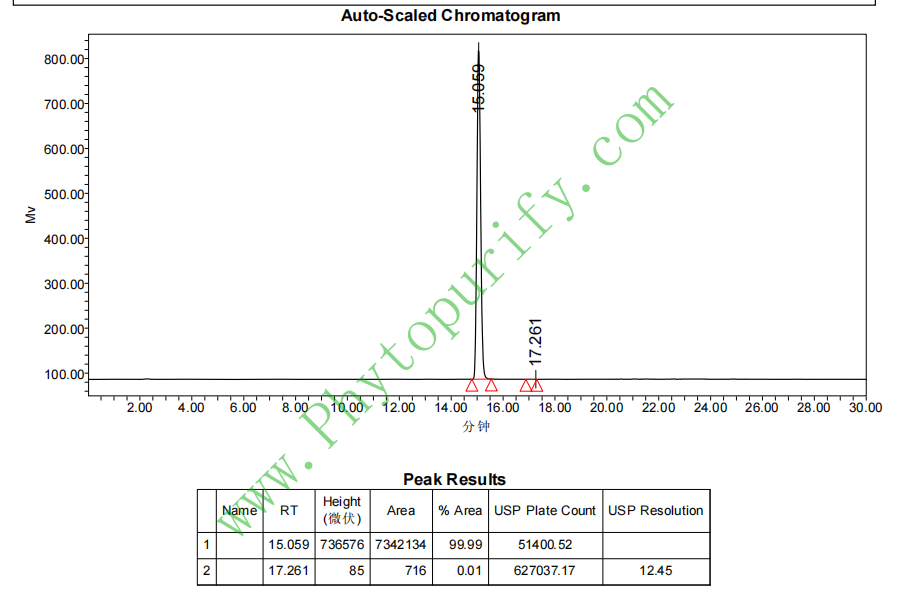
HPLC of Digitoxin
Storage conditions:Short-term storage at 2~8℃, long-term storage at -20 ~ -80℃
182.8300
2.5125
2.5128
.0242
1.1451
2.3003
Low
65.7663
5.9836
No
No
No
No
No
No
0.0
Yes
No
No
No
Digitoxin is a classic natural cardiac glycoside, first isolated from plants of the Polygonatum genus. Due to its significant cardiac pharmacological activity, it is widely used in the treatment of heart failure. In recent years, with the advancement of natural product pharmacology and molecular biology techniques, the mechanism of action and potential anti-tumor activity of iridoid glycosides have attracted high attention from the scientific research community. Research has shown that iridoid glycosides not only exert cardioprotective effects by regulating intracellular calcium homeostasis, but also induce apoptosis, block cell cycle, and inhibit inflammatory responses in various tumor cells, demonstrating their potential as anticancer agents and immunomodulators.
This article will provide a systematic review of the chemical structure and physicochemical properties, plant sources, and extraction methods of digitalis toxin glycosides, with a focus on their pharmacological activity and mechanism of action. Combined with pharmacological parameters and pharmacokinetic characteristics, it will explore their clinical application prospects and future research directions, aiming to provide theoretical basis and research ideas for the in-depth development and clinical translation of this natural product.
The molecular formula of Yangdi Huangdu glycoside is C41H64O13, with a molecular weight of 764.95 and a CAS number of 71-63-6. Its chemical structure belongs to the class of cardiac glycosides, with a steroid structure at its core, connected by a lactone ring and multiple glycoside residues. The specific structural features include:
In terms of physical and chemical properties, the LogP value of iridoid glycosides is 2.5125, indicating that they have moderate lipid solubility and are conducive to membrane penetration. The polar surface area (TPSA) is 182.83 Å ², indicating high polarity and low water solubility (0.0242 mg/mL), which limits its oral absorption and bioavailability. The low penetration ability of the blood-brain barrier suggests its limited distribution in the central nervous system. The hERG channel inhibition test result was negative, indicating a low risk of cardiac toxicity, while the Ames mutagenicity test showed 0, indicating a low risk of genotoxicity.
The main source of digoxin is Digitalis spp., especially Digitalis purpurea and Digitalis lanata. Mao Di Huang plants are widely distributed in Europe, Asia, and North America, traditionally used to treat heart disease.
The extraction of iridoid glycosides from Yangdi is usually carried out using the following steps:
In recent years, green and efficient technologies such as supercritical fluid extraction and microwave-assisted extraction have also been applied to the extraction of digitalis toxin glycosides, improving extraction efficiency and purity while reducing solvent usage.
The pharmacological activities of iridoid glycosides are diverse, covering aspects such as cardioprotection, anti-tumor, anti-inflammatory, and immune regulation.
As a classic cardiac glycoside, digoxin mainly inhibits the activity of Na ⁺/K ⁺ - ATPase on the myocardial cell membrane, leading to an increase in intracellular sodium ion concentration. This, in turn, increases intracellular calcium ion concentration through the sodium calcium exchange mechanism, enhancing myocardial contractility. The mechanism of inducing intracellular calcium uptake through the formation of transmembrane calcium channels provides a theoretical basis for the treatment of heart failure. In addition, berberine can activate the AMPK (PRKAA1) signaling pathway, regulate energy metabolism, and improve myocardial function.
In recent years, research on the use of iridoid glycosides in the field of cancer has rapidly developed. Its main anti-tumor mechanisms include:
Yangdi Huangdu glycoside can regulate various immune related targets, including EHMT2, PTPN1, MAOA, ESR2, etc., inhibit the release of pro-inflammatory cytokines, alleviate inflammatory reactions, and has potential anti-inflammatory and immune regulatory effects.
The multi-target mechanism of action of iridoid glycosides is complex, involving multiple biological processes such as cardioprotection, anti-tumor, and immune regulation.
Yangdi Huangdu glycoside specifically inhibits Na ⁺/K ⁺ - ATPase, leading to an increase in intracellular sodium ion concentration, affecting the sodium calcium exchange system, promoting calcium ion influx, and enhancing myocardial contractility. In addition, changes in calcium signaling are also involved in regulating cell apoptosis and cell cycle.
Yangdi Huangdu glycoside can induce DNA double strand breaks (DSBs), activate the ATM/ATR signaling pathway, activate cell cycle checkpoints, block the cell cycle in the G2/M phase, and prevent tumor cell division and proliferation.
The regulation of these targets together constitutes a multidimensional pharmacological network of digitalis toxin glycosides.
The pharmacological evaluation of berberine shows that it has certain potential for drug development, but there are also some limitations.
The oral absorption of berberine is slow and incomplete, and its bioavailability is limited. It is mainly metabolized in the body through the liver, with metabolic pathways involving glycoside hydrolysis and steroid skeleton modification. A longer half-life is beneficial for maintaining blood drug concentration, but it also increases the risk of drug accumulation. Excretion is mainly through bile and kidneys. Due to its low water solubility and large molecular weight, formulation design needs to be optimized to improve bioavailability.
Yangdi Huangdu glycoside, as a traditional medicine for heart failure, has a long history of clinical application and clear therapeutic effects. With further research on its anti-tumor and immune regulatory effects, Yangdi Huangdu glycoside is expected to expand its clinical indications and become a multifunctional drug.
Yangdi Huangdu glycoside remains an important treatment option for heart failure patients by regulating the calcium ion homeostasis of myocardial cells, enhancing myocardial contractility, and improving cardiac function. In the future, combining molecular targeted therapy with personalized medication strategies is expected to improve efficacy and safety.
Yangdi Huangdu glycoside has shown potential as an anti-cancer drug by inducing apoptosis, blocking cell cycle, and causing DNA damage in various tumor cells. By combining modern drug delivery systems (such as nanocarriers) and structural modifications, it is possible to overcome the shortcomings of poor water solubility and low bioavailability, and enhance anti-tumor activity.
The inhibitory effect of digitalis glycoside on inflammatory factor storm provides a new idea for its application in infectious diseases and autoimmune diseases. Future research can focus on its immune regulatory mechanisms and develop novel immune modulators.
Yangdi Huangdu glycoside, as a natural product with a long history, has played an important role in the treatment of heart failure due to its unique steroidal glycoside structure and diverse pharmacological activities. In recent years, its potential in anti-tumor, immune regulation, and anti-inflammatory aspects has gradually emerged, expanding its clinical application possibilities. Despite the challenges of poor water solubility and low bioavailability, with the development of modern drug research and development technology, the structural optimization and formulation improvement of digoxin will provide strong support for its clinical translation. In the future, combined with interdisciplinary research, berberine is expected to become a model of multifunctional natural medicine, contributing greater value to human health.
