


Product name: Sauchinone
Synonym name:
Catalogue No.: BP1258
Cas No.: 177931-17-8
Formula: C20H20O6
Mol Weight: 356.374
Botanical Source: Saururus chinensis(Lour.)Baill
Physical Description:
Type of Compound: Diterpenoids
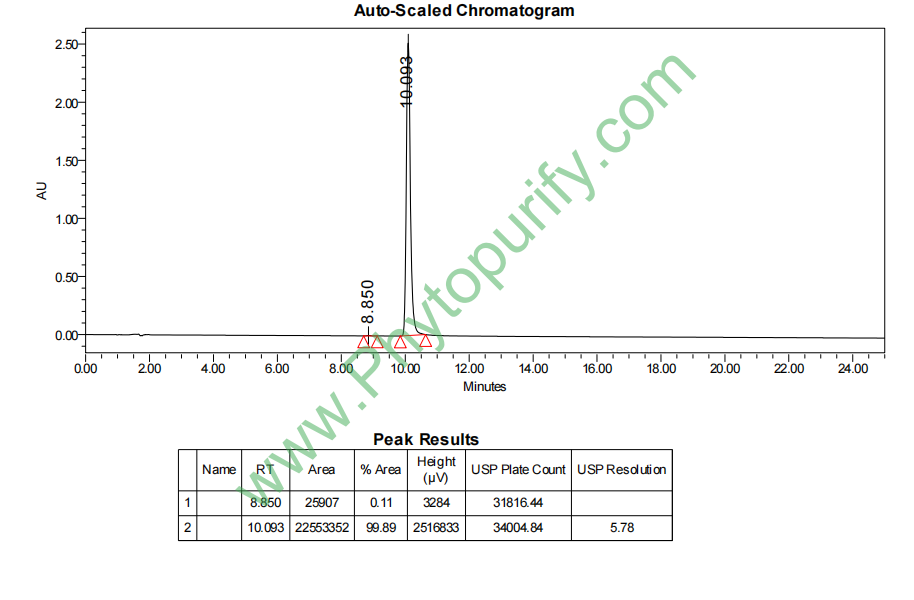
Purity: 95%~99%
Analysis Method: HPLC-DAD or/and HPLC-ELSD
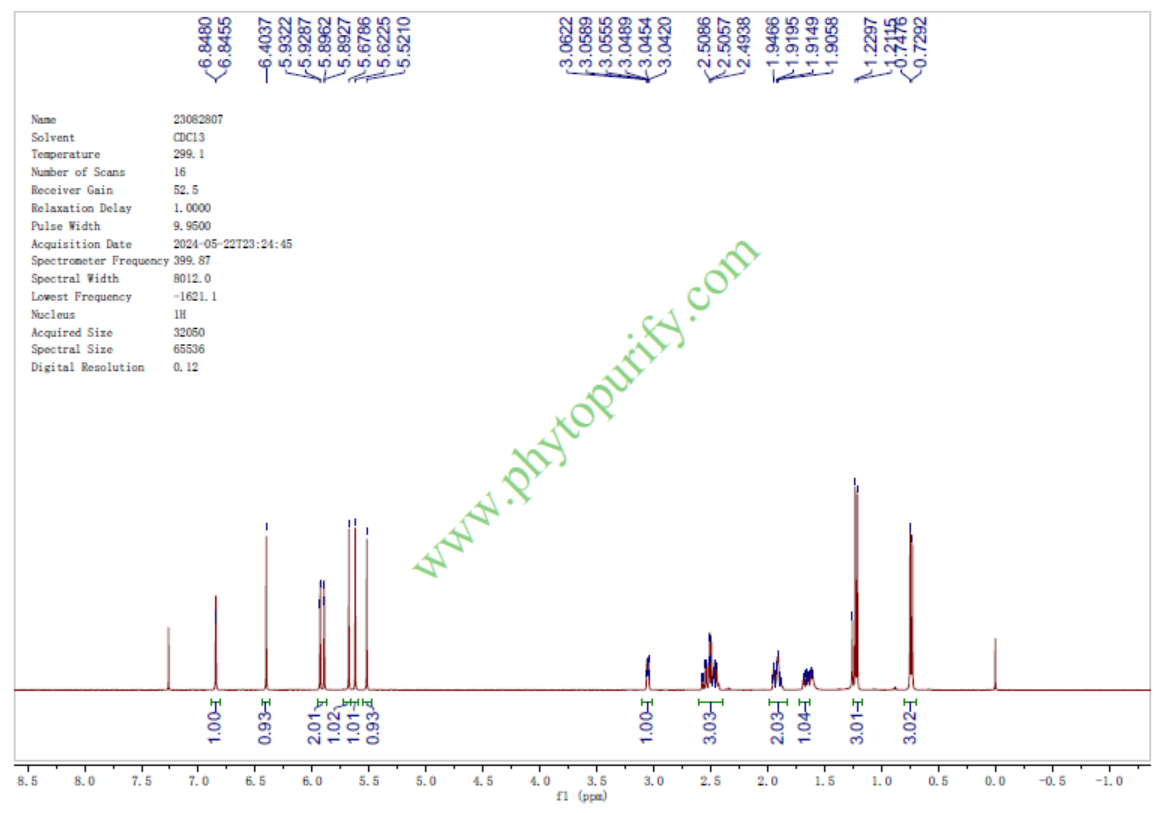
Identification Method: Mass, NMR
Packing: Brown vial or HDPE plastic bottle
Storage: Store in a well closed container, protected from air and light. Put into refrigerate or freeze for long term storage.
Whenever possible, you should prepare and use solutions on the same day. However, if you need to make up stock solutions in advance, we recommend that you store the solution as aliquots in tightly sealed vials at -20℃. Generally, these will be useable for up to two weeks.
The product could be supplied from milligrams to grams
Inquire for bulk scale.
Description:
Sauchinone possesses diverse pharmacological properties, such as hepatoprotective, neuroprotective, anti-inflammatory and anti-tumor effects. Sauchinone protects skin keratinocytes through inhibition of extracellular signal-regulated kinase, c-Jun N-terminal kinase, and p38 MAPK signaling via upregulation of oxidative defense enzymes. Sauchinone can be used for the prevention of functional β-cell damage, it prevents cytokine-induced NO production, iNOS expression,JAK/STAT activation,and NF-κB activation and inhibition of glucose-stimulated insulin secretion (GSIS).
References:
Int Immunopharmacol. 2013 Oct;17(2):471-7.
Sauchinone, a lignan from Saururus chinensis, attenuates neutrophil pro-inflammatory activity and acute lung injury.
Previous studies have shown that Sauchinone modulates the expression of inflammatory mediators through mitogen-activated protein kinase (MAPK) pathways in various cell types. However, little information exists about the effect of Sauchinone on neutrophils, which play a crucial role in inflammatory process such as acute lung injury (ALI).
METHODS AND RESULTS:
We found that Sauchinone decreased the phosphorylation of p38 MAPK in lipopolysaccharide (LPS)-stimulated murine bone marrow neutrophils, but not ERK1/2 and JNK. Exposure of LPS-stimulated neutrophils to Sauchinone or SB203580, a p38 inhibitor, diminished production of tumor necrosis factor (TNF)-α and macrophage inflammatory protein (MIP)-2 compared to neutrophils cultured with LPS. Treatment with Sauchinone decreased the level of phosphorylated ribosomal protein S6 (rpS6) in LPS-stimulated neutrophils. Systemic administration of Sauchinone to mice led to reduced levels of phosphorylation of p38 and rpS6 in mice lungs given LPS, decreased TNF-α and MIP-2 production in bronchoalveolar lavage fluid, and also diminished the severity of LPS-induced lung injury, as determined by reduced neutrophil accumulation in the lungs, wet/dry weight ratio, and histological analysis.
CONCLUSIONS:
These results suggest that Sauchinone diminishes LPS-induced neutrophil activation and ALI.
Biol Pharm Bull. 2013;36(7):1134-9.
Sauchinone, a lignan from Saururus chinensis, protects human skin keratinocytes against ultraviolet B-induced photoaging by regulating the oxidative defense system.
Ultraviolet (UV) radiation from sunlight induces matrix metalloproteinase (MMP) expression, which are responsible for collagenous extracellular matrix proteins breakdown in skin, causing photoaging. Sauchinone is reported to have various bioactivity such as antioxidative, hepatoprotective, and anti-inflammatory effects. In the present study, we investigated the protective effect of Sauchinone against UVB (50 mJ/cm(2))-induced photoaging in HaCaT human epidermal keratinocytes.
METHODS AND RESULTS:
Sauchinone, at 5-40 μM, significantly protected keratinocytes against UVB-induced damage as assessed by cell viability and toxicity assay. Additionally, Sauchinone, at 20-40 μM, prevented the upregulation of MMP-1 proteins and reduction of type 1 collagen induced by UVB. Other assays revealed that, in keratinocytes, Sauchinone decreased reactive oxygen species (ROS) production and increased glutathione levels and heme oxygenase-1. Sauchinone also inhibited UVB-induced phosphorylation of mitogen-activated protein kinase (MAPK) signaling pathways.
CONCLUSIONS:
These results demonstrated that Sauchinone protects skin keratinocytes through inhibition of extracellular signal-regulated kinase, c-Jun N-terminal kinase, and p38 MAPK signaling via upregulation of oxidative defense enzymes.
Biol Pharm Bull. 2003 Oct;26(10):1428-30.
Sauchinone, a lignan from Saururus chinensis, inhibits staurosporine-induced apoptosis in C6 rat glioma cells.
Neuronal apoptosis may contribute to pathologic neuronal loss in certain disease states such as neurodegenerative diseases. Staurosporine (ST), a nonselective protein kinase inhibitor, has been shown to induce apoptosis in a variety of cells including nerve cell lines. In this study, we investigated the neuroprotective effect of Sauchinone, which is a unique lignan from Saururus chinensis, on ST-induced apoptosis in C6 rat glioma cells.
METHODS AND RESULTS:
Sauchinone attenuated ST-induced apoptosis of C6 glioma cells as evidenced by DNA fragmentation. We also provide evidence that the inhibitory effect of Sauchinone on ST-induced apoptosis involves a dose-dependent upregulation of an antiapoptotic protein, Bcl-2. Mounting evidence shows that the activation of caspases, especially caspase-3, triggers the apoptotic process. The activity of caspase-3 of ST-pretreated cells was significantly decreased upon Sauchinone treatment in a dose-dependent manner.
CONCLUSIONS:
Taken together, the data demonstrate that Sauchinone protects C6 glioma cells from ST-induced apoptosis in a caspase-3 dependent manner. Our findings may be critical for developing a strategy to protect nerve cells from apoptosis, suggesting the potential development of Sauchinone as a neuroprotective agent.
Eur J Pharmacol. 2014 Apr 5;728:176-82.
Effect of sauchinone, a lignan from Saururus chinensis, on bacterial phagocytosis by macrophages.
AMP-activated protein kinase (AMPK) plays an important role in inflammation in various cells and increases the phagocytic ability of macrophages.
METHODS AND RESULTS:
In this study, we found that Sauchinone increased the phosphorylation of AMPK and acetyl-CoA carboxylase (ACC), a downstream target of AMPK, in mouse peritoneal macrophages. Sauchinoneincreased macrophage phagocytosis of fluorescent Escherichia coli, which was blocked by compound C, an AMPK inhibitor. Sauchinone also increased the phosphorylation of p38 mitogen activated protein kinase (MAPK) in cultured macrophages in a concentration-dependent fashion, which was not blocked by compound C. However, the increase of Sauchinone-induced phagocytosis was prevented by SB203580. An inhibitor of the upstream kinase TGF-beta-activated kinase (TAK1), (5z)-7-oxozeaenol, abolished the phosphorylation of ACC and p38 MAPK. Systemic administration of Sauchinone to mice led to increased phosphorylation of AMPK and p38 MAPK in the lung, and enhanced phagocytosis of fluorescent E. coli in bronchoalveolar lavage fluid as compared with control mice.
CONCLUSIONS:
These results suggest Sauchinone to be a useful adjunctive treatment for bacterial infection.
HNMR of Sauchinone
HPLC of Sauchinone
Storage conditions:Short-term storage at 2~8℃, long-term storage at -20 ~ -80℃
63.2200
2.6119
2.6122
.0089
4.9883
29.0174
High
81.9808
5.3287
No
No
Yes
No
Yes
Yes
1.5
Yes
Yes
Yes
Yes
Natural products, as an important source of drug discovery, play an irreplaceable role in the history of human disease treatment. Among them, lignans have always been a hot topic in medicinal chemistry and pharmacology research due to their structural diversity and extensive biological activities, such as anti-inflammatory, antioxidant, anti-tumor, etc. Sauchinone, a traditional medicinal plant derived from Sauchinone(Saururus chinensis)The non enantiomeric lignans obtained from the separation of lignin have attracted much attention since their discovery due to their significant anti-inflammatory and antioxidant activities. Its CAS number is 177931-17-8. Early studies have shown that triclosan can effectively inhibit the expression of inducible nitric oxide synthase (iNOS), tumor necrosis factor alpha (TNF - α), and cyclooxygenase-2 (COX-2) induced by lipopolysaccharide (LPS) by inhibiting key steps in the nuclear factor kappa B (NF - κ B) signaling pathway, such as I - κ B alpha phosphorylation and p65 nuclear translocation, laying the foundation for its role as an anti-inflammatory lead compound.
In recent years, with the deepening of research, the pharmacological activity spectrum of tribenurone has expanded from the classic anti-inflammatory field to a more challenging tumor field, especially in the treatment of breast cancer, showing the potential of multi-target and multi-channel intervention. Studies have revealed that tribenurone can affect AMPK, STAT3, BCL2, estrogen receptor beta (ESR2) and other key targets closely related to the occurrence, development, metastasis and drug resistance of breast cancer. This multi-target action characteristic makes it promising to overcome the limitations of traditional single target drugs, such as drug resistance and toxic side effects. The purpose of this paper is to systematically review the chemical characteristics, plant origin, pharmacological activity, molecular mechanism of action, pharmaceutical evaluation and clinical application prospects of trileucone in breast cancer and other diseases, in order to provide a comprehensive scientific reference for the in-depth development and transformation research of this natural product.
Sanbaicao ketone is a non enantiomeric lignan with a unique skeleton. Its chemical name is (7R, 8S, 7'R, 8'S) -7,7 '- dihydroxy-3,3', 4,4 ', 5,5' - hexamethoxy-8,8 '- neolignan. The molecular formula is C20H22O6 and the molecular weight is 356.3740. Its core structure is composed of two phenylpropanoid units (C6-C3) connected by carbon carbon bonds at the 8,8 '- position, forming a tetrahydrofuran ring structure, belonging to the class of bicyclic lignin. The structure contains multiple methoxy and phenolic hydroxyl groups, which have a decisive impact on its biological activity and physicochemical properties.
From the analysis of physical and chemical properties, the lipid water partition coefficient (LogP) of triclosan is 2.6119, indicating its moderate lipophilicity, which facilitates its penetration of cell membranes and interaction with intracellular targets. Its topological polar surface area (TPSA) is 63.2200 Å ², which is relatively small and further supports its good membrane permeability. The water solubility data is 0.0089 mg/mL, which belongs to poorly soluble compounds. This may be a potential limiting factor for their oral bioavailability, and solubilization strategies need to be considered in formulation development. It is worth noting that its blood-brain barrier (BBB) penetration is predicted to be "high", indicating that triclosan or its derivatives have potential value in the treatment of central nervous system related diseases such as neuroinflammation, Alzheimer's disease, etc. Preliminary safety assessment shows that it has no significant inhibitory effect on hERG potassium channels (hERG inhibition: No), reducing the risk of inducing QT interval prolongation in the heart. The Ames test result is 1.5, indicating no significant mutagenicity under the testing conditions, providing preliminary support for its safety.
Sanbaicao ketone mainly comes from the Sanbaicao plant in the Sanbaicao family(Saururus chinensis The above ground part of (Lour.) Baill. San Bai Cao is a perennial herbaceous plant widely distributed in East Asia, including China, South Korea, and Japan. In traditional Chinese medicine, the whole herb of Sanbai grass is used as medicine, which has the effects of clearing heat and dampness, detoxifying and reducing swelling. It is commonly used to treat edema, athlete's foot, jaundice, gonorrhea, vaginal discharge, abscess, and other diseases. Modern plant chemistry research has isolated and identified various lignans, flavonoids, and volatile oil components from this plant, among which triclosan is one of the most biologically active lignans.
The extraction and separation of triclosan usually follow the conventional process of natural product chemistry. Firstly, the dried upper part of the Sanbai grassland is crushed and subjected to reflux extraction or cold soaking extraction using polar organic solvents such as methanol, ethanol, or acetone to obtain the crude extract. Subsequently, the crude extract was preliminarily separated using solvent partitioning method (such as extraction with petroleum ether, ethyl acetate, and n-butanol in sequence), and triclosan was mainly enriched in the ethyl acetate extraction site. Further purification relies on various chromatographic techniques. Silica gel column chromatography is commonly used for preliminary separation, with different ratios of petroleum ether ethyl acetate or chloroform methanol gradient elution. After obtaining a fraction rich in triclosan, high-purity triclosan monomer is obtained by high performance liquid chromatography (HPLC), especially preparative or semi preparative HPLC, using a reverse phase C18 column and methanol water or acetonitrile water as the mobile phase for final purification. Structural identification involves the comprehensive use of techniques such as nuclear magnetic resonance (NMR, including 1H, 13C, 2D-NMR), mass spectrometry (MS), infrared spectroscopy (IR), and optical rotation measurement.
Sanbaicao ketone exhibits a wide range of pharmacological activities, and its research has expanded from its initial anti-inflammatory and antioxidant properties to multiple fields such as anti-tumor, liver protection, and neuroprotection.
Anti inflammatory and antioxidant activity This is the earliest confirmed core activity of triclosan. In various cell models (such as RAW 264.7 macrophages, microglia) and animal models (such as LPS induced sepsis model, carrageenan induced foot swelling model), triclosan has shown strong anti-inflammatory effects. It can significantly inhibit the production of pro-inflammatory mediators (NO, PGE2, TNF - α, IL-1 β, IL-6) and the expression of iNOS and COX-2 proteins. Its antioxidant effect is reflected in clearing free radicals, enhancing the activity of superoxide dismutase (SOD) and glutathione peroxidase (GPx), and reducing the level of malondialdehyde (MDA). These activities together form the basis of its resistance to oxidative stress related diseases (such as hepatitis, atherosclerosis, neurodegenerative diseases).
Antitumor activity In recent years, the research on the anti-tumor potential of trileucone, especially in breast cancer, has become the focus. In vitro studies have shown that trileucone can effectively inhibit the proliferation of many breast cancer cell lines (such as MCF-7, MDA-MB-231, T47D), and induce apoptosis and cell cycle arrest. In animal models, administration of tribenurone can inhibit the growth and metastasis of breast cancer xenografts. Its anti-tumor effect is not achieved through a single cytotoxic effect, but involves intervention in multiple malignant features of tumor cells, including proliferation, apoptosis resistance, invasion and metastasis, and drug resistance.
Liver protective activity In a mouse model of acute liver injury induced by carbon tetrachloride (CCl4) or acetaminophen (APAP), triclosan can alleviate liver tissue pathological damage, reduce serum transaminase levels, inhibit hepatic stellate cell activation, and exhibit hepatoprotective effects through its anti-inflammatory and antioxidant properties.
Neuroprotective activity Thanks to its excellent blood-brain barrier penetration and anti-inflammatory and antioxidant properties, triclosan has shown neuroprotective potential in MPTP induced Parkinson's disease mouse models and A β - induced Alzheimer's disease cell models, improving motor function, reducing neuronal death, and inhibiting excessive activation of microglia.
The pharmacological effects of trileucone, especially its anti breast cancer activity, are realized by regulating a complex molecular network, involving multiple key signal pathways and targets.
Core anti-inflammatory mechanism: NF - κ B pathway inhibition The most classic mechanism of action of triclosan is to inhibit the NF - κ B signaling pathway. Under inflammatory stimulation, it stabilizes I - κ B α by blocking the phosphorylation of I - κ B kinase (IKK) complex, thereby blocking the nuclear translocation of NF - κ B p65 subunit and ultimately downregulating the transcriptional expression of a series of NF - κ B target genes (such as iNOS, COX-2, TNF - α, IL-6).
Multi target mechanism of anti breast cancer:
To sum up, through acting on multiple key targets such as AMPK, STAT3, BCL2, ESR2, etc. at the same time, trileucone has formed a multi-dimensional and synergistic anti-tumor network, which provides a solid molecular basis for its development into a multi target anti breast cancer drug.
Although triclosan has shown excellent biological activity in preclinical studies, its pharmacological properties still need to be comprehensively evaluated.
Absorption, distribution, metabolism, excretion (ADME)Currently, research on the pharmacokinetics of the triclosan system is relatively limited. Based on its physicochemical properties (moderate LogP, low water solubility), it is predicted that its oral absorption may be limited by solubility, and its bioavailability needs to be improved. Its high blood-brain barrier penetration indicates good tissue distribution characteristics, especially in the central nervous system. As a lignan compound, triclosan is likely to undergo extensive metabolism in the body, including phase I metabolism (such as oxidation, reduction, and hydrolysis of cytochrome P450 enzymes) and phase II binding reactions (such as glucuronidation and sulfation). Further research is needed on its metabolites, major metabolic enzymes, and excretion pathways (via bile or urine) through radioactive labeling or high-sensitivity mass spectrometry analysis.
Challenges and optimization strategies for drug development:
Preliminary Safety Assessment The existing non clinical data (such as no hERG inhibition and negative Ames test) suggest a good safety starting point. However, a complete preclinical safety evaluation is still needed, including acute toxicity, long-term toxicity (28 day/90 day repeated administration), reproductive toxicity, as well as more comprehensive genetic toxicity and carcinogenicity assessments, to clarify its safety window.
The multi-target pharmacological properties of triclosan have brought broad prospects for its application in various disease fields.
breast cancer treatment This is the most promising direction. Sanbaicao ketone can be used as:
Inflammatory diseases Can be used to treat chronic inflammatory diseases such as rheumatoid arthritis, inflammatory bowel disease, and neuroinflammatory related diseases (such as Alzheimer's disease, Parkinson's disease). Its good BBB penetration is particularly beneficial for the treatment of central nervous system inflammation.
liver disease As a hepatoprotective drug, it is used to prevent or treat drug-induced liver injury, alcoholic/non-alcoholic fatty liver disease, etc.
Future research directions and challenges:
As a natural lignan derived from traditional medicinal plants, sanbaicao ketone, with its unique chemical structure and multi-target mechanism of action, has demonstrated remarkable pharmacological activities in the fields of anti-inflammatory, antioxidant and anti-tumor (especially breast cancer). It can not only play an anti-inflammatory role by inhibiting the classic NF - κ B pathway, but also co interfere with multiple malignant phenotypes such as proliferation, apoptosis, invasion and drug resistance of breast cancer by regulating key nodes such as AMPK, STAT3, BCL2 and ESR2. Despite facing challenges such as poor water solubility in drug development, modern medicinal chemistry and pharmaceutical technology provide powerful tools for addressing these issues. In the future, through in-depth mechanism analysis, systematic drug optimization and innovative drug delivery strategies, Sanbaicao Ketone is expected to be successfully transformed from a potential lead compound into an innovative drug for the treatment of major diseases such as breast cancer, fully demonstrating the lasting vitality and important value of natural products in modern drug research and development.
