| Catalog No | Package | Original Price | Price | Inventory | Quantity | Operating |
|---|---|---|---|---|---|---|
| BP5077-5mg | 5mg | $750.00 | Sign in |
|


Storage conditions:Short-term storage at 2~8℃, long-term storage at -20 ~ -80℃
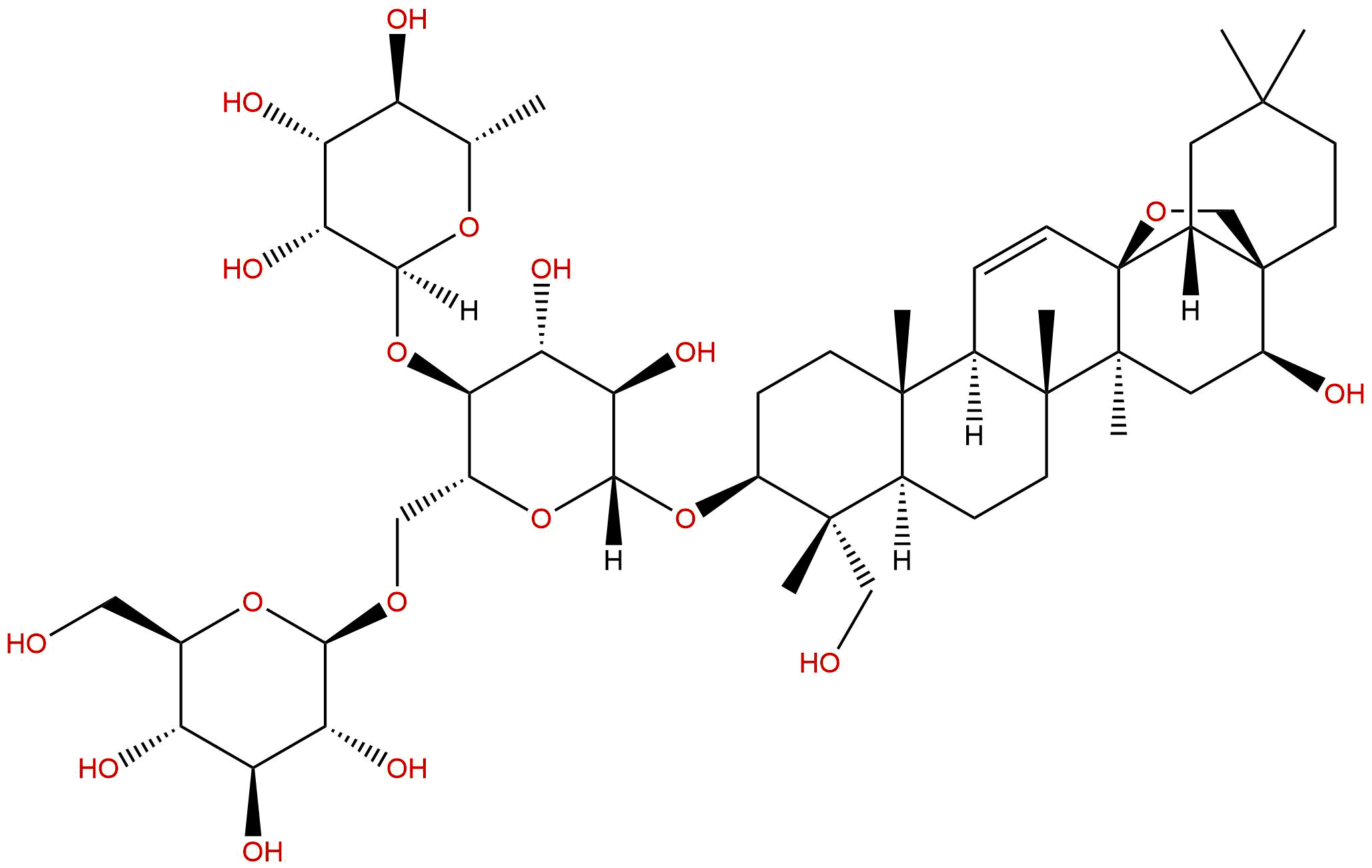
Chikusaikoside II is a natural triterpenoid saponin compound isolated from the Bupleurum longeradiatum plant in the Bupleurum genus. Bupleurum plants are widely used in traditional Chinese medicine, especially known for their effects of relieving the exterior, soothing the liver, and harmonizing the body's health. In recent years, with the development of natural product pharmacology, saikosaponin compounds have received widespread attention due to their diverse biological activities. As an important member of it, Chaihu saponin II exhibits significant anti-inflammatory activity, involving multiple inflammation related molecular targets, providing a theoretical basis for its potential application in the treatment of inflammatory diseases.
This article will systematically review the chemical structure and physicochemical properties, plant sources and extraction methods, pharmacological activity and mechanism of action, pharmacological evaluation and pharmacokinetic characteristics of Chaihu saponin II. Finally, it will explore its clinical application prospects and research prospects, aiming to provide scientific references for the in-depth research and drug development of this compound.
The chemical structure of Chaihu saponin II belongs to the triterpenoid saponin class, with a complex molecular formula and a molecular weight of 943.1340. Its structural core is a pentacyclic triterpenoid skeleton, connecting multiple sugar groups to form a typical saponin structure. The LogP value of this compound is 2.3399, indicating that it has moderate lipid solubility, which is beneficial for cell membrane penetration but not too hydrophobic. The topological polar surface area (TPSA) is 287.1400, indicating high polarity, and the presence of sugar groups significantly increases its polarity and hydration ability.
The water solubility is relatively low, about 0.0566 mg/mL, indicating limited solubility in water, which may affect oral bioavailability. The low permeability of the blood-brain barrier indicates limited distribution in the central nervous system, which may reduce central side effects. The hERG channel inhibition experiment result was negative, indicating that the compound has a low risk of cardiac toxicity. The Ames mutagenicity test result is 0.0, indicating that its genotoxicity risk is relatively low and has a good safety basis.
Saponin II from Bupleurum longeradiatum, a plant of the Bupleurum genus, is mainly isolated and obtained. Da Ye Chai Hu is widely distributed in northern China and East Asia, and is traditionally used in traditional Chinese medicine formulas for relieving external heat, soothing the liver and regulating qi. The roots of plants are the main medicinal parts and also the enrichment sites of saponin compounds.
The extraction process usually adopts the alcohol extraction method, using 70% -95% ethanol or methanol to reflux or ultrasonically extract the dried and crushed roots. After concentration, the extract is separated into saponin components using multi-stage liquid-liquid distribution (such as ethyl acetate, n-butanol, etc.). Further purification using commonly used techniques such as silica gel column chromatography and reverse phase high-performance liquid chromatography (RP-HPLC), combined with mass spectrometry (MS), nuclear magnetic resonance (NMR), and other methods to confirm the structure.
In recent years, the application of supercritical CO ₂ extraction and membrane separation technology has provided new ideas for improving extraction efficiency and purity, and is more in line with the principles of green chemistry. The optimization of extraction process not only affects the yield, but also has important significance for subsequent pharmacological activity research and formulation development.
The main pharmacological activities of saikosaponin II in large leaves are focused on anti-inflammatory effects, as well as immune regulation, antioxidant, and cell protection. Numerous in vitro and in vivo studies have shown that this compound can significantly inhibit the expression and release of various inflammatory mediators, reducing inflammatory responses.
In cell models, saikosaponin II can inhibit the production of inflammatory factors IL-6 and TNF - α, reduce the activity of inflammation related enzymes such as PTGS1 (COX-1), PTGS2 (COX-2), and NOS2 (iNOS), and alleviate oxidative stress and cell apoptosis. Its regulation of inflammasome associated protein CASP1 helps to inhibit the maturation and release of inflammatory mediators.
Animal model studies have shown that saikosaponin II can alleviate symptoms of various inflammatory diseases such as arthritis, hepatitis, and pneumonia, improve histopathological indicators, and reduce inflammatory cell infiltration. Its anti-inflammatory effect is similar to traditional saikosaponin drugs, but its specific regulation on certain inflammatory targets is more significant.
In addition, Chaihu saponin II has a regulatory effect on TRPV1 and TRPA1 plasma channels, which play a key role in pain and inflammatory signaling, suggesting its potential application value in the management of inflammatory pain.
The anti-inflammatory mechanism of Chaihu saponin II involves the synergistic regulation of multiple signaling pathways and molecular targets. The core targets include inflammatory cytokine IL-6, transcription factor STAT3, inflammasome component CASP1, inflammatory mediator synthase PTGS1/PTGS2, pro-inflammatory cytokine TNF, and oxidative stress-related enzyme NOS2.
IL-6/STAT3 signaling pathway IL-6 is a pro-inflammatory cytokine that promotes inflammation and cell proliferation by activating the STAT3 signaling pathway. Chaihu saponin II can inhibit the expression of IL-6 and the phosphorylation of STAT3, block signal transduction, and reduce the transcription of inflammatory genes.
Regulation of inflammasomes CASP1, as a key enzyme in inflammasomes, participates in the maturation of inflammatory factors such as IL-1 β. Chaihu saponin II inhibits CASP1 activity, reduces the release of pro-inflammatory cytokines, and alleviates inflammatory reactions.
Inhibition of cyclooxygenase (PTGS1/PTGS2)PTGS1 and PTGS2 catalyze prostaglandin synthesis and are important mediators of inflammatory responses. This compound has inhibitory effects on both enzymes and reduces the production of inflammatory mediators.
Inhibition of pro-inflammatory cytokine TNF TNF - α is one of the core factors in inflammatory response, and Chaihu saponin II can significantly reduce the expression of TNF - α and alleviate the inflammatory cascade reaction.
Oxidative stress regulation Reduce excessive production of nitric oxide (NO) and mitigate oxidative stress damage by inhibiting NOS2.
TRPV1/TRPA1 regulation These two ion channels play important roles in inflammatory pain and neuroinflammation. Chaihu saponin II from large leaves alleviates pain and inflammatory symptoms by regulating its activity.
Inhibition of NF - κ B signaling pathway NF - κ B is a key transcription factor that regulates the expression of inflammatory genes. Chaihu saponin II can inhibit the activation of NF - κ B and reduce the transcription of inflammatory genes.
In summary, the synergistic effect of Chaihu saponin II on multiple targets and pathways enables effective regulation of inflammatory responses, demonstrating its advantages as a candidate molecule for anti-inflammatory drugs.
From the perspective of medicinal properties, saikosaponin II exhibits certain advantages and challenges. Its molecular weight is relatively large (943.1340), exceeding the ideal range of traditional small molecule drugs, which may affect oral absorption and bioavailability. The higher TPSA value (287.1400) and lower water solubility (0.0566 mg/mL) indicate strong polarity, limited solubility, and membrane permeability.
The LogP value is 2.3399, which belongs to moderate lipid solubility and is conducive to cell membrane penetration. However, the complexity of the overall molecular structure and the presence of glycosides may limit its transmembrane transport. The low permeability of the blood-brain barrier reduces the risk of central nervous system side effects, but also limits its application in central inflammatory diseases.
In terms of safety, the hERG channel inhibition test was negative, indicating a low risk of cardiac toxicity. The Ames test result is 0, indicating a low risk of genotoxicity and good safety.
In terms of pharmacokinetics, existing research is relatively limited. Due to its high molecular weight and low water solubility, oral absorption may be limited, and further pharmacological measures such as nanocarriers and liposomes are needed to improve bioavailability. The metabolic pathways in the body are not yet clear and require further research. The role and excretion pathways of liver metabolic enzymes will be the focus of future research.
Large leaf Chaihu saponin II has broad application prospects in the treatment of inflammatory diseases due to its significant anti-inflammatory activity and multi-target regulatory advantages. Its targets include various inflammation related factors and are suitable for various diseases such as rheumatoid arthritis, hepatitis, pneumonia, and inflammatory pain.
Currently, the main challenge facing the development of natural product drugs is the optimization of bioavailability and pharmacokinetic performance. Regarding saikosaponin II from large leaf Chaihu, future research can focus on:
Pharmaceutical improvement Improve its solubility and absorption rate through nanotechnology, liposomes, solid dispersions, and other methods.
Structural modification Chemical modification based on molecular structure to optimize drug properties, enhance targeting and biological activity.
In depth study of mechanisms Using multi omics techniques, further analyze its mechanism of action and target network, and explore potential synergistic effects.
Preclinical safety evaluation Conduct toxicology research systematically to evaluate the safety and tolerability of long-term medication.
Clinical trial design Based on pharmacological and pharmacokinetic data, design rational clinical trials to verify their efficacy and safety.
In addition, by combining modern drug design concepts, the development of derivatives or compound preparations of Chaihu saponin II may achieve better therapeutic effects. Its low blood-brain barrier permeability also provides a safety guarantee for peripheral inflammatory diseases.
As an important triterpenoid saponin in the Bupleurum genus, saikosaponin II exhibits significant anti-inflammatory activity and multi-target regulatory ability, demonstrating good pharmacological potential. Its complex chemical structure and physicochemical properties pose challenges for drug development, but also provide abundant room for modification. In the future, through in-depth mechanism research, pharmaceutical optimization, and preclinical evaluation, it is expected to promote its clinical application and become a new natural drug candidate molecule for the treatment of inflammatory diseases.
In summary, saikosaponin II not only enriches the research system of saikosaponin natural products, but also provides new ideas and directions for the development of anti-inflammatory drugs, which is worthy of continuous attention and in-depth exploration in the field of natural product pharmacology.
