| Catalog No | Package | Original Price | Price | Inventory | Quantity | Operating |
|---|---|---|---|---|---|---|
| BP3104-20mg | 20mg | $20.00 | Sign in |
|


Storage conditions:Short-term storage at 2~8℃, long-term storage at -20 ~ -80℃
Cytosine, CAS number 65-46-3, is an important pyrimidine nucleoside compound that is widely present in organisms as one of the basic building blocks of RNA. Cytosine nucleosides are not only essential precursors for RNA synthesis, but also play important roles in cellular metabolism, signal transduction, and regulation of nervous system function. In recent years, cytosine nucleosides have gradually become a hot topic in neuropharmacology and metabolic disease research due to their potential roles in regulating the glial glutamate cycle, brain phospholipid metabolism, catecholamine synthesis, and mitochondrial function maintenance. In addition, the application prospects of cytosine nucleosides in the field of antiviral therapy have also attracted widespread attention, with their targets covering various viral proteins and host receptors, demonstrating good antiviral potential.
This article aims to systematically review the chemical structure and physicochemical properties, plant sources and extraction methods, pharmacological activity and mechanism of action, pharmacological evaluation and pharmacokinetic characteristics of cytosine nucleosides, and explore their clinical application prospects and development trends, providing theoretical basis and reference for scientific research and drug development in related fields.
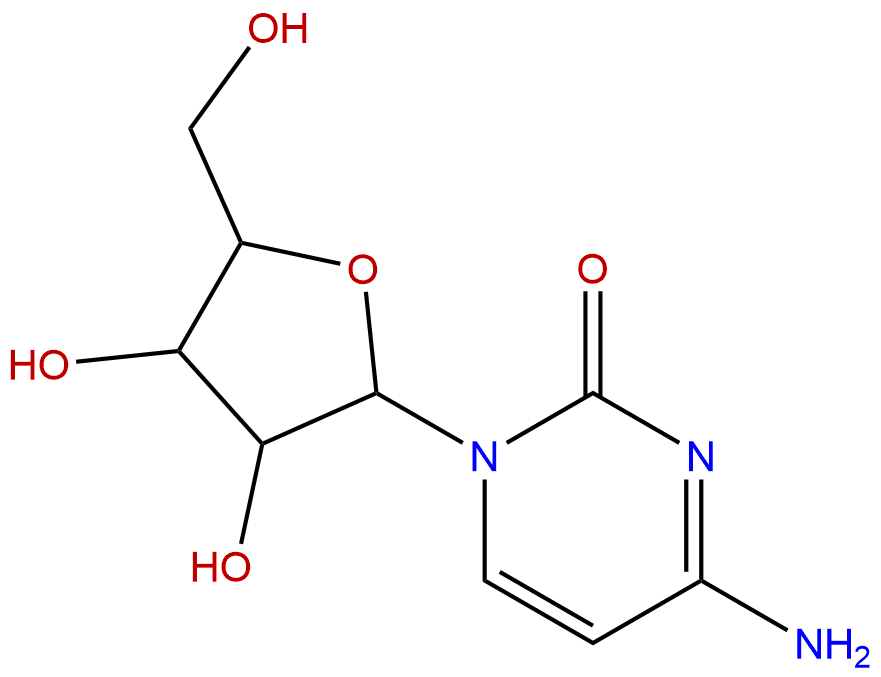
The chemical structure of cytosine nucleoside is composed of the pyrimidine base cytosine and ribose molecules connected by a β - N1 glycosidic bond, with a molecular formula of C9H13N3O5 and a molecular weight of 243.2190. Its structural characteristics determine that cytosine nucleosides have high polarity and hydrophilicity, with a LogP value of -2.1503, showing strong water solubility (22.8682 mg/mL), which is beneficial for their dissolution and transport in organisms. Its topological polar surface area (TPSA) is 130.83 Å ², indicating that cytosine nucleosides have strong polar groups that facilitate binding with enzymes and receptors.
The structure of cytosine nucleoside is stable and does not exhibit hERG channel inhibitory activity. The Ames test result is 0.9, indicating a low risk of genetic toxicity. In addition, cytidine has a high blood-brain barrier permeability, which lays the foundation for its application in the treatment of central nervous system diseases.
Cytosine nucleosides, as nucleoside compounds, are widely present in various organisms, including plants, microorganisms, and animal tissues. Although cytosine nucleosides are mainly generated in cells through biosynthetic pathways, some plants also contain certain amounts of cytosine nucleosides, especially in plant tissues rich in nucleic acids.
The traditional method for extracting cytosine nucleosides mainly relies on the hydrolysis and separation of nucleic acids, including acidic or enzymatic hydrolysis of RNA, followed by purification through techniques such as ion exchange chromatography and reverse phase high performance liquid chromatography (RP-HPLC). In recent years, the introduction of ultrasound assisted extraction and membrane separation technology has improved the extraction efficiency and purity of cytosine nucleosides. In addition, the technology of genetically engineered microbial fermentation for producing cytosine nucleosides has gradually matured and become an important pathway for industrial preparation.
The pharmacological activities of cytosine nucleosides cover multiple aspects such as neuroprotection, antiviral activity, and metabolic regulation.
The mechanism of action of cytidine in the nervous system mainly involves regulating the circulation of glutamate in glial cells, reducing excitotoxicity, and protecting neurons from damage caused by overexcitement. In addition, cytosine nucleosides participate in the metabolism of brain phospholipids, promote the repair and regeneration of neural membranes, and improve nerve conduction function. Its regulatory effect on catecholamine synthesis helps maintain neurotransmitter balance and improve cognitive and emotional states. Cytosine nucleosides also have the potential to inhibit neurodegenerative diseases by regulating mitochondrial function, enhancing cellular energy metabolism, reducing oxidative stress.
Cytosine nucleosides exhibit multi-target effects in antiviral research and can interfere with virus replication and infection processes. Its targets include myeloperoxidase (MPO), herpes virus associated proteins UL42, UL54, ICP27, thymidine kinase (TK), membrane glycoprotein gD, as well as HIV related targets such as CCR5, CXCR4, HIV1 protease (HIV1-PR), and integrase (INT). These targets involve key steps such as virus gene replication, protein synthesis, and host cell invasion. Cytosine nucleosides regulate these targets to inhibit virus replication and reduce pathological damage caused by viral infection.
Cytosine nucleosides have also been found to be involved in regulating immune responses and have certain anti-inflammatory effects. In addition, its regulatory effect on cellular metabolism has shown potential value in the study of metabolic syndrome and related diseases.
The mechanism of action of cytosine nucleosides is complex, involving multiple signaling pathways and molecular targets.
Cytosine nucleosides regulate glutamate transporters in glial cells, promote glutamate uptake and metabolism, reduce glutamate accumulation in synaptic cleft, and prevent excitotoxicity. In addition, cytosine nucleosides promote the synthesis of brain phospholipids, enhance the stability and functional integrity of neuronal cell membranes. Its promoting effect on catecholamine synthesis may be achieved by regulating tyrosine hydroxylase activity, which in turn affects the levels of neurotransmitters such as dopamine and norepinephrine. Cytosine nucleosides also regulate the activity of mitochondrial respiratory chain complexes, maintain cellular energy metabolism, reduce reactive oxygen species (ROS) generation, and prevent cell apoptosis.
Cytosine nucleosides inhibit the synthesis of viral DNA or RNA by binding to enzymes and proteins related to viral replication. Specifically, cytosine nucleosides interfere with the function of herpes virus UL42 and UL54 proteins, block viral DNA polymerase activity, and inhibit viral replication. For HIV virus, cytosine nucleoside blocks CCR5 and CXCR4 receptors to prevent virus invasion into host cells, while inhibiting HIV protease and integrase activity, interfering with multiple stages of the virus lifecycle. In addition, the regulatory effect of cytidine on the host immune system helps enhance the body's antiviral ability.
The physicochemical properties of cytosine nucleoside show that it has good water solubility and low lipid solubility, which is beneficial for oral absorption and in vivo distribution. Its LogP value is -2.1503, indicating that cytosine nucleosides are hydrophilic and may limit their passive diffusion through lipid membranes, but high blood-brain barrier permeability suggests that they may enter the central nervous system through specific transport mechanisms.
Cytosine nucleosides do not exhibit hERG channel inhibitory activity, reducing the risk of cardiac toxicity. The Ames test result is 0.9, indicating a low risk of genetic toxicity and good safety. Pharmacokinetic studies have shown that cytosine nucleoside has a relatively fast metabolic rate in vivo, mainly through nucleosidase hydrolysis metabolism. Metabolites can participate in nucleic acid synthesis and energy metabolism.
However, the oral bioavailability of cytidine is limited, and it may be necessary to improve its clinical efficacy through drug formulation optimization or administration route improvement. Its high blood-brain barrier permeability provides advantages for the treatment of neurological diseases, but further research is needed on its metabolism and duration of action in the brain.
The potential of cytidine in neuroprotection and antiviral fields provides broad prospects for its clinical application. Cytosine nucleosides have the potential to become a new therapeutic strategy in neurodegenerative diseases such as Alzheimer's disease, Parkinson's disease, and brain injury repair by regulating glial cell function and neurotransmitter balance. In addition, cytosine nucleosides exhibit multi-target synergistic inhibitory effects in antiviral therapy, especially against herpes virus and HIV infections. In the future, they can be used in combination with existing antiviral drugs to improve efficacy and reduce the risk of drug resistance.
Future research should focus on optimizing drug formulations for cytosine nucleosides, developing targeted delivery systems, and validating clinical trials to further clarify their safety and efficacy. Meanwhile, in-depth analysis of the mechanism of action of cytosine nucleosides in cellular metabolism and signal transduction will help expand their applications in immune regulation and treatment of metabolic diseases.
Cytosine nucleoside, as a natural pyrimidine nucleoside compound, has become a focus of natural product pharmacology research due to its important biological functions in RNA synthesis, neuroprotection, and antiviral effects. Its excellent physicochemical properties and safety provide favorable conditions for drug development. In the future, with the deepening of molecular mechanisms and advances in drug formulation technology, cytosine nucleosides are expected to play a greater role in the treatment of neurological diseases and viral infections, becoming an important representative of the new generation of natural product drugs.
