Introduction/Overview
Isomatynoside is a phenylpropanoid glycoside compound derived from natural plants, which was first isolated and identified from the family Lamiaceae plant Galeopsis pubescens. In recent years, with the increasing importance of natural products in drug development, allografts have received widespread attention due to their unique structure and diverse biological activities, especially their potential applications in the fields of angiotensin-converting enzyme (ACE) inhibition and antioxidant activity. ACE inhibitors, as a key class of drugs for treating hypertension and cardiovascular diseases, have provided valuable resources for the development of new drugs through the discovery of their natural lead compounds. In addition, the multi-target regulatory role of exogenous flavonoids in antioxidant mechanisms further enriches their pharmacological value.
This article aims to systematically review the chemical structure and physicochemical properties, plant sources, and extraction methods of allopurine, explore its pharmacological activity and mechanism of action, evaluate its pharmacological properties and pharmacokinetic characteristics, and prospect its clinical application potential, providing scientific basis for subsequent drug development and clinical translation.
Chemical structure and physicochemical properties
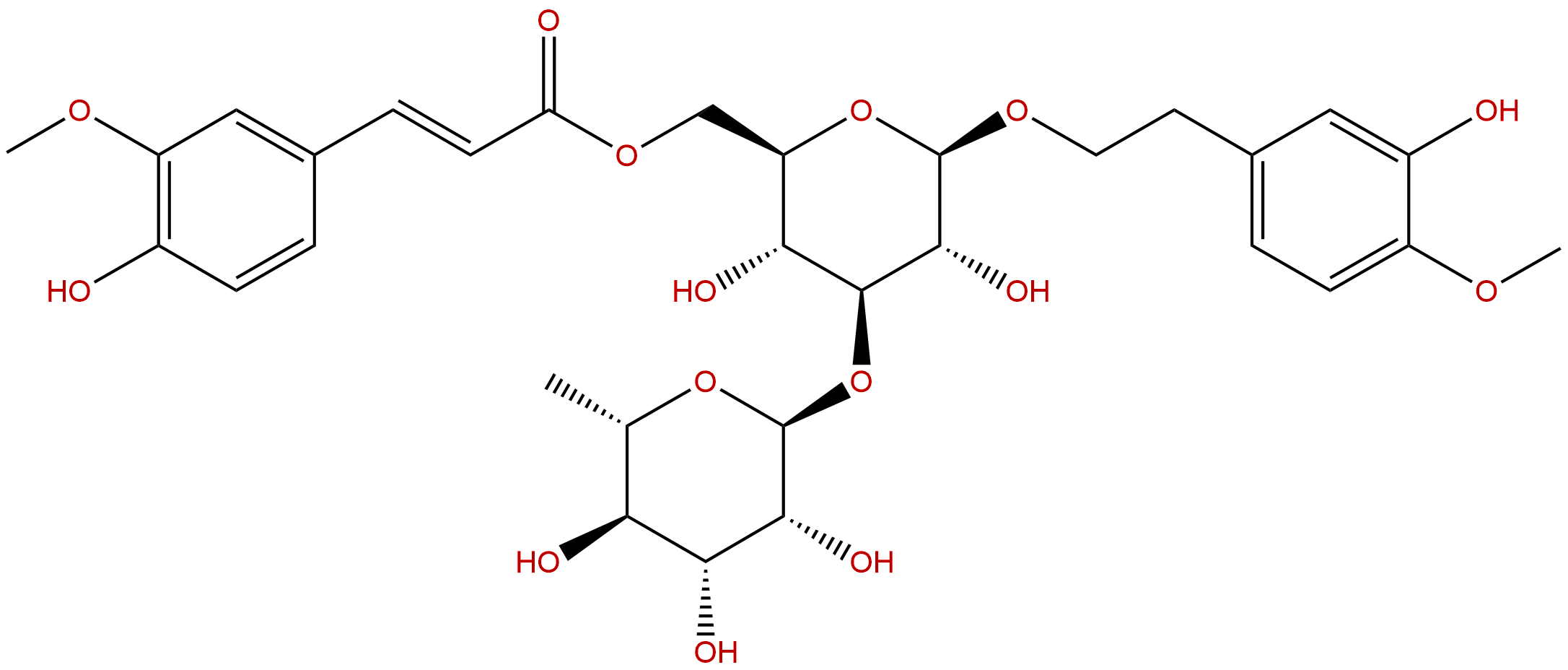
Heterogeneous Huangzhi (CAS number: 94410-22-7) belongs to the phenylpropanoid glycoside class, with a molecular formula of C29H36O17 and a molecular weight of 652.6460. Its structural core is composed of a phenylpropane skeleton connecting multiple sugar groups, endowing it with good water solubility and biocompatibility. The specific structural features include:
- Phenylpropane core: a typical C6-C3 structural unit containing multiple hydroxyl and methoxy modifications, enhancing the polarity of the molecule and its ability to bind to biological targets.
- Glycoside moiety: polysaccharide linkage increases molecular polarity and affects its pharmacokinetic properties.
In terms of physical and chemical properties, the LogP value of allopurine is 0.7269, indicating its low lipid solubility and tendency towards aqueous distribution. The topological polar surface area (TPSA) is 223.29 Å ², and higher TPSA is typically associated with lower cell membrane permeability. Its water solubility index is 2.8800, indicating that the compound has good water solubility, which is beneficial for oral absorption and in vivo distribution. The low penetration ability of the blood-brain barrier suggests that its direct role in the central nervous system is limited. The negative result of hERG channel inhibition experiment indicates a low potential risk of cardiac toxicity. The Ames mutagenicity test result is 0.0, indicating a low risk of genetic toxicity.
In summary, the physicochemical properties of allopurine are in line with the typical characteristics of natural product drug lead compounds and have a good safety basis. However, its high polarity may limit its membrane permeability and oral bioavailability, which needs to be improved through drug design optimization or formulation technology.
Plant sources and extraction methods
Heterologous flavonoids are mainly found in the family Lamiaceae plant Galeopsis pubescens. Galeopsis pubescens is distributed in temperate regions and has always been used in traditional herbs with certain anti-inflammatory and antioxidant effects. The content of exogenous flavonoids in plants is greatly influenced by geographical environment, collection time, and growth stage.
extraction process
The extraction of flavonoids from different regions usually uses polar solvents such as methanol, ethanol, or water alcohol mixed solvent systems, combined with ultrasound assisted extraction or reflux extraction techniques to improve extraction efficiency. The typical steps are as follows:
- Sample Pretreatment Grind dry Galeopsis pubescens whole plant or specific parts into fine powder.
- leaching Extract using 70% -80% ethanol or methanol at room temperature or heating conditions for several hours to several tens of hours.
- Filtration and concentration The extract is filtered and concentrated by rotary evaporation to a suitable volume.
- Separation and purification Using liquid-liquid extraction, column chromatography (such as silica gel column, C18 reverse phase column), and high performance liquid chromatography (HPLC) techniques for separation and purification, high-purity allopurine was obtained.
- appraisal Confirm the structure of the compound through methods such as mass spectrometry (MS), nuclear magnetic resonance (NMR), and infrared spectroscopy (IR).
In recent years, the introduction of supercritical CO2 extraction and membrane separation technology has provided new ideas for the green and efficient extraction of flavonoids from different regions, reducing the use of organic solvents and improving the environmental and economic benefits of extraction.
Pharmacological activity research
The pharmacological activity of non local flavonoids mainly manifests in two aspects: inhibition of angiotensin-converting enzyme (ACE) and antioxidant effects.
Angiotensin converting enzyme (ACE) inhibitory activity
ACE is an important enzyme that regulates blood pressure and vascular tone, and inhibiting ACE activity is an effective strategy for treating hypertension and heart failure. The experiment on the inhibition of ACE by exogenous flavonoids showed an IC50 value of 505.9 µ M, indicating moderate ACE inhibitory activity. Although its inhibitory effect is slightly weaker than traditional small molecule ACE inhibitors such as enalapril and Captopril, as a natural product, its unique structure and low side effects have potential development value.
antioxidant activity
Oxidative stress is an important mechanism for the occurrence and development of many chronic diseases (such as cardiovascular disease, diabetes, neurodegenerative disease). Heterologous flavonoids exhibit significant antioxidant capacity by regulating multiple antioxidant related targets. The relevant targets include:
- Tyrosinase (TYR)Participate in melanin synthesis and oxidation reaction regulation.
- Matrix metalloproteinases 1 and 3 (MMP1, MMP3)Regulating extracellular matrix remodeling and affecting oxidative stress-related tissue damage.
- Nuclear factor erythroid 2-related factor 2 (NFE2L2/NRF2)Key antioxidant response transcription factors regulate the expression of various antioxidant enzymes.
- Superoxide dismutase 1 and 2 (SOD1, SOD2)Eliminate superoxide radicals and reduce oxidative damage.
- Catalase (CAT)Decompose hydrogen peroxide to protect cells from oxidative damage.
- Glutathione peroxidase 1 (GPX1)Reduce harmful peroxides and maintain cellular redox balance.
- Heme oxygenase 1 (HMOX1)By degrading hemoglobin to produce antioxidant products, it exerts a cell protective effect.
Studies at both in vitro and cellular levels have shown that allopurine can activate the NRF2 signaling pathway, induce antioxidant enzyme expression, significantly reduce reactive oxygen species (ROS) levels, and alleviate cellular damage caused by oxidative stress. In addition, its regulation of MMPs helps to suppress oxidative stress-related tissue inflammation and fibrosis processes.
Mechanism of action and molecular targets
The mechanism of action of exogenous flavonoids involves the synergistic regulation of multiple targets and pathways, mainly including:
ACE inhibition mechanism
Heterologous flavonoids inhibit ACE catalytic activity, reduce the production of angiotensin II, and lower vascular constriction and blood pressure by forming hydrogen bonds and hydrophobic interactions with key amino acid residues at the active site of ACE. Molecular docking and dynamic simulation studies suggest that the glycosidic portion of allosteric yellow glycosides enhances their affinity for ACE active sites. Although the IC50 value is high, its unique binding mode provides a basis for structural optimization.
Regulation of antioxidant signaling pathway
Heterologous flavonoids activate the NFE2L2/NRF2 signaling pathway, promote the expression of downstream antioxidant enzymes (such as SOD, CAT, GPX1, HMOX1), and enhance cellular antioxidant capacity. Meanwhile, exogenous flavonoids can inhibit the overexpression of MMP1 and MMP3, alleviate extracellular matrix degradation and tissue damage caused by oxidative stress. In addition, its regulation of TYR activity may be involved in regulating the intracellular redox state.
Cellular protection and anti-inflammatory effects
By reducing ROS accumulation and regulating the activity of matrix metalloproteinases, allopurine exhibits potential in cell protection and anti-inflammatory effects. Its multi-target mechanism of action has shown good protective effects in various oxidative stress-related disease models.
Evaluation of drug properties and pharmacokinetics
The pharmacological parameters of non local flavonoids show that they have certain advantages and challenges:
- Molecular weight (652.6460)Larger, may affect oral absorption and cell membrane permeability.
- LogP(0.7269)Moderate indicates strong hydrophilicity, which is beneficial for dissolution and distribution in the blood.
- TPSA(223.29 Ų)Higher, usually associated with lower membrane permeability, may limit its oral bioavailability.
- Water solubility (2.8800)Good, helpful for formulation development and in vivo distribution.
- Low blood-brain barrier penetration Limit its application in the central nervous system but reduce the risk of central toxicity.
- HERG inhibition negative Low risk of cardiac toxicity.
- Ames test negative Low risk of genetic toxicity.
At present, there is a lack of pharmacokinetic data on glycosides from different regions. It is speculated that their oral absorption may be limited by their high polarity and molecular weight, and their metabolic pathways in vivo may involve glycoside hydrolysis and corresponding phenylpropane skeleton metabolism. In the future, systematic ADME (absorption, distribution, metabolism, excretion) research needs to be conducted to clarify its in vivo behavior and metabolic stability.
Clinical application prospects and prospects
As a natural source of ACE inhibitor and multi-target antioxidant, allopurine has broad clinical application potential:
- Hypertension and cardiovascular disease By inhibiting ACE and lowering blood pressure, combined with antioxidant protection of cardiovascular endothelium, it may become a candidate molecule for novel natural cardiovascular drugs.
- Oxidative stress-related diseases For example, diabetes, atherosclerosis, chronic inflammation and neurodegenerative diseases, the multi-target antioxidant mechanism of digitalis is expected to slow down disease progression.
- Potential for combination therapy Can work synergistically with existing drugs to reduce monotherapy dosage and side effects.
However, the clinical translation of trans regional flavonoids still faces many challenges, including its high IC50 value limiting its efficacy as an ACE inhibitor, and its large molecular weight and high polarity affecting pharmacokinetic performance. In addition, the lack of systematic in vivo pharmacological and toxicological data limits its preclinical evaluation.
Future research should focus on:
- Chemical modification and structural optimization to enhance ACE inhibitory activity and oral bioavailability.
- Deeply analyze its antioxidant related signaling pathways and expand the scope of indications.
- Develop efficient drug delivery systems or nanocarriers to improve drug release and targeting.
- Conduct systematic in vivo pharmacological, toxicological, and preclinical studies to promote their clinical translation.
Conclusion
As a natural phenylpropanoid glycoside, allopurine exhibits unique angiotensin-converting enzyme inhibition and multi-target antioxidant activity, with good safety and potential medicinal value. Its complex chemical structure and diverse biological activities provide abundant materials for the pharmacological research of natural products. Although its medicinal properties and pharmacological activities still need further optimization and validation, with the development of modern medicinal chemistry and biotechnology, allopurine is expected to become a powerful candidate for the new generation of natural medicines. The pharmacological mechanism research, structural optimization, and preclinical evaluation of future systems will be key to promoting their clinical applications.