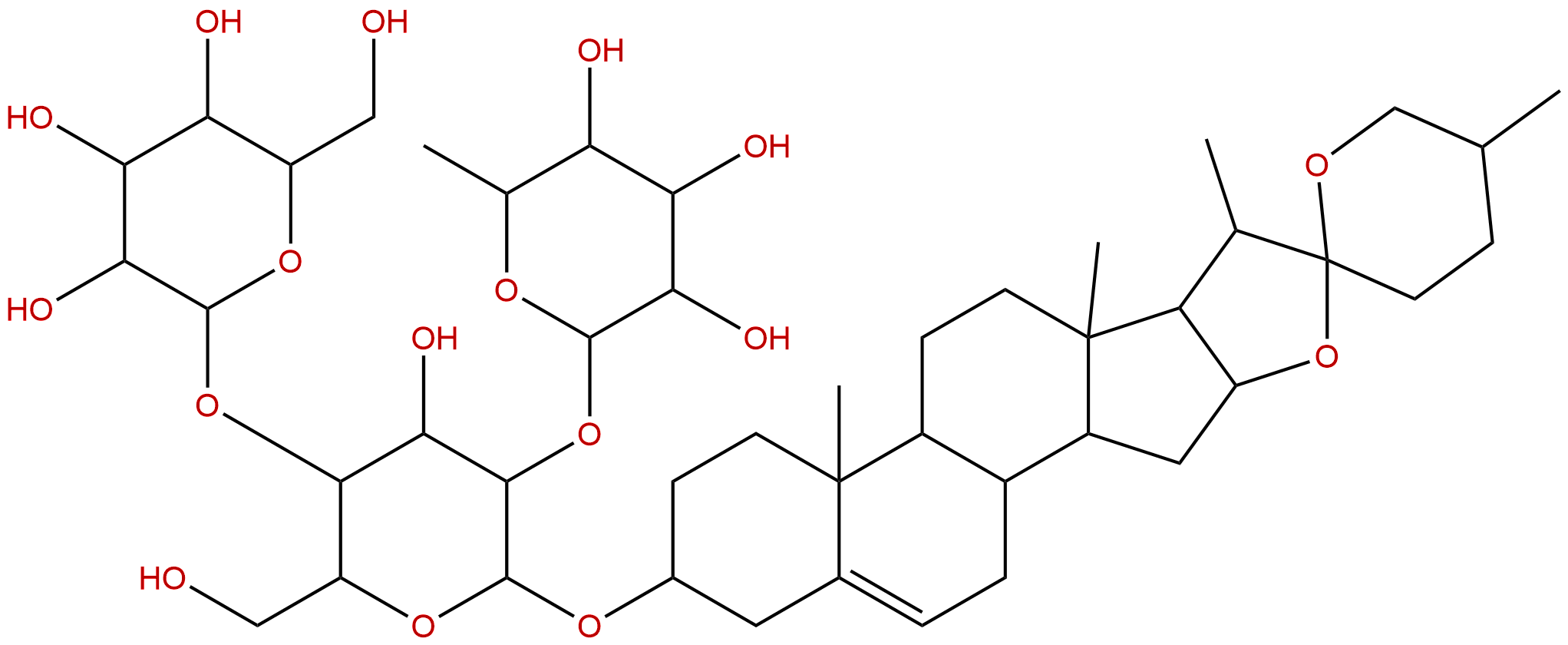


Product name: Deltonin
Synonym name:
Catalogue No.: BP3115
Cas No.: 55659-75-1
Formula: C45H72O17
Mol Weight: 885.054
Botanical Source: Dioscorea Zingiberensis C.H.Wright
Physical Description:
Type of Compound: Steroids
Purity: 95%~99%
Analysis Method: HPLC-DAD or/and HPLC-ELSD
Identification Method: Mass, NMR
Packing: Brown vial or HDPE plastic bottle
The product could be supplied from milligrams to grams. Inquire for bulk scale.
We provide solution to improve the water-solubility of compounds, thereby facilitating the variety of activity tests and clinic uses.
For Reference Standard and R&D, Not for Human Use Directly.
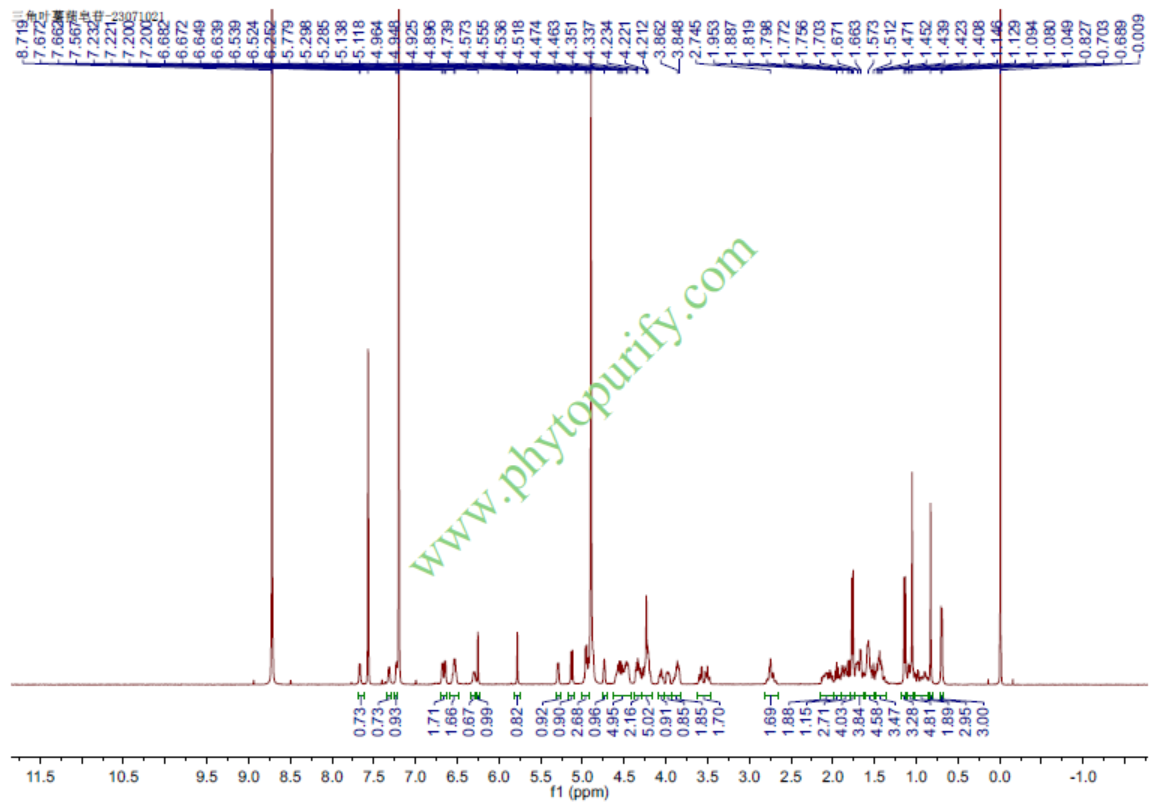
HNMR of Deltonin
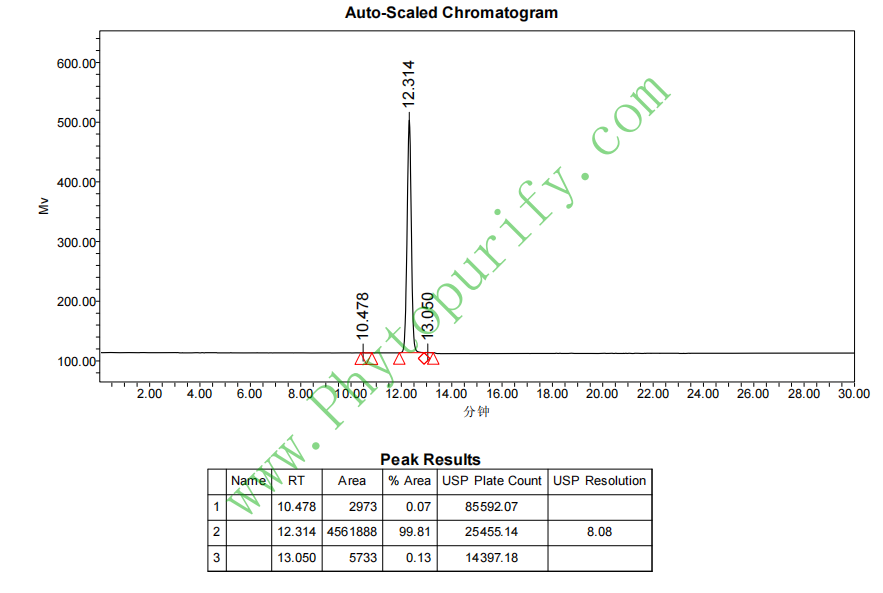
HPLC of Deltonin
Storage conditions:Short-term storage at 2~8℃, long-term storage at -20 ~ -80℃
255.9100
1.8755
1.8755
.0789
.5252
.4215
Low
66.9559
6.6878
No
No
No
No
No
No
0.3
Yes
No
No
No
In the vast field of natural product medicinal chemistry, steroidal saponins have attracted much attention due to their unique chemical structure and extensive biological activity. Delonin (CAS number 55659-75-1) is an important steroid saponin monomer isolated from the traditional medicinal plant Dioscorea zingiberensis C. H. Wright. As the main industrial source of dioscin, Dioscorea opposita has a long history of medicinal value, and in-depth research on its active monomer components is the core task of modern natural medicinal chemistry. Deltonin, as one of its representative active ingredients, has become a research hotspot in recent years due to its significant anti-tumor activity. Research has shown that Deltonin can induce tumor cell apoptosis, inhibit proliferation and metastasis by regulating multiple key signaling pathways including ERK1/2 and AKT, demonstrating the potential to become a novel anti-tumor candidate drug. In addition, given its structural association with steroid hormones, its potential regulatory role in hormone related diseases, particularly in targets related to hormone replacement therapy (HRT) such as ESR1, CYP19A1, PGR, FSHR, and LHB, is gradually being revealed. This article aims to systematically review the chemical structure, plant origin, pharmacological activity, molecular mechanism of action, pharmacological evaluation, and clinical application prospects of Deltonin, in order to provide comprehensive scientific references for the in-depth research and development of this compound.
Deltonin is a spirostanol type steroidal saponin. Its molecular formula is C45H72O17 and its molecular weight is 885.0540. Its basic skeleton consists of a spirostane core consisting of 27 carbon atoms (consisting of a six ring steroid core and an oxygen-containing five membered heterocyclic spirone structure) and an oligosaccharide chain connected to the C-3 position. This sugar chain is usually composed of monosaccharides such as xylose and glucose, and is one of the key determinants of its water solubility and biological activity.
From the analysis of physical and chemical properties, the calculated value of Deltonin's lipid water partition coefficient (LogP) is about 1.8755, indicating that it has a certain lipophilicity, but not high lipid solubility. Its topological polar surface area (TPSA) is as high as 255.9100 Å ², mainly attributed to the abundant hydroxyl and glycosidic oxygen atoms in the molecule, which are potential hydrogen bond donors and acceptors, leading to strong molecular polarity. This characteristic also directly affects its solubility, with a predicted low water solubility value (about 0.0789 mg/mL), making it a poorly soluble compound. In drug delivery, it may be necessary to improve its bioavailability through formulation techniques such as nanocrystals, liposomes, cyclodextrin inclusion, etc. In addition, preliminary pharmacological predictions indicate that Deltonin has a low ability to cross the blood-brain barrier, which limits its direct application in central nervous system related diseases, but may also reduce potential neurotoxic risks. In early safety screening, the risk of hERG inhibition was negative, indicating a low likelihood of causing QT interval prolongation in the heart. The Ames test (reverse mutation test) data is 0.3, indicating that under the conditions of this experiment, its mutagenic risk is low, but further in vitro and in vivo genetic toxicity studies are still needed to confirm.
Deltonin mainly comes from the rhizome of Dioscorea zingiberensis C.H. Wright, a plant in the Dioscoreaceae family. Dioscorea nipponica is a unique medicinal plant in China, rich in various steroidal saponins. It is an important industrial raw material plant for the synthesis of steroid hormone drugs, and is therefore known as the "mother of hormones".
The extraction and purification of Deltonin from plant materials typically involves a multi-step process. Firstly, after the dried rhizome of Dioscorea nipponica is crushed, it is commonly subjected to heating reflux extraction or ultrasound assisted extraction using medium polarity organic solvents (such as methanol, ethanol, or a certain proportion of ethanol water mixed solvents) to efficiently extract saponin components. After vacuum concentration, the crude extract is preliminarily enriched and purified using the adsorption desorption characteristics between steroidal saponins and macroporous adsorption resins (such as D101, AB-8, etc.). Water soluble impurities are usually washed away with water, and then eluted with ethanol gradients of different concentrations to collect the elution sites rich in saponins.
Subsequently, further chromatographic separation techniques are required to obtain high-purity Deltonin monomers. The conventional method includes silica gel column chromatography with gradient elution using a mixed solvent system such as chloroform methanol water. Combining thin layer chromatography (TLC) or high-performance liquid chromatography (HPLC) for online or offline monitoring. A more efficient purification method relies on reverse phase preparative high performance liquid chromatography (RP preparative HPLC), which uses a C18 column and methanol water or acetonitrile water as the mobile phase to obtain Deltonin monomers with a purity of over 98%. Modern separation techniques such as high-speed countercurrent chromatography (HSCCC) have also been applied in the separation and purification of dioscin monomers due to their advantages of irreversible adsorption and high recovery rate. The entire extraction and separation process requires attention to temperature and pH control to avoid hydrolysis or structural changes of saponins.
Numerous in vitro and in vivo pharmacological studies have confirmed that Deltonin has broad and significant biological activities, with anti-tumor activity being the most prominent.
1. Antitumor activity:
Deltonin has shown strong growth inhibition and apoptosis promoting effects on a variety of human tumor cell lines, including breast cancer (such as MCF-7, MDA-MB-231), cervical cancer (HeLa), ovarian cancer (SKOV3), lung cancer (A549), liver cancer (HepG2, SMMC-7721), gastric cancer (SGC-7901) and colorectal cancer (HCT-116). Its effect is concentration and time-dependent. In animal models, Deltonin can significantly inhibit the growth of transplanted tumors and exhibit synergistic effects when combined with certain chemotherapy drugs (such as cisplatin), while reducing side effects such as weight loss caused by chemotherapy, suggesting its chemosensitizing and protective effects.
2. Regulatory activity of hormone related systems:
Given its steroid core structure, Deltonin has potential regulatory effects on hormone related targets. Studies have shown that Deltonin may interact with estrogen receptor alpha (ESR1) in a similar way to selective estrogen receptor modulator (SERM), and show an anti estrogen effect in estrogen dependent breast cancer cells. In addition, it may interfere with the biosynthesis of estrogen by affecting the activity of aromatase (CYP19A1). The potential regulation of progesterone receptor (PGR), follicle stimulating hormone receptor (FSHR), and luteinizing hormone/chorionic gonadotropin receptor (LHB/CGR) suggests their research value in regulating the reproductive endocrine axis and intervening in hormone imbalance related diseases such as menopausal syndrome, polycystic ovary syndrome, and hormone dependent tumors. This provides a theoretical basis for exploring new applications of Deltonin in hormone replacement therapy (HRT) related fields, but whether it is used as an agonist or antagonist, with tissue selectivity, requires further research.
3. Other pharmacological activities:
In addition to anti-tumor effects, research also suggests that Deltonin may have anti-inflammatory, antioxidant, and immunomodulatory activities. For example, in inflammation models, Deltonin can alleviate inflammation by inhibiting inflammatory pathways such as NF - κ B. Its antioxidant effect helps to eliminate free radicals and alleviate cellular oxidative stress damage.
The anti-tumor and other biological activities of Deltonin stem from its precise regulation of multiple signaling pathways within cells, and its mechanism of action is multi-target and multi-level.
1. Inducing cell apoptosis: This is one of the core mechanisms of Deltonin's anti-tumor effect. It can upregulate the expression of pro apoptotic proteins such as Bax, Bak, and cleaved caspase-3/8/9, downregulate the expression of anti apoptotic proteins such as Bcl-2 and Bcl xL, induce a decrease in mitochondrial membrane potential, release cytochrome C, and activate the mitochondrial dependent apoptotic pathway. Meanwhile, exogenous apoptosis can also be induced through death receptor pathways such as Fas/FasL.
2. Inhibit key survival signaling pathways: The most significant feature of Deltonin is the inhibition of phosphorylation activation of ERK1/2 and AKT (also known as PKB). ERK1/2 is the core of the MAPK pathway, regulating cell proliferation and survival; AKT is the core of the PI3K/AKT/mTOR pathway and an important signaling hub for cell survival. Deltonin directly weakens the proliferation and survival ability of tumor cells by inhibiting these two pathways. In addition, its inhibition of pathways such as mTOR and STAT3 has also been reported.
3. Block cell cycle: Deltonin can block tumor cells in the G0/G1 or G2/M phase, and its mechanism is related to regulating the expression of cyclins (such as Cyclin D1, Cyclin B1) and cyclin dependent kinases (CDKs), as well as upregulating the expression of cyclin dependent kinase inhibitors (such as p21, p27).
4. Inhibit tumor invasion and metastasis: Deltonin can downregulate the expression of matrix metalloproteinases (MMP-2, MMP-9) and upregulate the expression of tissue metalloproteinase inhibitors (TIMP-1, TIMP-2), thereby inhibiting extracellular matrix degradation and hindering tumor cell invasion and metastasis. It can also inhibit epithelial mesenchymal transition (EMT) process, manifested by upregulation of epithelial markers (E-cadherin) and downregulation of stromal markers (N-cadherin, Vimentin).
5. Regulating autophagy: Deltonin has a bidirectional regulatory effect on autophagy and can induce protective autophagy or cytotoxic autophagy under specific conditions, depending on cell type and microenvironment. Its interaction with apoptosis is at the forefront of research.
6. Targeting hormone related targets: At the molecular target level, Deltonin can directly or indirectly act on ESR1, affecting its downstream gene transcription. It may also act as an inhibitor of CYP19A1, reducing estrogen production. The potential effects on receptors such as PGR, FSHR, and LHB may be regulated by interfering with corresponding ligand receptor signaling pathways, affecting downstream cAMP/PKA pathways, and thus modulating cellular function.
Despite the clear pharmacological activity of Deltonin, its drug likeness still faces challenges, which is a common issue among most natural saponin compounds.
Pharmacokinetic characteristics: Existing pharmacokinetic studies (mainly based on animal experiments) indicate that the oral bioavailability of Deltonin is generally low. This is mainly attributed to: ① poor water solubility and limited dissolution in the gastrointestinal tract; ② High molecular weight and strong polarity, low passive transmembrane absorption efficiency; ③ It may experience extensive first pass effects in the gastrointestinal tract and liver, including hydrolysis by gut microbiota (sugar chains are cleaved and converted into glycosides) and metabolism by liver metabolic enzymes such as CYP450. Its distribution in the body has tissue specificity and accumulates to a certain extent in tumor tissues. The main pathways of excretion may be through bile and feces. These characteristics suggest that developing non oral routes of administration (such as injections) or adopting advanced oral delivery systems is a necessary strategy to improve their pharmacokinetic behavior.
Formulation strategy: To improve the solubility, stability, and bioavailability of Deltonin, researchers have explored various formulation techniques. Including: ① Nanoformulations such as Deltonin nanocrystals, lipid nanoparticles, and polymer nanoparticles, which increase specific surface area by reducing particle size, improve dissolution rate, and oral absorption. ② Liposomes, especially long circulating liposomes or targeted liposomes, can increase their blood circulation time and enhance passive or active targeted accumulation at the tumor site (EPR effect or ligand mediated). ③ Cyclodextrin inclusion complex: Utilizing the cavity of cyclodextrin to encapsulate hydrophobic steroid nuclei, improving water solubility and stability. ④ Prodrug design: Chemical modification of hydroxyl groups on glycosides or mother nuclei to prepare lipophilic or targeted prodrugs and improve their pharmaceutical properties.
Safety evaluation: In addition to early Ames testing and hERG screening, systematic preclinical safety evaluation is crucial, including acute toxicity, long-term toxicity (repeated administration toxicity), reproductive toxicity, immunotoxicity, etc. Existing studies have shown that at effective doses, the toxicity of Deltonin to normal cells is usually lower than that to tumor cells, demonstrating a certain degree of selectivity. However, its therapeutic window still needs to be precisely defined under more standardized GLP conditions.
The in-depth research of Deltonin depicts a diversified prospect for its future clinical applications, but also points out the direction that needs to be broken through.
1. As a new anti-tumor drug development: This is the most direct direction. Deltonin can be developed as a single component anti-tumor drug, especially suitable for tumors that are resistant to traditional chemotherapy or hormone receptor positive. Its multi-target mechanism of action helps overcome tumor heterogeneity and drug resistance. Combination therapy with existing chemotherapy, targeted therapy, or immunotherapy is an effective strategy to improve efficacy and reduce toxic side effects.
2. Application exploration in gynecological endocrine related diseases: Based on its potential regulatory effect on ESR1, CYP19A1, PGR, FSHR, LHB and other targets, Deltonin is expected to be developed for adjuvant treatment or prevention of climacteric syndrome, endometriosis, hysteromyoma, polycystic ovary syndrome and hormone dependent breast cancer. It may provide a plant derived, tissue-specific hormone regulatory alternative, but requires extremely rigorous preclinical and clinical studies to validate its efficacy and safety, clarify whether it acts as an agonist or antagonist, and its specific effects in different tissues.
3. Structural optimization as a lead compound: The complex structure of Deltonin provides multiple sites for its chemical modification. By using semi synthetic methods to modify its sugar chain (such as adding or removing sugar groups, replacing types) or modifying the steroid nucleus, it is expected to obtain derivatives with higher activity, lower toxicity, and better pharmacokinetic properties, thus discovering new candidate drugs.
4. Challenges and future research directions:
- Drug bottleneck: We must continue to invest in pharmaceutical research to address the challenges of solubility, stability, and oral absorption.
- Deep exploration of mechanisms: Chemical biological methods such as photoaffinity labeling and proteomics need to be used to more accurately identify its direct target protein network.
- The complexity of hormone regulation: Its regulation of the endocrine system is highly complex and potentially bidirectional, and must be systematically evaluated in different physiological and pathological models to avoid unpredictable hormone interference effects.
- Clinical translation: Standardized preclinical safety evaluation and gradual clinical trials are the necessary path to the market, requiring significant investment of funds and time.
Deltonin, as an active steroidal saponin derived from the traditional medicinal plant Dioscorea opposita, has become a highlight molecule in the pharmacological research of natural products due to its proven anti-tumor activity, effective inhibition of key signaling pathways such as ERK/AKT, and potential regulatory ability on hormone related targets. Its multi-target and multi pathway mode of action provides unique advantages in dealing with complex tumor biology. However, its inherent pharmaceutical challenges, such as low solubility and low oral bioavailability, are key obstacles that constrain its translation into clinical applications. Future research should focus on fully tapping into the therapeutic potential of Deltonin through interdisciplinary strategies - combining advanced formulation technology, in-depth molecular mechanism elucidation, systematic safety evaluation, and rational clinical development pathways. Whether as a single component anti-tumor drug, a candidate for regulating endocrine function, or as a lead compound for structural optimization, Deltonin represents an important example of discovering modern therapeutic drugs from the treasure trove of traditional herbs. Its research and development process will continue to provide valuable experience and inspiration for innovative drug development in natural products.
