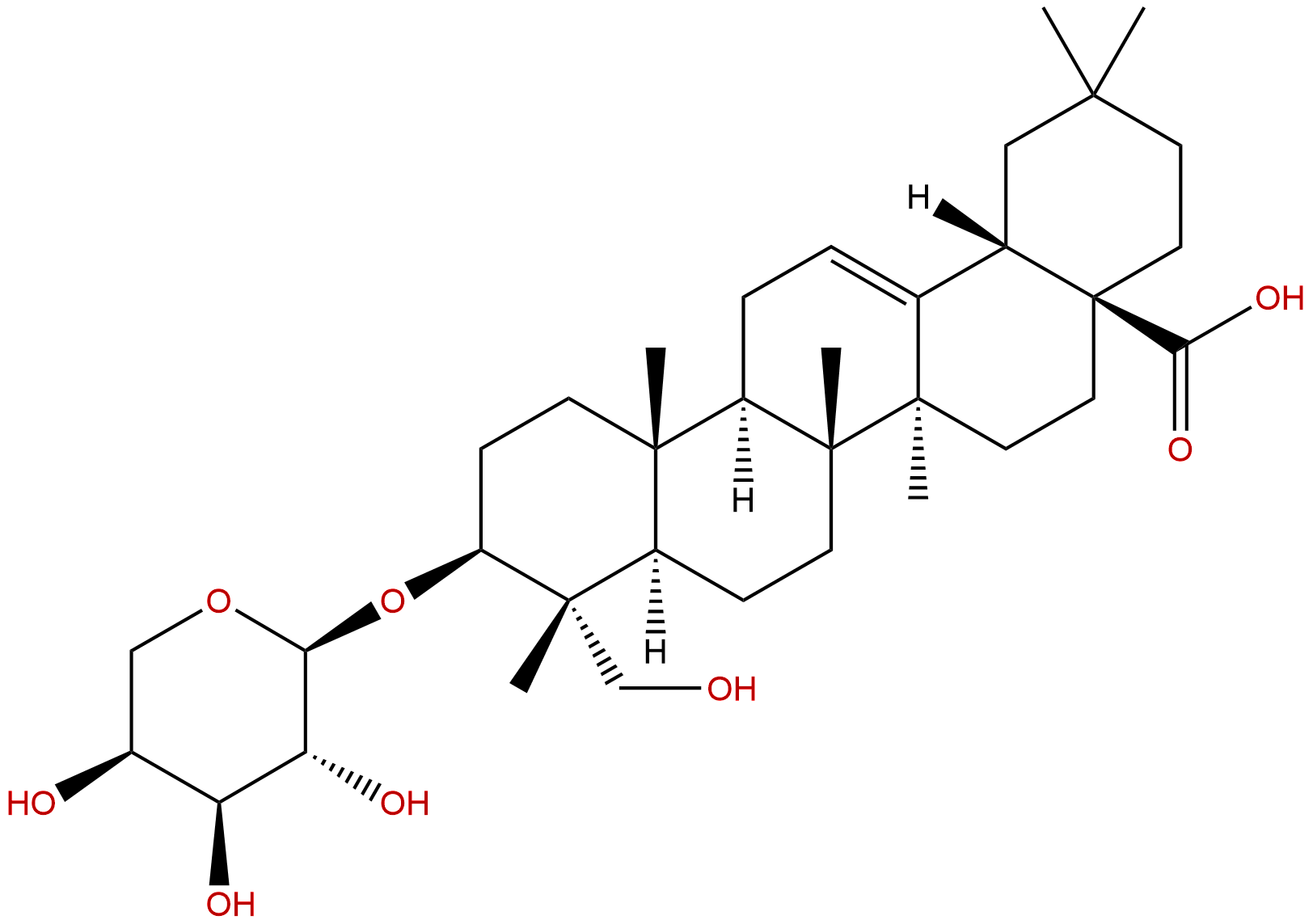


Product name: Cauloside A
Synonym name:
Catalogue No.: SBP03395
Cas No.: 17184-21-3
Formula: C35H56O8
Mol Weight: 604.825
Botanical Source:
Physical Description:
Type of Compound: Triterpenoids
Purity: 95%~99%
Analysis Method: HPLC-DAD or/and HPLC-ELSD
Identification Method: Mass, NMR
Packing: Brown vial or HDPE plastic bottle
The product could be supplied from milligrams to grams. Inquire for bulk scale.
We provide solution to improve the water-solubility of compounds, thereby facilitating the variety of activity tests and clinic uses.
For Reference Standard and R&D, Not for Human Use Directly.
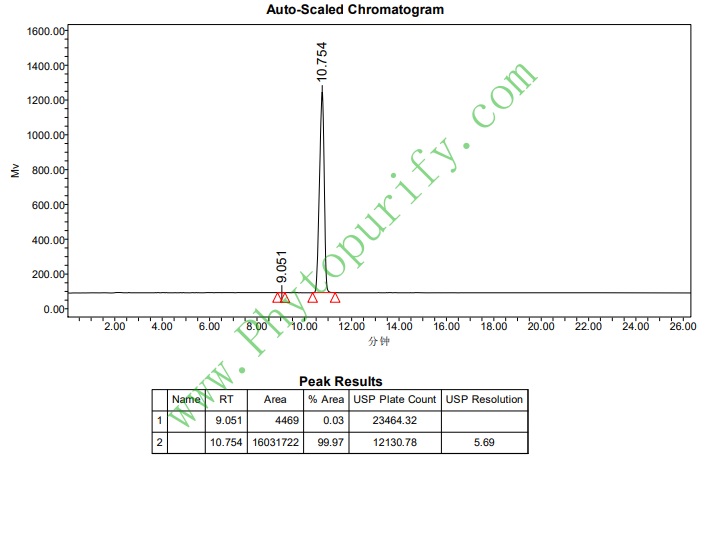
HPLC of Cauloside A
Storage conditions:Short-term storage at 2~8℃, long-term storage at -20 ~ -80℃
136.6800
4.1192
2.3149
.0174
.8945
.4912
Low
88.9185
5.2694
No
No
No
No
No
No
0.0
Yes
No
No
No
Natural products, as an important source of drug discovery, play an irreplaceable role in the long history of human struggle against diseases. Saponins, as a class of secondary metabolites widely present in the plant kingdom, have attracted much attention due to their structural diversity and significant biological activity. Cauloside A, also known as Leontoside A, is a plant derived from the family Menispermaceae in the genus Menispermaceae(Dipsacus asper)Natural triterpenoid saponins isolated from roots. This compound not only has a unique chemical structure, but also exhibits various pharmacological activities including antifungal and anti-inflammatory effects, making it a worthwhile subject for further research in the field of natural product pharmacology.
The research history of red hair saponin A can be traced back to the mid-20th century, initially discovered due to its application background in traditional medicine. Chuanxuduan, as a commonly used traditional Chinese medicinal herb, has the effects of nourishing the liver and kidneys, strengthening muscles and bones, repairing injuries, and stopping collapse and leakage. The analysis of its chemical composition has always been a research hotspot in natural medicinal chemistry. The isolation and identification of red hair seven saponins A provide an important material basis for understanding the pharmacological effects of Chuanxuduan. In recent years, with the rapid development of modern pharmacology and molecular biology techniques, research on red hair seven saponins A has deepened from simple activity screening to molecular level mechanism exploration. Especially its potential in anti-inflammatory and antifungal effects has attracted widespread attention from scholars both domestically and internationally.
Inflammation is a complex defense response of the body against infection and tissue damage, but uncontrolled chronic inflammation is the core pathological process of various diseases such as rheumatoid arthritis, inflammatory bowel disease, cardiovascular disease, and even cancer. Fungal infection, especially invasive fungal infection, has a high incidence rate and mortality rate in immunodeficiency patients, while the existing antifungal drugs are facing severe challenges such as drug resistance and toxic side effects. Therefore, the search for natural anti-inflammatory and antifungal lead compounds with new mechanisms of action, high efficiency and low toxicity has important scientific significance and clinical value. Red hair seven saponin A, with its clear antifungal activity and regulatory effects on multiple key inflammatory targets such as IL-6, STAT3, TNF, etc., has shown great potential as a candidate molecule for novel therapeutic drugs. This article aims to provide a systematic review of the chemical structure, plant sources, extraction methods, pharmacological activities, mechanisms of action, medicinal properties, and clinical application prospects of red hair seven saponins A, in order to provide comprehensive references for the in-depth research and development of this natural product.
The chemical structure of red hair saponin A is the basis of its biological activity. According to existing research data, this compound belongs to the pentacyclic triterpenoid saponin class, and its aglycone is an oleanane type triterpenoid. Its structural feature is that one or more sugar groups are connected to specific hydroxyl groups of the aglycone through glycosidic bonds. Specifically, the molecular formula of red hair saponin A is C ∝₅ H ₅₆ O ₈, with a molecular weight of 604.8250 g/mol. Its structure is usually described as 3-O - β - D-glucopyranosyl-oleanolic acid, where the C-3 hydroxyl group of oleanolic acid is connected to one molecule of glucose. This structure endows it with amphiphilic characteristics, consisting of both lipophilic triterpenoid glycosides and hydrophilic glycosyl moieties, which are crucial for its interaction with biological membranes and transmembrane transport.
From the perspective of physical and chemical properties, red hair seven saponins A exhibit typical saponin characteristics. Its lipid water partition coefficient (LogP) is 4.1192, indicating that the compound has moderate lipophilicity, which facilitates its penetration of the cell membrane and binding to intracellular targets. However, its solubility is only 0.0174 mg/mL, making it a poorly soluble compound, which to some extent limits its bioavailability and formulation development. The topological polar surface area (TPSA) is 136.6800 Å ², which is a relatively high value and usually indicates that the compound has a weak ability to penetrate the blood-brain barrier (BBB) through passive diffusion. In fact, its blood-brain barrier permeability assessment result is "low", indicating that the potential application of red hair saponin A in the treatment of central nervous system diseases may be limited, but it also means that its risk of causing central nervous system toxicity is low.
In addition, key toxicological indicators in the evaluation of drug properties showed that red hair saponin A had a negative result (0.0) in the Ames test, indicating that it did not have direct mutagenicity. At the same time, its risk assessment of inhibiting hERG potassium ion channels is' no ', which greatly reduces its risk of causing prolonged QT interval and fatal arrhythmias in the heart. These preliminary toxicological data provide positive evidence for the safety of red hair saponin A and are an important foundation for promoting its entry into preclinical research. Overall, the chemical structure of red hair saponin A determines its unique physicochemical properties, which not only provide the possibility for its biological activity, but also pose challenges for its subsequent drug development, such as optimizing solubility and bioavailability.
Red hair seven saponins A were originally derived from the Chuanxuduan plant in the Chuanxuduan family(Dipsacus asper Separate and identify the roots of Wall. ex Henry. Chuanxuduan is mainly distributed in East Asian regions such as China, Japan, and South Korea, and is mainly produced in Sichuan, Hubei, Hunan, Guizhou, and other places in China. As a traditional Chinese medicine, the roots of Chuanxuduan are harvested in autumn. After removing the root heads and fibrous roots, they are dried over low heat until partially dried. They are then piled up to "sweat" until the inside turns green, and then dried again to obtain the medicinal herb "Chuanxuduan". In addition to Chuanxuduan, red hair seven saponin A is also present in other plants, such as the Berberidaceae plant red hair seven(Caulophyllum robustum Maxim.), This is also the origin of its name "Red Hair Seven Saponins A". In addition, in Leontice It has also been found in plants, hence it is also known as Leontoside A. This phenomenon, which exists in plants with distant genetic relationships, suggests that they may have important ecological functions, such as defending against pathogenic microorganisms.
The extraction of red hair seven saponins A from Chuanxuduan roots usually follows the classic natural product extraction and separation process. The core steps include extraction, enrichment, and purification.
Extract After the dried Chuanxuduan roots are crushed, solvent extraction is usually used. Due to the good solubility of saponin compounds in alcohol solvents, commonly used extraction solvents are methanol or ethanol (such as 70% -95% ethanol). The extraction methods include cold soaking, percolation, or heating reflux. In order to improve extraction efficiency and reduce impurities, modern techniques such as ultrasound assisted extraction or microwave-assisted extraction are sometimes used. After filtration and vacuum concentration of the extract, the total extract is obtained.
enrichment The total extract contains a large amount of non saponin impurities, such as sugars, pigments, lipids, etc. The enrichment step aims to remove these impurities and obtain crude saponin extract. Common methods include:
purification After obtaining the crude extract of saponins, further purification is required to obtain high-purity monomers of red hair seven saponins A. Mainly relying on various chromatographic techniques:
The entire extraction and separation process requires real-time monitoring using techniques such as thin-layer chromatography (TLC) and HPLC to determine the fraction of the target compound. Finally, the purified compound was structurally identified by spectroscopic methods such as nuclear magnetic resonance (NMR) and mass spectrometry (MS), confirming its identity as red hair seven saponins A. Although this extraction process is classic, it is cumbersome, time-consuming, and requires a large amount of solvent. In the future, developing more efficient and environmentally friendly extraction and purification technologies, such as high-speed countercurrent chromatography (HSCCC), molecular imprinting technology, etc., will be an important direction to improve the efficiency of obtaining red hair saponin A.
The pharmacological activity research of red hair seven saponins A mainly focuses on its antifungal and anti-inflammatory aspects. In addition, some studies have also revealed its potential cytotoxicity and other biological activities.
1. Antifungal activity
One of the most notable activities of red hair saponin A is its significant antifungal effect. Early research found that the compound has inhibitory effects on various plant pathogenic fungi, which is consistent with its role in the plant defense system. In recent years, its activity against human pathogenic fungi has gradually been revealed. Research has shown that red hair saponin A has an effect on Candida albicans(Candida albicans)Cryptococcus neoformans(Cryptococcus neoformans)And various types of Aspergillus fungi(Aspergillus Opportunistic pathogenic fungi such as spp have shown inhibitory activity in clinical practice. Its mechanism of action may be related to the disruption of the integrity of fungal cell membranes. As a saponin compound, red hair seven saponins A can bind with sterols (mainly ergosterol) in fungal cell membranes, form complexes, form pores on the membrane, cause leakage of cell contents, and thus kill fungi. This direct action on the cell membrane makes it difficult for fungi to develop resistance, which is a potential advantage compared to traditional azole and polyene antifungal drugs.
2. Anti inflammatory activity
Anti inflammation is another core pharmacological activity of red hair seven saponins A, which is highly consistent with the traditional efficacy of Chuanxuduan in "tonifying liver and kidney, strengthening muscles and bones" (often related to anti-inflammatory and analgesic effects). A large number of in vitro and in vivo experiments have confirmed its anti-inflammatory effect.
- In vitro research In the inflammatory model of macrophages (such as RAW264.7 cells) stimulated by lipopolysaccharide (LPS), red hair saponin A can significantly inhibit the production of pro-inflammatory factors such as nitric oxide (NO), prostaglandin E2 (PGE2), tumor necrosis factor - α (TNF - α), interleukin-6 (IL-6), and interleukin-1 β (IL-1 β). At the same time, it can also downregulate the expression of key inflammatory enzymes such as inducible nitric oxide synthase (iNOS/NOS2) and cyclooxygenase-2 (COX-2/PTGS1).
- In vivo research In various animal inflammation models, such as carrageenan induced paw swelling in rats, xylene induced ear swelling in mice, and acetic acid induced increased intra-abdominal capillary permeability in mice, red hair saponin A has shown significant anti-inflammatory effects and can effectively reduce the levels of pro-inflammatory factors in inflammatory tissues. In addition, in chronic inflammation models such as adjuvant arthritis, it has also been observed to reduce joint swelling and bone destruction.
3. Other activities
In addition to its antifungal and anti-inflammatory effects, some studies have also reported other biological activities of red hair saponin A. For example, studies have shown that it has certain cytotoxicity towards certain tumor cell lines (such as liver cancer and lung cancer cells), suggesting that it may have anti-tumor potential, but its selective toxicity needs further evaluation. In addition, there are sporadic reports on its analgesic and antioxidant activities, but these activities are usually closely related to its anti-inflammatory effects and may be an extension of its anti-inflammatory effects.
The pharmacological activity of red hair saponin A is achieved by interacting with multiple molecular targets and regulating a complex signaling network. Especially in the field of anti-inflammatory, its mechanism of action has been extensively studied.
1. Anti inflammatory mechanism
The anti-inflammatory effect of red hair saponin A is mainly achieved by inhibiting multiple key inflammatory signaling pathways, among which the most core ones are the NF - κ B and STAT3 pathways.
- Inhibition of NF - κ B pathway NF - κ B is the central regulatory factor of inflammatory response. In the resting state, NF - κ B (usually a p50/p65/RELA heterodimer) binds to its inhibitory protein I κ B and exists in an inactive form in the cytoplasm. When cells are stimulated by inflammation such as LPS and TNF - α, I κ B kinase (IKK, composed of subunits such as IKBKB) is activated, phosphorylates and degrades I κ B, thereby releasing NF - κ B. Free NF - κ B translocates into the nucleus, initiating the transcription of downstream pro-inflammatory genes such as TNF - α, IL-6, IL-1 β, COX-2, iNOS. Research has shown that red hair saponin A can inhibit the activity of IKK β (IKBKB), block the phosphorylation and degradation of I κ B, thereby preventing the nuclear translocation and transcriptional activity of NF - κ B, and ultimately downregulating the expression of various pro-inflammatory factors.
- Inhibition of STAT3 pathway Signal transducer and activator of transcription factor 3 (STAT3) also plays a critical role in inflammation and immune responses. After binding to cytokines such as IL-6 and their receptors, JAK kinase is activated, which phosphorylates STAT3 to form dimers and integrate into the nucleus, regulating target gene transcription. Red hair seven saponins A have been shown to inhibit IL-6-induced STAT3 phosphorylation, thereby blocking the STAT3 signaling pathway and reducing the production of downstream inflammatory mediators.
- Regulating other targets In addition to NF - κ B and STAT3, red hair saponin A may also exert anti-inflammatory effects through other mechanisms. For example, it may directly or indirectly affect the activity of CASP1 (caspase-1), thereby regulating the assembly of NLRP3 inflammasomes and the mature secretion of IL-1 β. In addition, its regulatory effect on transient receptor potential channels such as TRPV1 and TRPA1 may be related to the relief of inflammation related pain and sensory abnormalities. Reducing the excessive production of NO by inhibiting the expression of NOS2 (iNOS) is also an important part of its anti-inflammatory mechanism.
2. Mechanism of antifungal action
As mentioned earlier, the antifungal mechanism of red hair saponin A is mainly related to its destruction of fungal cell membranes. Its molecular target is ergosterol in the fungal cell membrane. By specifically binding to ergosterol, red hair saponin A is inserted into the lipid bilayer, altering membrane fluidity and permeability, ultimately leading to loss of membrane integrity, leakage of cellular contents (such as potassium ions, ATP, proteins), and causing fungal cell death. This mechanism is similar to amphotericin B, but red hair saponin A has a lower affinity for cholesterol in mammalian cell membranes and theoretically may have better selective toxicity.
3. Target network and pleiotropy
Overall, red hair saponin A does not act on a single target, but exerts its pharmacological effects through a "multi-target, multi pathway" mode. Its anti-inflammatory activity involves the regulation of multiple signaling nodes and effector molecules such as IL-6/STAT3, TNF/NF - κ B, CASP1/inflammasome, TRPV1/TRPA1, NOS2, etc. This multi-target characteristic of action may give red hair saponin A an advantage over single target drugs in the treatment of complex diseases such as chronic inflammation, as it can more comprehensively regulate the disease network and is less likely to develop drug resistance. However, this also increases the difficulty of elucidating the exact pharmacological substance basis and avoiding potential off target effects.
To push natural products from laboratory research to clinical applications, strict pharmacological evaluations must be conducted. The preliminary pharmacological parameters of red hair saponin A have provided us with some key information, but its complete pharmacokinetic (ADME) characteristics still need to be systematically studied.
1. Evaluation of drug properties
Based on classic drug prediction criteria such as Lipinski's "Rule of Five" and Veber's rule, an analysis was conducted on red hair seven saponins A:
- molecular weight:604.8 Da, Slightly above the threshold of 500 Da, this usually suggests that its oral absorption may be poor.
- LogP 4.12, within the acceptable range of -0.4 to 5.6, with moderate lipid solubility.
- Hydrogen bond donor and acceptor The saponin structure contains multiple hydroxyl groups, with a large number of hydrogen bond donors (- OH) and acceptors (- O -), which may exceed the thresholds of 5 and 10, making it difficult for it to penetrate biological membranes through passive diffusion.
- TPSA 136.68 Å ², far exceeding the threshold of 140 Å ², further confirms the prediction of poor oral absorption and blood-brain barrier penetration ability.
Overall, the physicochemical properties of red hair seven saponins A deviate to some extent from the ideal pharmaceutical space, especially their larger molecular weight and higher polarity, indicating that their oral bioavailability may be lower. However, this does not mean that it has no development value. Many successful natural medicines, such as cyclosporine A, have also broken through the "five rules". For red hair saponin A, its positive toxicological characteristics (Ames test negative, no hERG inhibition risk) are its important advantages. Future development strategies may need to focus on non oral routes of administration (such as injection, transdermal administration) or adopt formulation technologies (such as liposomes, nanoparticles, phospholipid complexes) to improve their solubility and bioavailability.
2. Pharmacokinetic characteristics
At present, there is relatively limited publicly available research data on the pharmacokinetics of red hair seven saponins A in vivo. However, based on its physicochemical properties and ADME characteristics of similar saponins, the following inferences can be made:
- absorb Poor oral absorption and low bioavailability. It may be absorbed in small amounts through passive diffusion or endocytosis of intestinal epithelial cells, but the hydrolysis of its glycosyl portion by intestinal microbiota may produce secondary glycosides or aglycones, which may have different pharmacokinetic characteristics and activities.
- distribution Due to its lipophilicity, it may be widely distributed in tissues after intravenous administration, especially in organs with abundant blood flow such as the liver, spleen, and lungs. Low blood-brain barrier penetration limits its distribution in the central nervous system.
- Metabolism The main metabolic sites may be in the liver and intestines. Metabolic pathways may include II phase metabolic reactions such as glycation hydrolysis (deglycosylation), hydroxylation, and glucuronic acid binding. The cytochrome P450 enzyme system may be involved in the oxidative metabolism of its glycoside moiety.
- excretion Saponins and their metabolites are mainly excreted into the intestine through bile and excreted with feces. Renal excretion may not be its primary clearance pathway.
In order to comprehensively understand the in vivo fate of red hair saponin A, systematic preclinical pharmacokinetic studies are needed in the future, including establishing sensitive and specific biological sample analysis methods (such as LC-MS/MS), determining its blood concentration time curve in animals, calculating key parameters (such as Cmax, Tmax, t1/2, AUC, bioavailability F), and studying its tissue distribution, metabolic pathways, and excretion characteristics. These data are crucial for guiding dosing regimen design, predicting drug interactions, and evaluating potential toxicity.
Red hair seven saponins A, with its unique pharmacological activity and preliminary safety data, have shown promising clinical application prospects in multiple therapeutic fields.
1. Development of antifungal drugs
In view of the increasing incidence rate of invasive fungal infections worldwide and the increasingly serious problem of drug resistance, it is urgent to develop new antifungal drugs. Red hair saponin A, with its unique mechanism of action on fungal cell membrane ergosterol, is expected to become a candidate molecule to overcome existing drug resistance. Its development direction may include:
- Local antifungal preparations Develop topical preparations such as creams, ointments, suppositories, etc. for superficial fungal infections such as dermatophytosis and vaginal candidiasis. Its low water solubility may not be the main obstacle in such applications.
- Injection antifungal drugs Developing intravenous injections for the treatment of deep fungal infections such as invasive candidiasis and aspergillosis by improving their water solubility and bioavailability through liposome or nanoformulation technology. Its low hERG inhibition risk and negative Ames test results are important safety guarantees for its use as an injection.
2. Development of anti-inflammatory drugs
Chronic inflammation is the common pathological basis of many diseases. Red hair seven saponins A have broad prospects in the treatment of inflammatory diseases by inhibiting inflammatory responses through multiple targets.
- Inflammatory bowel disease (IBD)Such as Crohn's disease and ulcerative colitis. After oral administration, red hair seven saponins A may mainly exert their effects locally in the intestine, directly acting on immune cells in the intestinal mucosa and inhibiting local inflammation. Its low oral bioavailability may actually become an advantage here, reducing systemic exposure and side effects.
- Rheumatoid arthritis (RA)Red hair saponin A is expected to alleviate joint inflammation and bone destruction by inhibiting the TNF - α, IL-6, and NF - κ B pathways. Can be developed as injectable or transdermal drug delivery formulations.
- acute inflammation Such as acute pancreatitis, sepsis, etc. In these life-threatening acute inflammatory states, intravenous injection of red hair saponin A preparation can rapidly suppress uncontrolled inflammatory storms and may have therapeutic potential.
3. Future research directions
Despite the promising prospects, the clinical translation of red hair saponin A still faces many challenges, and future research should focus on the following aspects:
- In depth mechanism research Using omics techniques such as transcriptomics and proteomics, as well as systems biology methods, comprehensively depict the molecular target network of red hair saponin A, elucidate its exact mechanisms of anti-inflammatory and antifungal activity, and explore its cross-talk with other signaling pathways such as MAPK and PI3K/Akt.
- Structural modification and structure-activity relationship Using red hair seven saponin A as the lead compound, the functional groups on its sugar moiety and aglycone were modified through semi synthetic or total synthetic methods, aiming to improve its water solubility, pharmacokinetic properties, enhance activity, or reduce toxicity. The systematic study of its structure-activity relationship (SAR) is crucial for discovering better candidate drugs.
- Research on Formulation Technology Develop new drug delivery systems, such as liposomes, polymer nanoparticles, phospholipid complexes, cyclodextrin inclusion complexes, etc., to solve the bottleneck problem of low solubility and oral bioavailability.
- Toxicological evaluation of the system After completing the preliminary genetic toxicity assessment, more comprehensive toxicological studies are needed, including acute toxicity, long-term toxicity, reproductive toxicity, immunotoxicity, etc., to comprehensively evaluate its safety.
- Combination therapy research Exploring the synergistic effects of red hair seven saponins A with existing antifungal drugs (such as fluconazole, amphotericin B) or anti-inflammatory drugs (such as methotrexate, biologics), in order to reduce the dosage and toxic side effects of existing drugs and improve efficacy.
Red hair seven saponin A, a natural triterpenoid saponin derived from the traditional Chinese medicine Chuan Shen Duan, has become a new star in the field of natural product pharmacology research due to its unique chemical structure and significant antifungal and anti-inflammatory activities. This article systematically reviews the research progress in chemistry, botany, pharmacology, mechanisms, and drug properties. It exerts antifungal effects by disrupting fungal cell membranes and regulates inflammatory responses by inhibiting multiple signaling pathways such as NF - κ B and STAT3, demonstrating multi-target and multi pathway characteristics. The preliminary pharmacological evaluation revealed its potential and challenges as a drug candidate molecule: on the one hand, its good safety (no mutagenicity, no hERG inhibition risk) is a valuable advantage; On the other hand, its low solubility and oral bioavailability are key issues that urgently need to be addressed.
The road to the transformation of red hair saponin A from laboratory discoveries to clinical applications is still long and challenging. Future research requires collaborative efforts from multiple disciplines such as chemistry, biology, pharmacy, and medicine to fully explore its therapeutic potential through in-depth mechanism exploration, rational structural modification, innovative formulation design, and rigorous preclinical evaluation. We have reason to believe that with the continuous deepening of research, red hair seven saponins A and its derivatives are expected to open up new chapters in the field of antifungal and anti-inflammatory treatment, and contribute to the cause of human health. The continuous exploration of such natural products not only helps to reveal the scientific connotation of traditional medicine, but also serves as an important source for modern innovative drug discovery.
