| Catalog No | Package | Original Price | Price | Inventory | Quantity | Operating |
|---|---|---|---|---|---|---|
| BP1245-100mg | 100mg | $30.00 | Sign in |
|


Synonym name: Azurechelin
Catalogue No.: BP1245
Cas No.: 69-72-7
Formula: C7H6O3
Mol Weight: 138.122
Botanical Source: Present in willow bark (Salix sp.). Grindelia sp., Populus pseudo-simonii. Prod. by Pseudomonas cepacia
Purity: 95%~99%
Analysis Method: HPLC-DAD or/and HPLC-ELSD
Identification Method: Mass, NMR
Packing: Brown vial or HDPE plastic bottle
Can be supplied from milligrams to grams.
For Reference Standard and R&D, Not for Human Use Directly.
Inquire for bulk scale.
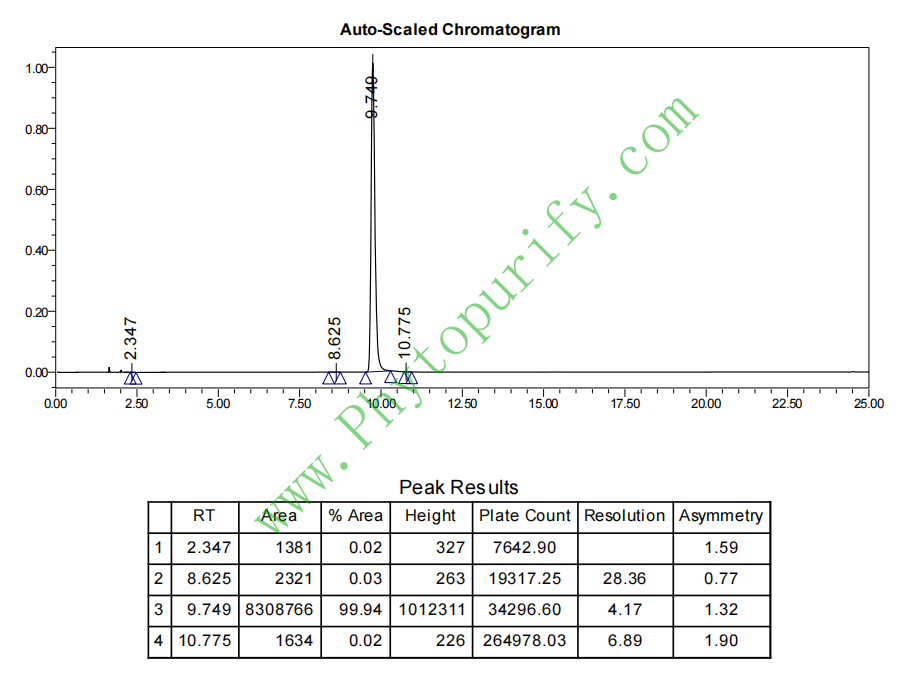
HPLC of Salicylic acid
Storage conditions:Short-term storage at 2~8℃, long-term storage at -20 ~ -80℃
57.5300
1.8817
-1.0641
1.9970
3.1051
6.3194
Low
86.3327
1.4251
Yes
No
No
No
Yes
No
0.0
Yes
No
Yes
Yes
Salicylic acid, also known as 2-hydroxybenzoic acid, is a simple phenolic acid compound widely found in plants in nature. Its CAS number is 69-72-7 and its molecular formula is C7H6O3. The application history of salicylic acid and its derivatives (the most famous of which is acetylsalicylic acid, also known as aspirin) dates back to ancient Sumerians and Egyptians using willow bark extract to relieve pain and fever. However, it was not until the mid-19th century that its active ingredients were isolated and purified, ushering in a new era of modern antipyretic, analgesic, and anti-inflammatory drugs. Although aspirin shines brighter, salicylic acid itself, as its active metabolite and precursor molecule, has always held a unique and fundamental position in the field of pharmacology. In recent years, with the deepening of molecular pharmacology research, the mechanism of action of salicylic acid has far exceeded the traditional scope of cyclooxygenase (COX) inhibition, and has been revealed to involve a complex network of multiple signaling pathways and molecular targets, exhibiting multifaceted effects in anti-inflammatory, analgesic, immune regulation, and even neuroprotection. This article aims to systematically review the chemical properties, plant sources, pharmacological activities, multi-target mechanisms of action, pharmacological characteristics, and clinical application prospects of salicylic acid, in order to provide a comprehensive academic perspective for the deep development and innovative application of this classic natural product.
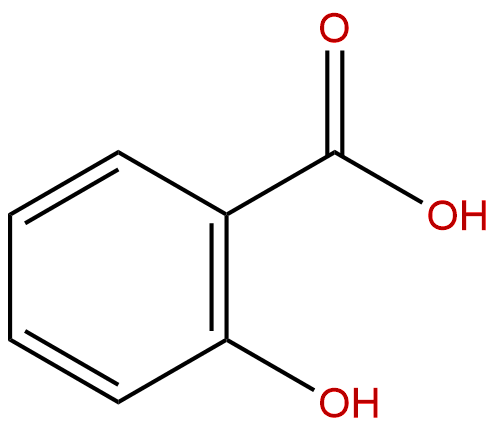
Salicylic acid is a monohydroxybenzoic acid, whose chemical structure consists of a benzene ring, a carboxyl group (- COOH), and an adjacent phenolic hydroxyl group (- OH). This adjacent substituted hydroxybenzoic acid structure is the basis for its unique physicochemical properties and biological activity.
The basic physicochemical parameters are as follows: molecular weight of 138.1220 g/mol. The calculated lipid water partition coefficient (LogP) is approximately 1.88, indicating that salicylic acid has a certain degree of lipophilicity, but it is still an amphiphilic molecule as a whole. This is consistent with its ability to dissolve in organic solvents such as ethanol and ether, as well as being slightly soluble in hot water. Its water solubility value is about 1.997 mg/mL, which is slightly soluble. The topological polar surface area (TPSA) is 57.53 Å ², which is relatively small and conducive to transmembrane transport.
The phenolic hydroxyl group in salicylic acid molecules makes it weakly acidic (pKa ≈ 2.97), while the pKa of the carboxyl group is approximately 4.54. Under physiological pH conditions, salicylic acid mainly exists in the form of deprotonated anions. Its carboxyl and phenolic hydroxyl groups can participate in the formation of intramolecular hydrogen bonds, affecting its crystal structure and solubility. In addition, phenolic hydroxyl groups make it prone to oxidation reactions, which is also the structural basis for its antioxidant activity. This relatively simple structure endows salicylic acid with the ability to cross biological barriers, including the blood-brain barrier, providing the possibility for its application in central nervous system related diseases.
Salicylic acid is an important endogenous signaling molecule in plants, involved in defense responses such as systemic acquired resistance (SAR), and therefore widely present in various plants. Its natural sources mainly include:
The traditional method of extracting salicylic acid from plant materials is mainly based on its acidity and solubility:
At present, the large-scale production of salicylic acid in industry mainly adopts chemical synthesis methods (such as Kolbe Schmidt reaction), but naturally extracted salicylic acid still has demand in specific fields such as cosmetics and food additives.
The core pharmacological activities of salicylic acid are anti-inflammatory, antipyretic, and analgesic, which are in line with the effects of aspirin. However, in-depth research reveals a broader spectrum of pharmacological effects.
The traditional view is that salicylic acid and its derivatives mainly block the synthesis of prostaglandins (PGs) by irreversible acetylation and inhibition of cyclooxygenase (COX, especially COX-1). However, salicylic acid itself has weak acetylation ability towards COX, and its mechanism of action is more diverse and complex, involving the regulation of multiple key signaling molecules and pathways. Based on the provided target information, its functional network can be summarized as follows:
Dual effects on cyclooxygenase (COX)Salicylic acid is COX active Competitive inhibitors Instead of covalent modification inhibitors like aspirin. It can directly compete with arachidonic acid for the active site of COX, thereby inhibiting the production of prostaglandins (such as PGE2). It is worth noting that salicylic acid has a relatively stronger inhibitory activity on inducible COX-2, and this inhibition is not related to its impact on NF - κ B transcriptional activation, indicating its direct enzyme activity inhibition.
Regulating the nuclear factor kappa B (NF - κ B) signaling pathway NF - κ B is the core transcription factor of inflammatory response. Salicylic acid can inhibit the activation of NF - κ B in a dose-dependent manner. Its mechanism does not directly act on the NFKB1 gene product p50 protein, but rather inhibits the activity of I κ B kinase (IKK), preventing its phosphorylation and degradation, thereby retaining NF - κ B in the cytoplasm and reducing the transcription of pro-inflammatory factors (such as TNF - α, IL-6) genes.
Intervention in Janus kinase/signal transduction and transcriptional activator (JAK/STAT) pathway Salicylic acid can inhibit the activation of key inflammatory factor interleukin-6 (IL-6) and its downstream signaling molecule STAT3. The sustained activation of STAT3 is closely related to chronic inflammation and tumorigenesis. Salicylic acid may exert anti-inflammatory and potential anti-tumor effects by inhibiting IL-6 production upstream or directly affecting the JAK/STAT phosphorylation cascade.
Affects the synthesis of nitric oxide (NO)Salicylic acid can inhibit the expression and activity of inducible nitric oxide synthase (iNOS, NOS2), reduce excessive NO production under inflammatory conditions, and thus alleviate NO mediated cytotoxicity and vasodilation.
Regulating transient receptor potential (TRP) channels Salicylic acid is an agonist or modulator of certain TRP channels. It can activate TRPV1 and TRPA1 channels, which may initially cause a burning or stinging sensation (a common feeling when applied topically), but over time or under specific conditions, this activation may lead to desensitization of the channels or inhibition of the transmission of nociceptive signals, participating in their peripheral analgesic mechanisms.
Regulating Pyroptosis Salicylic acid has been reported to inhibit the activation of Caspase-1 (CASP1). Caspase-1 is a key effector protein of inflammasomes, responsible for cleaving the precursors of IL-1 β and IL-18, and mediating cell apoptosis. By inhibiting Caspase-1, salicylic acid may alleviate excessive inflammatory response and tissue damage.
Regulation of tumor necrosis factor - α (TNF - α)Salicylic acid can inhibit the production and signaling of TNF - α. TNF - α is another core pro-inflammatory cytokine, and salicylic acid may reduce its synthesis by affecting its mRNA stability or translation process.
In summary, the mechanism of action of salicylic acid is a multi-target, multi-level network system, and its anti-inflammatory effect is the comprehensive result of synergistically inhibiting prostaglandin synthesis, cytokine production, transcription factor activity, and inflammatory mediator release.
From the perspective of medicinal properties, salicylic acid has distinct characteristics:
At present, the direct application of salicylic acid and its salts in clinical practice mainly focuses on the following aspects:
Looking ahead to the future, based on a new understanding of its multi-target mechanism of action, the clinical application of salicylic acid may expand in the following directions:
Salicylic acid, a natural product derived from ancient willow bark, has undergone hundreds of years of application and decades of in-depth research. Its image has evolved from a simple antipyretic and analgesic precursor to a versatile agent with a complex mechanism of action and diverse targets. It is not only a signaling molecule for plant defense, but also an important tool for humans to combat inflammation and related diseases. From directly inhibiting COX enzyme activity, to upstream regulation of key signaling pathways such as NF - κ B and JAK/STAT, to affecting TRP channels and cell apoptosis, salicylic acid, with its unique chemical structure, weaves a fine network of action in the body. Although it has certain limitations as a systemic oral drug, its excellent pharmacological basis (such as appropriate LogP, blood-brain barrier permeability, low cardiac toxicity) and clear multi-target effects provide broad space for its "new use of old drugs" and "structural redevelopment" in modern medicine. In the future, by combining systems pharmacology, structural biology, and new formulation technologies, we will deeply explore the potential of salicylic acid in the fields of neuroinflammation, metabolic diseases, tumor prevention, etc., which is expected to give this classic molecule new vitality in the era of precision medicine and continue to contribute to human health. The continuous research on salicylic acid is also a vivid confirmation of the value of natural products as a source of drug discovery.
