Alcesefoliside: A Comprehensive Analysis of a Natural Anti inflammatory Flavonoid Glycoside Derived from Rubus Hook
1. Overview
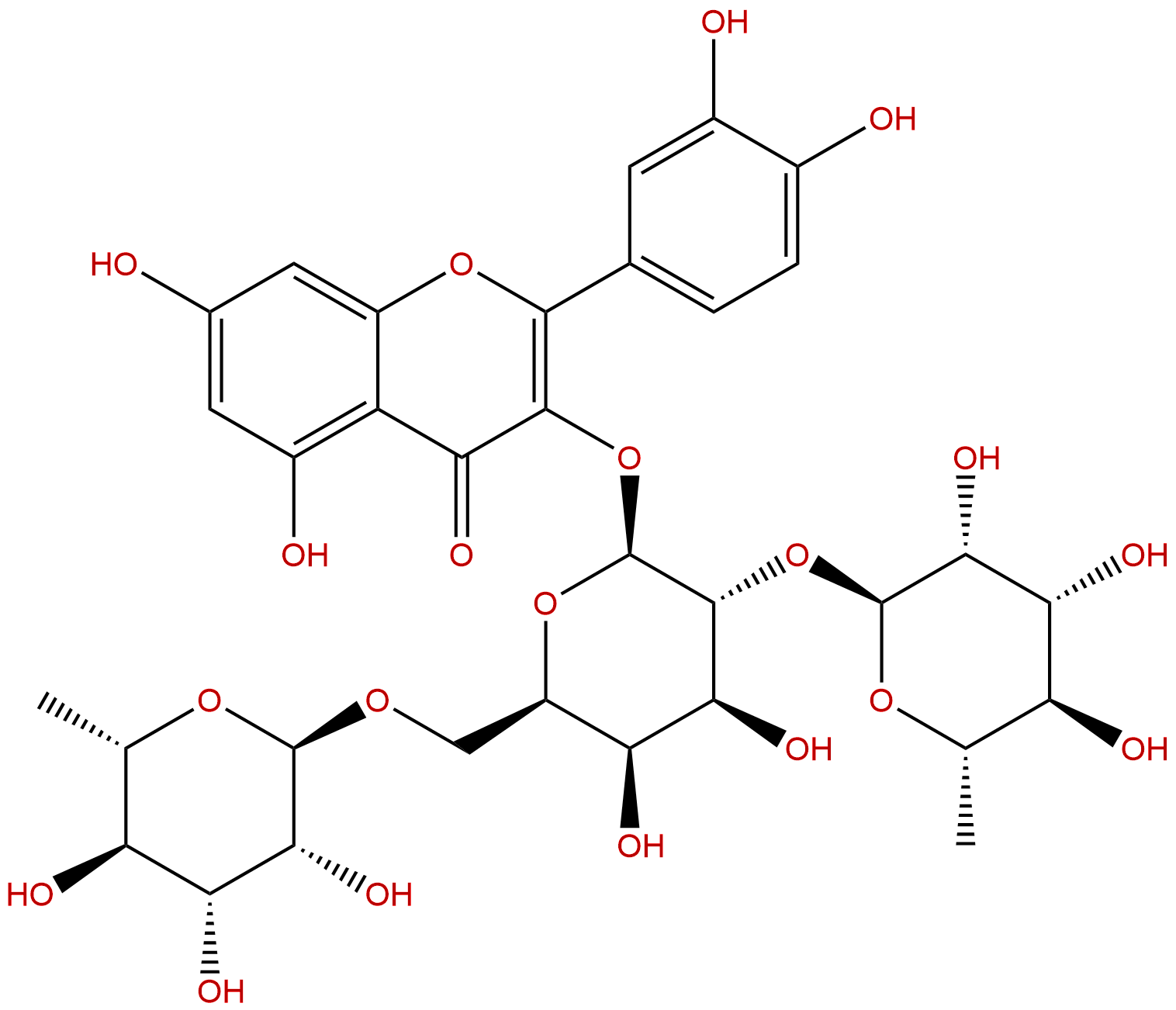
Alcesefoliside, with CAS number 124151-38-8, is a species belonging to the genus Rubus(Rubus spp.)Natural flavonoid glycosides isolated from plants. Its molecular formula is C33H40O20 and its molecular weight is 756.6630 g/mol. This compound was initially discovered for its significance in plant chemical taxonomy, but subsequent pharmacological studies have shown its significant biological activity. The existing description indicates that crude leaf hook glycosides have clear antioxidant effects and exhibit cell protective activity similar to the classic hepatoprotective drug silymarin at the cellular level (with statistical significance at a concentration of 60 µ g/mL). In recent years, with the in-depth study of the pathogenesis of inflammatory bowel diseases (such as colitis), crude leaf hook glycoside has attracted much attention due to its potential regulatory effects on multiple key inflammatory targets such as CASP1, IL1B, and NLRP3. This article will provide a systematic professional popularization of this natural product from the aspects of its chemical structure, plant origin, pharmacological mechanism, medicinal evaluation, and research prospects.
2. Chemical structure and physicochemical properties
The chemical structure of crude leaf hook glycoside is complex and belongs to the flavonoid glycoside class. The SMILES string provides a detailed description of its stereoconfiguration, indicating that it is a highly glycosylated compound. Molecules contain multiple chiral centers, and their biological activity is closely related to specific spatial conformations. From the molecular formula C33H40O20, it can be seen that the compound is rich in oxygen atoms, which is consistent with its good water solubility characteristics.
Based on the provided pharmacological parameters, we can conduct in-depth analysis of its physicochemical properties:
- Molecular weight (MW):756.6630 g/mol。 This value significantly exceeds the empirical upper limit of 500 g/mol for conventional small molecule drugs, which is a key factor to consider when using it as a drug lead compound.
- Lipid water partition coefficient (LogP/LogD)LogP is -0.4507 and LogD is -0.5515. Both are negative values, indicating that the compound has high hydrophilicity and tends to be distributed in the aqueous phase. This is completely consistent with its structural characteristics of containing multiple sugar and hydroxyl groups.
- Topological Polarity Surface Area (TPSA)Up to 328.35 Å ². TPSA is an important parameter for predicting molecular membrane permeability, and compounds with TPSA>140 Å ² are generally considered to have poor cell membrane permeability. The extremely high TPSA value of crude leaf hook glycoside strongly suggests that its oral absorption may face challenges.
- Water solubility The value is 5.0751 (usually measured in mg/mL or log mol/L, which is not specified here, but it is inferred from its structure that it has good water solubility). High water solubility is beneficial for the development of compound formulations and their distribution in body fluids.
- Other parameters The low permeability (0.1977) and effective permeability (Peff, 0.3732) of Caco-2 cells confirm its weak ability to cross the intestinal epithelial cell barrier. The blood-brain barrier (BBB) penetration is "low", which means it is difficult for it to enter the central nervous system, which is unfavorable for treating central nervous system diseases, but may also reduce the risk of central nervous system side effects.
In summary, crude leaf hook glycoside is a typical natural glycoside product with high molecular weight, polarity, and water solubility. These properties determine its pharmacokinetic behavior in vivo and are the basis for evaluating its potential as a drug.
3. Plant sources and traditional applications
The main source of crude leaf hook glycoside is from Rubus spp Plants, this genus of plants is widely distributed worldwide, with common ones including raspberries, blackberries, etc. In the traditional medical system, various species of plants in the genus Rubus are widely used. For example, in Chinese folklore, the roots, leaves, or fruits of some species of hookah are used to treat diarrhea, dysentery, hepatitis, rheumatic pain, and inflammatory diseases. In traditional European herbal medicine, raspberry leaves are often used to relieve sore throat, oral ulcers, and mild diarrhea.
These traditional applications are often related to the efficacy descriptions of "clearing heat, detoxifying, converging, and anti-inflammatory", which provides clues for searching for their active substances from a modern pharmacological perspective. As one of the active ingredients isolated from this genus of plants, the discovery of antioxidant and anti-inflammatory activities of crude leaf hook glycoside provides a scientific basis for the traditional medicinal value of hook plants. From the perspective of phytochemistry, flavonoid glycosides are important secondary metabolites of plants in the genus Rubus. They are not only defense substances of plants themselves, but also key components for their pharmacological effects. Therefore, the study of crude leaf hook glycosides is a bridge connecting traditional medicinal wisdom with modern drug discovery.
4. Pharmacological activity and mechanism of action
The core pharmacological activity of crude leaf hook glycoside is concentrated in antioxidant and anti-inflammatory And its anti-inflammatory effect and treatment colitis The potential is closely related. The database information reveals five key targets of its action:CASP1, IL1B, NLRP3, IL18, and ASC These five targets do not exist in isolation, but collectively point to a crucial signaling pathway in inflammation and immune response——NLRP3 inflammasome pathway。
Scientific explanation of the mechanism of action:
1. Composition and activation of NLRP3 inflammasome NLRP3 inflammasome is a multi protein complex within cells that is a core component of the innate immune system. It mainly consists of three parts:Sensor protein (NLRP3)、Adaptor protein (ASC) and Effect protein (Caspase-1, also known as CASP1)When cells are stimulated by pathogen associated molecular patterns (PAMPs, such as bacterial components) or damage associated molecular patterns (DAMPs, such as ATP and crystal substances released by cellular stress), NLRP3 protein is activated and oligomerized. Subsequently, it recruits and activates CASP1 through ASC protein.
-
The production of downstream pro-inflammatory factors Activated CASP1 has two key functions: firstly, to convert inactive CASP1 into Precursor IL-1 β (encoded by IL1B gene) and Precursor IL-18 (encoded by the IL18 gene) Cut into mature forms of IL-1 β and IL-18 with biological activity; The second is to trigger a special inflammatory cell death mode - cell pyroptosis. Mature IL-1 β and IL-18 are potent pro-inflammatory cytokines that, when released into the extracellular space, can recruit more immune cells to the site of inflammation and amplify the inflammatory response.
-
NLRP3 inflammasome and colitis In the pathogenesis of inflammatory bowel disease (IBD), especially ulcerative colitis and Crohn's disease, abnormal activation of NLRP3 inflammasomes in the intestinal mucosa is considered one of the key mechanisms leading to intestinal epithelial damage and chronic inflammation. Excessive production of IL-1 β and IL-18 can disrupt intestinal barrier function and exacerbate tissue damage.
-
Potential targets of crude leaf hook glycoside The database information suggests that crude leaf hook glycoside can interact with five targets: CASP1, IL1B, NLRP3, IL18, and ASC. This strongly suggests that the compound may pass through Inhibition of assembly or activity of NLRP3 inflammasome Furthermore Reduce the activation of CASP1 In the end Downregulate the production of mature IL-1 β and IL-18 Thus exerting an anti colitis effect. Its antioxidant activity may also indirectly inhibit the activation of this pathway by clearing reactive oxygen species (ROS, one of the classic activators of NLRP3 inflammasome).
Therefore, the mechanism of action of crude leaf hanging hook glycoside can be summarized as: intervening in the NLRP3 inflammasome signaling pathway through multiple targets, inhibiting the maturation and release of downstream key pro-inflammatory cytokines, thereby alleviating inflammatory diseases driven by excessive activation of this pathway, such as colitis. This mechanism provides a solid theoretical basis for its development as a new type of anti-inflammatory drug.
5. Evaluation of drug properties
Drug efficacy assessment aims to predict the likelihood of an active compound developing into a successful drug. We combined Lipinski's Rule of Five (Ro5) with the provided detailed parameters to analyze the crude leaf hook glycoside:
Lipinski's Five Rules Compliance Status:
1. Molecular weight ≤ 500 Not compliant (MW=756.66>500).
2. Lipid water partition coefficient LogP ≤ 5 Meets (LogP=-0.45<5).
3. Number of hydrogen bond donors (HBD) ≤ 5 Not compliant (according to the structure, its glycoside part contains a large number of hydroxyl groups, and the HBD number far exceeds 5).
4. Number of hydrogen bond acceptors (HBA) ≤ 10 Not compliant (the molecular formula contains 20 oxygen atoms, most of which can be used as HBAs, with a quantity far exceeding 10).
Crude leaf hook glycoside Serious violation of three of Lipinski's rules(MW、HBD、HBA), This indicates that it Oral bioavailability is likely to be extremely low Ro5 is based on the empirical rules summarized from a large number of successful oral medications, and violating these rules usually means that the compound has significant obstacles in intestinal absorption and distribution.
In depth analysis combined with other pharmacological parameters:
- absorb The extremely high TPSA (328.35) and extremely low Caco-2 permeability (0.1977) directly confirm its poor ability to cross biofilms, such as intestinal epithelial cells. This is consistent with its conclusion of violating Ro5, indicating that the absorption rate after oral administration may be very low.
- distribution The plasma protein binding rate (PPB) is 74.66%, which is a moderately high level and can affect its free drug concentration. The low penetration of BBB limits its application in treating central nervous system diseases, but it may be beneficial for treating peripheral inflammation such as colitis.
- Metabolism and toxicity:
-The Ames test result is 0.0, usually interpreted as non mutagenic, which is a positive signal.
-The chromosomal aberration test result is' yes', indicating a possible risk of genetic toxicity, which requires high attention and in-depth research in drug development Red Alert。
-HERG inhibition is' no ', indicating a lower risk of causing QT interval prolongation in the heart.
-Multiple serum biochemical indicators (ALT, AST, ALK) showed "yes", indicating that the testing conditions may have a certain impact on the liver and further evaluation of its hepatotoxicity is needed.
-Respiratory sensitization (Resp_Sens) is "yes" and also a safety signal that needs attention.
Comprehensive evaluation conclusion:
Coarse leaved Hook Hook Glycoside as a Natural product lead compounds, with clear and novel features Multi target anti-inflammatory mechanism It has shown promising results in the treatment of inflammatory diseases such as colitis Pharmacological activity potential However, it Pharmaceutical properties face severe challenges The extremely poor oral absorption characteristics are the main obstacle on its path towards oral medication; Meanwhile, potential chromosomal aberrations and hepatotoxic signals are key issues that must be thoroughly clarified in terms of their safety. It is unlikely to be developed directly as an oral small molecule drug, and more likely development directions include: 1) as Injection or local administration preparation Developing colon targeted drugs to bypass absorption barriers; 2) As The starting point of pharmaceutical chemistry optimization By modifying its structure (such as simplifying sugar groups and preparing prodrugs) to improve its drug like properties; 3) As Molecular tool for in-depth exploration of the regulatory mechanism of NLRP3 inflammasome。
6. Research Status and Application Prospects
At present, research on crude leaf hook glycosides is still in progress Early preclinical stage The existing literature mainly focuses on its isolation and identification, preliminary in vitro antioxidant and cell protective activity reports, and target network analysis based on database prediction. Regarding its anti colitis effect by inhibiting the NLRP3 inflammasome pathway Direct experimental evidence(such as using gene knockout animals, specific inhibitor controls, etc.) is still relatively lacking, and more in-depth and systematic in vitro and in vivo pharmacological and mechanistic studies are needed to verify.
Future research directions and prospects:
1. Deepening mechanism research It is urgent to directly verify the inhibitory effects of crude leaf hook glycoside on NLRP3 inflammasome assembly, CASP1 activation, and IL-1 β/IL-18 secretion in cell and animal models (such as DSS or TNBS induced colitis mouse models), and clarify its specific mechanism of action (whether it acts on NLRP3 itself, ASC, or CASP1).
2. Optimization of drug properties Given the poor drug properties of its current molecular entities, future chemical research should focus on Structural modification and simplification Up there. For example, exploring whether derivatives with glycosides (removing the glycosyl portion) or simplified sugar chains retain activity and improve membrane permeability. At the same time, development New drug delivery system Applications such as nanoparticles, liposomes, or colon specific drug delivery systems may be another practical path towards their application.
3. Comprehensive evaluation of safety Strict experimental evaluation must be conducted on the suggested chromosomal aberration and hepatotoxicity risks, to determine their toxic dose range, mechanism of action, and to determine whether the risk can be avoided through dose control or structural optimization.
4. Integration of multi omics and network pharmacology By utilizing network pharmacology, transcriptomics, proteomics, and other techniques, we aim to comprehensively reveal the overall network of action of crude leaf hook glycosides in cells. This may lead to the discovery of other beneficial targets beyond the NLRP3 pathway, providing a broader perspective for understanding their pleiotropy.
In summary, crude leaf hook glycoside is a natural product molecule with significant value. It is like a key, opening up new ideas for us to treat inflammatory diseases such as colitis by regulating NLRP3 inflammasome. Although the road to developing it directly as a traditional oral medication is bumpy, it serves as The value of lead compounds and mechanism probes is beyond doubt With the continuous advancement of research methods for natural products, crude leaf hook glycosides and their derivatives are expected to provide new candidate drugs or design inspiration for the treatment of inflammatory diseases in the future, and also lay a scientific foundation for the deep development and modern utilization of hook plants.