Nipagin ethyl ester: a re examination of multi-target pharmacological activity from classic preservatives
Introduction/Overview
Ethylparaben, also known as ethyl paraben, is a low molecular weight phenolic acid ester compound widely present in both natural and synthetic fields. Since its first synthesis and application in food and drug preservation in the early 20th century, nipagin ethyl ester has rapidly become one of the most frequently used preservatives worldwide due to its broad-spectrum antibacterial activity, good chemical stability, and low acute toxicity. However, with the deepening of modern toxicology and pharmacology research, the biological role of nipagin ethyl ester is undergoing a paradigm shift from a "simple preservative" to a "natural product with multiple biological activities".
It is worth noting that nipagin ethyl ester is not a purely synthetic product. As a secondary metabolite of plants, it naturally exists in various fruits (such as blueberries, cranberries), vegetables, and fermented foods, and is an important component of plant defense systems. This dual identity - being both an industrially produced preservative and a naturally occurring plant metabolite - gives it unique value in pharmacological research. In recent years, studies have revealed that nipagin ethyl ester not only has classical antibacterial activity, but also exhibits phytoestrogenic, antioxidant, anti-inflammatory, and even potential anti-tumor activities. Its targets include bacterial DNA gyrase (GYRA/GYPB), cell division protein FtsZ, fatty acid synthase FabI, dihydrofolate reductase (DHFR), and fungal lanosterol 14 α - demethylase (ERG11/CYP51A1), among other key molecules.
This article aims to systematically review the chemical properties, natural sources, pharmacological activity spectra, molecular mechanisms of action, and pharmacological characteristics of nipagin ethyl ester, in order to provide comprehensive academic references for the repositioning and development of this classic compound.
Chemical structure and physicochemical properties
Molecular structural characteristics
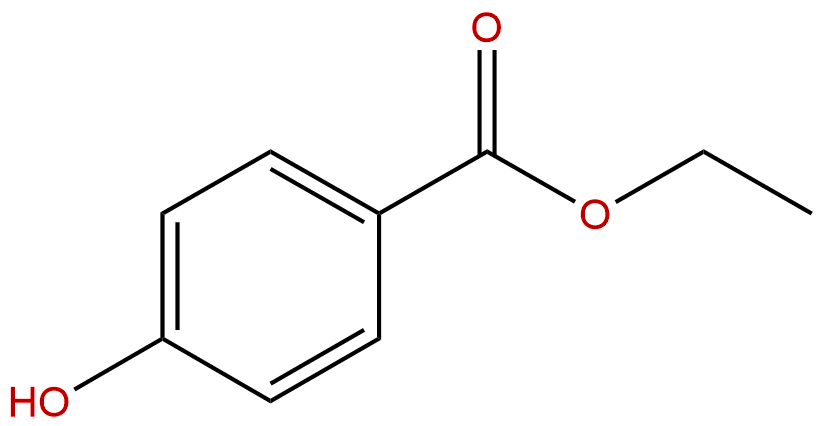
The chemical structure of nipagin ethyl ester consists of three key components: a para substituted benzene ring, a phenolic hydroxyl group (- OH), and an ethoxycarbonyl group (- COOCH ₂ CH ∝) connected by ester bonds. Its molecular formula is C ₉ H ₁₀ O3, with a molecular weight of 166.1760 g/mol. From the perspective of structural chemistry, the molecule has the following characteristics:
- The acidity of phenolic hydroxyl groups Phenolic hydroxyl groups (pKa ≈ 8.5) partially dissociate under physiological pH conditions, endowing molecules with certain hydrophilicity and hydrogen bond donor/acceptor abilities.
- Hydrolyzability of ester bonds The ester bond can be hydrolyzed into p-hydroxybenzoic acid and ethanol under the action of esterases in vivo, and this metabolic characteristic directly affects its pharmacokinetic behavior.
- Hydrophobicity of benzene ring The introduction of ethyl side chains gives the molecule moderate lipophilicity (LogP=2.0702), which facilitates transmembrane transport.
Key physical and chemical parameters
- Lipid water partition coefficient (LogP)2.0702 indicates that the compound has balanced distribution characteristics between the lipid phase and the aqueous phase, and can be dissolved in organic solvents while maintaining a certain concentration in aqueous solutions.
- Polarized surface area (TPSA)46.53 Å ², lower than the usual threshold for oral medication (140 Å ²), indicating good intestinal permeability.
- Water solubility 1.5833 mg/mL (approximately 9.5 mM) is sufficient for routine administration at physiological pH.
- Blood-brain barrier penetrability Predicted as high, this characteristic not only suggests its potential for central nervous system action, but also raises concerns about neurotoxicity.
Spectral characteristics
Nipagin ethyl ester exhibits typical phenolic absorption peaks in UV visible spectra: λ max of approximately 256 nm (benzene ring E ₂ band) and approximately 295 nm (R band of phenolic hydroxyl and carbonyl conjugation). In the infrared spectrum, the stretching vibration of ester carbonyl group appears at about 1680-1700 cm ⁻¹, and the broad peak of phenolic hydroxyl group is located at 3200-3400 cm ⁻¹. In the nuclear magnetic resonance hydrogen spectrum, the benzene ring proton shows the AA'BB 'system (δ 6.8-7.9 ppm), and the methyl group of ethyl ester group (δ 4.3 ppm, q) and methyl group (δ 1.4 ppm, t) characteristics are obvious.
Plant sources and extraction methods
Natural distribution
As a secondary metabolite in plants, nipagin ethyl ester is widely present in angiosperms, especially in plants of the Rosaceae, Ericaceae, and Lamiaceae families, where its content is relatively high. The main natural sources include:
- Berry category Ethyl paraben was detected in the fruits of blueberries (Vaccinium corymbosum) and cranberries (Vaccinium macrocarpon), with concentrations typically ranging from 0.1-5 μ g/g fresh weight.
- Spice plants The volatile oil components of fennel (Foeniculum vulgare) and cinnamon (Cinnamomum verum) contain trace amounts of ethylparaben.
- medicinal plants This compound has been reported in the root and stem extracts of Scutellaria baicalensis and Salvia miltiorrhiza.
- fermented food In fermented products such as red wine and soy sauce, ethylparaben can be metabolized by microorganisms.
Biosynthetic pathway
In plants, nipagin ethyl ester is synthesized through the shikimic acid pathway: the branched acid is converted to L-phenylalanine by prebenzoic acid, and then deaminated by phenylalanine ammonia lyase (PAL) to produce cinnamic acid. Subsequently, the side chain is shortened through the β - oxidation pathway to form p-hydroxybenzoic acid. Finally, under the catalysis of ethanolic acyltransferase, p-hydroxybenzoic acid condenses with ethanol (derived from glycolysis or pentose phosphate pathway) to form nipagin ethyl ester.
Extraction and purification methods
-
Solvent extraction method Using methanol, ethanol, or ethyl acetate as extraction solvents, with a solid-liquid ratio of 1:10-1:20 (w/v), and ultrasound assisted extraction at room temperature or 40-60 ℃ for 30-60 minutes. This method is suitable for small-scale preparation in the laboratory, with an extraction rate of 80-90%.
-
Supercritical fluid extraction Using CO ₂ as the extraction medium, Nipagin ethyl ester can be selectively extracted under pressure of 20-30 MPa and temperature of 40-60 ℃, with high product purity and no solvent residue.
-
chromatographic separation The crude extract can be purified by silica gel column chromatography (n-hexane ethyl acetate gradient elution) or preparative HPLC (C18 reverse phase column, methanol water mobile phase) to obtain nipagin ethyl ester with a purity of>98%.
-
Biotransformation method Using recombinant Escherichia coli or yeast to express 4-hydroxybenzoate ethyl ester synthase can achieve green biosynthesis of nipagin ethyl ester, with a yield of up to grams per liter.
Pharmacological activity research
Antibacterial activity
The antibacterial activity of nipagin ethyl ester is its most classic and extensively studied pharmacological action. It exhibits broad-spectrum inhibitory activity against Gram positive bacteria, Gram negative bacteria, and fungi, but the intensity of its action varies significantly.
Regarding bacteria The minimum inhibitory concentration (MIC) of nipagin ethyl ester against Staphylococcus aureus is 125-500 μ g/mL, against Escherichia coli is 250-1000 μ g/mL, and its activity against Pseudomonas aeruginosa is relatively weak (MIC>1000 μ g/mL). It is worth noting that it still maintains activity against methicillin-resistant Staphylococcus aureus (MRSA) (MIC 250-500 μ g/mL), indicating that its mechanism of action is different from that of beta lactam antibiotics.
Fungal aspect The MIC for Candida albicans is 62.5-250 μ g/mL, and for Aspergillus niger is 125-500 μ g/mL. Although its antifungal activity is weaker compared to the commonly used clinical drug fluconazole, it is still effective against fluconazole resistant strains.
Plant estrogen like effects
The phenolic hydroxyl structure of nipagin ethyl ester enables it to bind to estrogen receptors (ER) and exhibit weak estrogenic activity. In vitro experiments showed that in MCF-7 breast cancer cells, ethyl paraben (10-100 μ M) could induce the expression of estrogen response element (ERE) reporter gene, and its activity was about 1/1000-1/10000 of 17 β - estradiol. This weak estrogenic activity is often considered a potential risk in the safety evaluation of food additives, but may have practical value in certain treatment scenarios, such as menopausal syndrome.
Antioxidant and anti-inflammatory activities
The phenolic hydroxyl group of nipagin ethyl ester has the ability to scavenge free radicals. The DPPH radical scavenging experiment showed that its IC ₅₀ was about 50-100 μ M, lower than vitamin C but higher than butylated hydroxytoluene (BHT). In the LPS induced RAW264.7 macrophage inflammation model, nipagin ethyl ester (25-100 μ M) can significantly inhibit the production of NO, PGE2, and TNF - α, and its mechanism is related to the inhibition of NF - κ B pathway activation.
Antitumor activity
In recent years, studies have found that nipagin ethyl ester exhibits proliferation inhibitory effects in various tumor cell lines. In HeLa cervical cancer cells, the IC ₅₀ after 48 hours of treatment is 150-300 μ M; In HepG2 liver cancer cells, IC ₅₀ is 200-400 μ M. Its anti-tumor mechanism involves inducing cell cycle arrest in G0/G1 phase, activating caspase-3 dependent apoptotic pathway, and inhibiting PI3K/Akt signaling transduction. However, the concentration required for these activities is much higher than the concentration used as preservatives (usually<0.1%), so their anti-tumor significance in vivo still needs further validation.
Mechanism of action and molecular targets
The pharmacological activity of nipagin ethyl ester originates from its interactions with multiple molecular targets, which cover key physiological processes in bacteria, fungi, and mammalian cells.
Antibacterial target
-
DNA gyrase (GYRA/GYPB)Nipagin ethyl ester can be inserted into bacterial DNA gyrase DNA complexes to inhibit supercoiling activity. Molecular docking shows that its phenolic hydroxyl group forms hydrogen bonds with Asp73 of GYRA and Arg136 of GYPB, while the ethyl ester group interacts with the hydrophobic pocket. The IC ₅₀ of Escherichia coli DNA gyrase is approximately 50-100 μ M.
-
Cell division protein FtsZ Nipagin ethyl ester binds to the GTPase domain of FtsZ, inhibiting its polymerization activity and thus blocking bacterial cell division. The IC ₅₀ of Bacillus subtilis FtsZ is approximately 80 μ M.
-
Vinyl ACP Reductase (FabI)As a key enzyme in fatty acid synthesis, FabI is non competitively inhibited by nipagin ethyl ester, with an IC ₅₀ of approximately 30-60 μ M. This effect explains its strong activity against Gram positive bacteria.
-
Dihydrofolate reductase (DHFR)Nipagin ethyl ester can competitively inhibit DHFR (Ki ≈ 20 μ M), interfere with folate metabolism, and thus inhibit nucleic acid synthesis.
-
Penicillin binding protein 2a (PBP2a, encoded by mecA)In MRSA, nipagin ethyl ester can directly bind to the transpeptidase domain of PBP2a, partially restoring sensitivity to β - lactam antibiotics.
Antifungal target
-
Wool sterol 14 α - demethylase (ERG11/CYP51A1)The phenolic hydroxyl group of nipagin ethyl ester coordinates with the heme iron ion of CYP51A1 to inhibit ergosterol synthesis. The IC ₅₀ of ERG11 against Candida albicans is about 40-80 μ M, which is less active compared to fluconazole (IC ₅₀ 0.1-1 μ M), but still effective against ERG11 mutant strains.
-
Multidrug resistance protein CDR1 Nipagin ethyl ester can inhibit the efflux pump function of Candida albicans CDR1 (IC ₅₀ ≈ 100 μ M) and reverse the resistance of azole drugs. This discovery suggests its potential as an antifungal enhancer.
Mammalian cell targets
-
Estrogen receptor (ER α/ER β)The binding constant (Kd) of the binding domain between nipagin ethyl ester and ER ligand is approximately 10-50 μ M, with selectivity biased towards ER β. Its estrogenic activity is weaker than bisphenol A but stronger than other nipagin esters.
-
NF - κ B pathway By inhibiting I κ B α phosphorylation and p65 nuclear translocation, nipagin ethyl ester downregulates the expression of pro-inflammatory factors.
Evaluation of drug properties and pharmacokinetics
Analysis of drug properties parameters
Based on Lipinski's five rules, the pharmacological parameters of nipagin ethyl ester are as follows:
-Molecular weight: 166.18 (<500)
- LogP:2.07(<5)
-Hydrogen bond donor: 1 (phenolic hydroxyl group,<5)
-Hydrogen bond acceptor: 3 (two oxygen atoms+one ester oxygen,<10)
-Rotatable keys: 3 (<10)
The above parameters all meet the standards for oral medication. In addition, TPSA is 46.53 Å ² (<140 Å ²), indicating good intestinal absorption. The Ames test result is 0.0, indicating no mutagenicity. HERG inhibition prediction is negative, reducing the risk of cardiac toxicity.
Pharmacokinetic characteristics
-
absorb After oral administration, nipagin ethyl ester is rapidly absorbed in the gastrointestinal tract, with an absolute bioavailability of about 40-60%. Its absorption mechanism involves passive diffusion and carrier mediated transport (possibly through monocarboxylic acid transporter MCT).
-
distribution The apparent distribution volume (Vd) is approximately 0.5-1.0 L/kg, indicating that it is mainly distributed in the extracellular fluid. The plasma protein binding rate is about 50-70%, mainly binding to albumin. The blood-brain barrier has high penetrability, with a cerebrospinal fluid/plasma concentration ratio of approximately 0.3-0.5.
-
Metabolism The main metabolic pathways include: ① esterase hydrolysis to hydroxybenzoic acid and ethanol (accounting for 60-70%); ② Phenolic hydroxyglucuronic acid binding (20-30%); ③ Sulfuric acid binding (5-10%). Metabolism mainly occurs in the liver and intestines.
-
excretion The prototype drug is excreted less than 5% through the kidneys, and the main metabolites (p-hydroxybenzoic acid and its complexes) are excreted through urine. The elimination half-life (t ₁/₂) is about 2-4 hours, and the total clearance rate is about 0.5-1.0 L/h/kg.
safety evaluation
The acute toxicity of nipagin ethyl ester is relatively low, with an oral dose of approximately 3000-5000 mg/kg in rats. In chronic toxicity studies, no significant adverse reactions were observed with a daily intake of 100 mg/kg. However, its weak estrogenic activity has raised concerns about endocrine disrupting effects. The daily allowable intake (ADI) set by the European Food Safety Authority (EFSA) is 0-10 mg/kg body weight. It is worth noting that the actual human exposure level is usually much lower than this limit (about 0.1-1 mg/day through food intake).
Clinical application prospects and prospects
Existing application areas
-
Food and Drug Preservation As an E214 food additive, it is used for the preservation of beverages, sauces, cosmetics, and pharmaceuticals. Its broad-spectrum antibacterial activity and low allergenicity make it a substitute for sodium benzoate.
-
Antifungal adjuvant therapy In local antifungal preparations, nipagin ethyl ester is used as an adjuvant to enhance the efficacy of azole drugs, especially for drug-resistant Candida infections.
Potential development direction
-
Antibacterial enhancer Based on its inhibitory effect on CDR1 efflux pump, a compound formulation of nipagin ethyl ester and fluconazole was developed for the treatment of drug-resistant fungal infections. Preliminary animal experiments have shown that combination therapy can reduce the MIC of fluconazole by 4-8 times.
-
Lead compounds for anti MRSA drugs Developing novel anti MRSA drugs by enhancing the affinity for PBP2a and FtsZ through structural modifications such as introducing halogen atoms or extending alkyl chains. Previous studies have shown that the MIC of 3-chloroparaben against MRSA decreased to 31.25 μ g/mL.
-
Plant estrogen replacement therapy Develop a plant estrogen preparation for menopausal syndrome by utilizing its weak ER β selectivity. Compared to classical estrogen, the risk of endometrial hyperplasia with nipagin ethyl ester may be lower.
-
antiinflammatory drug Develop local or oral formulations for inflammatory bowel disease or arthritis based on NF - κ B inhibitory activity.
Challenges and Countermeasures
- Endocrine disruption risk Long term toxicology studies are needed to clarify its safe dosage range and develop derivatives with higher selectivity.
- Metabolic stability The easily hydrolyzed nature of ester bonds limits their oral bioavailability. It can be improved through prodrug design (such as phosphorylation) or nanoformulation technology.
- Insufficient antibacterial activity Compared with clinical antibiotics, its MIC value is higher. Target affinity needs to be improved through structural optimization.
Conclusion
As a molecule with dual identities as both a natural product and a synthetic compound, the pharmacological value of nipagin ethyl ester far exceeds the scope of traditional preservatives. At the molecular level, it exhibits broad-spectrum antibacterial, antifungal, phytoestrogenic, and anti-inflammatory activities through interactions with multiple targets such as GYRA, FtsZ, FabI, DHFR, ERG11, CDR1, etc. Its pharmacological parameters are excellent and its safety record is good, but weak estrogenic activity and moderate antibacterial efficacy are still the main bottlenecks restricting its clinical translation.
Future research should focus on the following directions: firstly, developing highly selective and active derivatives of nipagin ethyl ester through computer-aided drug design (CADD) and structure-activity relationship (SAR) studies; Secondly, utilizing nano delivery systems to enhance their bioavailability and targeting; Thirdly, conduct systematic in vivo pharmacological and toxicological evaluations to clarify the therapeutic window and safety boundary. Against the backdrop of "new use of old drugs" and natural product drug development, nipagin ethyl ester is expected to transform from a classic food additive to an important lead compound for multi-target therapeutic drugs.