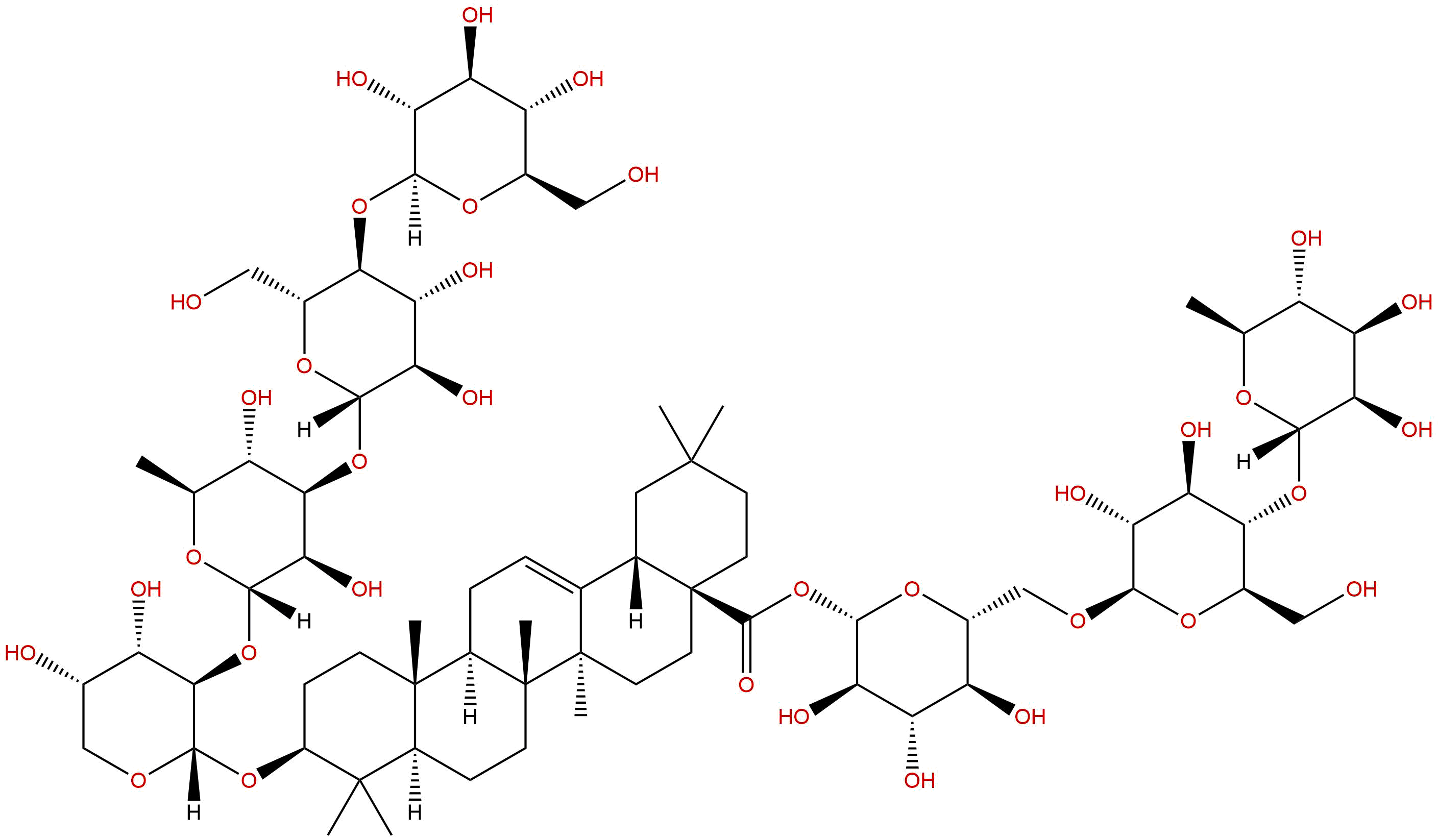


Product name: Pulchinenoside E3
Synonym name: Raddeanoside 17; Raddeanoside R17
Catalogue No.: BP5019
Cas No.: 824401-07-2
Formula: C71H116O35
Mol Weight: 1529.67
Botanical Source:
Type of Compound: Triterpenoids
Purity: 95%~99%
Analysis Method: HPLC-DAD or/and HPLC-ELSD
Identification Method: Mass, NMR
Packing: Brown vial or HDPE plastic bottle
Storage: Store in a well closed container, protected from air and light. Put into refrigerate or freeze for long term storage.
Whenever possible, you should prepare and use solutions on the same day. However, if you need to make up stock solutions in advance, we recommend that you store the solution as aliquots in tightly sealed vials at -20℃. Generally, these will be useable for up to two weeks.
The product could be supplied from milligrams to grams
Inquire for bulk scale.
For Reference Standard and R&D, Not for Human Use Directly.
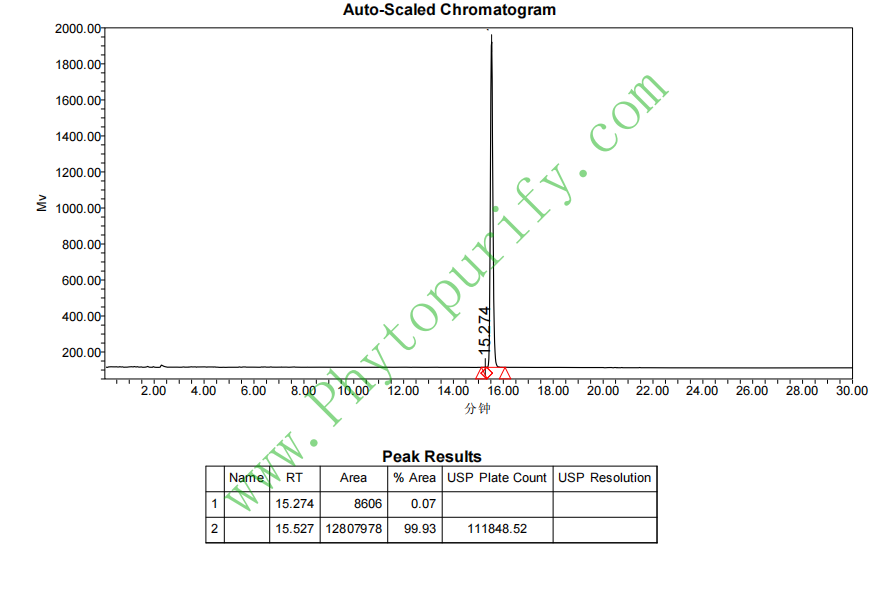
HPLC of Pulchinenoside E3
Storage conditions:Short-term storage at 2~8℃, long-term storage at -20 ~ -80℃
550.8900
1.4414
1.4412
1.2617
.4896
.1531
Low
63.6403
5.8785
Yes
No
No
No
No
No
0.0
Yes
No
No
Yes
Natural products, as an important source of drug discovery, play an irreplaceable role in the long history of human fight against diseases. In recent years, with the rapid development of modern separation technology and pharmacological screening methods, mining lead compounds with significant biological activity from traditional medicinal plants has become one of the hot areas in new drug research and development. Among numerous natural products, it originates from the traditional Chinese medicine Bai Tou Weng(Pulsatilla chinensis The triterpenoid saponins of Bunge Regel have attracted much attention due to their significant anti-tumor, anti-inflammatory, and immunomodulatory activities. Among them, Pulshinenoside E3, as a structurally unique lupine type pentacyclic triterpenoid saponin, is gradually moving from behind the scenes to the forefront due to its strong and multi-target inhibitory activity against malignant hematological diseases such as leukemia, becoming a rising star in the field of natural product pharmacology research.
Leukemia, as a malignant clonal disease of hematopoietic stem cells, has a complex pathogenesis involving multiple gene mutations and abnormal activation of signaling pathways. Despite breakthroughs in targeted therapy (such as FLT3 inhibitors, BCR-ABL inhibitors) and immunotherapy in recent years, the emergence of drug resistance, severe toxic side effects, and the lack of effective treatment options for some subtypes (such as acute myeloid leukemia with DNMT3A mutations) still pose serious challenges to clinical treatment. Therefore, there is an urgent clinical need to search for novel anti leukemia drugs with novel structures, unique mechanisms of action, and the ability to overcome existing drug resistance. In this context, the potential of Bai Tou Weng saponin E3, with its multi-target synergistic effect, provides a new approach for leukemia treatment.
This review aims to comprehensively and systematically review the research progress of Paeonia lactiflora saponin E3. The article will start with its chemical structure and physicochemical properties, elaborate on its plant origin and extraction process, focus on analyzing its pharmacological activity in the field of anti leukemia and other diseases, and deeply explore its molecular mechanism of action on multiple key targets such as FLT3, JAK2, DNMT3A, BCR-ABL, etc. At the same time, based on its pharmacological parameters and pharmacokinetic characteristics, the clinical application prospects and future research directions of Paeonia lactiflora saponin E3 are discussed, in order to provide a solid theoretical basis for the in-depth development and translational application of this natural product.
Paeonia lactiflora saponin E3 belongs to the lupine type derivatives of pentacyclic triterpenoids. Its chemical structure is complex, consisting of a hydrophobic pentacyclic triterpenoid glycoside (usually 23 hydroxybetulinic acid or related derivatives) connected to a hydrophilic oligosaccharide chain through glycosidic bonds. This "amphiphilic" structure is the chemical basis for its various biological activities. Specifically, its sugar chain is usually composed of various monosaccharide units such as glucose, rhamnose, arabinose, etc., which are connected to the C-3 or C-28 positions of the nucleoside to form disaccharide chain saponins. This complex sugar chain structure not only determines its high molecular weight (1529.6740 Da), but also has a decisive impact on its solubility, membrane permeability, and interaction with biological targets.
From the perspective of physical and chemical properties, Paeonia lactiflora saponin E3 exhibits typical characteristics of saponin compounds. Its lipid water partition coefficient (LogP) is 1.4414, indicating that it has a certain hydrophilicity, but also moderate lipid solubility, which helps with its distribution and transmembrane transport in organisms. Its topological polar surface area (TPSA) is as high as 550.8900 Å ², much higher than the conventional threshold for oral drugs (usually<140 Å ²), indicating that its oral bioavailability may be low and difficult to penetrate the blood-brain barrier. The water solubility parameter (1.2617 mg/mL) indicates that its solubility in water is still acceptable, which provides convenience for its in vitro pharmacological experiments and injectable development. It is worth noting that the hERG inhibition risk assessment of this compound is "no", and the Ames test result is 0.0, which preliminarily indicates that its cardiotoxicity and genotoxicity risks are low, and it has good safety potential. However, the high molecular weight and extremely high polar surface area also suggest that its absorption, distribution, metabolism, and excretion (ADME) process in vivo will face many challenges, requiring optimization of its drug properties through rational drug delivery systems or structural modifications.
The main plant source of Paeonia lactiflora saponin E3 is Paeonia lactiflora, a plant of the genus Paeonia in the Ranunculaceae family(Pulsatilla chinensis). In addition, other plants of the same genus such as the Korean white headed Weng(P. cernua)Mongolian White Headed Weng(P. ambigua)It may also contain this ingredient, but the content may vary significantly depending on the species, place of origin, harvest season, and processing method. Traditionally, the dried rhizomes of Paeonia lactiflora have been used as medicine, with the effects of clearing heat, detoxifying, cooling blood, and stopping dysentery. Modern research has shown that its rhizomes are rich in various triterpenoid saponins, among which paeoniflorin E3 is a representative active ingredient.
For the extraction of saponins E3 from Paeonia lactiflora, the classic process route of "alcohol extraction water precipitation macroporous resin purification" is usually used. Firstly, the dried medicinal herb of Paeonia lactiflora is crushed and heated with methanol or ethanol (such as 70% -95% ethanol) for reflux or ultrasound assisted extraction. The good solubility of saponins in alcohol solvents is utilized to dissolve them from plant cells. After the extraction solution is concentrated under reduced pressure, an appropriate amount of water is added for precipitation to remove fat soluble impurities and some water-insoluble components. Subsequently, the supernatant was adsorbed onto a macroporous adsorption resin column (such as D101, AB-8 type) and eluted with water and different concentrations of ethanol (such as 30%, 50%, 70%) in a gradient manner. Paeonia lactiflora saponin E3 is usually enriched in the 30% -70% ethanol elution site. Finally, high-purity Paeonia lactiflora saponin E3 monomer can be obtained by further separation and purification of the target fraction using preparative high-performance liquid chromatography (Prep HPLC) or high-speed countercurrent chromatography (HSCCC) techniques. In recent years, with the promotion of green chemistry concepts, new technologies such as microwave-assisted extraction and enzyme assisted extraction have also been attempted to be applied to the extraction of saponins from Paeonia lactiflora, aiming to improve extraction efficiency, shorten time, and reduce the use of organic solvents.
The most prominent pharmacological activity of Paeonia lactiflora saponin E3 is its significant inhibitory effect on various leukemia cell lines. Research has shown that this compound can inhibit the proliferation of acute myeloid leukemia (AML) cells (such as HL-60, U937, KG-1a, etc.) and chronic myeloid leukemia (CML) cells (such as K562) in a dose-dependent and time-dependent manner. Its mechanism of action is not singular, but is achieved through multiple collaborative pathways. For example, it can induce apoptosis in leukemia cells, manifested as nuclear fragmentation, DNA fragmentation, decreased mitochondrial membrane potential, and activation of Caspase-3/9. At the same time, it can also arrest the cell cycle in the G0/G1 phase or G2/M phase, inhibiting unrestricted cell proliferation. More importantly, Paeonia lactiflora saponin E3 also exhibits strong cytotoxicity against drug-resistant CML cell lines (such as K562/ADM), suggesting its potential to overcome multidrug resistance (MDR), which is of great significance for chemotherapy failure caused by overexpression of P-glycoprotein (P-gp) in clinical treatment.
In addition to its anti leukemia effect, Paeonia lactiflora saponin E3 also exhibits a wide range of pharmacological activities. In terms of anti solid tumor, it also has a certain inhibitory effect on proliferation of human liver cancer cells (HepG2), lung cancer cells (A549), breast cancer cells (MCF-7), but its activity is generally weaker than that of leukemia cells. In addition, Paeonia lactiflora saponin E3 also exhibits significant anti-inflammatory activity, which can inhibit the release of pro-inflammatory factors such as nitric oxide (NO), tumor necrosis factor - α (TNF - α), and interleukin-6 (IL-6) in macrophages induced by lipopolysaccharide (LPS). Its mechanism may be related to the inhibition of the activation of the NF - κ B signaling pathway. Based on its anti-inflammatory and immune regulatory properties, this compound has also shown potential application value in the treatment of autoimmune diseases such as rheumatoid arthritis and colitis. In addition, some studies have reported its antiviral (such as anti influenza virus) and antibacterial activities, but the relevant research is not yet in-depth.
The pharmacological activity of Paeonia lactiflora saponin E3, especially its anti leukemia effect, is closely related to its regulation of multiple key signaling pathways and molecular targets. This multi-target synergistic effect is a significant advantage that distinguishes it from traditional single target chemotherapy drugs.
Regulation of FLT3 FLT3 (FMS like tyrosine kinase 3) is one of the most common mutated genes in AML, and its internal tandem repeat (ITD) mutation leads to sustained activation of FLT3, driving leukemia cell proliferation. Research has shown that saponins E3 from Paeonia lactiflora can significantly inhibit the proliferation of FLT3-ITD positive AML cells (such as MV4-11) and induce their apoptosis. At the molecular level, it can directly or indirectly inhibit the autophosphorylation of FLT3 receptors and their downstream signaling pathways, such as the activation of STAT5, PI3K/AKT, and RAS/MAPK, thereby blocking the transmission of pro survival signals.
Regulation of JAK2 JAK2 is the core kinase of the JAK-STAT signaling pathway, and its mutations (such as JAK2 V617F) are common in myeloproliferative neoplasms (MPN) and some AML. Baitouweng saponin E3 has been found to inhibit the phosphorylation level of JAK2, thereby weakening the transcriptional activity of STAT3/STAT5 and downregulating the expression of its target genes (such as Bcl xL and Cyclin D1), thereby inhibiting leukemia cell growth and inducing apoptosis. This mechanism makes it potentially therapeutic for JAK2 mutation driven leukemia.
Regulation of DNMT3A DNMT3A (DNA methyltransferase 3A) is an epigenetic regulator of high-frequency mutations in AML, and its loss of function mutations lead to abnormal DNA methylation patterns, promoting the development of leukemia. Although the evidence for direct binding of Paeonia lactiflora saponin E3 to DNMT3A protein is not sufficient, research suggests that it may indirectly regulate DNA methylation status and reverse abnormal gene expression profiles caused by DNMT3A mutations by affecting the expression level of DNMT3A or its ability to bind to chromatin. This provides a new strategy for treating refractory AML with DNMT3A mutations.
Regulation of BCR-ABL BCR-ABL fusion protein is a pathogenic driver of CML. Paeonia lactiflora saponin E3 can inhibit the tyrosine kinase activity of BCR-ABL and its downstream signals (such as CrkL and STAT5) in K562 cells. More importantly, it may overcome imatinib resistance caused by BCR-ABL kinase region mutations (such as T315I) by acting on the degradation pathway of BCR-ABL protein or affecting its interaction with heat shock protein (Hsp90), demonstrating its potential as a next-generation anti CML drug.
Regulation of nucleotide metabolizing enzymes DCK (deoxycytidine kinase), CDA (cytidine deaminase), and NT5C2 (5 '- nucleotidase II) are key enzymes that affect the efficacy of nucleoside analogues such as cytarabine. Paeonia lactiflora saponin E3 has been found to upregulate the expression or activity of DCK, while inhibiting CDA and NT5C2, thereby enhancing the activation of cytarabine and reducing its inactivation, acting as a chemotherapy sensitizer. In addition, it can also inhibit RRM1 and RRM2 (ribonucleotide reductase subunits), which are key rate limiting enzymes for DNA synthesis and repair. Their inhibition can directly block DNA replication in leukemia cells.
Regulation of KIT KIT (CD117) is another receptor tyrosine kinase that frequently mutates in AML. Paeonia lactiflora saponin E3 can also inhibit the phosphorylation of KIT and its downstream signaling, exerting inhibitory effects on KIT mutation positive leukemia cells.
In summary, Paeonia lactiflora saponin E3 constructs a multi-target and multi-level anti leukemia network by simultaneously acting on multiple key kinases (FLT3, JAK2, BCR-ABL, KIT), epigenetic regulatory factors (DNMT3A), and nucleotide metabolizing enzymes (DCK, CDA, NT5C2, RRM1/2) that drive the occurrence and development of leukemia. This "one stone, many birds" mode of action not only endows it with strong anti leukemia activity, but also greatly reduces the possibility of single target mutations leading to drug resistance.
Although Paeonia lactiflora saponin E3 exhibits remarkable pharmacological activity in vitro and in vivo (animal models), its pharmacological evaluation reveals the main challenges in translating it into clinical drugs. As mentioned earlier, its molecular weight (1529.67 Da) and TPSA (550.89 Å ²) far exceed the "Lipinski's Rule of Five" range of oral drugs, indicating poor oral absorption and extremely low bioavailability. Although its LogP value (1.44) is moderate, its high polarity surface area makes it difficult for it to passively diffuse through the intestinal epithelial cell membrane. Therefore, oral administration may not be the ideal route of administration.
Preliminary pharmacokinetic studies (mainly based on animal experiments) have shown that saponins E3 from Paeonia lactiflora are widely distributed in the body after intravenous injection, but their elimination half-life may be short and require frequent administration. Its metabolism in the body may mainly occur in the gastrointestinal tract and liver, through gradual hydrolysis of sugar chains or glycoside redox reactions. Due to its large molecular weight and high polarity, its prototype drug is mainly excreted through bile into the intestine and excreted through feces, while the amount excreted by the kidneys is relatively small. The low penetration of the blood-brain barrier may be a disadvantageous factor in the treatment of central nervous system leukemia, but it also means that its selectivity towards peripheral tissues is relatively high, which may reduce central neurotoxicity.
In terms of safety, as mentioned earlier, its low risk of hERG inhibition and negative Ames test are positive signals. However, as a saponin compound, its hemolytic activity is a toxicological issue that requires special attention. High concentrations of saponins may damage the red blood cell membrane, leading to hemolysis. Therefore, when developing injectable formulations, it is necessary to strictly control their blood drug concentration or reduce their hemolytic toxicity through structural modifications (such as prodrug design, sugar chain modification), while retaining or enhancing their anti-tumor activity.
Based on existing research, Paeonia lactiflora saponin E3, as a natural product with multi-target action characteristics, has shown unique advantages and broad application prospects in the field of leukemia treatment.
Overcoming drug resistance Its activity against FLT3-ITD, BCR-ABL T315I and other drug-resistant mutants, as well as its killing effect on multidrug-resistant cells, make it a potential candidate drug for solving clinical resistance problems. Especially as a component of combination therapy, when used in combination with traditional chemotherapy drugs such as cytarabine, it enhances efficacy, reduces dosage and toxicity through sensitization.
The potential of precision medicine Given that its targets include key driver genes in leukemia molecular subtypes such as FLT3, JAK2, DNMT3A, KIT, etc., in the future, based on the patient's gene mutation profile, the population most likely to benefit from the treatment with Paeonia lactiflora saponin E3 can be screened, achieving precise treatment guided by "accompanying diagnosis".
Formulation innovation Developing a new drug delivery system is key to promoting its clinical translation in response to the bottleneck of low oral bioavailability. For example, using carriers such as liposomes, nanoparticles, and polymer micelles to encapsulate paeoniflorin E3 can not only improve its water solubility and stability, but also efficiently deliver the drug to the tumor site through passive targeting (EPR effect) or active targeting (surface modified ligand), improve efficacy, and reduce systemic toxicity. In addition, developing its prodrug or structurally similar compounds by introducing cleavable functional groups or optimizing the sugar chain structure is also an important direction for improving its pharmacokinetic properties.
Expand indications Based on its anti-inflammatory and immunomodulatory activities, the application of Paeonia lactiflora saponin E3 in autoimmune diseases (such as rheumatoid arthritis and inflammatory bowel disease) and certain solid tumors (such as liver cancer and lung cancer) is also worth further exploration. Especially its regulatory effect on the tumor microenvironment may provide a new combination strategy for immunotherapy.
As an active ingredient derived from the traditional Chinese medicine Bai Tou Weng, Bai Tou Weng saponin E3 has become a highly promising lead compound in the field of natural product pharmacology due to its unique chemical structure and multi-target synergistic anti leukemia mechanism. It exhibits strong anti leukemia activity and unique advantages in overcoming drug resistance by simultaneously acting on multiple key targets such as FLT3, JAK2, BCR-ABL, DNMT3A, and nucleotide metabolizing enzymes. However, its physicochemical properties such as high molecular weight and high polar surface area pose challenges to drug development, such as poor oral absorption and metabolic instability, which are obstacles that must be overcome to push it from the laboratory to clinical applications.
Future research should focus on: 1) further elucidating its direct binding mode and structure-activity relationship with various target proteins; 2) Using medicinal chemical methods for structural optimization, or developing novel nano delivery systems to improve their pharmacokinetic properties; 3) Systematically evaluate its efficacy and safety in animal models closer to clinical settings, such as PDX models, and explore the optimal combination therapy regimen. Despite the challenges ahead, the "multi-target, natural source" drug discovery strategy represented by Paeonia lactiflora saponin E3 undoubtedly provides new hope for overcoming the stubborn disease of leukemia. With the continuous deepening of research, this pearl in the treasure trove of natural products is expected to shine brighter in the future and contribute to the cause of human health.
