| Catalog No | Package | Original Price | Price | Inventory | Quantity | Operating |
|---|---|---|---|---|---|---|
| BP0803-20mg | 20mg | $30.00 | Sign in |
|


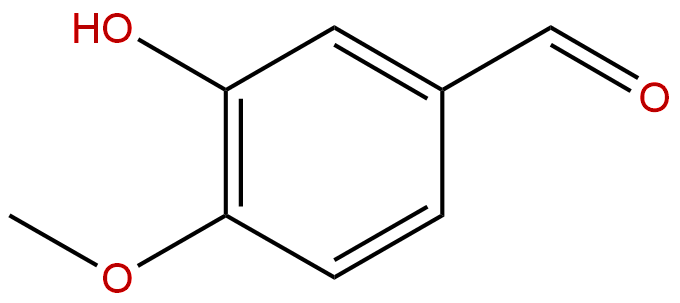
Synonym name: 3-Hydroxyanisaldehyde
Catalogue No.: BP0803
Cas No.: 621-59-0
Formula: C8H8O3
Mol Weight: 152.149
Botanical Source:
Purity: 95%~99%
Analysis Method: HPLC-DAD or/and HPLC-ELSD
Identification Method: Mass, NMR
Packing: Brown vial or HDPE plastic bottle
Can be supplied from milligrams to grams.
For Reference Standard and R&D, Not for Human Use Directly.
Inquire for bulk scale.
Storage conditions:Short-term storage at 2~8℃, long-term storage at -20 ~ -80℃
Isovanillin (CAS number: 621-59-0), as a natural benzaldehyde derivative, has received widespread attention in the field of natural product pharmacology in recent years due to its unique chemical structure and diverse biological activities. Isocoumarin is a 3-hydroxy substituted isomer of 4-methoxybenzaldehyde, belonging to the benzaldehyde, monomethoxybenzene, and phenolic compounds. Its main pharmacological activities include aldehyde oxidase inhibition, antispasmodic, antidiarrheal, antifungal, and HIV protease inhibition. Of particular note is its potential as an aldehyde oxidase (EC 1.2.3.1) inhibitor, indicating its application value in regulating oxidative stress and related diseases. In addition, isovanillin exhibits significant biological effects in the field of antioxidant damage, involving multiple key antioxidant targets such as NFE2L2 (NRF2), SOD1, CAT, GPX1, and HMOX1. This article will provide a systematic review of the chemical structure, sources, pharmacological activity, mechanism of action, and pharmacological evaluation of isovanillin, and explore its clinical application prospects, aiming to provide a theoretical basis and research direction for the development of natural product drugs.
The molecular formula of isovanillin is C8H8O3, with a molecular weight of 152.1490. Its structural feature is the substitution of 3-hydroxy-4-methoxybenzaldehyde by the hydroxyl group at position 3 and methoxy group at position 4 on the benzene ring. This structure endows isovanillin with unique chemical properties and biological activity. In terms of physical and chemical parameters, the LogP value of isovanillin is 1.3385, indicating its moderate hydrophobicity, which is beneficial for cell membrane penetration. The topological polar surface area (TPSA) is 46.53 Å ², indicating that its polarity is moderate and conducive to oral absorption and blood-brain barrier penetration. The water solubility is 3.4059, indicating that it has a certain solubility in water, which is convenient for formulation development. The high penetration ability of the blood-brain barrier suggests its potential application value in central nervous system diseases. The negative result of hERG channel inhibition experiment indicates a low risk of cardiac toxicity. The Ames mutagenicity test result is 1.2, indicating a low genetic toxicity risk and meeting safety requirements.
Isocoumarin naturally exists in various plants, especially in the roots, leaves, and fruits of certain spices and medicinal plants. Its main natural sources include Vanilla spp. and some aromatic plants. Traditional extraction methods often use solvent extraction combined with liquid-liquid distribution and chromatographic purification techniques. Common solvents include mixed solutions of ethanol, methanol, and water, and their polarity characteristics are utilized to achieve effective extraction. Modern extraction techniques such as ultrasound assisted extraction (UAE), microwave-assisted extraction (MAE), and supercritical fluid extraction (SFE) have been applied to improve the extraction efficiency and purity of isovanillin. After extraction, qualitative and quantitative analysis is carried out using high-performance liquid chromatography (HPLC), gas chromatography-mass spectrometry (GC-MS) and other methods to ensure the purity and stability of the sample. In recent years, research on biosynthetic pathways has also provided possibilities for the bioengineering synthesis of isovanillin, promoting its large-scale production.
The pharmacological activities of isovanillin are diverse, covering multiple aspects such as antioxidant, antispasmodic, antidiarrheal, antifungal, and antiviral.
Aldehyde oxidase inhibitory activity
Isovanillin, as an effective inhibitor of aldehyde oxidase (EC 1.2.3.1), can regulate the levels of aldehyde metabolites in the body, alleviate oxidative stress and cell toxicity caused by aldehyde substances. This role lays the foundation for its application in metabolic diseases and oxidative damage related diseases.
Spasmodic and antidiarrheal effects
In vitro and in vivo experiments have shown that isovanillin has significant anti spasmodic activity, which can alleviate intestinal smooth muscle spasms and thus exert antidiarrheal effects. Its mechanism may involve the regulation of calcium ion channels and the release of neurotransmitters, which is suitable for the treatment of intestinal dysfunction related diseases.
Antifungal and antiviral activity
Isovanillin exhibits inhibitory effects on various fungi, especially pathogenic yeast and mold. Its antifungal mechanism may be related to cell membrane disruption and metabolic interference. In addition, isovanillin has been found to have HIV protease inhibitory activity, indicating its potential in the development of antiviral drugs.
antioxidant activity
Isovanillin activates the NFE2L2/NRF2 signaling pathway, promotes the expression of downstream antioxidant enzymes such as SOD1, CAT, GPX1, and HMOX1, enhances cellular antioxidant defense ability, and reduces oxidative damage. This role is of great significance for the prevention and treatment of neurodegenerative diseases, cardiovascular diseases, and inflammatory diseases.
The multiple pharmacological effects of isovanillin are attributed to its regulation of key molecular targets:
NFE2L2/NRF2 path activation
NRF2 is the main antioxidant transcription factor in cells, regulating the expression of various antioxidant enzymes. Isovanillin promotes NRF2 nuclear translocation, enhances antioxidant gene expression, reduces oxidative stress, and protects cells from free radical damage.
Aldehyde oxidase (EC 1.2.3.1) inhibition
Isocoumarin directly binds and inhibits aldehyde oxidase activity, reducing the production of aldehyde metabolites, preventing their toxic effects on cells, and alleviating oxidative damage and inflammatory reactions.
Antibacterial and antiviral targets
By inhibiting HIV protease, isovanillin blocks the virus replication process and exhibits anti HIV activity. The antifungal effect may involve the destruction of cell membrane structure and inhibition of metabolic enzymes, but the specific molecular mechanism still needs further research.
Smooth muscle antispasmodic mechanism
Isovanillin may exert antidiarrheal effects by regulating calcium ion channels and inhibiting neurotransmitter release, reducing smooth muscle excitability, relieving spasms.
The pharmacological parameters of isovanillin show that it has good potential for drug development:
In terms of pharmacokinetics, isovanillin exhibits good absorption and distribution characteristics, especially its accumulation in brain tissue suggests its potential therapeutic value for neurological diseases. The metabolic pathway mainly involves the liver enzyme system, and the excretion pathway is mainly through urine. Moderate half-life, convenient for drug dosage design. At present, there is still a lack of research on its metabolites and long-term toxicology, and further exploration is urgently needed.
Isovanillin, as a multifunctional natural product, has broad clinical application potential:
Antioxidant and neuroprotective agents
By activating the NRF2 pathway, isovanillin is expected to be used as an adjuvant therapy for neurodegenerative diseases (such as Parkinson's disease, Alzheimer's disease) and cerebral ischemia-reperfusion injury.
Metabolic disease regulators
Its aldehyde oxidase inhibition provides new ideas for the treatment of diabetes and related metabolic disorders, especially in reducing oxidative stress injury in the complications of diabetes.
Anti infective drugs
The antifungal and anti HIV activities suggest that isocoumarin can be a candidate molecule for anti infective drugs, especially in the context of increased drug resistance, and the development of new antimicrobial drugs is of great significance.
Intestinal function regulator
The antispasmodic and antidiarrheal effects make it potentially valuable in the treatment of irritable bowel syndrome and infectious diarrhea.
Future research should focus on the preclinical pharmacodynamics and safety evaluation of isovanillin, optimize its pharmacokinetic properties, and carry out structural modifications to enhance its activity and selectivity. In addition, the combination of modern drug delivery systems and nanotechnology is expected to further improve its bioavailability and targeting, promoting the clinical translation of isovanillin.
Isovanillin, as a natural benzaldehyde compound with multiple biological activities, has shown broad research and application prospects in the field of natural product pharmacology. Its unique chemical structure endows it with diverse pharmacological activities, particularly outstanding in antioxidant, antispasmodic, antidiarrheal, and anti infective aspects. By regulating key molecular targets such as NRF2 and aldehyde oxidase, isovanillin can effectively reduce oxidative damage, regulate metabolic balance, and has good safety and drug properties. In the future, combining modern drug research and development technology, in-depth exploration of its mechanism of action and clinical applications will provide important theoretical basis and practical guidance for the development of new natural medicines. Isovanillin is expected to become an important candidate molecule in the development of natural product drugs, contributing new therapeutic options to human health.
