Lingzhi Oleic Acid A: A Systematic Review from Natural Products to Potential Therapeutic Drugs
Introduction/Overview
Natural products, as an important source of drug discovery, play an irreplaceable role in human health. Among numerous natural compounds with biological activity, Ganoderma lucidum is the source(Ganoderma lucidum)Triterpenoids have attracted much attention due to their significant pharmacological activities. Lingzhi, as a traditional medicinal fungus, has been used in East Asia for thousands of years and is known as the "fairy grass" and "auspicious grass". Its medicinal value is recorded in classic works such as the "Shennong Bencao Jing". Modern pharmacological research has confirmed that Ganoderma lucidum contains various active ingredients, including polysaccharides, triterpenoids, nucleosides, sterols, etc. Among them, triterpenoids are considered the main material basis for Ganoderma lucidum to exert pharmacological effects such as anti-tumor, anti-inflammatory, hepatoprotective, and immune regulation.
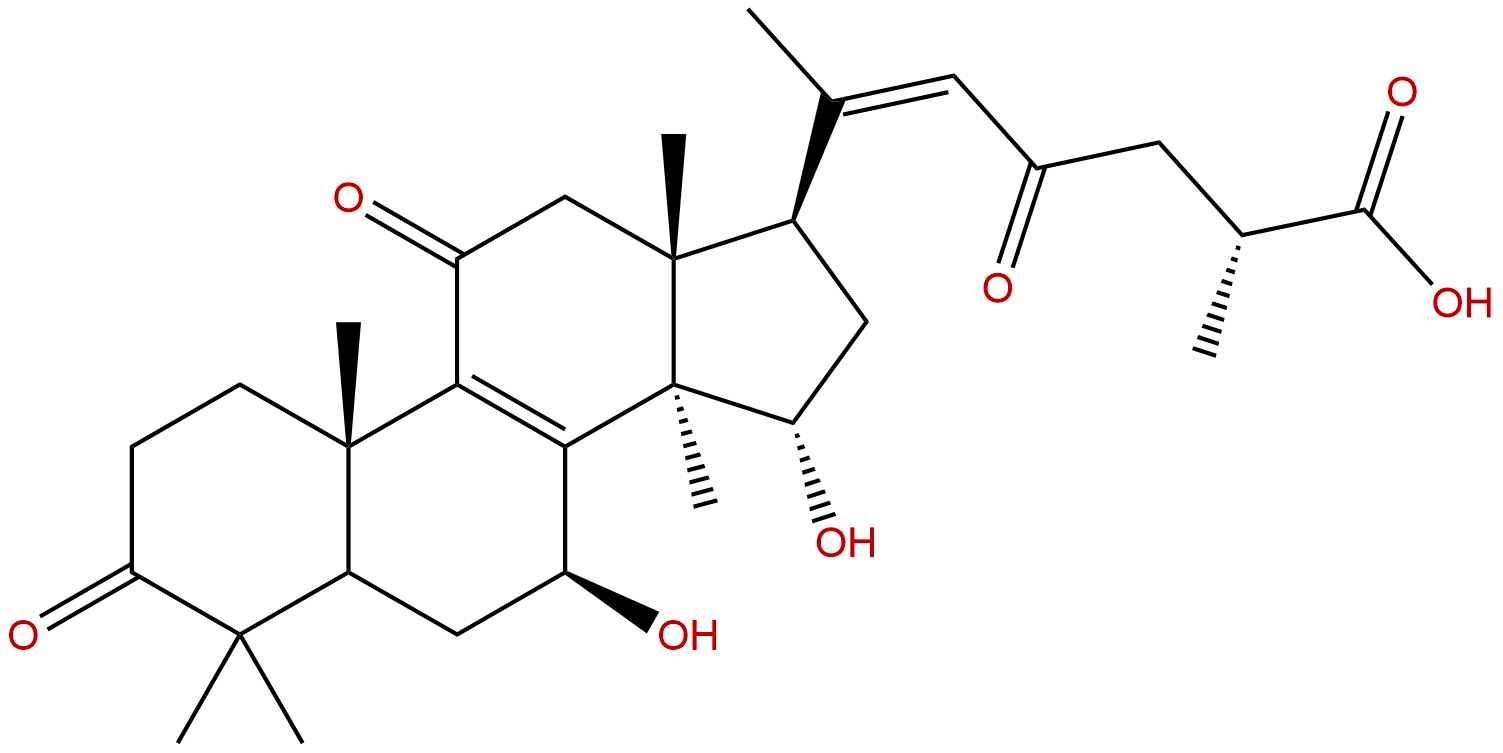
Ganoderma acid A, CAS number 100665-40-5, is a tetracyclic triterpenoid compound isolated from the fruiting body or mycelium of Ganoderma lucidum, and belongs to an important member of the Ganoderma acid family. Since its first isolation and identification, this compound has attracted extensive research interest from scholars both domestically and internationally due to its unique chemical structure and diverse biological activities. The molecular formula of ganoderic acid A is C ∝₀ H ₄₂ O ₇, with a molecular weight of 514.6590. It has a typical lanostane type triterpenoid skeleton and contains multiple hydroxyl and carboxyl functional groups in its structure, endowing it with good chemical reactivity and biological activity.
In recent years, with the continuous deepening of research on ganoderic acid A, its pharmacological activities in anti-inflammatory, hepatoprotective, anti-tumor and other aspects have been gradually revealed. Especially as an effective inhibitor of β - glucuronidase, ganoderic acid A has shown unique potential in regulating drug metabolism and improving liver function. In addition, it has a significant protective effect on liver injury induced by carbon tetrachloride (CCl ₄), providing an important lead compound for the development of new hepatoprotective drugs. This article will provide a systematic review of the research progress of ganoderic acid A from the aspects of chemical structure, plant origin, pharmacological activity, mechanism of action, and medicinal evaluation, in order to provide reference for the in-depth research and development of this compound.
Chemical structure and physicochemical properties
Lingzhi acid A belongs to the tetracyclic triterpenoid class, and its chemical structure is based on the lanostane skeleton. Specifically, the compound exhibits typical ganoderic acid structural features: the A/B, B/C, and C/D rings are all trans fused, with a methyl group at positions C-10 and C-13, and a side chain connected at position C-17. The structural characteristic of Ganoderma lucidum acid A is that it contains multiple oxygen-containing functional groups on its side chain, including carboxyl and hydroxyl groups. The presence of these functional groups not only increases the polarity of the compound, but also provides a structural basis for its interaction with biological targets.
From the perspective of physical and chemical properties, the molecular weight of ganoderic acid A in Ganoderma lucidum is 514.6590, which belongs to the category of natural products with medium molecular weight. Its lipid water partition coefficient (LogP) is 2.8106, indicating that the compound has moderate lipophilicity, which facilitates its transmembrane transport through biological membranes. The topological polar surface area (TPSA) is 128.9700 Å ², which is a relatively high value, indicating that the compound may have good water solubility characteristics, but it may also affect its ability to cross the blood-brain barrier. In fact, the pharmacological parameters indicate that ganoderic acid A has low blood-brain barrier permeability, which to some extent limits its application in the treatment of central nervous system diseases, but also reduces potential central nervous system toxic side effects.
In terms of water solubility, ganoderic acid A has a water solubility value of 0.0448 mg/mL, making it a poorly soluble compound. This characteristic is quite common in natural products, but it also poses challenges for their formulation development and bioavailability enhancement. It is worth noting that the hERG inhibitory activity of ganoderic acid A is negative, indicating a low risk of causing QT interval prolongation in the heart, which is an important safety indicator as a candidate drug. In addition, the Ames test result was 0.0, indicating that the compound did not exhibit mutagenicity in the bacterial recovery mutation test, and the preliminary genetic toxicity evaluation result was good.
Overall, the physicochemical properties of Ganoderma lucidum acid A exhibit typical characteristics of natural triterpenoid acid compounds: moderate molecular weight, moderate lipophilicity, low water solubility, and good preliminary safety evaluation results. These properties provide a foundation for its subsequent drug development, but also suggest the need for appropriate formulation techniques to improve its solubility and bioavailability.
Plant sources and extraction methods
Ganoderma lucidum acid A is mainly derived from various medicinal fungi of the Ganoderma genus in the family Fungi, including Ganoderma lucidum(Ganoderma lucidum)And Zizhi(Ganoderma sinense)As the main source. Lingzhi, as a type of wood rot fungus, usually grows on decaying broad-leaved trees and is widely distributed under natural conditions, but its resources are limited. At present, artificial cultivation techniques are quite mature, and a large amount of Ganoderma lucidum fruiting bodies can be obtained through oak cultivation or substitute cultivation, providing sufficient raw material guarantee for the extraction and separation of Ganoderma lucidum arachidonic acid A.
The content of ganoderic acid A in Ganoderma lucidum varies depending on factors such as the strain, growth conditions, and harvesting period. Research has shown that the content of triterpenoids in Ganoderma lucidum fruiting bodies is usually higher than that in mycelium, while the triterpenoid content in Ganoderma lucidum spore powder is relatively lower. The distribution of triterpenoids varies in different parts of the fruiting body of Ganoderma lucidum, with the cap typically having a higher content than the stem. In addition, the harvesting period has a significant impact on the content of triterpenes, which generally reaches its peak during the maturation period of Ganoderma lucidum fruiting bodies (when the edge of the cap begins to turn red).
The extraction methods of ganoderic acid A from Ganoderma lucidum mainly include traditional solvent extraction method and modern assisted extraction technology. Traditional solvent extraction methods usually use ethanol or methanol as extraction solvents, and obtain crude extracts through reflux extraction or cold soaking extraction. Due to the moderate polarity of ganoderic acid A, ethanol water mixed solvents (usually 70% -95% ethanol) can achieve good extraction efficiency. Factors such as extraction temperature, time, and solid-liquid ratio can all affect the extraction efficiency. The optimized extraction conditions are usually: 70% -80% ethanol, 60-80 ℃ reflux extraction 2-3 times, each time for 1-2 hours.
Modern assisted extraction techniques include ultrasonic assisted extraction, microwave-assisted extraction, supercritical fluid extraction, etc. These techniques have advantages such as high extraction efficiency, short time, and low solvent consumption. Ultrasonic assisted extraction destroys cell wall structure through cavitation effect and promotes the release of target compounds, which is widely used in the extraction of triterpenoids from Ganoderma lucidum. Supercritical CO ₂ extraction technology has shown promising prospects in the extraction of active ingredients from Ganoderma lucidum due to its green and environmentally friendly characteristics, as well as good selectivity. However, its high equipment cost limits its large-scale application.
The crude extract after extraction needs further separation and purification to obtain high-purity ganoderic acid A. Common separation methods include silica gel column chromatography, ODS reverse phase column chromatography, preparative high-performance liquid chromatography, etc. Due to the similar structure of triterpenoids in Ganoderma lucidum, separation is difficult and usually requires a combination of multiple chromatographic techniques for systematic separation. In recent years, new separation methods such as high-speed countercurrent chromatography and molecular imprinting technology have also been applied to the separation and purification of triterpenoids in Ganoderma lucidum, achieving good results.
Pharmacological activity research
The pharmacological activity research of Ganoderma lucidum acid A mainly focuses on anti-inflammatory, hepatoprotective, anti-tumor and other aspects, among which the hepatoprotective and anti-inflammatory activities are the most prominent.
Hepatoprotective activity It is one of the most extensively studied pharmacological effects of ganoderic acid A. Research has shown that ganoderic acid A has a significant protective effect on liver injury induced by carbon tetrachloride (CCl ₄). CCl ₄ is a classic hepatotoxic substance that is metabolized by cytochrome P450 enzymes to generate trichloromethyl radicals, triggering lipid peroxidation reactions and leading to liver cell damage and necrosis. Pre treatment with ganoderic acid A can significantly reduce the elevation of serum transaminase (ALT, AST) levels induced by CCl ₄, alleviate liver tissue pathological damage, including hepatocyte degeneration, necrosis, and inflammatory cell infiltration. In addition, ganoderic acid A can enhance the activity of liver antioxidant enzymes such as superoxide dismutase (SOD) and glutathione peroxidase (GSH Px), and reduce the content of malondialdehyde (MDA), indicating that its hepatoprotective effect is closely related to its antioxidant mechanism.
anti-inflammatory activity It is another important pharmacological effect of ganoderic acid A. Inflammation is a defense response of the body against injury or infection, but excessive or sustained inflammation can lead to tissue damage and the occurrence of various diseases. Lingzhi acid A exhibits significant anti-inflammatory effects in various inflammatory models. In a macrophage model stimulated by lipopolysaccharide (LPS), ganoderic acid A can inhibit the production of pro-inflammatory cytokines such as tumor necrosis factor - α (TNF - α) and interleukin-6 (IL-6), reduce the release of nitric oxide (NO), and inhibit the expression of inducible nitric oxide synthase (iNOS/NOS2) and cyclooxygenase-2 (COX-2/PTGS1). These results indicate that ganoderic acid A exerts anti-inflammatory effects through multiple targets and pathways.
Antitumor activity In terms of proliferation, ganoderic acid A exhibits inhibitory effects on various tumor cell lines. It has been reported that Ganodenic acid A can induce apoptosis in liver cancer cells, lung cancer cells, breast cancer cells, etc. Its mechanism involves the activation of mitochondrial pathway and death receptor pathway. In addition, ganoderic acid A can also inhibit the migration and invasion ability of tumor cells, which may be related to the regulation of matrix metalloproteinases (MMPs) expression. It is worth noting that ganoderic acid A has low toxicity to normal cells and exhibits certain selective anti-tumor activity.
Other pharmacological activities It also includes antioxidant, immune regulation, antibacterial, etc. The antioxidant activity of ganoderic acid A is related to its phenolic hydroxyl groups and conjugated double bonds in its molecular structure, which can directly scavenge free radicals or chelate transition metal ions. In terms of immune regulation, ganoderic acid A can regulate the proliferation and differentiation of T lymphocytes and B lymphocytes, and affect the secretion balance of cytokines.
Mechanism of action and molecular targets
The pharmacological effects of ganoderic acid A involve the regulation of multiple molecular targets and signaling pathways, and its mechanism of action exhibits the characteristics of multiple targets and pathways.
Inhibition mechanism of β - glucuronidase It is one of the most distinctive targets of ganoderic acid A. β - glucuronidase is a key enzyme involved in drug metabolism and bilirubin metabolism, and its overactivation is associated with various diseases, including liver disease, inflammatory bowel disease, etc. Lingzhi acid A, as an effective inhibitor of β - glucuronidase, can inhibit the activity of the enzyme, thereby regulating drug metabolism and bilirubin metabolism processes. Molecular docking studies have shown that the carboxyl and hydroxyl functional groups of ganoderic acid A can form hydrogen bonds and hydrophobic interactions with key amino acid residues at the active site of β - glucuronidase, stably occupying the active center of the enzyme and competitively inhibiting substrate binding.
Regulation of anti-inflammatory signaling pathway It is the core mechanism by which ganoderic acid A exerts anti-inflammatory effects. Research has shown that ganoderic acid A can inhibit the activation of the nuclear factor kappa B (NF - κ B/RELA) signaling pathway. In the resting state, NF - κ B binds to the inhibitory protein I κ B and exists in the cytoplasm; When stimulated by inflammation, I κ B kinase (IKK/IKBKB) is activated, phosphorylating and degrading I κ B, releasing NF - κ B into the nucleus to initiate transcription of inflammatory genes. Lingzhi acid A can inhibit the activity of IKK, prevent the phosphorylation and degradation of I κ B, thereby inhibiting the nuclear translocation and transcriptional activity of NF - κ B, and downregulating the expression of inflammatory factors such as TNF - α, IL-6, iNOS, COX-2, etc.
In addition, ganoderic acid A can also regulate the signal transduction and transcription activator 3 (STAT3) signaling pathway. STAT3 is a key transcription factor that mediates IL-6 signaling and plays an important role in inflammation and tumorigenesis. Lingzhi acid A can inhibit IL-6-induced STAT3 phosphorylation and nuclear translocation, thereby blocking the pro-inflammatory and pro proliferative effects of the IL-6/STAT3 signaling pathway.
Regulation of apoptosis related pathways It is the molecular basis of the anti-tumor activity of ganoderic acid A. Lingzhi acid A can activate caspase family proteins, especially caspase-1 (CASP1) and caspase-3, and induce tumor cell apoptosis. Meanwhile, ganoderic acid A can also regulate the expression of Bcl-2 family proteins, upregulate the expression of pro apoptotic proteins Bax and Bak, downregulate the expression of anti apoptotic proteins Bcl-2 and Bcl xL, alter mitochondrial membrane potential, promote the release of cytochrome c, and activate the mitochondrial apoptosis pathway.
Transient receptor potential channel regulation It is a new mechanism of anti-inflammatory and analgesic effects of ganoderic acid A. Research has shown that ganoderic acid A can inhibit the activity of transient receptor potential vanillic acid subtype 1 (TRPV1) and transient receptor potential anchor protein subtype 1 (TRPA1). TRPV1 and TRPA1 are non selective cation channels expressed on sensory neurons, involved in the transmission of pain and inflammatory signals. The inhibitory effect of ganoderic acid A on these two channels may be related to its anti-inflammatory and analgesic effects.
Evaluation of drug properties and pharmacokinetics
The evaluation of drug properties is a crucial step in determining whether natural products can be successfully converted into clinical drugs. The pharmacological parameters of Ganoderma lucidum acid A show that it has certain development potential, but also faces some challenges.
From the perspective of medicinal chemical properties, the molecular weight of ganoderic acid A is 514.6590, slightly higher than the upper molecular weight limit of traditional small molecule drugs (500 Da), but still within an acceptable range. The LogP value is 2.8106, which meets the requirement of Lipinski's five rules that LogP<5, indicating moderate lipophilicity. The TPSA value is 128.9700 Å ², which is higher than the recommended standard of TPSA<140 Å ² for oral drugs. This suggests that the compound may have good oral absorption potential, but its high polarity may also affect its transmembrane transport.
The pharmacokinetic studies of ganoderic acid A in terms of absorption, distribution, metabolism, and excretion (ADME) are not yet sufficient. Preliminary studies have shown that the oral bioavailability of ganoderic acid A is relatively low, which may be related to its poor water solubility (0.0448 mg/mL) and first pass metabolism. Lingzhi acid A is widely distributed in the body, but its blood-brain barrier permeability is low, which limits its therapeutic application in central nervous system diseases. In terms of metabolism, ganoderic acid A is mainly metabolized by the liver and may involve phase II metabolic reactions such as glucuronic acid binding and sulfate binding. The main excretion pathway is bile excretion, with some being excreted through the kidneys.
Safety evaluation is an important component of drug efficacy evaluation. As mentioned earlier, the hERG inhibitory activity of ganoderic acid A is negative, and the Ames test result is negative. The preliminary safety evaluation results are good. However, it should be pointed out that there is currently incomplete systematic toxicology research on the long-term toxicity, reproductive toxicity, carcinogenicity, and other aspects of ganoderic acid A. These data are crucial for its clinical development.
There are various strategies to improve the pharmacological properties of Ganoderma lucidum acid A. In terms of improving water solubility, formulation technologies such as cyclodextrin inclusion, solid dispersion, and liposomes can be used; In terms of improving bioavailability, prodrug or nanodrug delivery systems can be designed; In terms of improving pharmacokinetic properties, its metabolic stability can be optimized through structural modification. In addition, the combination therapy strategy may also enhance the efficacy of ganoderic acid A and reduce low toxicity side effects.
Clinical application prospects and prospects
Based on the pharmacological activity and mechanism of action of ganoderic acid A, it has shown potential clinical application prospects in the treatment of various diseases.
liver disease It is the most valuable application field for the development of ganoderic acid A. Given its protective effect against CCl ₄ - induced liver injury and its properties as a β - glucuronidase inhibitor, ganoderic acid A is expected to be developed as a novel drug for the treatment of liver diseases such as acute liver injury, chronic hepatitis, and liver fibrosis. Especially for drug-induced liver injury, ganoderic acid A may regulate drug metabolism and alleviate drug hepatotoxicity by inhibiting the activity of β - glucuronidase. In addition, the anti-inflammatory and antioxidant effects of ganoderic acid A also contribute to improving the pathological progression of non-alcoholic fatty liver disease (NAFLD).
Inflammatory diseases It is another important application direction of ganoderic acid A. Its multi-target anti-inflammatory mechanism makes it potentially valuable in the treatment of inflammatory diseases such as rheumatoid arthritis, inflammatory bowel disease, and dermatitis. Especially the inhibitory effect of ganoderic acid A on TRPV1 and TRPA1 channels suggests that it may have analgesic effects and can be used for the treatment of inflammatory pain.
neoadjuvant therapy In terms of natural anti-tumor compounds, ganoderic acid A can be used in combination with chemotherapy drugs to enhance anti-tumor effects and reduce the toxic side effects of chemotherapy drugs. Its selective anti-tumor activity (low toxicity to normal cells) gives it a good safety advantage in tumor treatment.
However, the clinical development of ganoderic acid A still faces many challenges. Firstly, the issues of poor water solubility and low bioavailability need to be addressed through formulation techniques or structural modifications. Secondly, current research on the pharmacological activity of ganoderic acid A is mainly based on in vitro experiments and animal models, and there is still a lack of systematic clinical research data. In addition, although the multi-target mechanism of action of ganoderic acid A endows it with broad pharmacological activity, it also increases the complexity of mechanism of action research and the risk of potential off target effects.
Future research directions should focus on the following aspects: firstly, conducting in-depth pharmacokinetic and toxicological studies on ganoderic acid A to provide safety data support for its clinical development; The second is to use modern medicinal chemistry methods to optimize the structure of ganoderic acid A in Ganoderma lucidum, in order to improve its efficacy and drug properties; The third is to explore the synergistic effect of ganoderic acid A with other drugs and develop a combination therapy plan; Fourthly, using systems biology and network pharmacology methods, comprehensively analyze the mechanism of action and molecular target network of ganoderic acid A.
Conclusion
Lingzhi acid A, as an important triterpenoid active ingredient in Ganoderma lucidum, occupies an important position in the field of natural product medicine research due to its unique chemical structure and diverse pharmacological activities. This article systematically reviews the research progress on the chemical structure, plant origin, pharmacological activity, mechanism of action, pharmacological evaluation, and clinical application prospects of Ganoderma lucidum acid A. This compound, as an effective inhibitor of β - glucuronidase, exhibits significant pharmacological activity in liver protection and anti-inflammatory effects. Its mechanism of action involves multiple signaling pathways and molecular targets such as NF - κ B, STAT3, TRPV1/TRPA1.
Although ganoderic acid A has poor water solubility and low bioavailability in terms of medicinal properties, its good preliminary safety evaluation results and multi-target pharmacological activity make it of great development value. With the continuous development of modern medicinal chemistry, pharmacy, and pharmacology technologies, strategies such as structural modification and formulation optimization are expected to overcome these shortcomings and promote the transformation of ganoderic acid A from a natural product to a clinical drug.
From a broader perspective, the study of ganoderic acid A not only provides lead compounds for the development of new hepatoprotective and anti-inflammatory drugs, but also provides scientific basis for understanding the pharmacological substance basis and mechanism of action of traditional Chinese medicine Ganoderma lucidum. In the context of the "Healthy China" strategy, it is of great significance to deeply explore and develop natural product drugs with independent intellectual property rights to promote the modernization and internationalization of traditional Chinese medicine. I believe that with the continuous deepening of research, ganoderic acid A and its derivatives will play a greater role in human health.