
| Catalog No | Package | Original Price | Price | Inventory | Quantity | Operating |
|---|---|---|---|---|---|---|
| BP0820-20mg | 20mg | $30.00 | Sign in |
|


Product name: Kaempferol
Synonym name:
Catalogue No.: BP0820
Cas No.: 520-18-3
Formula: C15H10O6
Mol Weight: 286.239
Botanical Source: Very widespread in the plant world, e.g. in Cruciferae, Apocynaceae, Dilleniaceae, Ranunculaceae, Leguminosae, etc.
Physical Description: Yellow powder
Type of Compound: Flavonoids
Purity: 95%~99%
Analysis Method: HPLC-DAD or/and HPLC-ELSD
Identification Method: Mass, NMR
Packing: Brown vial or HDPE plastic bottle
Storage: Store in a well closed container, protected from air and light. Put into refrigerate or freeze for long term storage.
Whenever possible, you should prepare and use solutions on the same day. However, if you need to make up stock solutions in advance, we recommend that you store the solution as aliquots in tightly sealed vials at -20℃. Generally, these will be useable for up to two weeks.
The product could be supplied from milligrams to grams, up to kilograms
Inquire for bulk scale.
Descriptions:
Kaempferol is a polyphenol antioxidant found in fruits and vegetables, has beneficial effects in reducing the risk of chronic diseases, especially cancer, it may help to promote the development of cancer by augmenting the body's antioxidant defence against free radicals,and inhibit cancer cell growth and angiogenesis and induce cancer cell apoptosis.[1]
Kaempferol and quercetin have anti-inflammatory effects by modulating of iNOS, COX-2 and CRP, and involving blockade of NF-κB activation and the resultant up-regulation of the pro-inflammatory genes.[2]
Kaempferol is an autophagic enhancer, has a more general protection in Parkinson's disease, can mediate antiapoptotic and antioxidant effects is the enhancement of mitochondrial turnover by autophagy.[3]
Kaempferol and quercetin at concentrations ranging from 0.1 to 100 microM reduce bone resorption in a time and dose-dependent manner, have significant inhibitory effects at concentrations as low as 0.1 microM especially with kaempferol, they exert a potent inhibitory effect on in vitro bone resorption.[4]
References:
[1] Chen A Y, Chen Y C.Food Chem, 2013, 138(4):2099-107.
[2] García-Mediavilla V, Crespo I, Collado P S, et al. Eur J Pharmacol, 2007, 557(2–3):221-9.
[3] Filomeni G, Graziani I, Zio D D, et al. Neurobiol Aging, 2012, 33(4):767-85.
[4] Wattel A, Kamel S, Mentaverri R, et al. Biochem Pharmacol, 2003, 65(1):35-42.
[5] Yuanqing F U, Fengwei M O, Liao H. Medicinal Plant, 2013(1):42-43, 46.
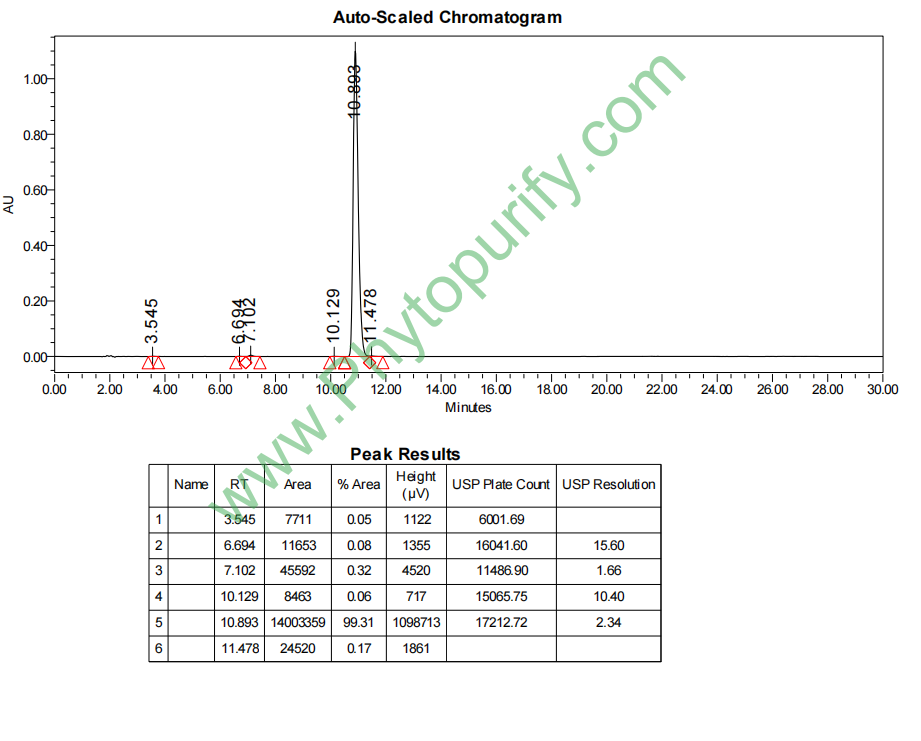
HPLC of Kaempferol
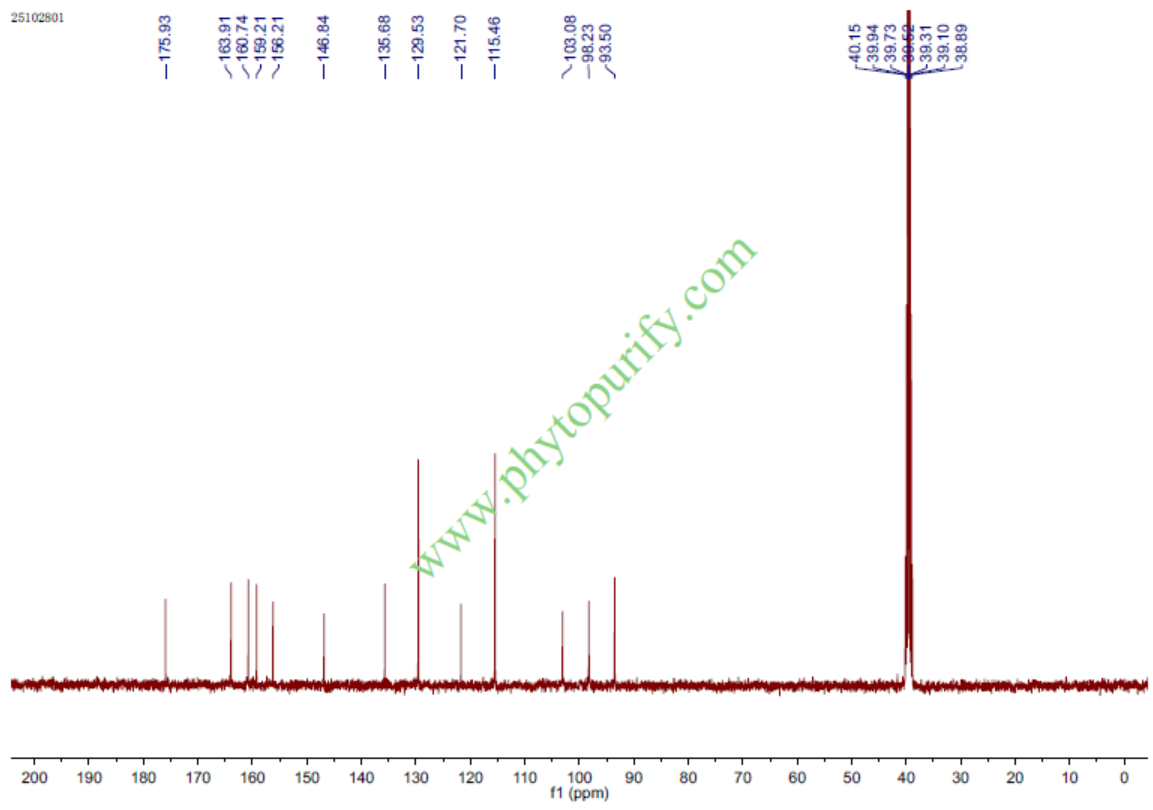
NMR of Kaempferol
Storage conditions:Short-term storage at 2~8℃, long-term storage at -20 ~ -80℃
Kaempferol, CAS number 520-18-3, is a natural flavonoid compound widely present in various plants and has attracted much attention due to its diverse biological activities and potential medicinal value. As an important member of flavonoids, kaempferol exhibits significant pharmacological effects in antioxidant, anti-inflammatory, anti-tumor, and neuroprotective aspects, especially in the unique mechanisms of growth inhibition and apoptosis induction of tumor cells. In recent years, with the deepening of molecular biology and pharmacology research, kaempferol has made important progress in the treatment of breast cancer, glioblastoma, lung cancer and other malignant tumors, showing its broad prospects as a potential anticancer drug.
This article aims to systematically review the chemical structure and physicochemical properties, plant sources and extraction methods, pharmacological activity and mechanism of action, pharmacological evaluation and pharmacokinetic characteristics of kaempferol, and explore its potential clinical applications and future development directions, providing comprehensive and in-depth reference materials for researchers in the field of natural product pharmacology.
The chemical name of kaempferol is 3,4 ', 5,7-tetrahydroxyflavone, with a molecular formula of C15H10O6 and a molecular weight of 286.2390. Its structural core is a typical flavonoid skeleton, formed by two benzene rings (A ring and B ring) connected by a three carbon bridge (C ring). Kaempferol contains multiple hydroxyl groups on both the A and B rings, endowing it with excellent antioxidant activity. Its chemical structure is shown in Figure 1:
(Here should be a schematic diagram of the chemical structure of kaempferol)
In terms of physical and chemical properties, the LogP value of kaempferol is 2.0477, indicating its moderate lipid solubility, which is beneficial for membrane penetration. Its topological polar surface area (TPSA) is 111.1300 Å ², indicating that it has a certain polarity that affects its water solubility and bioavailability. The low water solubility (0.1198 mg/mL) to some extent limits its oral absorption and bioavailability. In addition, kaempferol has no significant inhibitory effect on hERG channels, with an Ames test result of 0.6, indicating a low risk of genotoxicity and good safety.
Kaempferol is widely present in various edible fruits, vegetables, and medicinal plants. Common sources include cabbage, spinach, green tea, thyme, onions, and various berries. Its content varies depending on the plant species, tissue location, growth environment, and harvesting time. As a natural flavonoid, kaempferol is usually extracted using organic solvent extraction methods such as ethanol, methanol, or ethyl acetate, combined with modern technologies such as ultrasound assisted extraction and microwave-assisted extraction to improve extraction efficiency and purity.
The commonly used extraction process includes: plant drying and crushing → solvent extraction → filtration and concentration → column chromatography separation and purification → high performance liquid chromatography (HPLC) analysis and identification. In recent years, supercritical fluid extraction and membrane separation technologies have also been applied to the extraction of kaempferol, further enhancing the green environmental friendliness and economic benefits of extraction.
As a natural flavonoid antioxidant, kaempferol can effectively eliminate free radicals and alleviate oxidative stress damage to cells. Its antioxidant mechanism mainly activates the intracellular antioxidant enzyme system, such as superoxide dismutase (SOD1, SOD2), catalase (CAT), glutathione peroxidase (GPX1), and heme oxygenase (HMOX1), to regulate the nuclear factor erythroid 2-related factor 2 (NFE2L2/NRF2) signaling pathway, enhance cellular antioxidant defense ability, and protect cells from oxidative damage.
Kaempferol exhibits significant anti proliferative and pro apoptotic effects in various tumor cell lines. Especially in breast cancer cells, kaempferol can inhibit the expression of estrogen receptor α (ER α), block estrogen signaling pathway, and inhibit the growth and division of tumor cells. In addition, in glioblastoma and lung cancer cells, kaempferol induces apoptosis and exerts anti-tumor effects by activating the MEK-MAPK signaling pathway. Related studies have shown that kaempferol can regulate the expression of various cell cycle proteins and apoptosis related proteins, such as Bcl-2 family proteins, caspase enzymes, etc., promoting programmed cell death of tumor cells.
In addition to antioxidant and anti-tumor effects, kaempferol also has multiple biological activities such as anti-inflammatory, antibacterial, neuroprotective, and cardiovascular protection. For example, kaempferol can inhibit the release of inflammatory mediators and alleviate chronic inflammatory reactions; In neurological disease models, kaempferol protects neurons through antioxidant and anti-inflammatory mechanisms, demonstrating potential therapeutic value.
The pharmacological effects of kaempferol involve multiple signaling pathways and molecular targets, mainly including:
Antioxidant mechanism
Kaempferol activates NFE2L2/NRF2 transcription factors, promotes the expression of downstream antioxidant enzyme genes such as SOD1, SOD2, CAT, GPX1, and HMOX1, and enhances the cell's resistance to oxidative stress. In addition, kaempferol can directly scavenge reactive oxygen species (ROS) and reduce cellular oxidative damage.
Antitumor mechanism
Regulating cell cycle and apoptosis proteins Kaempferol regulates the expression of apoptosis related proteins such as Bcl-2 and Bax, promoting mitochondrial mediated cell apoptosis.
Anti inflammatory and other mechanisms
Kaempferol exerts anti-inflammatory effects by inhibiting the NF - κ B signaling pathway and reducing the release of pro-inflammatory cytokines such as TNF - α and IL-6. In addition, its regulation of various enzyme activities is also involved in its multi-target pharmacological effects.
The pharmacological parameters of kaempferol indicate that it has certain potential for drug development. The molecular weight of 286.2390 conforms to Lipinski's rule, and the LogP value of 2.0477 indicates moderate lipid solubility, which is beneficial for membrane penetration. The TPSA is 111.1300, slightly higher than the ideal range (<90 Å ²), which may affect its oral bioavailability. Low water solubility (0.1198 mg/mL) limits its in vivo absorption, indicating the need to improve its solubility through pharmaceutical formulations.
The low blood-brain barrier penetration ability indicates limited distribution of kaempferol in the central nervous system, but this may reduce central side effects for non central target disease treatment. The hERG channel inhibition experiment was negative, indicating a low risk of cardiac toxicity. The Ames test results showed a low risk of genotoxicity and good safety.
In terms of pharmacokinetics, the absorption of kaempferol after oral administration is slow, and its bioavailability is limited by its low water solubility and first pass effect. Its metabolism in the body is mainly through phase II reactions in the liver, such as glucuronidation and sulfation, and the metabolites are easily excreted. Future research needs to further optimize its pharmacokinetic properties, improve in vivo stability and targeting.
Kaempferol has shown great clinical potential due to its extensive pharmacological activity, especially in the fields of anti-tumor and antioxidant effects. Breast cancer is a common malignant tumor in women. Kaempferol provides a new idea for the treatment of hormone dependent breast cancer by inhibiting the expression of ER α. Research on glioblastoma and lung cancer indicates that they have potential therapeutic value in various types of tumors.
However, the clinical translation of kaempferol still faces many challenges, mainly including its low water solubility and bioavailability, which limit its efficacy. In the future, drug formulation technologies such as nanocarriers, liposome encapsulation, and eutectic formation can be used to improve its pharmacokinetic properties. In addition, in-depth analysis of its mechanism of action and molecular targets can help develop more targeted derivatives or combination therapy strategies.
Preclinical research should strengthen the systematic evaluation of the safety, toxicology, and pharmacodynamics of kaempferol, and promote its entry into clinical trials. Combining the concept of precision medicine, screening suitable patient groups for the treatment of kaempferol to improve the success rate of its clinical application.
As a multifunctional natural flavonoid compound, kaempferol has shown broad research and application prospects in various fields such as antioxidant, anti-tumor, and anti-inflammatory due to its unique chemical structure and rich biological activity. It exerts complex molecular mechanisms by regulating multiple signaling pathways such as NFE2L2/NRF2 antioxidant pathway and MEK-MAPK apoptosis pathway, providing valuable research examples for natural product pharmacology.
Although the clinical development of kaempferol still faces challenges in pharmacokinetics and formulation technology, with the development of modern drug design and nanotechnology, it is expected to overcome these bottlenecks and achieve its clinical application in the treatment of tumors and other diseases in the future. The in-depth pharmacological mechanism research and preclinical evaluation of the system will lay a solid foundation for the pharmacological process of kaempferol and promote it to become an important representative of natural product drug development.
In summary, as a safe and effective natural active ingredient, kaempferol deserves continuous attention and in-depth exploration in future drug development.
