| Catalog No | Package | Original Price | Price | Inventory | Quantity | Operating |
|---|---|---|---|---|---|---|
| BP1346-100mg | 100mg | $30.00 | Sign in |
|


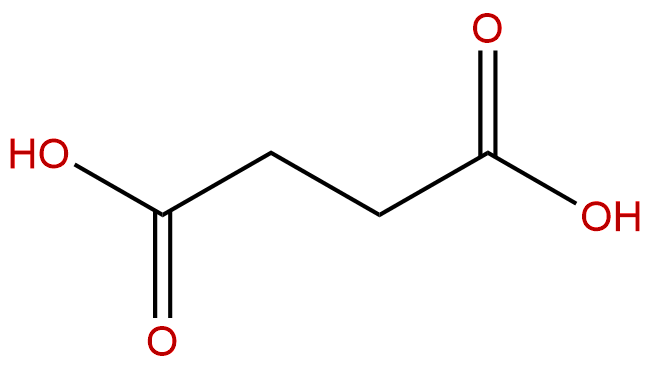
Synonym name: Butanedioic acid, 9CI; Ethane-1,2-dicarboxylic acid; Amber acid; Wormwood acid
Catalogue No.: BP1346
Cas No.: 110-15-6
Formula: C4H6O4
Mol Weight: 118.088
Botanical Source: Widely distributed in higher plants and prod. by microorganisms, e.g. Candida tropicalis, Saccharomyces cerevisiae, Xanthomonas campestris, Pseudomonas putida-
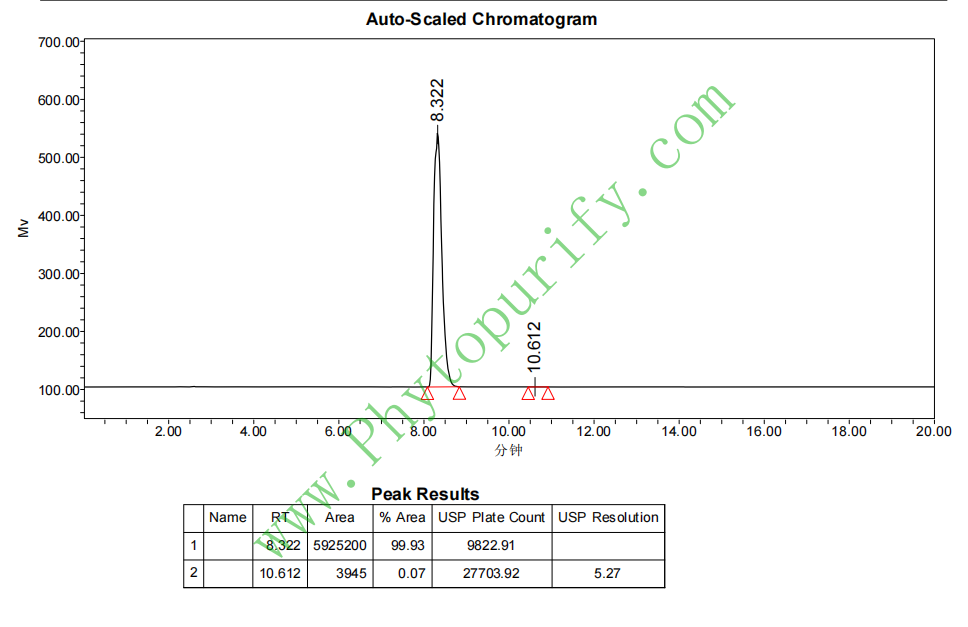
Purity: 95%~99%
Analysis Method: HPLC-DAD or/and HPLC-ELSD
Identification Method: Mass, NMR
Packing: Brown vial or HDPE plastic bottle
Can be supplied from milligrams to grams.
For Reference Standard and R&D, Not for Human Use Directly.
Inquire for bulk scale.
HPLC of Succinic acid
Storage conditions:Short-term storage at 2~8℃, long-term storage at -20 ~ -80℃
74.6000
-.4781
-1.9484
65.7040
1.2404
1.8274
Low
44.1202
1.6080
Yes
No
No
No
No
No
0.0
Yes
Yes
Yes
Yes
Succinic acid, scientific name succinic acid, is a naturally occurring dicarboxylic acid with a CAS number of 110-15-6. As a key intermediate metabolite in the tricarboxylic acid cycle (TCA cycle), which is the core hub of energy metabolism in living organisms, succinic acid plays an indispensable role in cellular respiration and energy (ATP) production. For a long time, it has been regarded as a bridge molecule connecting the metabolism of sugar, lipids, and amino acids. However, with the deepening of modern pharmacological research, succinic acid has surpassed its classical metabolite identity and demonstrated diverse biological activities, especially its orally effective anti anxiety effect, making it a remarkable natural product in the field of neuropsychopharmacology. In addition, its salt form (such as disodium succinate) is also widely used. In the industrial field, succinic acid is an important platform chemical used in the production of surfactants, additives, ion chelating agents, and seasonings, spanning across the chemical, pharmaceutical, and food industries. In recent years, the role of succinic acid in mitochondrial function and related diseases has become increasingly prominent. Key enzymes in its metabolic pathway, such as succinate dehydrogenase complex subunits (SDHA, SDHB, SDHC, SDHD) and succinyl CoA ligase (SUCLG1), have become important potential targets for treating mitochondrial diseases. This article aims to systematically review the chemical properties, sources, pharmacological activities, molecular mechanisms of action, drug properties, and clinical application prospects of succinic acid, in order to provide a comprehensive academic perspective for the in-depth research and development of this natural product.
The chemical name of succinic acid is succinic acid, with a molecular formula of C ₄ H ₆ O ₄ and a molecular weight of 118.0880. Its structure is a straight chain saturated dicarboxylic acid, with two carboxyl groups (- COOH) located at both ends of the carbon chain. The structural formula is HOOC-CH ₂ - CH ₂ - COOH. This simple structure determines its unique physicochemical properties.
In terms of physical properties, succinic acid is a colorless or white, odorless crystal with a sour taste. Its melting point is 185-187 ° C, and its boiling point is about 235 ° C (decomposition). It has good water solubility, with a solubility of about 65.7040 mg/mL, which is attributed to the two polar carboxyl groups in its molecule, making it easy to form hydrogen bonds with water molecules. Its octanol/water partition coefficient (LogP) is -0.4781, indicating that it is a hydrophilic molecule with low lipid solubility. The topological polar surface area (TPSA) is 74.6000 Å ², further confirming its strong polarity characteristics. These properties collectively affect its absorption and distribution within living organisms.
In terms of chemical properties, succinic acid has typical carboxylic acid reaction characteristics and can undergo esterification, amidation, reduction and other reactions. As a dicarboxylic acid, it can form acid salts or neutral salts, and its salts (such as sodium salts and magnesium salts) are usually more water-soluble. In living organisms, succinic acid exists in its anionic form (succinate) and can participate in various biochemical pathways such as the TCA cycle, heme synthesis, and ketone metabolism by converting to succinyl CoA. Its stable chemical properties and good biocompatibility lay the foundation for its application in the fields of medicine and food.
Succinic acid is widely distributed in nature, not only in animal tissues such as amber, brain, and muscle, but also in large quantities in various plants and microorganisms. In the plant kingdom, succinic acid is an intermediate product of plant respiratory metabolism and certain secondary metabolic pathways, abundant in the following sources:
1. Immature fruits and vegetables Such as grapes, apples, tomatoes, rhubarb, etc., especially in the fermentation or immature stage, the content is relatively high.
2. Algae and lichens Some algae and lichens can synthesize and accumulate succinic acid.
3. Chinese medicinal materials Succinic acid or its derivatives have also been detected in some traditional Chinese medicines such as amber (fossilized resin from ancient pine plants), Poria cocos, Tianma, etc., which may be related to some of their pharmacological activities.
4. Fermented products Succinic acid is a product of fermentation by many microorganisms, such as anaerobic bacteria and fungi, and is present in fermented foods such as wine, beer, soy sauce, and soy sauce.
The industrial and laboratory acquisition of succinic acid mainly relies on biological fermentation and chemical synthesis methods, and extraction from plants or biological resources is also an important pathway.
1. Chemical Synthesis The traditional method mainly involves catalytic hydrogenation of maleic anhydride or maleic acid. This method is mature in technology, but it relies on petroleum based raw materials and may involve heavy metal catalysts.
2. Biological fermentation method This is currently the mainstream direction of green and sustainable production. Utilizing engineered microorganisms such as Escherichia coli, Corynebacterium glutamicum, yeast, etc., using renewable carbon sources such as glucose, glycerol, and cellulose hydrolyzed sugars as substrates, efficient fermentation production is achieved by optimizing metabolic pathways. This method has mild conditions, environmental friendliness, and high product purity.
3. Natural extraction method Extract from plant materials or fermentation broth rich in succinic acid. Common methods include:
* Water extraction/acid extraction method Using the water solubility of succinic acid, extract with hot water or dilute acid.
* Crystallization method Concentrate the extract, adjust the pH, and use temperature differences to precipitate succinic acid crystals.
* Ion exchange/chromatography method Used for further purification to obtain high-purity succinic acid.
* Extract from Amber In history, succinic acid was first obtained by distilling amber, hence its name, but this method is no longer mainstream.
Biological fermentation has become the main technology for producing pharmaceutical grade and food grade succinic acid due to its sustainability and economy.
Succinic acid, as an endogenous metabolite, exhibits multifaceted pharmacological activities through exogenous supplementation or regulation, surpassing its traditional role in energy metabolism.
Anti anxiety and neuroprotective effects This is one of the most highly regarded pharmacological activities of succinic acid. Studies have shown that oral administration of succinic acid can produce significant anti anxiety effects in various animal models, such as elevated maze tests and light dark box experiments, without significant sedative or muscle relaxation side effects. Its function may be related to regulating the GABAergic system in the brain, reducing oxidative stress, and stabilizing mitochondrial function. In addition, succinic acid has shown protective potential against ischemic hypoxic brain injury and neurodegenerative disease models, which may be achieved by supplementing TCA cycle intermediates, enhancing energy metabolism, and inhibiting cell apoptosis.
Improving energy metabolism and anti fatigue As a direct substrate of the TCA cycle, exogenous succinic acid can be rapidly utilized by cells to promote ATP production. Research has shown that succinic acid or its salts can improve exercise endurance, accelerate fatigue recovery, and improve muscle function in patients with mitochondrial myopathy, which is closely related to their rapid supplementation of energy metabolism intermediates and optimization of oxidative phosphorylation processes.
Antioxidant and anti-inflammatory effects Succinic acid has a dual function of regulating the generation of reactive oxygen species (ROS). On the one hand, energy production is promoted through the mitochondrial electron transport chain; On the other hand, its metabolic process itself may affect ROS levels. More importantly, succinic acid can inhibit the activation of inflammasomes (such as NLRP3), reduce the release of pro-inflammatory cytokines (such as IL-1 β), and exhibit anti-inflammatory effects in inflammatory models such as colitis and arthritis. The mechanism may be related to stabilizing mitochondrial membrane potential and inhibiting specific signaling pathways.
Regulation of mitochondrial function Succinic acid is a "sensor" and regulator of mitochondrial function. The accumulation of intracellular succinic acid levels can serve as a signal of metabolic stress. It can stabilize hypoxia inducible factor-1 alpha (HIF-1 alpha) by inhibiting proline hydroxylase (PHD) and participate in cellular adaptation to hypoxia. In addition, abnormal succinic acid metabolism is directly related to mitochondrial diseases.
Other activities The study also suggests that succinic acid has potential immunomodulatory and gastrointestinal protective effects (regulating microbiota, protecting mucous membranes). Its safety as an acidity regulator and flavor substance in the food industry has been verified for a long time.
The pharmacological mechanism of succinic acid is complex, involving multiple levels such as metabolism, signal transduction, and epigenetics. Its core revolves around mitochondrial function and its metabolic enzyme system.
Core role of energy metabolism As an intermediate of the TCA cycle, succinic acid is catalyzed by succinyl CoA synthase (SUCL) to produce succinyl CoA, which is then converted into succinyl CoA Succinate dehydrogenase complex Catalytic dehydrogenation generates fumarate, which transfers electrons to coenzyme Q and enters the mitochondrial electron transport chain to drive ATP synthesis. This is the fundamental mechanism for improving cellular energy status.
Key molecular targets associated with mitochondrial diseases:
Signal transduction mechanism:
Based on the provided pharmacological parameters and existing research, the characteristic evaluation of succinic acid as a drug candidate molecule is as follows:
Basic pharmacological parameters:
Pharmacokinetic characteristics:
Succinic acid, as a safe and multifunctional natural product, has broad clinical application prospects but also faces challenges.
Current and potential clinical applications:
Challenges and Prospects:
Succinic acid, an ancient natural metabolite, is attracting researchers' attention with its novel pharmacological features. The transition from a silent intermediate in the tricarboxylic acid cycle to a diverse biological regulatory molecule with oral anti anxiety activity that can regulate mitochondrial function and inflammatory response reflects the deepening understanding of metabolite function in modern life science. Its clear targets, such as SDH complex subunits and SUCLG1, are closely associated with mitochondrial diseases, providing a direct metabolic intervention approach for the treatment of such difficult diseases. The excellent pharmacological parameters (low toxicity, no mutagenicity, no hERG inhibition) have laid a safe foundation for its clinical application. Despite challenges in blood-brain barrier permeability and pharmacokinetics, these obstacles are expected to be overcome through innovations in formulation and medicinal chemistry. In the future, with further clarification of its mechanism of action and the advancement of high-quality clinical research, succinic acid and its derivatives are expected to develop from an important platform chemical into innovative drugs or functional preparations for the treatment of mitochondrial diseases, anxiety disorders, and fatigue related disorders, playing an important role in the fields of translational medicine and precision nutrition. The continuous exploration of succinic acid will also enrich our understanding of the role of metabolites as signaling molecules in health and disease.
