


Synonym name: Poncirenin
Catalogue No.: BP2027
Cas No.: 491-69-0
Formula: C22H24O10
Mol Weight: 448.424
Botanical Source:
Physical Description: Powder
Type of Compound: Flavonoids
Purity: 95%~99%
Analysis Method: HPLC-DAD
Identification Method: Mass, NMR
Packing: Brown vial or HDPE plastic bottle
The product could be supplied from milligrams to grams. Inquire for bulk scale.
For Reference Standard and R&D, Not for Human Use Directly.
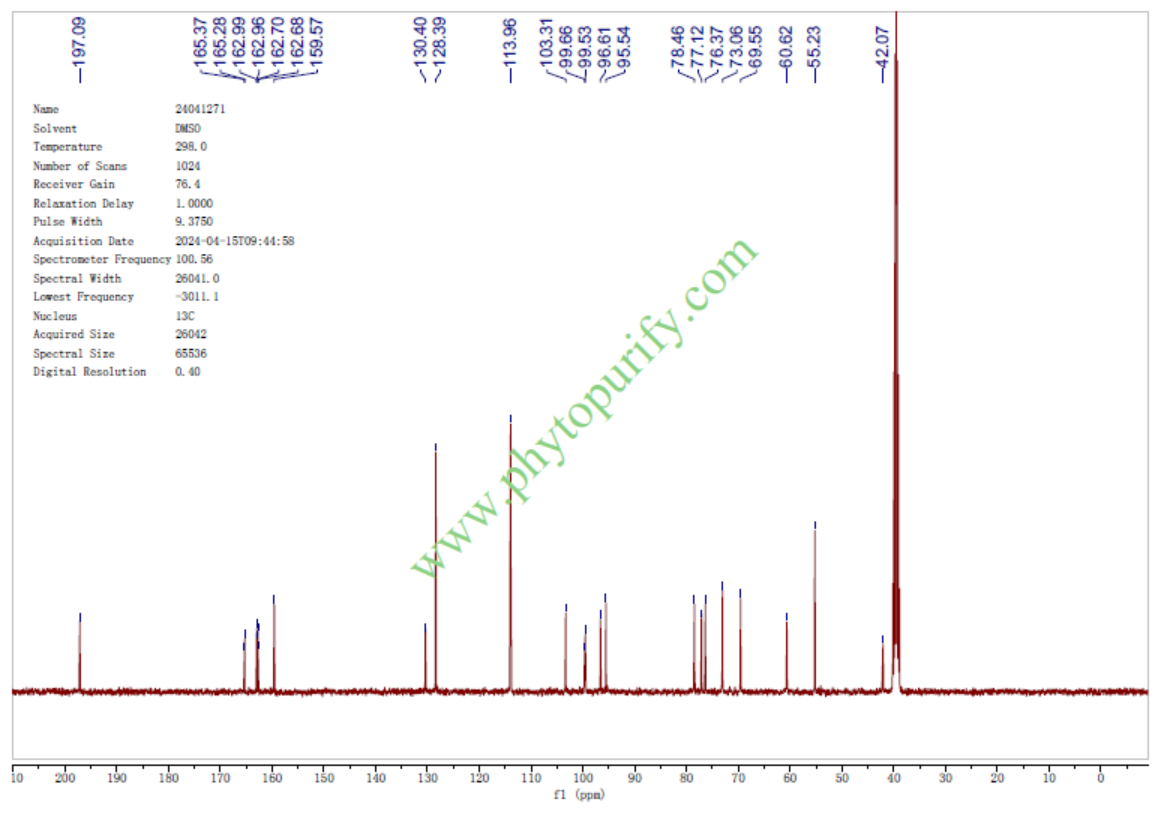
NMR of Isosakuranin
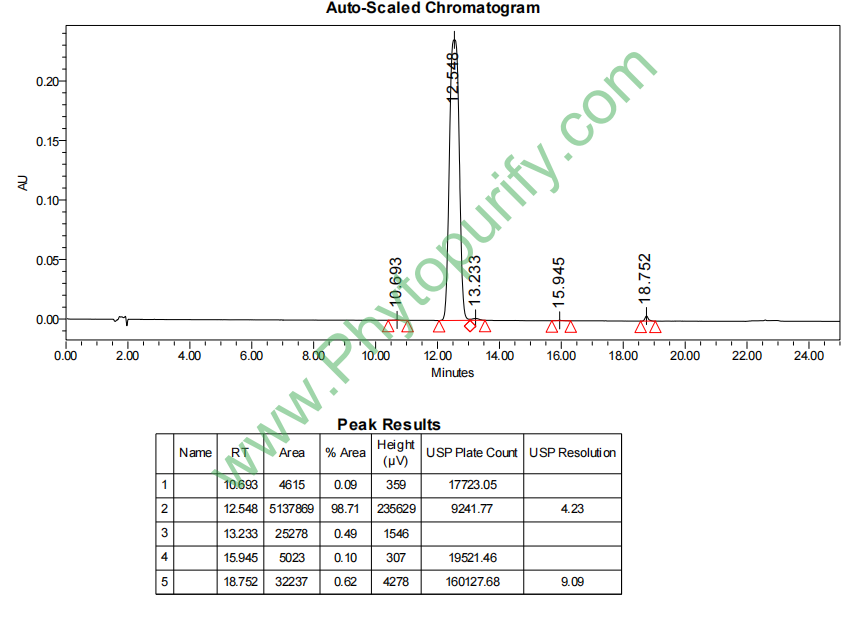
HPLC of Isosakuranin
Storage conditions:Short-term storage at 2~8℃, long-term storage at -20 ~ -80℃
155.1400
.6965
.6605
2.1496
.5761
.3026
Low
77.4324
3.9252
No
No
No
No
No
No
0.0
Yes
No
Yes
No
Natural products, as an important source of drug discovery, play an irreplaceable role in the long history of human fight against diseases. One of the core paths in modern drug development is to isolate and identify active ingredients from traditional herbs, and elucidate their pharmacological mechanisms. Flavonoids, as a widely present class of secondary metabolites in nature, have always been a hot topic in natural product chemistry and pharmacology research due to their structural diversity and rich biological activity. Among them, Isosakuranin, as a specific flavonoid glycoside compound, has gradually entered the field of researchers in recent years and demonstrated unique pharmacological value.
Isosakurinin, also known as isosakurin-7-O-glucoside, has a CAS number of 491-69-0. This compound was originally derived from plants in the Rhamnaceae family Paliurus ramosissimus Separated from the fruit of (multiple branches of horsetail).Paliurus ramosissimus As a traditional medicinal plant, it is often used in folk medicine to treat inflammation related diseases, which provides a solid traditional medical basis for exploring the pharmacological effects of its active ingredient, isocherry blossom glycoside. Preliminary studies have shown that isocherry blossom glycosides have various biological activities such as anti-inflammatory and antioxidant effects, especially in the field of respiratory diseases, and their potential therapeutic effects on asthma have attracted widespread attention.
Asthma is a complex heterogeneous disease characterized by chronic airway inflammation, airway hyperresponsiveness, and reversible airflow limitation. Its pathogenesis involves the interaction between various immune cells (such as Th2 cells, eosinophils, mast cells) and structural cells (such as airway epithelial cells, smooth muscle cells), as well as the involvement of numerous inflammatory mediators, cytokines, and chemokines. At present, the clinical treatment of asthma mainly relies on inhaled corticosteroids and beta 2 receptor agonists, but some patients, especially those with severe or refractory asthma, still face problems such as poor control and significant side effects. Therefore, it is of great clinical significance to search for natural anti asthma drugs with new mechanisms of action, high efficiency and low toxicity. The emergence of isocherry blossom glycosides provides new candidate molecules for this field. This article aims to systematically review the chemical structure, plant origin, pharmacological activity, mechanism of action, medicinal properties, and clinical application prospects of isocherry blossom glycosides, in order to provide comprehensive academic references for the in-depth research and development of this compound.
Isosakuranetin belongs to the flavonoid glycoside class, and its chemical structure is composed of the glycoside Isosakuranetin (5,7-dihydroxy-4 '- methoxydihydroflavone) and the sugar moiety (glucose) connected by glycosidic bonds. Specifically, the glucose group is attached to the hydroxyl group at position 7 of the glycoside, hence its systematic name is Isosakuranitin-7-O - β - D-glucoside. This structure determines its unique physicochemical properties and biological activity.
From the perspective of physical and chemical properties, the molecular weight of isocherry blossom glycoside is 448.4240 Da, which belongs to a medium-sized molecule. Its lipophilic water partition coefficient (LogP) is 0.6965, indicating that the compound has moderate lipophilicity but is more inclined towards a hydrophilic environment. This characteristic is consistent with the structural feature of the molecule containing multiple hydroxyl groups (from glycosides and glycosides) and one methoxy group. The polar surface area (TPSA) is as high as 155.1400 Å ², mainly attributed to the large number of hydroxyl and ether oxygen atoms in its molecules, indicating that the compound has good water solubility. The experimentally measured water solubility value is 2.1496 mg/mL, further confirming its good water solubility. High water solubility has a significant impact on the oral absorption and in vivo distribution of drugs, but it may also limit their transmembrane transport capacity.
In the critical safety assessment of drug development, isocherry blossom glycosides have shown encouraging characteristics. The blood-brain barrier (BBB) penetration assessment is rated as' low ', which means that the compound is less likely to enter the central nervous system, thereby reducing the potential risk of central neurotoxicity. This is a significant advantage for drugs used to treat peripheral diseases such as asthma. In addition, the evaluation result of hERG (human ether - à - go related gene) inhibition is' no ', indicating that it is unlikely to cause QT interval prolongation in the heart at therapeutic concentrations, thereby reducing the risk of inducing severe arrhythmias such as apical torsion ventricular tachycardia. The Ames test result was 0.0, indicating that the compound did not exhibit mutagenicity in the bacterial recovery mutation test, preliminarily confirming its low genetic toxicity. These pharmacological parameters have laid a solid safety foundation for the subsequent development of isocherry blossom glycosides.
Isocherry blossom glycoside was first discovered and reported in Paliurus ramosissimus Among the fruits of (multiple branches of horsehide).Paliurus ramosissimus Belonging to the Rhamnaceae family and the Malvaceae genus(Paliurus)Plants are deciduous shrubs or small trees, mainly distributed in East Asia such as southern China, Japan, and the Korean Peninsula. In the traditional medical system, different parts of the plant (such as roots, leaves, fruits) are often used to treat inflammation, pain, swelling, and other conditions. Its fruit is rich in various chemical components, including flavonoids, triterpenoids, alkaloids, etc. Among them, isoquercetin is considered an important active flavonoid glycoside component.
Except for Paliurus ramosissimus Isocherry blossom glycosides have also been found in other plants, such as certain citrus genera(Citrus)The fruits or leaves of plants such as lemons and lime, as well as some Lamiaceae plants. This indicates that isocherry blossom glycosides have a certain distribution breadth in the plant kingdom, but their content is usually low and varies depending on factors such as plant species, growth environment, and harvest season. At present,Paliurus ramosissimus Fruits are still the main natural source for obtaining isocherry blossom glycosides.
The extraction of isocherry blossom glycosides usually follows the classic process of natural product chemistry, which includes the following main steps:
1. Raw material pretreatment: Dry it Paliurus ramosissimus Grind the fruit to an appropriate particle size to improve extraction efficiency.
2. Solvent extraction By utilizing the polarity characteristics of isocherry blossom glycosides, polar solvents such as methanol, ethanol, or their aqueous solutions are often used for extraction, percolation, or reflux. Usually, a 70% -80% ethanol aqueous solution is chosen as the extraction solvent to balance the solubility of the target compound and impurities.
3. Concentration and preliminary purification After the extraction solution is concentrated under reduced pressure, crude extract is obtained. The crude extract can be sequentially subjected to liquid-liquid extraction using organic solvents of different polarities (such as petroleum ether, ethyl acetate, n-butanol) to enrich isocherry blossom glycosides in the n-butanol or ethyl acetate extraction sites.
4. chromatographic separation This is a key step in obtaining high-purity isocherry blossom glycosides. Common chromatographic techniques include silica gel column chromatography, ODS (octadecylsilane bonded silica gel) reversed phase column chromatography, Sephadex LH-20 gel column chromatography, etc. By gradient elution, isocherry blossom glycosides can be effectively separated from other flavonoid glycosides or impurities.
5. Purification and identification For the isolated compounds, their purity needs to be analyzed by high-performance liquid chromatography (HPLC). Finally, modern spectroscopic techniques such as nuclear magnetic resonance spectroscopy (NMR) and mass spectrometry (MS) were used for structural identification, confirming its identity as isocherry blossom glycoside.
In recent years, with the promotion of green chemistry concepts, some new extraction techniques such as ultrasound assisted extraction, microwave-assisted extraction, enzyme assisted extraction, etc. have also been attempted to be applied to the extraction of isocherry blossom glycosides, in order to improve extraction efficiency, shorten time, and reduce the use of organic solvents. However, traditional solvent extraction combined with multi-step chromatographic separation is still the main method for obtaining high-purity isocherry blossom glycosides in laboratory and industrial production.
The pharmacological activity research of isocherry blossom glycoside is still in its infancy, but existing studies have revealed its potential in anti-inflammatory, antioxidant, and anti asthma aspects, especially in targeting asthma related targets, making it a candidate molecule for the development of respiratory disease drugs.
Inflammation is the core pathological process of many chronic diseases such as asthma. Research has shown that isocherry blossom glycosides can inhibit the production of various inflammatory mediators. In a macrophage model stimulated by lipopolysaccharide (LPS), isocherry blossom glycoside can significantly reduce the levels of pro-inflammatory cytokines such as tumor necrosis factor - α (TNF - α), interleukin-6 (IL-6), and interleukin-1 β (IL-1 β). The mechanism may be related to the inhibition of the activation of the nuclear factor kappa B (NF - κ B) signaling pathway. NF - κ B is a key transcription factor that regulates inflammatory responses. Isocherry blossom glycosides inhibit the phosphorylation and degradation of I κ B α, preventing NF - κ B (p65 subunit, i.e. RELA) from translocating into the nucleus and downregulating the expression of downstream inflammatory genes. In addition, isocherry blossom glycosides can inhibit the expression of cyclooxygenase-2 (COX-2, encoded by the PTGS1/2 gene) and inducible nitric oxide synthase (iNOS), reducing the production of inflammatory mediators such as prostaglandin E2 (PGE2) and nitric oxide (NO).
Oxidative stress plays an important role in airway inflammation and tissue damage in asthma. Isocherry blossom glycoside, as a polyphenolic compound, has direct antioxidant capacity. The phenolic hydroxyl groups in its molecular structure can effectively scavenge free radicals, such as DPPH free radicals, ABTS cationic free radicals, and superoxide anions. In addition, isocherry blossom glycosides can activate the endogenous antioxidant defense system in cells. Research has found that it can upregulate the expression of a series of antioxidant enzymes, such as superoxide dismutase (SOD), catalase (CAT), and glutathione peroxidase (GPx), by activating the nuclear factor E2 related factor 2 (Nrf2)/antioxidant response element (ARE) signaling pathway, thereby enhancing the ability of cells to resist oxidative damage. This dual antioxidant mechanism (direct clearance of free radicals and activation of endogenous antioxidant system) makes it potentially valuable in reducing airway oxidative damage in asthma.
Based on its anti-inflammatory and antioxidant properties, the direct action of isocherry blossom glycoside in asthma models has attracted much attention. Although direct in vivo animal experimental data is not yet abundant, in vitro studies targeting asthma related targets provide strong evidence. Isocherry blossom glycoside can act on multiple key links in the pathogenesis of asthma:
* Regulating immune response The core of asthma is the predominance of Th2 type immune response. Isocherry blossom glycoside may regulate Th17/Treg cell balance by affecting the phosphorylation levels of signal transduction and transcription activator 3 (STAT3), thereby inhibiting excessive Th2 type inflammatory response. STAT3 is a key molecule involved in the signaling of various cytokines, such as IL-6 and IL-23, and its abnormal activation is associated with the severity of asthma.
* Inhibit the infiltration of inflammatory cells in the airway Isocherry blossom glycoside can inhibit the chemotaxis and activation of eosinophils and neutrophils towards the airway. It may inhibit the synthesis of potent pro-inflammatory mediators such as leukotrienes (LTB4, LTC4) by downregulating the activity of phospholipase A2 (PLA2G2A), reducing the release of arachidonic acid. Leukotriene is an important mediator that causes bronchial constriction, mucus secretion, and airway inflammation.
* Relieve airway hyperresponsiveness Isocherry blossom glycoside may act on the transient receptor potential vanillic acid subtype 1 (TRPV1) channel, inhibiting airway sensory nerve excitation induced by stimuli such as capsaicin, thereby reducing cough and bronchospasm. TRPV1 is highly expressed in the sensory nerve endings of the airway and is an important receptor for airway hyperresponsiveness.
* Affects airway remodeling The airway remodeling caused by long-term chronic inflammation is an important reason why asthma is difficult to cure. Isocherry blossom glycosides may delay airway remodeling by inhibiting fibroblast proliferation and collagen deposition. Its effect may be related to the inhibition of the transforming growth factor - β (TGF - β)/Smad signaling pathway.
In addition to the main activities mentioned above, preliminary studies also suggest that isocherry blossom glycosides may have anti allergic, antibacterial, antiviral and other effects. For example, it may stabilize mast cell membranes and inhibit the release of allergens such as histamine. These diverse activities further expand their potential application scope.
The pharmacological activity of isocherry blossom glycoside, especially its anti asthma effect, is achieved through the synergistic action of multiple targets and pathways. Based on existing research, its key mechanisms of action and molecular targets can be summarized as follows:
AMPK signaling pathway (target: PRKAA1)AMP activated protein kinase (AMPK) is a key sensor for cellular energy metabolism and has been found to have strong anti-inflammatory effects in recent years. Isocherry blossom glycoside may exert anti-inflammatory effects by activating AMPK (whose catalytic subunit is encoded by the PRKAA1 gene), inhibiting downstream NF - κ B and mTOR signaling pathways. The activation of AMPK can also promote autophagy, help clear damaged organelles and protein aggregates, alleviate airway inflammation and oxidative stress.
NF - κ B signaling pathway (target: RELA)As mentioned earlier, isocherry blossom glycosides inhibit the activity of I κ B kinase (IKK), prevent the degradation of I κ B α, and prevent the p65 subunit of NF - κ B (RELA) from entering the nucleus to initiate the transcription of pro-inflammatory genes (such as TNF - α, IL-6, COX-2, iNOS). This is one of the core mechanisms of its anti-inflammatory effect.
STAT3 signaling pathway (target: STAT3)STAT3 is a key transcription factor that connects inflammation and immunity. In asthma, cytokines such as IL-6 activate STAT3, promote Th17 cell differentiation, and inhibit Treg cell function. Isocherry blossom glycoside may inhibit the activity of JAK kinase or directly interact with STAT3 protein to reduce its phosphorylation level, thereby blocking STAT3 signaling and regulating immune imbalance.
Arachidonic acid metabolic pathway (targets: PLA2G2A, ALOX5, PTGS1)Isocherry blossom glycoside reduces the release of arachidonic acid from cell membrane phospholipids by inhibiting the activity of cytoplasmic phospholipase A2 (PLA2G2A). Arachidonic acid is a precursor for the synthesis of prostaglandins and leukotrienes. By inhibiting 5-lipoxygenase (ALOX5) and cyclooxygenase-1/2 (PTGS1/2), isokaempferol can simultaneously reduce the production of leukotrienes and prostaglandins, thereby exerting dual anti-inflammatory and anti bronchoconstrictive effects.
TRPV1 channel (target: TRPV1)TRPV1 is a non selective cation channel that can be activated by stimuli such as capsaicin, heat, and acid. Activation of TRPV1 in the airway epithelium and sensory nerves can lead to neuropeptide release, bronchial constriction, and coughing. Isocherry blossom glycoside may act as an antagonist of TRPV1, blocking its activation and alleviating airway hyperresponsiveness and cough symptoms.
Caspase-1 and cell pyroptosis (target: CASP1)Caspase-1 is a key effector enzyme activated by inflammasomes such as NLRP3, responsible for cleaving pro-IL-1 β and pro-IL-18 into mature forms and inducing cell pyroptosis. Isocherry blossom glycoside may inhibit the activity of Caspase-1, reduce the release of IL-1 β and IL-18, and thus suppress the strong inflammatory response driven by inflammasomes.
Adenosine A2B receptor (target: ADORA2B)Adenosine A2B receptors are upregulated in asthma airway epithelium and inflammatory cells, and their activation can promote the release of cytokines such as IL-19, exacerbating Th2 type inflammation. Isocherry blossom glycoside may act as an antagonist of ADORA2B, blocking adenosine mediated pro-inflammatory signals.
In summary, isocherry blossom glycosides form a complex network regulatory mechanism by acting on multiple targets such as AMPK, NF - κ B, STAT3, arachidonic acid metabolism, TRPV1, Caspase-1, and ADORA2B, exerting anti asthma effects from multiple dimensions such as inhibiting inflammation, regulating immunity, relieving bronchospasm, and reducing oxidative stress. This multi-target mode of action is its unique advantage over single target synthetic drugs, and may also bring more comprehensive therapeutic effects and lower resistance risks.
The drug like and pharmacokinetic (PK) properties of a natural product are crucial for its transition from laboratory to clinical application. The preliminary pharmacological evaluation of isocherry blossom glycoside is optimistic, but its pharmacokinetic studies are not yet sufficient.
Drugability assessment:
* drug-likeness The molecular weight (448 Da) and LogP (0.70) of isocherry blossom glycoside both conform to the Lipinski's "Five Rules" range (MW<500, LogP<5), indicating its good medicinal properties. It has good water solubility (2.15 mg/mL), which is beneficial for formulation development.
* safety As mentioned earlier, low BBB penetration, no risk of hERG inhibition, and negative Ames test provide important safety data for its development. However, more comprehensive toxicological evaluations (such as acute toxicity, chronic toxicity, reproductive toxicity, etc.) still need to be conducted.
* Metabolic stability As a flavonoid glycoside, isocherry blossom glycoside may undergo deglycosylation metabolism in the body to generate the glycoside isocherry blossom glycoside. Glycosides may undergo further methylation, sulfation, or glucuronidation binding reactions. Its metabolic stability is a key factor determining its oral bioavailability. At present, there is a lack of detailed data on the metabolic stability of liver microsomes.
pharmacokinetics:
* absorb The high water solubility and medium molecular weight of isocherry blossom glycosides suggest that they may be absorbed by the intestine through passive diffusion or carrier mediated transport. However, flavonoid glycosides typically have low oral bioavailability, mainly due to first pass effects in the gut and liver. β - glucosidase in the gut microbiota may hydrolyze it into aglycones, which are more easily absorbed. Therefore, the oral bioavailability of isocherry blossom glycosides may not be high, and suitable administration routes or formulation techniques (such as nanoparticle, liposome, prodrug design) need to be designed to improve it.
* distribution Due to its low BBB penetration, isocherry blossom glycosides are mainly distributed in peripheral tissues. Its high TPSA value also limits its transmembrane ability. For treating asthma, medication needs to effectively reach the lungs. Inhalation administration may be a better method of drug delivery, as it can directly deliver the drug to the site of action, increase local concentration, and reduce systemic exposure.
* Metabolism The main metabolic pathways include glycosidic bond hydrolysis, methylation, glucuronidation, and sulfation. The liver and intestines are its main metabolic organs. Metabolites may retain some biological activity or become inactive.
* excretion Isocherry blossom glycoside and its metabolites are mainly excreted through bile and urine.
Overall, isocherry blossom glycosides have good initial pharmacological properties, especially in terms of safety. But its pharmacokinetic properties, especially oral bioavailability, are key issues that need to be addressed in future development. Inhalation administration strategy deserves priority consideration.
As a natural flavonoid glycoside with a multi-target mechanism of action, isocherry blossom glycoside has shown promising application prospects in the field of asthma treatment. Its unique pharmacological properties, especially its ability to regulate multiple key asthma targets such as AMPK, NF - κ B, STAT3, arachidonic acid metabolism pathway, and TRPV1, make it a potential new and multifunctional anti asthma drug.
Clinical application prospects:
1. As an adjuvant therapy drug For patients with mild to moderate asthma who have poor control with standard therapy (inhaled corticosteroids+β 2 receptor agonists), isokaempferol may serve as an effective adjuvant therapy. Through its anti-inflammatory, antioxidant, and immunomodulatory effects, it helps patients better control symptoms, reduce the frequency of acute attacks, and may allow for a decrease in hormone dosage, thereby reducing hormone related side effects.
2. Targeting specific asthma phenotypes Given its regulatory effect on Th2/Th17 immune balance, isocherry blossom glycoside may have better therapeutic effects on patients with Th2 high or mixed granulocyte asthma. Future research can explore its precise therapeutic applications guided by specific biomarkers such as blood eosinophils, FeNO, and serum IL-6 levels.
3. Relieve airway hyperresponsiveness and cough By antagonizing the TRPV1 channel, isokaempferol is expected to be used for the treatment of asthma subtypes characterized by cough and airway hyperresponsiveness, or for the treatment of other respiratory diseases accompanied by persistent cough.
4. Preventing airway remodeling Long term medication may delay or reverse airway remodeling in asthma patients, thereby improving the long-term decline in lung function.
Future research directions:
1. In depth pharmacological research It is necessary to systematically evaluate the in vivo efficacy of icariin in various asthma animal models, such as ovalbumin OVA induction, house dust mite HDM induction, and mixed allergen induction models, including its improvement effects on airway inflammation, airway hyperresponsiveness, mucus secretion, and airway remodeling.
2. Comprehensive pharmacokinetic studies Conduct research on the absorption, distribution, metabolism, and excretion (ADME) of isocherry blossom glycosides in animals and humans, to clarify their oral bioavailability, metabolic pathways, major metabolites, and their activities. Meanwhile, explore the pharmacokinetic characteristics of the lungs after inhalation administration.
3. toxicological evaluation Conduct systematic preclinical toxicology studies, including acute toxicity, long-term toxicity, reproductive and developmental toxicity, genetic toxicity, etc., to comprehensively evaluate their safety.
4. Formulation development In response to its low oral bioavailability, new drug delivery systems such as liposomes, nanoemulsions, solid dispersions, phospholipid complexes, etc. have been developed to improve its solubility and bioavailability. The development of inhaled formulations, such as dry powder inhalers and nebulized inhalers, is an ideal way to use them for the treatment of asthma.
5. structural optimization Using isocherry blossom glycoside as a lead compound, chemical modifications such as prodrug design, glycosylation modification, and skeleton modification are used to improve its pharmacokinetic properties or enhance its targeting and activity.
6. In depth study of mechanisms Using modern molecular biology techniques such as CRISPR-Cas9 gene editing, proteomics, and metabolomics, we aim to more accurately elucidate its binding patterns with targets such as AMPK, STAT3, and TRPV1, as well as downstream signaling network regulatory mechanisms.
Isocherry blossom glycoside, derived from traditional medicinal plants Paliurus ramosissimus The flavonoid glycosides in fruits, with their unique chemical structure and multi-target pharmacological activity, have shown important research value and development potential in the field of natural product pharmacology, especially in the development of anti asthma drugs. It achieves a comprehensive effect of anti-inflammatory, antioxidant, immune regulation, and alleviation of airway hyperresponsiveness by regulating multiple signaling pathways and targets closely related to the pathogenesis of asthma, such as AMPK, NF - κ B, STAT3, arachidonic acid metabolism, TRPV1, etc. The preliminary drug efficacy evaluation results are encouraging, especially its low toxicity and good safety characteristics. However, from laboratory discovery to clinical application, isocherry blossom glycoside still faces many challenges, especially its pharmacokinetic properties need to be further elucidated and optimized. Future research should focus on systematic in vitro and in vivo pharmacological validation, comprehensive pharmacokinetic and toxicological evaluation, and innovative formulation technology development. With the continuous deepening of research, isocherry blossom glycoside is expected to become a new, safe, and effective candidate drug for the treatment of asthma, especially refractory asthma, bringing new hope to billions of asthma patients worldwide.
