Introduction/Overview
Osteoporosis is a systemic bone disease characterized by reduced bone mass, destruction of bone microstructure, and increased bone fragility. It has become a major public health challenge worldwide, especially in an aging society. At present, although first-line clinical drugs can effectively inhibit bone resorption or promote bone formation, there are still limitations such as long-term side effects, poor patient compliance, and high costs. Therefore, the search for efficient, low toxicity, and multi-target novel anti osteoporosis lead compounds from natural products has always been an important direction in drug development. Saponins have shown great potential in the field of bone health due to their extensive biological activity.
17 hydroxygracillin (CAS: 90308-85-3) is a steroid saponin isolated from plants such as the Dioscoreaceae family. In recent years, with the deepening development of natural product chemistry and molecular pharmacology, this compound has attracted much attention due to its multi-target and multi pathway effects in regulating bone metabolism balance. It can not only exert its effects through the classical nuclear receptor pathway, but also intervene in key enzyme activities and cytokine networks, demonstrating unique advantages compared to traditional single target drugs. This article aims to systematically review the chemical properties, plant sources, pharmacological activities, molecular mechanisms of action, and pharmacological properties of 17 hydroxy slender dioscin, in order to provide comprehensive scientific references for the in-depth research and development of this compound as a candidate drug for anti osteoporosis.
Chemical structure and physicochemical properties
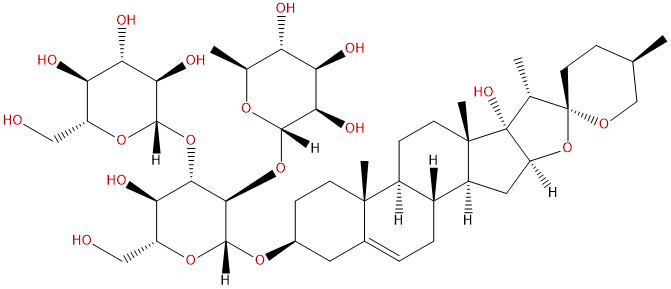
The molecular formula of 17 hydroxy slender dioscin is C45H72O18, with a molecular weight of 901.0530. Its structure belongs to the spirostane type steroidal saponins, which are hydroxylated derivatives of gracillin. Its core structure is composed of a hydrophobic spirosteroid core and a hydrophilic oligosaccharide chain connected by glycosidic bonds. This amphiphilic structure is the material basis for its various biological activities.
An additional hydroxyl group was introduced at the C-17 position of the mother nucleus, which significantly altered its spatial conformation and electronic distribution, enhancing its ability to interact with specific target proteins (such as the nuclear receptor ligand binding domain). This may be the key to its pharmacological activity distinguishing it from the parent compound, Dioscin. Its sugar chain is usually composed of monosaccharides such as glucose and xylose. The length, type, and connection mode of the sugar chain directly affect its water solubility, cell membrane permeability, and recognition specificity with receptors.
Based on its structure, its physicochemical properties parameters are as follows: the calculated lipid water partition coefficient (LogP) is 1.5324, indicating that the compound has a certain degree of lipophilicity, but not highly hydrophobic. The theoretical polar surface area (TPSA) is as high as 276.1400 Å ², mainly attributed to the numerous hydroxyl groups in the molecule and oxygen atoms on the sugar chain, indicating its good hydration ability. The calculated water solubility is about 0.1139 mg/mL, which belongs to the category of slightly soluble to poorly soluble. This suggests that in the development of formulations, it may be necessary to improve their solubility through techniques such as salt formation, cyclodextrin inclusion, or nanomaterialization. In addition, its larger molecular weight and higher TPSA also determine its difficulty in crossing the blood-brain barrier (predicted as low permeability), which may actually reduce potential side effects on the central nervous system for drugs primarily targeting the peripheral skeletal system. The preliminary pharmacological risk assessment showed no significant hERG potassium channel inhibition risk (predicted as' no '), and the Ames test predicted a value of 0.0, indicating a low potential mutagenic risk and providing preliminary positive signals for subsequent safety evaluation.
Plant sources and extraction methods
17 hydroxy slender dioscin is mainly found in plants of the Dioscoreaceae family, especially in various species of the Dioscorea genus(Dioscorea)In the rhizomes or tubers of plants. These plants are distributed in many regions around the world, serving as both traditional medicinal herbs and natural treasure trove of steroidal saponins. Common sources of plants include but are not limited to slender yam(Dioscorea gracillima)Chuanlong Dioscorea(Dioscorea nipponica)Dioscorea nipponica var. mongolica(Dioscorea zingiberensis)Wait. There are differences in their content among different species and parts, and modern analytical techniques are usually needed for qualitative and quantitative analysis.
Its extraction and separation follow the conventional process of natural product chemistry, but have been optimized for its saponin properties:
1. Extract Alcohol solvents (such as methanol, ethanol, or a certain proportion of ethanol water solution) are usually used for reflux extraction or ultrasound assisted extraction. The alcohol extraction method can effectively extract polar and moderately polar saponin components. In recent years, green extraction techniques such as supercritical CO2 fluid extraction (which requires the addition of entrainers such as ethanol) have also been applied to improve extraction efficiency and reduce residual organic solvents.
2. Enrichment and Separation After the crude extract is concentrated under reduced pressure, the characteristic of easy binding of saponins with macroporous adsorption resin is often utilized. Water and different concentrations of ethanol are used for gradient elution to preliminarily enrich the saponin sites. Further purification depends on column chromatography technology, often using silica gel, reverse silica gel (such as ODS), dextran gel (Sephadex LH-20) and other fillers. Preparative high-performance liquid chromatography (HPLC) is the final key step in obtaining high-purity monomers, often using a reverse phase C18 column with methanol water or acetonitrile water as the mobile phase.
3. appraisal Comprehensive use of spectroscopic methods for structural identification of compounds. Determine molecular weight and formula through high-resolution mass spectrometry (HR-ESI-MS); Using nuclear magnetic resonance spectroscopy (NMR, including 1H NMR, 13C NMR, HSQC, HMBC, etc.) to analyze the steroid parent nucleus, glycosylation type, linkage position, and configuration; Infrared spectroscopy (IR) and optical rotation data provide auxiliary information.
Pharmacological activity research
A large number of in vitro and in vivo pharmacological studies have confirmed that the core pharmacological activity of 17 hydroxy slender dioscin focuses on anti osteoporosis, and its effect is reflected in the bidirectional regulation of the two major processes of bone metabolism - bone resorption and bone formation.
1. Inhibit osteoclast activity and bone resorption:
Overactivation of osteoclasts is the direct cause of bone loss in osteoporosis. Research has shown that 17 hydroxy slender dioscin can effectively inhibit the differentiation of osteoclast precursors into mature osteoclasts induced by receptor activator of nuclear factor kappa B ligand (RANKL). At the cellular level, it can significantly reduce the formation of osteoclast specific markers such as tartrate resistant acid phosphatase (TRAP) positive multinucleated cells and decrease the area of osteoclast bone resorption cavities. The mechanism involves inhibiting the expression and activation of key transcription factors for osteoclast differentiation, such as NFATc1, as well as downregulating the expression of bone resorption related enzymes such as tissue protease K (CTSK).
2. Promote osteoblast differentiation and bone formation:
In addition to inhibiting bone resorption, this compound can also positively regulate bone formation. In osteoblast precursor cell models (such as MC3T3-E1 cells and bone marrow mesenchymal stem cells), 17 hydroxyslender dioscin can significantly promote cell proliferation, increase alkaline phosphatase (ALP) activity, and mineralization nodule formation. It can upregulate the expression of a series of key osteogenic differentiation marker genes and proteins, including type I collagen (COL1A1), osteocalcin (BGLAP), Runt related transcription factor 2 (RUNX2), and Osterix (SP7). This indicates its ability to promote the differentiation of bone marrow stromal cells into the osteoblast lineage and accelerate the maturation and mineralization of bone matrix.
3. In vivo anti osteoporosis effect:
In a postmenopausal osteoporosis rat or mouse model induced by ovariectomy (OVX), the following positive effects were observed after intervention with 17 hydroxyslender dioscin: significant increase in bone density (BMD), improvement in microstructural parameters of bone trabeculae (such as increased number of trabeculae and decreased separation), and enhancement of bone biomechanical properties (such as increased maximum load and stiffness). These in vivo data strongly support the conclusions of its in vitro studies, confirming that it can effectively alleviate rapid bone loss caused by estrogen deficiency.
Mechanism of action and molecular targets
The anti osteoporosis effect of 17 hydroxy slender dioscin is not achieved through a single pathway, but constitutes a multi-target, networked regulatory system, mainly involving the following key targets and pathways:
1. Regulation of nuclear receptor targets:
* Estrogen receptor alpha (ESR1)As a potential estrogen like compound derived from plants, it may bind to ESR1 in a selective estrogen receptor modulator (SERM) manner, exerting estrogen like bone protection in bone tissue, activating downstream pro survival and osteogenic gene expression, while avoiding excessive stimulation of the mammary gland and uterus.
* Vitamin D receptor (VDR)The vitamin D metabolic pathway is crucial for calcium phosphorus homeostasis and bone metabolism. 17 hydroxy slender dioscin may serve as a regulator of VDR, enhancing VDR mediated transcriptional activity and promoting the expression of genes related to intestinal calcium absorption and bone mineralization.
2. Regulation of key transcription factors:
* RUNX2 and SP7 (Osterix)This is the core regulatory axis of osteoblast differentiation. This compound can directly or indirectly upregulate the expression and activity of RUNX2 and SP7, thereby initiating and driving osteogenic differentiation programs.
* NF - κ B and NFATc1 pathway On the osteoclast side, it can interfere with the NF - κ B signaling pathway activated by RANKL and inhibit the nuclear translocation and transcriptional activity of NFATc1, thereby blocking osteoclast differentiation upstream.
3. Regulation of bone metabolism specific factors:
* Osteoprotegerin (OPG, encoded by TNFRSF11B)/RANKL/RANK system This is the 'master switch' for bone metabolism balance. Research has shown that this compound can upregulate OPG (a decoy receptor for RANKL) secreted by osteoblasts, while possibly downregulating the expression of RANKL, thereby reducing the ratio of RANKL/RANK and inhibiting osteoclastogenesis.
* Sclerosing protein (SOST)SOST is a key negative regulator of the Wnt/β - catenin classical osteogenic signaling pathway. 17 hydroxy slender dioscin may inhibit the expression of SOST, release its inhibition on the Wnt pathway, stabilize β - catenin incorporation into the nucleus, activate and promote bone gene transcription.
* Matrix metalloproteinase-9 (MMP9) and tissue protease K (CTSK)Both are key enzymes involved in the degradation of bone matrix by osteoclasts. This compound can downregulate the expression of MMP9 and CTSK, directly weakening the bone resorption function of osteoclasts.
4. Promotion of extracellular matrix synthesis:
By raising COL1A1 and BGLAP The expression of osteocalcin directly promotes the synthesis of type I collagen, the main component of bone matrix, and increases the secretion of osteocalcin, which is an important marker of bone mineralization maturity.
In summary, 17 hydroxy slender dioscin constructs a three-dimensional action network from promoting bone formation to inhibiting bone resorption by synergistically acting on nuclear receptors such as ESR1 and VDR, transcription factors such as RUNX2/SP7 and NFATc1, as well as key signaling pathways such as OPG/RANKL/RANK and Wnt/β - catenin, reflecting the unique therapeutic strategy of natural multi-target drugs.
Evaluation of drug properties and pharmacokinetics
Although 17 hydroxy slender dioscin exhibits excellent pharmacological activity, its development from a lead compound to a drug requires a systematic pharmacological evaluation.
1. Preliminary analysis of drug properties:
As mentioned earlier, its molecular weight (901) far exceeds Lipinski's "Five Rules" recommendation of 500, and its sugar chain structure leads to high polarity (high TPSA), which is expected to pose challenges for oral bioavailability. Its low predicted water solubility and moderate LogP value suggest the possibility of absorption and dissolution issues. However, many successful natural product drugs (such as cardiac glycosides and paclitaxel) have also broken through the traditional drug like rules, so their development value cannot be completely denied, but rather indicate the direction of formulation technology research and development.
2. Pharmacokinetic (ADME) prediction and challenges:
* absorb As a highly polar saponin, its oral absorption may be poor and susceptible to gastrointestinal pH, microbiota, and first pass effects. Both active transport and passive diffusion do not have an advantage. Non oral routes (such as injection, transdermal) may be a better choice.
* distribution Predict that it is difficult to penetrate the blood-brain barrier, but can be distributed to blood rich tissues such as bones and liver. The potential affinity between it and hydroxyapatite in bone tissue is worth studying and may be beneficial for accumulation at the target site.
* Metabolism Steroid saponins are easily hydrolyzed or modified by gut microbiota and liver metabolic enzymes (such as glycosidase and cytochrome P450) in the body, and the shedding of sugar chains may significantly affect their activity. It is necessary to clarify the main metabolites and activities in its body.
* excretion Expected to be primarily excreted through the kidneys and/or bile.
3. Preliminary safety assessment:
Predicting the absence of hERG inhibition and mutagenic risk (Ames negative) is a good starting point. However, saponin compounds often cause hemolysis or gastrointestinal irritation due to their surface activity, and require systematic preclinical safety evaluations such as acute toxicity, long-term toxicity, and reproductive toxicity. Its potential hormone like activity also needs to be carefully evaluated for its long-term impact on the endocrine system.
4. Prospects for formulation strategies:
To enhance its pharmacological properties, future formulation research can focus on: ① prodrug design, modifying hydroxyl or sugar groups to improve lipid solubility and membrane permeability; ② Applying nano delivery systems (such as liposomes, polymer nanoparticles, micelles) to improve solubility, stability, and the ability to target bone tissue; ③ Develop suitable compound preparations and utilize other ingredients to promote their absorption or produce synergistic effects.
Clinical application prospects and prospects
17 hydroxy slender dioscin, as a multi-target natural lead compound for anti osteoporosis, has broad clinical application prospects, but the road ahead is long.
1. Potential therapeutic advantages:
* Multi target synergistic effect Compared to single mechanism drugs such as bisphosphonates (which inhibit bone resorption) and teriparatide (which promote osteogenesis), its dual characteristics of promoting formation and inhibiting resorption may lead to more comprehensive bone quality improvement and lower fracture risk.
* Natural sources and potential safety Originating from traditional medicinal plants, it may have better biocompatibility and lower long-term toxicity.
* Suitable for complex pathological states Osteoporosis often coexists with chronic inflammation and oxidative stress, and the anti-inflammatory and antioxidant activities commonly possessed by saponin compounds may provide additional benefits.
2. R&D challenges and directions:
* Optimization of drug properties This is the biggest challenge it faces. It is necessary to significantly improve its solubility, stability, and oral bioavailability through medicinal chemistry (structural modification) and pharmacology (advanced delivery systems) methods.
* Deep explanation of mechanism It is necessary to use techniques such as gene knockout animals, molecular docking, and surface plasmon resonance to accurately elucidate its direct interaction mode and affinity with targets such as ESR1 and VDR.
* System preclinical evaluation Complete a complete set of pharmacological, pharmacokinetic, and toxicological studies that meet the requirements for new drug registration, and establish stable quality control standards.
* Explore combination therapy Study the possibility of combining it with existing anti osteoporosis drugs in order to reduce their respective doses, minimize side effects, and improve efficacy.
3. Future prospects:
With the deepening of understanding of the bone metabolism network and the advancement of drug development technology, 17 hydroxy slender dioscin is expected to be developed into a new generation of bone metabolism regulators. It may not only be used for primary osteoporosis, but also has therapeutic potential for secondary bone diseases such as glucocorticoid induced osteoporosis and rheumatoid arthritis related bone destruction. In addition, its core steroidal saponin structure also provides rich structural optimization templates for medicinal chemists to rationally design and synthesize a series of derivatives with better activity and drug properties.
Conclusion
17 hydroxy slender dioscin is a brilliant gem in the treasure trove of natural products. Its multi-target and multi pathway pharmacological activities in anti osteoporosis provide new ideas and candidate molecules for addressing this global health challenge. From a chemical structure perspective, its unique C-17 hydroxylation and complex sugar chains are the basis of its biological activity; From the perspective of its mechanism of action, it cleverly rebuilds the balance between osteoblasts and osteoclasts, regulating multiple nodes from nuclear receptors to key enzyme activity. Although its large molecular weight and poor prediction of drug properties pose significant challenges for subsequent development, this is precisely the field where modern pharmaceutical chemistry and formulation science can shine. Through in-depth structural optimization, innovative delivery strategies, and rigorous preclinical research, 17 hydroxy slender dioscin and its derivatives are expected to move from the laboratory to clinical practice, ultimately providing a safer and more effective treatment option for osteoporosis patients. The continuous and in-depth research on it not only has the value of new drug development, but also will further enrich our understanding of the regulation of complex life networks by natural products.