


Synonym name: Aromadendrin 3-rhamnoside; Engelitin
Catalogue No.: BP0535
Cas No.: 572-31-6
Formula: C21H22O10
Mol Weight: 434.397
Botanical Source: Engelhardtia, Eucalyptus, Eucryphia, Flindersia, Glycoxylon (preferred genus name Pradosia), Lyonia, Nothofagus, Smilax and Vitis spp.
Purity: 95%~99%
Analysis Method: HPLC-DAD or/and HPLC-ELSD
Identification Method: Mass, NMR
Packing: Brown vial or HDPE plastic bottle
Can be supplied from milligrams to grams.
For Reference Standard and R&D, Not for Human Use Directly.
Inquire for bulk scale.
HPLC of Engeletin
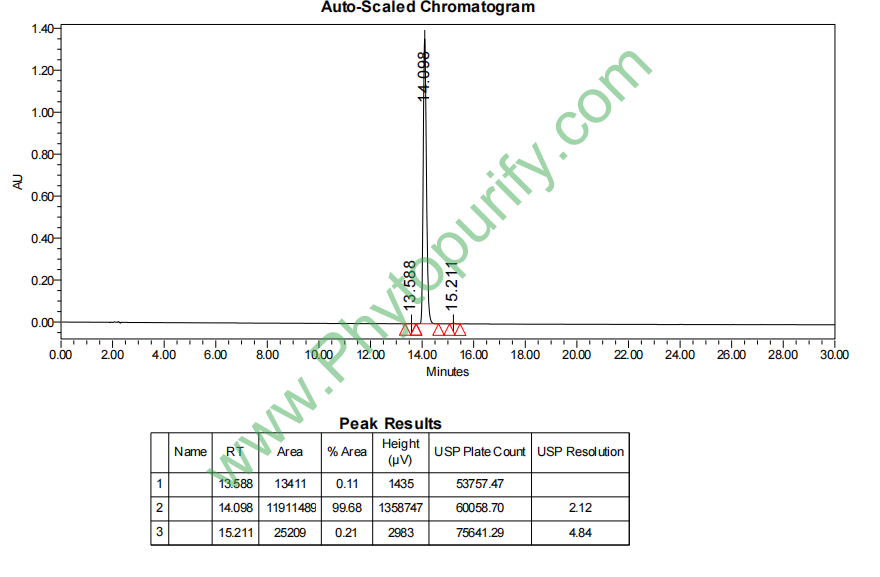
Storage conditions:Short-term storage at 2~8℃, long-term storage at -20 ~ -80℃
166.1400
.7360
.6123
2.4553
.4168
.3941
Low
79.4750
4.2352
Yes
No
Yes
No
Yes
No
0.0
Yes
No
Yes
No
Engeletin, also known as dihydromyricetin-3-O - α - L-rhamnoside, is a natural dihydroflavonoid glycoside with significant biological activity. Its CAS number is 572-31-6. This compound is mainly derived from the traditional medicinal plant Poria cocos(Smilax glabra Obtained from Roxb., in various folk medicine systems, Poria cocos is commonly used to treat inflammation, infection, rheumatism, rheumatism, and edema, which is closely related to the pharmacological effects of its main active ingredient, Huangqi glycoside. Modern pharmacological studies have shown that the core mechanism of action of Huangqi glycoside lies in its ability to effectively inhibit abnormal activation of the nuclear factor kappa B (NF - κ B) signaling pathway, which is the core hub for regulating inflammatory response, cell proliferation, apoptosis, and immune response. Based on this, Huangqi glycoside exhibits a wide range of pharmacological activities, including anti-inflammatory, analgesic, diuretic, anti edema, and antibacterial effects.
In recent years, with a deeper understanding of the molecular mechanisms of tumor occurrence and development, the anti-cancer potential of Huangqiglycoside, especially in solid tumors such as liver cancer, has attracted widespread attention. Liver cancer is a malignant tumor with the highest incidence rate and mortality worldwide. Its occurrence and development are closely related to chronic inflammation, abnormal cell proliferation, apoptosis escape and tumor microenvironment remodeling. Huangqi glycoside has shown the potential for multi pathway and multi-target intervention by acting on multiple key targets closely related to the occurrence and development of liver cancer, such as BCL2, STAT3, HIF1A, PIK3CA, providing valuable natural lead compounds for the development of new anti liver cancer drugs. This article aims to systematically review the chemical properties, plant sources, pharmacological activities, molecular mechanisms of action, pharmacological evaluation, and clinical application prospects of Huangqi glycoside, in order to provide comprehensive scientific references for the in-depth research and development of this compound.
The molecular formula of Huangqi glycoside is C21H22O10, with a molecular weight of 434.3970. Its chemical structure belongs to the class of dihydroflavonoid glycosides, and its parent nucleus is dihydroflavonoid (also known as flavanone), which is connected to an α - L-rhamnose group through a glycosidic bond at the C-3 position. This structural feature makes it a rhamnoside derivative of dihydromyricetin. The dihydroflavonoid skeleton itself has a saturated C-ring structure, and compared to flavonoids or flavonols, its planarity is weaker, which may affect its interaction mode with certain biomolecules.
In terms of physical and chemical properties, the theoretical lipid water partition coefficient (LogP) of Huangqi glycoside is about 0.7360, indicating that it has a certain degree of lipophilicity, but overall it still leans towards hydrophilicity. Its topological polar surface area (TPSA) is as high as 166.14 Å ², mainly attributed to the oxygen atoms on multiple hydroxyl and sugar groups in the molecule, which are important sites for forming hydrogen bonds. Higher TPSA values are usually associated with poorer cell membrane permeability. The predicted value of its water solubility is about 2.4553 mg/L, which belongs to the range of slightly soluble to poorly soluble, which is a key factor to consider in the development of actual formulations. Pharmacokinetic predictions indicate that Huangqi glycoside has a lower ability to cross the blood-brain barrier, suggesting that it may not be suitable for direct treatment of central nervous system diseases, but it also reduces the potential risk of central nervous system side effects. In the preliminary safety prediction, Huangqi glycoside showed no significant hERG potassium channel inhibitory activity (low risk of arrhythmia), and the Ames test predicted a value of 0.0, suggesting that it may not have direct genetic toxicity. These preliminary pharmacological parameters have laid the foundation for subsequent research.
The main plant source of Huangqi glycoside is the plants of the Smilax genus in the Liliaceae family Smilax glabra(Smilax glabra Dry rhizomes of Roxb. Tu Fu Ling is a traditional Chinese medicine with a sweet, light, and flat nature. It belongs to the liver and stomach meridians and has the effects of detoxification, dehumidification, and joint promotion. It is commonly used for syphilis, mercury poisoning, damp heat and turbidity, vaginal discharge, abscess, scrofula, scabies, and other diseases. Huangqi glycoside is considered one of the key active ingredients that exert anti-inflammatory, diuretic, and analgesic effects. In addition, this compound has also been found in other plants such as the grape family and legume family, but Poria cocos is still its most abundant and medicinal source.
The extraction of hesperidin from plant materials usually follows the conventional methods of natural product chemistry.Solvent extraction method It is the most commonly used preliminary extraction technique, often using methanol, ethanol, or their aqueous solutions (such as 70% -95% ethanol) for reflux extraction or ultrasound assisted extraction. Ethanol has become the preferred choice due to its high safety, low cost, and good efficiency in extracting polar components.Extraction and Separation Purification The process is more refined: the crude extract is concentrated under reduced pressure and then subjected to liquid-liquid extraction using organic solvents such as petroleum ether, ethyl acetate, and n-butanol. Huangqi glycoside is mainly enriched in the ethyl acetate or n-butanol fractions. Further purification relies on various chromatographic techniques, including silica gel column chromatography, polyamide column chromatography, reverse phase C18 column chromatography, as well as high-performance liquid chromatography (HPLC) and preparative liquid chromatography (pre HPLC). Modern technologies such as high-speed countercurrent chromatography (HSCCC) are increasingly being used for the efficient preparation and separation of Huangqi glycoside due to their advantages of not requiring a solid phase carrier and high recovery rate. The optimization of extraction process usually revolves around factors such as solvent concentration, solid-liquid ratio, extraction temperature, and time to improve the yield and purity of the target compound.
Numerous in vitro and in vivo pharmacological experiments have confirmed that Huangqi glycoside has diverse and significant biological activities.
Anti inflammatory and analgesic effects This is the earliest known and studied activity of Huangqi glycoside. In classic animal models of acute and chronic inflammation such as carrageenan and cotton ball granuloma, Huangqi glycoside can significantly inhibit plantar swelling, reduce inflammatory exudation, and granulation tissue proliferation. Its analgesic effect has been validated in acetic acid writhing test and hot plate test, indicating that it has a relieving effect on both chemical and thermal pain. These effects are directly related to their inhibition of inflammatory mediators such as prostaglandins and leukotrienes, as well as the inhibition of the NF - κ B pathway that will be elaborated later.
Diuretic and anti edema effects Huangqi glycoside can promote the excretion of urine in experimental animals and alleviate edema caused by various reasons. Its diuretic mechanism may be related to affecting the reabsorption of sodium and chloride ions by renal tubules, as well as improving local microcirculation and reducing capillary permeability.
Antibacterial and antiviral activity Research has shown that Huangqi glycoside has a certain inhibitory effect on common bacteria such as Staphylococcus aureus and Escherichia coli. In addition, some preliminary studies suggest that it also has inhibitory potential against certain viruses (such as influenza virus), but its broad-spectrum and strength of action still need to be further explored.
Antitumor activity This is currently a hot topic in the research of Huangqi glycoside. Especially in liver cancer research, Huangqi glycoside has shown significant inhibitory effects. In vitro experiments have shown that it can dose dependently inhibit the proliferation, migration, and invasion of various liver cancer cell lines (such as HepG2, Huh7, SMMC-7721), and induce cell cycle arrest and apoptosis. In in vivo models such as nude mouse transplanted tumors, administration of Huangqi glycoside can effectively inhibit tumor growth and show synergistic effects when combined with certain chemotherapy drugs.
Other activities The study also found that Huangqi glycoside has antioxidant, endothelial protective, and anti acute lung injury and renal fibrosis activities, which are often intertwined with its core mechanisms of anti-inflammatory and anti apoptotic effects.
The pharmacological effects of Huangqi glycoside, especially its anti-inflammatory and anti-tumor activities, are based on precise regulation of multiple signaling pathways, among which the NF - κ B pathway is its most central node of action.
Core pathway: NF - κ B signaling pathway inhibition NF - κ B is a key transcription factor family that exists in the cytoplasm at rest, binding to the inhibitory protein I κ B. When cells are stimulated by inflammatory factors, oxidative stress, etc., the I κ B kinase complex (IKK, where IKBKB/IKK β is the catalytic subunit) is activated, phosphorylated, and degraded, allowing NF - κ B (mainly the RELA/p65 subunit) to enter the nucleus and initiate the transcription of numerous pro-inflammatory and pro survival genes. Huangqi glycoside has been proven to effectively inhibit the activation of IKK (especially IKBKB), prevent the phosphorylation and degradation of I κ B, and thus block the nuclear translocation and transcriptional activity of NF - κ B. This is the cornerstone for its powerful anti-inflammatory effect and induction of tumor cell apoptosis.
Anti liver cancer related molecular target network In the context of liver cancer, the action of Huangqi glycoside exhibits multi-target characteristics
In summary, Huangqi glycoside synergistically regulates multiple pathways such as STAT3, PI3K/AKT, MAPK, and affects key effector molecules such as BCL2 and HIF1A by inhibiting NF - κ B, forming a multidimensional and networked anti liver cancer mechanism. It effectively inhibits tumor cell proliferation, promotes apoptosis, suppresses invasion, metastasis, and angiogenesis.
Although the pharmacological activity of Huangqi glycoside is clear, its pharmacological properties still need to be systematically evaluated in order to become an ideal drug candidate molecule.
Absorption, distribution, metabolism, excretion (ADME)Current pharmacokinetic studies are relatively limited. Due to its high polarity and molecular weight, the oral bioavailability of Huangqi glycoside may face challenges. Animal experiments suggest that it has moderate absorption after oral administration and may undergo extensive phase II metabolism (such as glucuronidation and sulfation) in the body. Its distribution may be concentrated in organs with abundant blood supply, but poor blood-brain barrier permeability limits its application in the central nervous system. The main pathways of excretion may be through the kidneys and bile. Detailed identification of metabolites, research on major metabolic enzymes and transporters are urgently needed.
Formulations and Formulation Challenges The water solubility and lipid solubility of Huangqi glycoside are not outstanding, belonging to Class IV (low solubility and low permeability) in the Biopharmaceutical Classification System (BCS), which poses difficulties for the development of oral preparations. To improve its bioavailability, advanced formulation technologies such as nanocrystals, liposomes, solid dispersions, cyclodextrin inclusion complexes, or phospholipid complexes may be required. These techniques can increase the solubility and dissolution rate of drugs, or promote their passage through the intestinal mucosa.
Preliminary Safety Assessment Based on existing in vitro predictions and some animal experiments, Huangqi glycoside has shown a good safety window. The absence of hERG inhibition and Ames negativity are important early positive signals. However, comprehensive preclinical safety evaluation, including long-term toxicity, reproductive toxicity, carcinogenicity experiments, etc., is an indispensable step for future translational research.
Huangqi glycoside, as a natural active molecule with multiple targets and functions, has broad clinical application prospects, but also faces many challenges.
Potential application directions:
Challenges faced and future research directions:
Huangqi glycoside is a highly valuable dihydroflavonoid glycoside compound discovered from the traditional Chinese medicine Poria cocos. It exhibits excellent anti-inflammatory, analgesic, and anti-tumor (especially anti liver cancer) activities by effectively inhibiting key signaling pathways such as NF - κ B. The characteristic of its multi-target action is in line with the concept of modern "network pharmacology" in treating complex diseases. Despite challenges such as poor water solubility and potential low bioavailability in drug development, these challenges are expected to be overcome through the comprehensive application of modern medicinal chemistry, pharmacology, and pharmaceutical techniques. In the future, with the continuous deepening of basic research and the continuous promotion of translational medicine, astragaloside is expected to develop from a natural product with clear activity into a new drug or adjuvant for the treatment of inflammation related diseases and liver cancer, fully reflecting the great value of the treasure house of traditional Chinese medicine "inheriting essence, preserving integrity and innovation".
