| Catalog No | Package | Original Price | Price | Inventory | Quantity | Operating |
|---|---|---|---|---|---|---|
| BP0609-100mg | 100mg | $30.00 | Sign in |
|


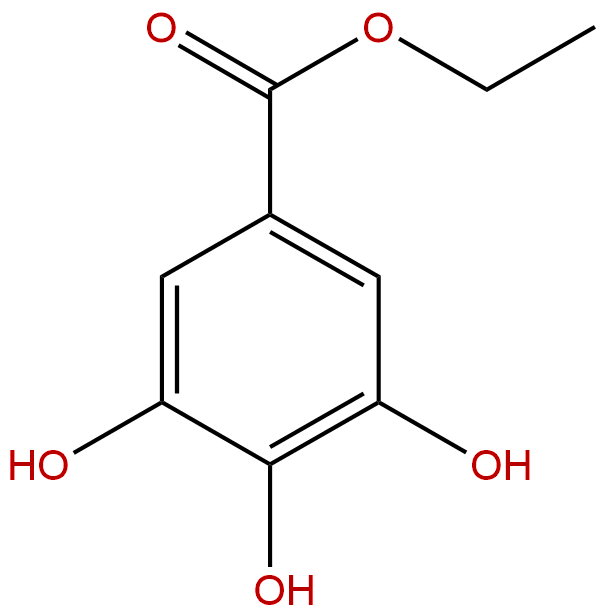
Product name: Gallic Acid Ethyl Ester
Synonym name: Ethyl 3,4,5-trihydroxybenzoate; Ethyl gallate
Catalogue No.: BP0609
Cas No.: 831-61-8
Formula: C9H10O5
Mol Weight: 198.174
Botanical Source:
Physical Description:
Type of Compound: Phenols
Purity: 95%~99%
Analysis Method: HPLC-DAD or/and HPLC-ELSD
Identification Method: Mass, NMR
Packing: Brown vial or HDPE plastic bottle
Storage: Store in a well closed container, protected from air and light. Put into refrigerate or freeze for long term storage.
Whenever possible, you should prepare and use solutions on the same day. However, if you need to make up stock solutions in advance, we recommend that you store the solution as aliquots in tightly sealed vials at -20℃. Generally, these will be useable for up to two weeks.
The product could be supplied from milligrams to grams
Inquire for bulk scale.
Chengdu Biopurify Phytochemicals Ltd. is a leading company in the research, development, manufacture and marketing of High Quality Phytochemicals and Extracts(especially Active Ingredients from Traditional Chinese Medicine,TCM), Natural Active Pharmaceutical Ingredients worldwide.
The main services:
A. Supply active ingredients and reference standards of TCM, from mgs to kgs scale
B. Custom extraction and purification, target Herb Active Ingredients
C. Custom synthesis and semi-synthesis for Natural Active Ingredients
D. CR(contract research), CM(contract manufacture) and PD(process development) services from lab scale, pilot scale to commercial scale(GMP is also available)
E. TCM compounds library for drug screen,more than 3000 compounds available, many of them are rare and unique.
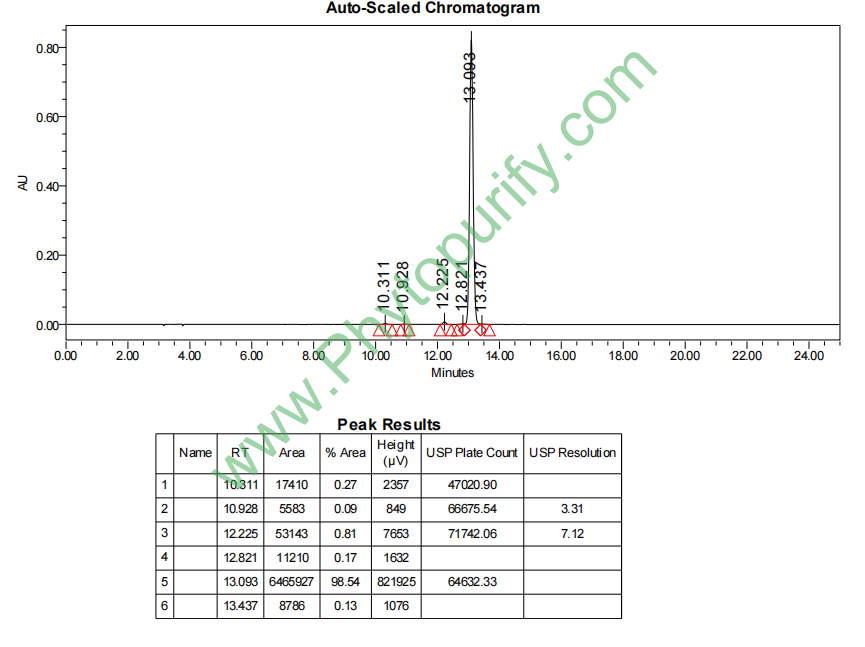
HPLC of Gallic Acid Ethyl Ester
Storage conditions:Short-term storage at 2~8℃, long-term storage at -20 ~ -80℃
86.9900
1.6458
1.1619
3.5048
3.2958
2.0518
Low
70.3181
2.0245
Yes
Yes
No
No
Yes
No
0.6
Yes
No
Yes
Yes
Gallic Acid Ethyl Ester (CAS number: 831-61-8) is a natural ester compound formed by esterification of gallic acid and ethanol, widely present in various plants. As an ethyl derivative of gallic acid, ethyl gallate not only inherits various biological activities of gallic acid, but also exhibits better lipid solubility and bioavailability due to its structural modifications, thus receiving widespread attention in the field of natural product pharmacology. In recent years, ethyl gallate has shown significant pharmacological activity in a variety of disease models such as anti-inflammatory, antioxidant, anti-cancer, neuroprotective and diabetes, and its mechanism of action involves multiple cellular signaling pathways and molecular targets, showing its great potential as a potential drug candidate molecule.
This article aims to systematically review the chemical structure and physicochemical properties, plant sources, and extraction methods of ethyl gallate, with a focus on summarizing its pharmacological activity and mechanism of action, exploring its pharmacological properties and pharmacokinetic characteristics, and looking forward to its clinical application prospects, providing theoretical basis and reference for further research and drug development of this compound.
The molecular formula of ethyl gallate is C9H10O5, with a molecular weight of 198.1740. Its structure consists of a benzene ring core of gallic acid and three adjacent hydroxyl substituents. The carboxyl group forms an ethyl ester structure with ethanol through ester bonds. This structure endows the compound with strong polarity and a certain degree of lipophilicity, with a LogP value of 1.6458, indicating moderate lipophilicity that facilitates membrane penetration and in vivo distribution.
The topological polar surface area (TPSA) characterized by molecular polarity is 86.99 Å ², indicating that the compound has good hydrogen bond donor and acceptor abilities, which is beneficial for binding to biomolecule targets. The water solubility is 3.5048, indicating that it has a certain solubility in the aqueous phase and is easy to absorb in vivo. The low permeability of the blood-brain barrier suggests limited direct effects on the central nervous system, but its role in neurodegenerative diseases may be achieved through peripheral mechanisms or indirect regulation. The negative result of hERG channel inhibition experiment indicates a low risk of cardiac toxicity. The Ames test score is 0.6, indicating no significant mutagenicity and high safety.
In summary, the physicochemical properties of ethyl gallate have laid a solid foundation for its biological activity and pharmacokinetic characteristics, making it suitable for further drug development research.
Ethyl gallate is widely present in various plants, especially in plants rich in gallic acid such as tea leaves (Camellia sinensis), myrrh trees (Pistachia lentiscus), oak trees (Quercus spp.), and various fruits and nuts. Its content is greatly influenced by factors such as plant species, growth environment, harvesting time, and processing methods.
Traditional extraction methods often use organic solvents such as ethanol, methanol, or ethyl acetate for extraction, combined with modern technologies such as ultrasound assisted extraction (UAE) and microwave-assisted extraction (MAE) to improve extraction efficiency and purity. After the extraction solution is concentrated by rotary evaporation, it is often separated and purified using methods such as silica gel column chromatography and reverse phase high performance liquid chromatography (RP-HPLC) to obtain high-purity ethyl gallate.
In recent years, green extraction techniques such as supercritical CO2 extraction and deep eutectic solvent (DES) assisted extraction have also been applied to the extraction of ethyl gallate, aiming to improve environmental friendliness and extraction efficiency. In addition, the chemical synthesis method can also obtain this compound through the esterification reaction of gallic acid and ethanol, which is convenient for large-scale preparation.
Ethyl gallate exhibits significant anti-inflammatory activity in various inflammatory models. It regulates key inflammatory signaling pathways, such as inhibiting Toll like receptor 4 (TLR4) - mediated NF - κ B activation, reducing the expression of pro-inflammatory factors TNF - α, IL-1 β, and IL-6, thereby alleviating inflammatory responses. Research has shown that ethyl gallate can also inhibit key targets such as protein tyrosine phosphatase 1 (PTPN1), signal transduction and transcription activator 3 (STAT3), and block the transmission of inflammatory signals.
In addition, ethyl gallate has an inhibitory effect on the activity of lipoxygenases (ALOX5, ALOX15), reducing the production of inflammatory mediator leukotrienes and further exerting anti-inflammatory effects. Signal molecules such as protein kinase C alpha (PRKCA) and phosphatidylinositol 3-kinase gamma (PIK3CG) are also regulated by it, demonstrating the potential for multi-target synergistic inhibition of inflammation.
Ethyl gallate has excellent antioxidant properties, effectively scavenging free radicals and reducing oxidative stress damage. It upregulates the expression of antioxidant enzymes such as superoxide dismutase (SOD1, SOD2), catalase (CAT), glutathione peroxidase 1 (GPX1), and heme oxygenase 1 (HMOX1) by activating the nuclear factor erythroid 2-related factor 2 (NFE2L2/NRF2) signaling pathway, enhancing cellular antioxidant defense capabilities.
Both in vitro experiments and animal models have confirmed that ethyl gallate can significantly reduce lipid peroxidation products, protect cell membrane and mitochondrial function, slow down cell aging and apoptosis processes, and has potential anti-aging and tissue protective effects.
Ethyl gallate has shown inhibitory effects on proliferation, induction of apoptosis, and inhibition of metastasis in various tumor cell lines. The mechanism involves regulating B-cell lymphoma 2 (BCL2) family proteins and promoting cancer cell apoptosis; Inhibiting the NOTCH1 signaling pathway and blocking the maintenance of tumor stem cell characteristics; Regulating signaling molecules such as PTPN1, STAT3, and PRKCA to inhibit tumor cell proliferation and invasion.
In addition, ethyl gallate can inhibit DNA topoisomerase I (TOP1) and topoisomerase II alpha (TOP2A), interfere with tumor cell DNA replication and repair processes, and enhance cell sensitivity to chemotherapy drugs. Its regulation of targets such as mitogen activated protein kinase 1 (MAPK1), nitric oxide synthase 2 (NOS2), and peroxisome proliferator activated receptor gamma (PPARG) further enriches its anti-tumor mechanism.
Ethyl gallate exhibits neuroprotective effects in neurodegenerative disease models such as Alzheimer's disease. It reduces β - amyloid deposition and neuronal apoptosis by regulating key proteins such as BCL2, amyloid precursor protein (APP), and β - secretase 1 (BACE1).
Meanwhile, ethyl gallate inhibits TLR4 mediated neuroinflammatory response and reduces inflammatory damage to the nervous system. Its regulation of tyrosinase (TYR), microtubule associated protein Tau (MAPT), lipoxygenase 5 (ALOX5), and TRPV1 receptor helps maintain neuronal function and stabilize neural networks.
The activation of the NFE2L2 signaling pathway enhances the antioxidant capacity of nerve cells, slows down the progression of neurodegenerative diseases, and demonstrates the potential of ethyl gallate in the treatment of neurological disorders.
The study of ethyl gallate in diabetes and its complications shows that it can improve glucose and lipid metabolism and enhance insulin sensitivity by activating AMP activated protein kinase (AMPK, PRKAA1). It regulates BCL2, PTPN1, PRKCA, PRKCB and other signal molecules, and reduces apoptosis and inflammatory reaction caused by diabetes.
In addition, ethyl gallate inhibited the activity of aldose reductase (AKR1B1) and slowed down the progression of diabetes retinopathy and neuropathy. By regulating xanthine oxidase (XDH), tumor necrosis factor (TNF) and glycogen synthase kinase 3 β (GSK3B) and other targets, ethyl gallate is expected to reduce oxidative stress and chronic inflammation related to diabetes and improve the prognosis of patients.
The multi-target mechanism of action of ethyl gallate is the basis for its broad pharmacological activity. Its main targets include multiple key proteins and signaling pathways such as immune regulation, oxidative stress defense, cell apoptosis regulation, and metabolic regulation.
The synergistic effect of these multiple targets enables ethyl gallate to exert comprehensive therapeutic effects in various pathological states.
The pharmacological parameters of ethyl gallate indicate that it has good potential for drug development. The moderate molecular weight (198.1740) and LogP (1.6458) comply with Lipinski's rule and are beneficial for oral absorption. A higher TPSA (86.99 Å ²) suggests good targeting binding ability, but it also limits the penetration of the blood-brain barrier, which may affect the direct action of the central nervous system.
Moderate water solubility, easy to distribute and excrete in the body. The negative inhibition of hERG channel reduces the risk of cardiac toxicity, and the Ames test results show no significant mutagenicity, indicating good safety.
In terms of pharmacokinetics, existing studies have shown that ethyl gallate has good absorption and distribution characteristics in vivo, but its bioavailability and metabolic pathways still need further systematic research. The ester bond structure may make it easily hydrolyzed by esterases in the body, producing gallic acid and ethanol, which affects its pharmacological persistence. In the future, its pharmacokinetic characteristics can be optimized through structural modification or drug carrier technology.
Based on the pharmacological activities of ethyl gallate in anti-inflammatory, antioxidant, anticancer, neuroprotective, and metabolic regulation, it has broad application prospects in clinical disease prevention and treatment. Especially in the fields of chronic inflammatory diseases, tumor adjuvant therapy, neurodegenerative diseases and diabetes management, ethyl gallate, as a candidate molecule of natural product drugs, shows good therapeutic potential.
Future research should focus on the following directions:
In summary, ethyl gallate, as a multifunctional natural product, provides a solid foundation for the development of new drugs with its pharmacological activity and pharmacological advantages, and is expected to become an important candidate drug for the treatment of various diseases in the future.
Ethyl gallate, as an ethyl ester derivative of gallic acid, exhibits a wide range of pharmacological activities in various fields such as anti-inflammatory, antioxidant, anticancer, neuroprotective, and metabolic diseases due to its unique chemical structure and excellent physicochemical properties. Its mechanism of action involves multiple key cellular signaling pathways and molecular targets, reflecting the advantages of natural products with multiple targets and mechanisms.
The pharmacokinetic parameters indicate that it has good potential for drug development, but further optimization of pharmacokinetic properties and systematic evaluation of safety are still needed. In the future, with the deepening of research and the advancement of technology, ethyl gallate is expected to play an important role in clinical practice and become a model for the development of natural product drugs.
This article systematically reviews the research progress of ethyl gallate, providing scientific references for subsequent basic and applied research, and looks forward to achieving greater breakthroughs in the field of natural product pharmacology and clinical translation.
