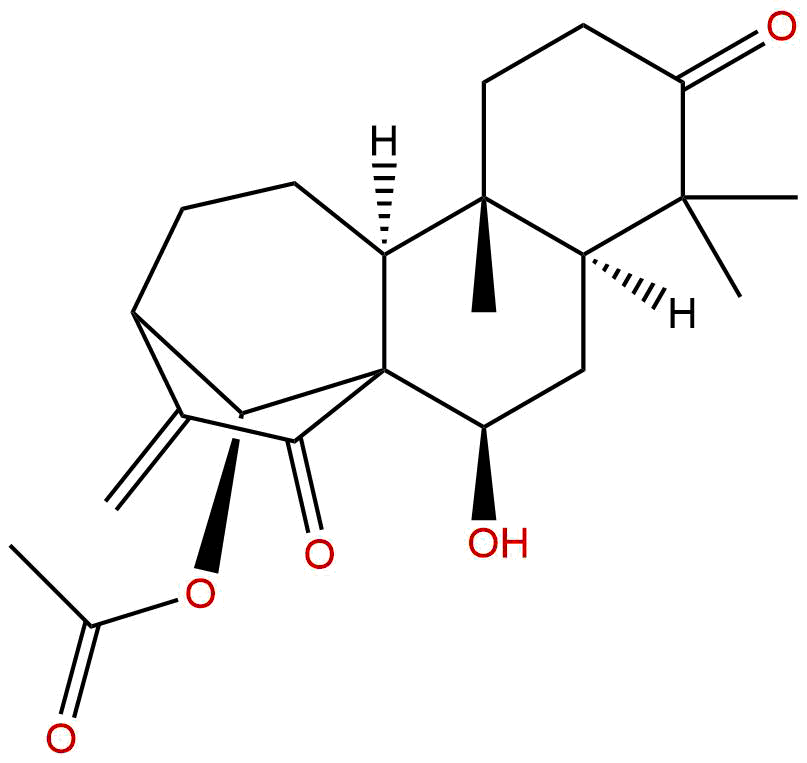


Product name: Glaucocalyxin B
Synonym name: Wangzaozin C
Catalogue No.: BP3983
Cas No.: 80508-81-2
Formula: C22H30O5
Mol Weight: 374.477
Botanical Source: Rabdosia japonica and Isodon amethystoides
Physical Description:
Type of Compound:
Purity: 95%~99%
Analysis Method: HPLC-DAD or/and HPLC-ELSD
Identification Method: Mass, NMR
Packing: Brown vial or HDPE plastic bottle
Storage: Store in a well closed container, protected from air and light. Put into refrigerate or freeze for long term storage.
Whenever possible, you should prepare and use solutions on the same day. However, if you need to make up stock solutions in advance, we recommend that you store the solution as aliquots in tightly sealed vials at -20℃. Generally, these will be useable for up to two weeks.
The product could be supplied from milligrams to grams
Inquire for bulk scale.
For Reference Standard and R&D, Not for Human Use Directly.
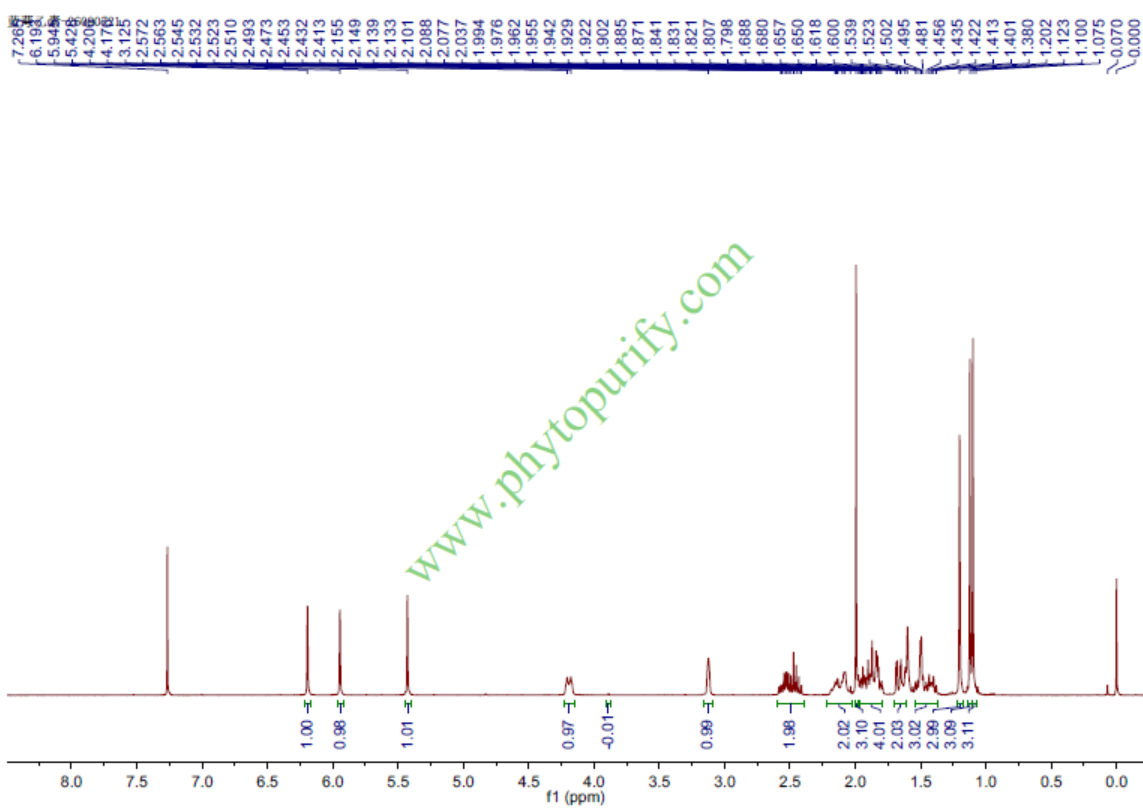
HNMR of Glaucocalyxin B
Storage conditions:Short-term storage at 2~8℃, long-term storage at -20 ~ -80℃
80.6700
2.2128
2.2128
.0593
3.5059
8.3847
High
67.8322
5.7779
No
No
No
No
Yes
No
0.0
Yes
No
Yes
Yes
Natural products have always been an important source of drug discovery and development, especially in the fields of anti-tumor and anti-inflammatory. Plant derived active small molecules provide abundant lead compounds for modern medicine. Among the numerous natural products with biological activity, those originating from the Lamiaceae family and the Camellia genus(Rabdosia)The enantiomeric diterpenoids of the kaempferol type in plants have attracted much attention due to their significant anti-cancer and anti-inflammatory activities. Glaucocalxin B (GLB) is one of the representative members in this family.
Blue calyx B was first extracted from fragrant tea vegetables(Rabdosia japonica var. glaucocalyx)Separated from the middle, its chemical structure belongs to the enantiomeric kaempferol diterpenoid type, with unique α, β - unsaturated ketone structural units. Since its discovery, GLB has attracted extensive research from scholars at home and abroad due to its significant pharmacological activity, especially its proliferation inhibition and anti-inflammatory effects on various tumor cell lines. Research has shown that GLB can effectively inhibit the growth of human promyelocytic leukemia cell line HL-60 within 24 hours, with a half maximal inhibitory concentration (IC ₅₀) of approximately 5.86 μ M, demonstrating strong cytotoxic potential. In addition, GLB also performs well in anti-inflammatory effects, regulating multiple inflammatory signaling pathways involving key targets such as IL-6, STAT3, CASP1, TRPV1, RELA, PTGS1, TNF, TRPA1, IKBKB, NOS2, etc.
This article aims to provide a systematic review of the current research status of blue-green pigment, covering its chemical structure and physicochemical properties, plant sources and extraction methods, pharmacological activity, mechanism of action and molecular targets, pharmacological evaluation and pharmacokinetic characteristics. It also looks forward to its clinical application prospects, in order to provide reference for the in-depth development and utilization of this natural product.
The chemical structure of Blue Calyx B is the basis of its biological activity. From a chemical classification perspective, GLB belongs to the enantiomeric kaempferol type diterpenes(ent-kaurane diterpenoid), Its core skeleton is composed of four fused rings (A, B, C, D), with the D ring being a five membered ring with a characteristic methylene ring double bond (C-16 position). The structure of GLB contains multiple oxygen-containing functional groups, such as hydroxyl and carbonyl groups. The C-1 and C-7 positions are usually replaced by hydroxyl groups, while the C-15 position has an α, β - unsaturated ketone structure (i.e., the C-15 carbonyl group is conjugated with the C-16 double bond). This α, β - unsaturated ketone structure is considered a key pharmacophore for its anti-tumor and anti-inflammatory activities, as it can act as a Michael addition receptor and covalently bind with cysteine thiol groups in proteins or enzymes in the body, thereby regulating related signaling pathways.
In terms of physical and chemical properties, the molecular formula of Blue Calyx Ethylene is C ₂₀ H ∝₀ O ₆, with a molecular weight of 374.4770 g/mol. Its lipophilic water partition coefficient (LogP) is 2.2128, indicating that the compound has a certain degree of lipophilicity, which is beneficial for its penetration into cell membranes. The topological polar surface area (TPSA) is 80.6700 Å ², which is at a moderate level, indicating a certain oral absorption potential, but may be affected by efflux transporters. The water solubility parameter is 0.0593 mg/mL, indicating its low solubility in water, which to some extent limits its bioavailability. It is worth noting that computer simulation predictions show that berberine has a high blood-brain barrier (BBB) penetration ability, which provides the possibility for its treatment of central nervous system related diseases such as brain tumors or neuroinflammation. In addition, hERG inhibition prediction is negative, indicating a low risk of cardiac toxicity; The Ames test result is 0.0, indicating that it does not have significant mutagenicity. These physicochemical properties and early toxicity prediction data provide positive signals for further drug development of GLB.
Blue sepal B is mainly derived from plants in the Lamiaceae family, with the most common source being Blue sepal Camellia(Rabdosia japonica (Burm. f.) Hara var. glaucocalyx (Maxim.) Hara)。 This plant is widely distributed in Northeast, North, and East China, and is commonly used as a herbal medicine for clearing heat, detoxifying, promoting blood circulation, and reducing swelling in folk medicine. In addition, in other plants of the Camellia genus, such as Rabdosia eriocalyx、Rabdosia rubescens GLB has also been detected in plants such as Ophiopogon japonicus, but the content is usually low.
The content of GLB in plants is influenced by various factors, including growth environment, harvest season, plant parts, etc. Generally speaking, the aboveground parts (stems and leaves) are the main sites for extracting GLB. The traditional extraction method mainly relies on organic solvent extraction. Due to the lipophilicity of GLB, ethanol or methanol is commonly used as extraction solvents. The specific process usually includes: crushing the dried plant material, repeatedly extracting it with a certain concentration of ethanol (such as 70% -95%) at room temperature or heating conditions, combining the extracts, and concentrating under reduced pressure to obtain the extract. Subsequently, the extract is subjected to liquid-liquid extraction (such as petroleum ether, ethyl acetate, n-butanol, etc.) for preliminary separation, and GLB is usually enriched in the ethyl acetate extraction layer.
In order to obtain high-purity GLB, further separation and purification steps are required. Classic separation methods include silica gel column chromatography, ODS (octadecylsilane bonded silica gel) reverse phase column chromatography, and preparative high-performance liquid chromatography (Prep HPLC). In silica gel column chromatography, gradient elution systems such as chloroform methanol or petroleum ether acetone are commonly used for separation. With the development of modern separation technology, high-speed countercurrent chromatography (HSCCC) and molecular imprinting techniques have also been applied to the efficient separation of GLB. In recent years, in order to meet the needs of green chemistry and industrial production, new technologies such as ultrasound assisted extraction, microwave-assisted extraction, and supercritical fluid extraction (SFE) have also been attempted for the extraction of GLB. These methods have the advantages of high extraction efficiency, short time, and low solvent consumption.
The pharmacological activity research of Blue Calyx B mainly focuses on two fields: anti-tumor and anti-inflammatory. In addition, in recent years, its antibacterial, antiviral, and neuroprotective activities have gradually been revealed.
1. Antitumor activity
GLB exhibits significant proliferation inhibition on various tumor cell lines. In addition to having a strong inhibitory effect on HL-60 leukemia cells (IC ≮₀ about 5.86 μ M), studies also found that GLB can inhibit the growth of many solid tumor cells, such as human liver cancer cells (HepG2, SMMC-7721), human breast cancer cells (MCF-7, MDA MB-231), human lung cancer cells (A549), human colon cancer cells (HCT-116), and human gastric cancer cells (BGC-823). Its mechanism of action involves inducing cell apoptosis, blocking the cell cycle, inhibiting cell migration and invasion, and reversing multidrug resistance.
In terms of cell cycle regulation, GLB can block tumor cells in the G2/M phase, which may be related to its downregulation of Cyclin B1 and Cdc2 protein expression. In terms of inducing apoptosis, GLB can activate the mitochondrial apoptosis pathway, leading to loss of mitochondrial membrane potential, release of cytochrome c, and subsequently activate Caspase-9 and Caspase-3, ultimately resulting in cell apoptosis. In addition, GLB can induce autophagic cell death by inhibiting the PI3K/Akt/mTOR signaling pathway. It is worth noting that GLB has relatively low toxicity to normal cells and exhibits certain selective anti-tumor activity.
2. Anti inflammatory activity
The anti-inflammatory activity of GLB is another important pharmacological effect. In the macrophage RAW264.7 model stimulated by lipopolysaccharide (LPS), GLB can significantly inhibit the production of pro-inflammatory factors such as nitric oxide (NO), prostaglandin E ₂ (PGE ₂), tumor necrosis factor - α (TNF - α), interleukin-6 (IL-6), and interleukin-1 β (IL-1 β). Its mechanism of action is mainly related to the inhibition of the nuclear factor kappa B (NF - κ B) signaling pathway. GLB can inhibit the phosphorylation and degradation of I κ B α, thereby preventing the translocation of p65 (RELA) subunit to the nucleus and downregulating the expression of downstream inflammation related genes.
In addition, GLB also has an inhibitory effect on the activation of NLRP3 inflammasome. Research has shown that GLB can inhibit the activity of Caspase-1 (CASP1) and reduce the maturation and secretion of IL-1 β. Meanwhile, GLB can also exert anti-inflammatory effects by regulating the STAT3 signaling pathway. In vivo experiments, GLB showed good therapeutic effects on mouse ear swelling, carrageenan induced toe swelling, and collagen induced arthritis (CIA) models, further confirming its anti-inflammatory activity in vivo.
3. Other activities
In addition to anti-tumor and anti-inflammatory activities, GLB also exhibits certain antibacterial activity and has a certain inhibitory effect on Staphylococcus aureus, Escherichia coli, and other bacteria. In addition, studies have reported that GLB has antiviral activity and can inhibit the replication of influenza A virus. Given its excellent blood-brain barrier penetration ability, the potential of GLB in neuroprotection has also attracted attention. Preliminary studies suggest that it may alleviate cerebral ischemia-reperfusion injury by inhibiting neuroinflammatory responses.
The pharmacological effects of Blue Calyx B involve multiple signaling pathways and molecular targets, and its core mechanism is to regulate the intracellular signal transduction network by covalently modifying cysteine residues of key proteins.
1. Direct targeting and covalent modification
As mentioned earlier, the α, β - unsaturated ketone structure in GLB molecules is the key to its biological activity. This structure is an electrophilic center that can undergo Michael addition reaction with cysteine thiol groups with strong nucleophilicity in proteins, forming stable covalent bonds. This covalent modification can irreversibly alter the conformation and function of the target protein. Research has shown that GLB can directly target key cysteine residues (such as Cys259) in the SH2 domain of STAT3 protein, inhibiting STAT3 phosphorylation and dimerization, thereby blocking its nuclear translocation and transcriptional activity. In addition, GLB may also act directly on IKBKB (I κ B kinase β) through a similar mechanism, inhibiting its activity and thereby blocking the activation of the NF - κ B pathway.
2. Signal pathway regulation
3. Epigenetic regulation
The latest research suggests that GLB may also exert pharmacological effects by affecting epigenetic modifications. For example, GLB may upregulate or downregulate the expression of specific genes by inhibiting the activity of histone deacetylase (HDAC), altering chromatin structure. This discovery provides a new perspective for understanding the multi-target mechanism of GLB.
Despite its excellent performance in both in vitro and in vivo pharmacological studies, the development of its pharmacological properties still faces some challenges, mainly in terms of pharmacokinetic properties.
1. Analysis of pharmacological parameters
According to the provided pharmacological parameters, the molecular weight of GLB is 374.48, which meets the requirement of molecular weight (<500) in Lipinski's Rule of Five. Its LogP is 2.21, which falls within the ideal lipophilic range (1-3) and is favorable for membrane permeability. The TPSA is 80.67 Å ², slightly higher than the recommended range of 60-70 Å ² for oral medications, but still within an acceptable range, indicating that there may be some oral absorption barriers, but they are not insurmountable. Poor water solubility (0.0593 mg/mL) is a common problem among many diterpenoid compounds, as low water solubility directly affects the drug's dissolution and oral bioavailability. The good news is that both hERG inhibition and Ames test were negative, indicating a low risk of cardiac and genetic toxicity, which is its advantage as a candidate drug.
2. Pharmacokinetic characteristics
At present, research on the pharmacokinetics of GLB in vivo is relatively limited, but there have been some preliminary results. Research has shown that the oral bioavailability of GLB in rats is low, which may be attributed to its poor water solubility and first pass effect. After intravenous administration, GLB rapidly distributes in the body with a large distribution volume, indicating strong tissue affinity. Its metabolic pathways mainly involve phase I metabolism (such as oxidation and reduction) and phase II metabolism (such as glucuronic acid binding) in the liver. The relatively short elimination half-life of GLB suggests that it may require dosage form modification (such as liposomes, nanoparticles, cyclodextrin inclusion complexes) to increase its in vivo exposure and prolong its duration of action.
3. Formulation development strategy
In order to overcome the pharmacokinetic deficiencies of GLB, researchers have explored various dosage forms. For example, preparing GLB into phospholipid complexes or lipid nanoparticles can significantly improve its water solubility and oral absorption. In addition, using polymer micelles or mesoporous silica nanoparticles as carriers can achieve targeted delivery and sustained release of GLB, thereby improving its anti-tumor efficacy and reducing systemic toxicity. These dosage form improvement strategies are expected to push GLB, a natural active molecule, towards preclinical and clinical research.
As a natural diterpenoid compound with multiple targets and high activity, blue calyx B has shown great potential for development in the treatment of tumors and inflammatory diseases.
1. Prospects for anti-tumor applications
Given the inhibitory effects of GLB on various blood and solid tumors, as well as its multiple mechanisms of inducing apoptosis, autophagy, and reversing drug resistance, GLB is expected to be developed as a novel anti-tumor drug. In particular, it can inhibit STAT3 and NF - κ B, two transcription factors that play a central role in tumor genesis and development, making it unique in the treatment of refractory tumors (such as triple negative breast cancer, pancreatic cancer, and glioblastoma). In addition, GLB, as a chemotherapy sensitizer, may produce synergistic effects when used in combination with existing chemotherapy drugs such as cisplatin, paclitaxel, and doxorubicin, and reduce the dosage and toxic side effects of chemotherapy drugs. Its high blood-brain barrier penetration ability also makes it a potential candidate drug for treating gliomas or brain metastases.
2. Prospects for anti-inflammatory applications
In the field of inflammatory diseases, the dual inhibitory effect of GLB on NLRP3 inflammasome and NF - κ B pathway makes it have broad application prospects in the treatment of acute or chronic inflammatory diseases such as gout, rheumatoid arthritis, inflammatory bowel disease, sepsis, etc. Compared with traditional nonsteroidal anti-inflammatory drugs (NSAIDs), GLB has a more upstream mechanism of action and may have better efficacy and lower gastrointestinal side effects. In addition, its potential role in neuroinflammation (such as Alzheimer's disease, Parkinson's disease) also deserves further exploration.
3. Challenges and Prospects
Despite its broad prospects, the clinical translation of GLB still faces many challenges. Firstly, its low oral bioavailability is the biggest bottleneck that needs to be addressed through advanced drug delivery systems. Secondly, although GLB has low toxicity to normal cells, its long-term toxicity, immunogenicity, and potential drug drug interactions still need to be elucidated through systematic preclinical safety evaluations. Again, although the covalent binding property of GLB endows it with strong activity, it also poses a risk of off target effects, requiring the comprehensive identification of its in vivo target profile using chemical biology methods (such as activity-based proteomic analysis, ABPP) to evaluate its safety.
Future research directions should focus on the following aspects: firstly, in-depth analysis of the covalent binding mode between GLB and key target proteins, providing a basis for structure based drug design; The second is to develop efficient and low toxicity GLB derivatives or analogues to improve their pharmacokinetic properties; The third is to use modern formulation methods such as nanotechnology to achieve targeted delivery and intelligent release of GLB; The fourth is to conduct systematic pharmacokinetic pharmacodynamic (PK-PD) studies to provide guidance for the design of clinical dosing regimens.
As an important enantiomer of the kaempferol type diterpenoid in the Camellia genus, blue calyx B has become a hot molecule in natural product pharmacology research due to its unique chemical structure and significant anti-cancer and anti-inflammatory activities. It regulates multiple signaling pathways such as NF - κ B, STAT3, PI3K/Akt by covalently modifying key proteins such as STAT3 and IKBKB, exhibiting multi-target and multi pathway characteristics. Although there are shortcomings in drug formulation, especially in terms of water solubility and oral bioavailability, these obstacles are expected to be overcome through dosage form improvement and structural optimization. With a deeper understanding of its mechanism of action and advances in drug delivery technology, blue calyx B and its derivatives are highly likely to be transformed into innovative drugs for the treatment of tumors and inflammatory diseases in the future, contributing to human health.
